
Victorian Glass Oil Light
These Victorian glass oil light pieces bring warm nineteenth-century character to a room through coloured fonts, columns and decorative shades.
Victorian Glass Oil Light
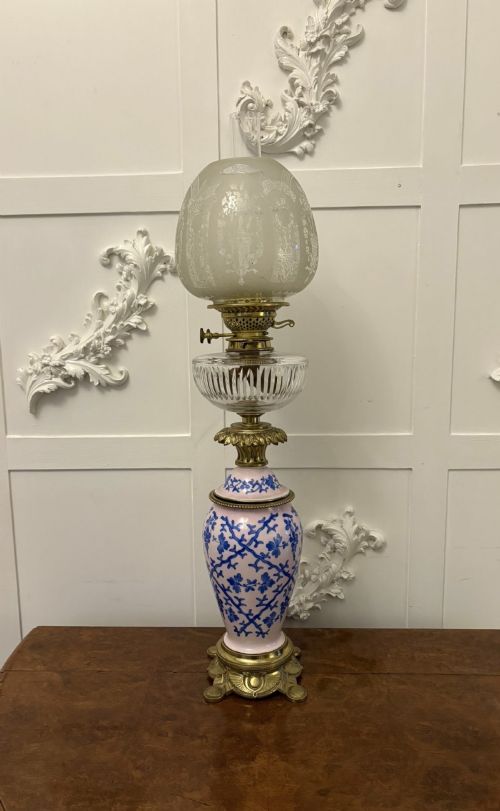
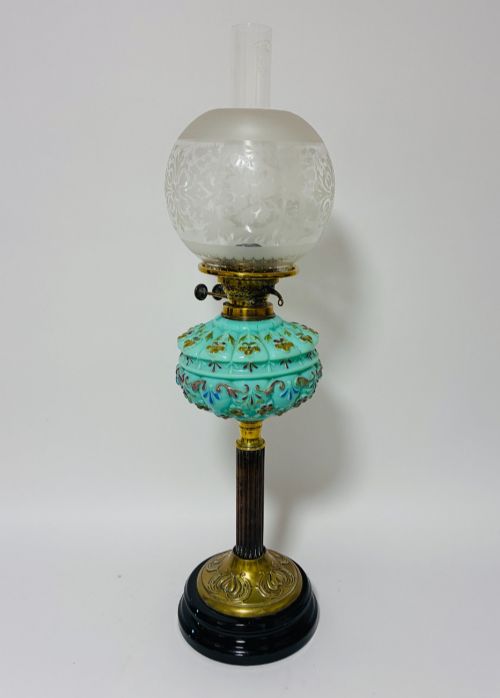
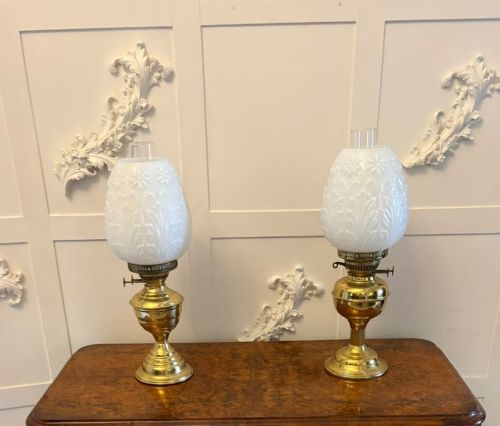
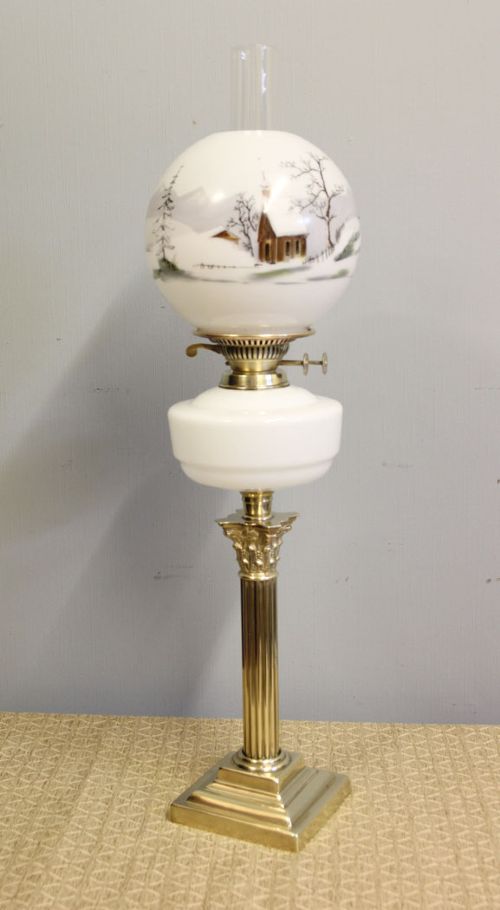
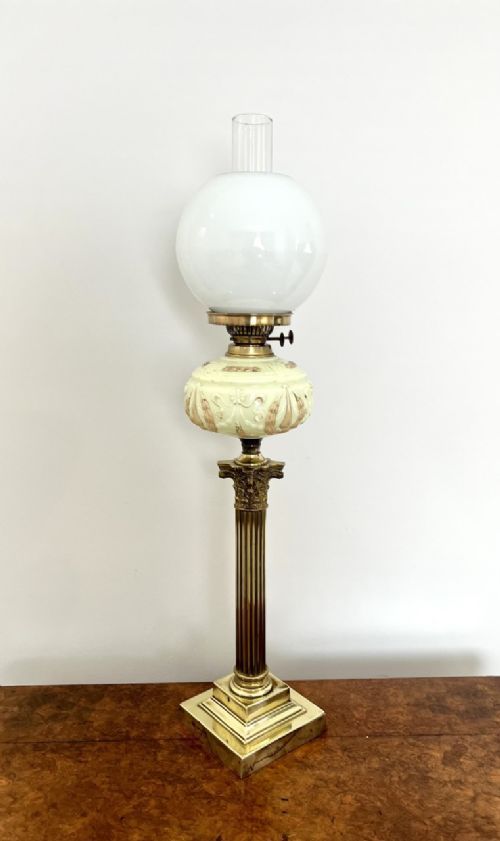
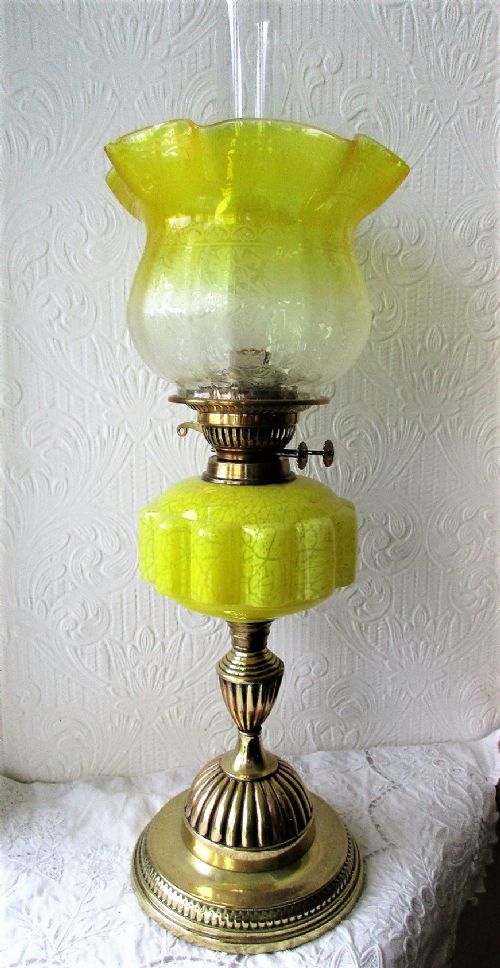
A victorian glass oil light combines functional nineteenth-century lighting with decorative glass and metal forms. Collectors seek these pieces for their combination of brass bases, ceramic elements and colourful glass shades.
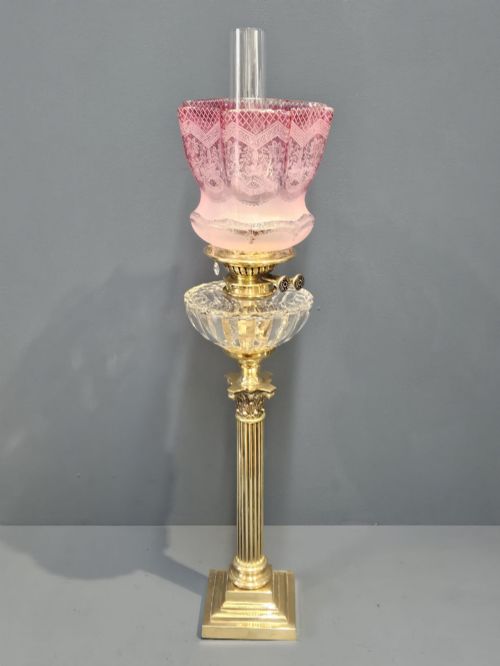
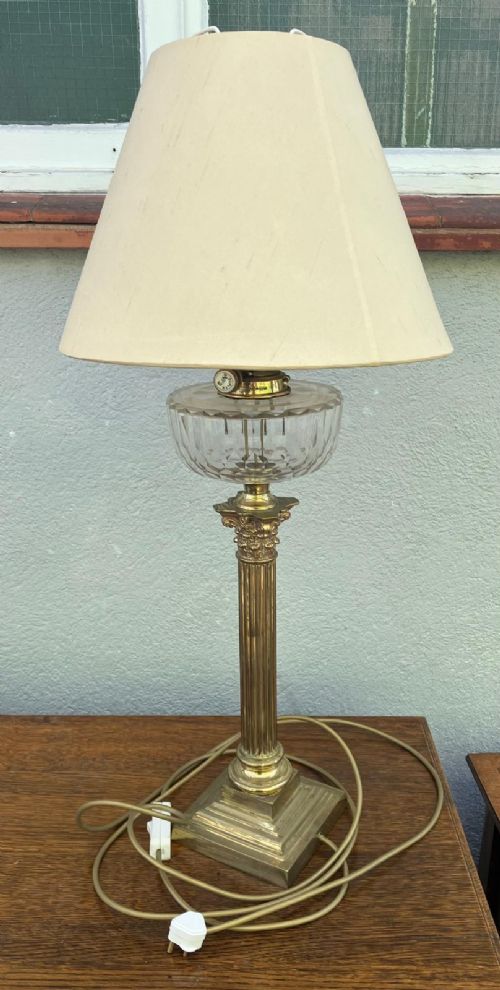
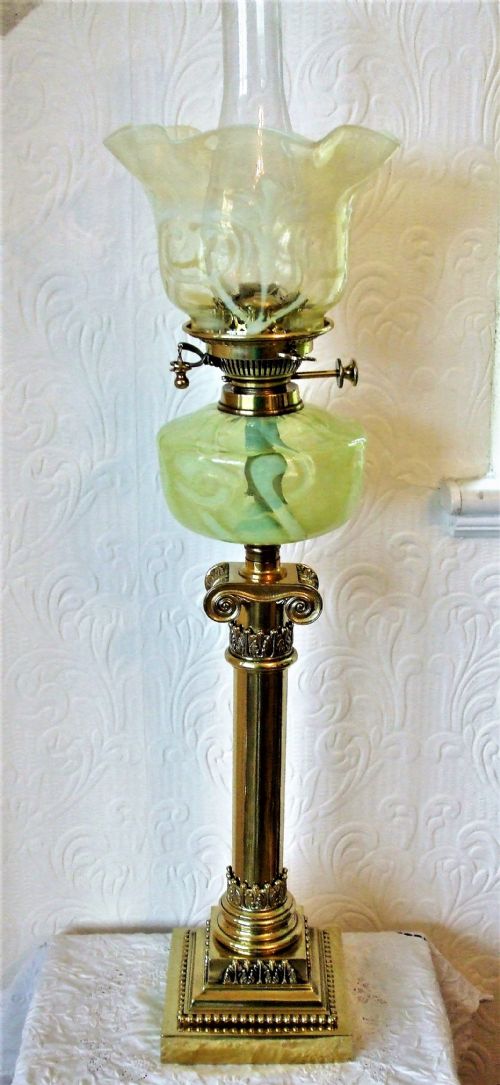
The selections on this page span the Victorian and Edwardian eras, including table lamps, hanging ceiling lights and floor lamps. Corinthian column designs and duplex burners appear frequently among the listed items.
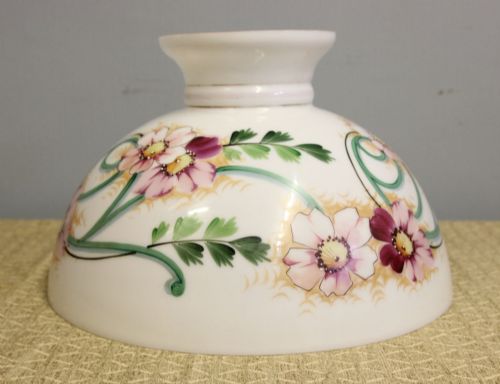
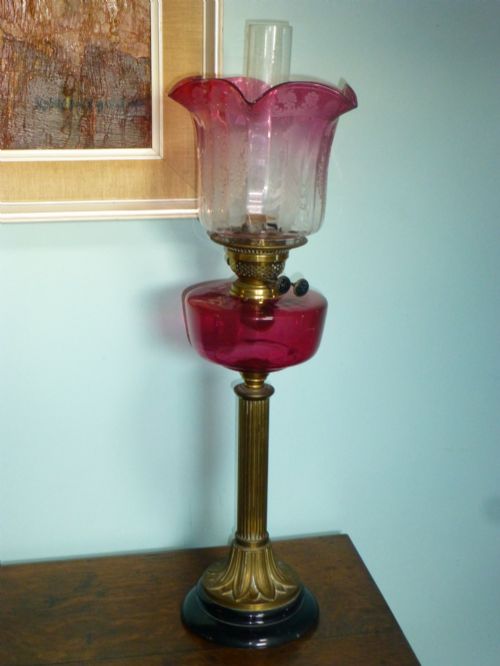
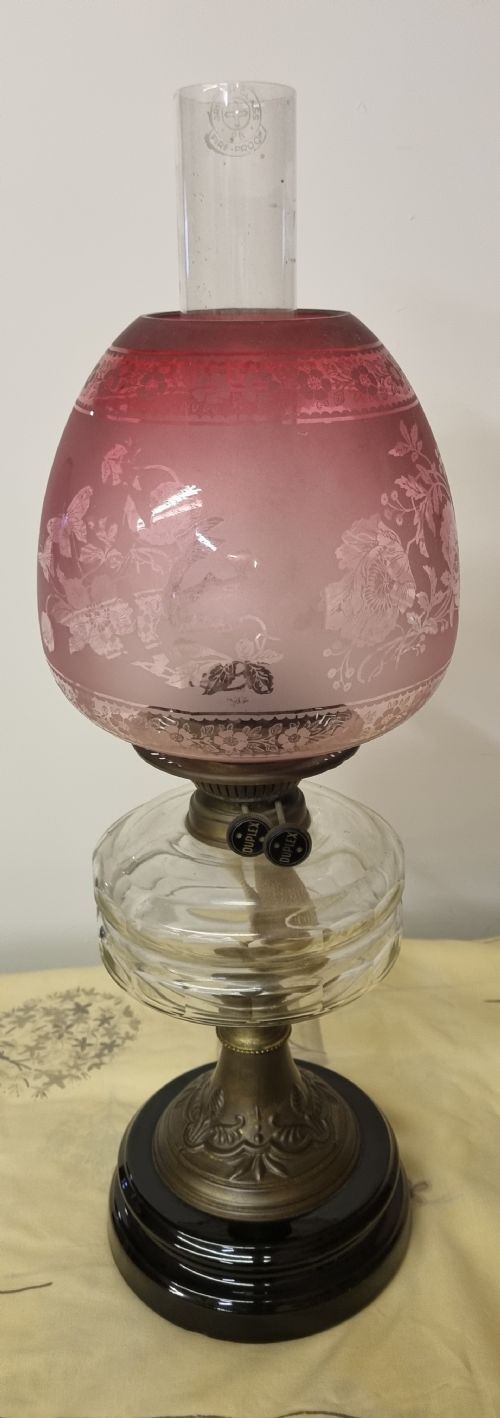
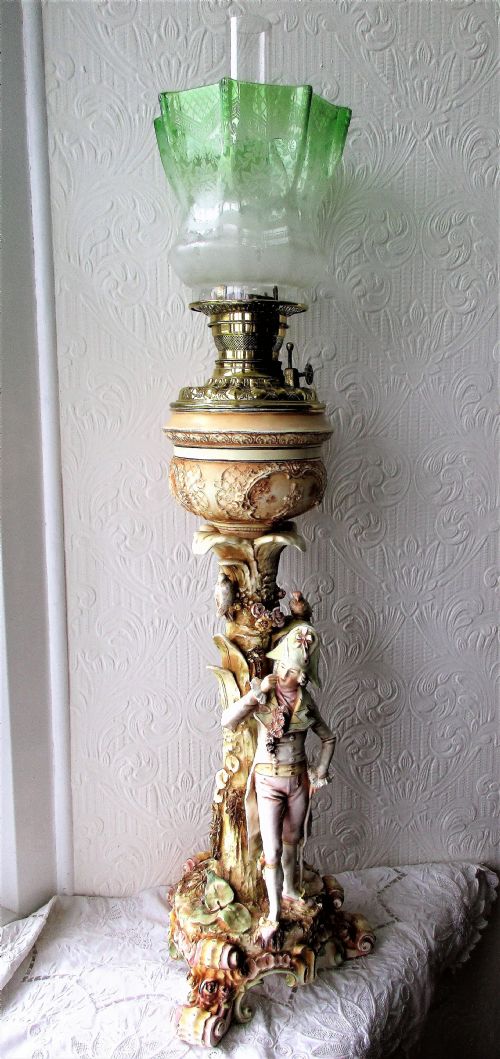
Many examples pair brass columns with cranberry glass or opaline glass fonts and shades. Figural and botanical painted details also surface across the inventory.
Materials and construction methods
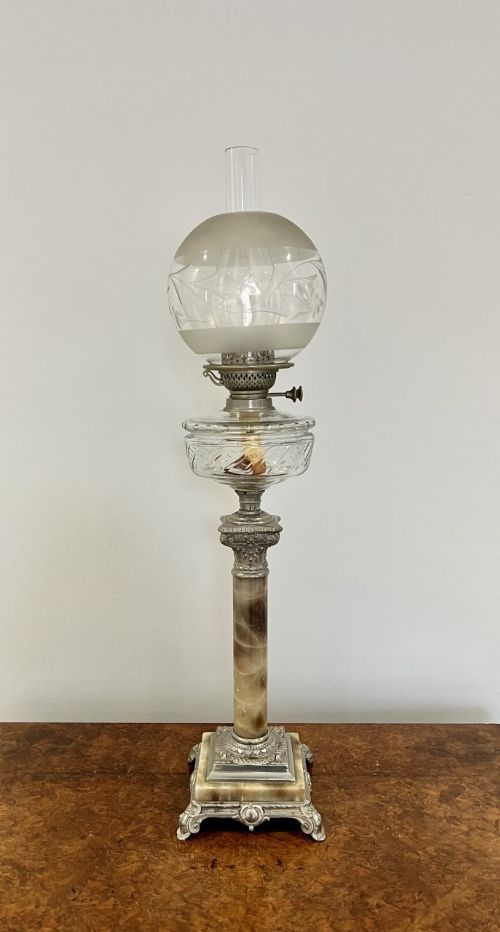
Makers utilised cast brass for columns and bases, often pairing metalwork with hand-blown or moulded glass fonts. Cranberry glass, opaline glass and cut glass feature prominently in the production of fonts and matching shades.
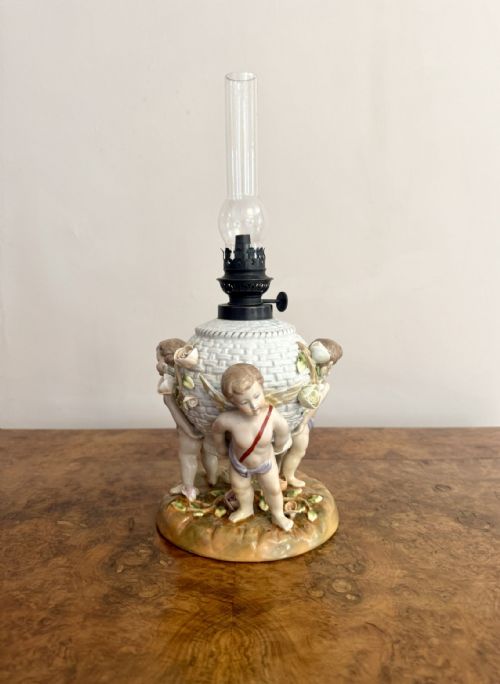
Ceramic and porcelain bodies, including Sitzendorf porcelain, integrate into the structural columns of specific table lamps. Etched patterns, hand-painted botanical motifs and gilt decoration adorn the glass and ceramic surfaces.
Listings feature brass, cranberry glass, opaline glass and porcelain across table lamps, hanging lights and floor lamps spanning the Victorian and Edwardian eras.
Assessing craftsmanship and proportion
Proportion and material weight divide standard production pieces from finer examples. Heavy brass casting, crisp fluting on Corinthian columns and substantial glass thickness indicate superior manufacture.
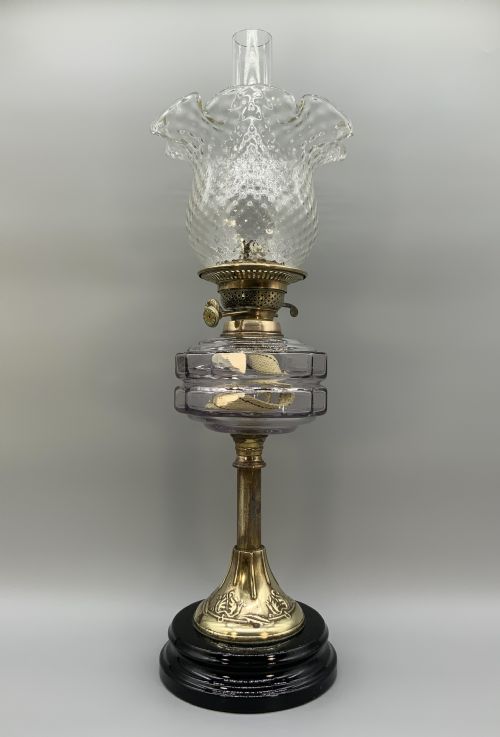
The execution of hand-painted scenes, etched tulip shades and gilt highlights reveals the skill of the original workshop. Dual burner mechanisms, such as duplex systems, demonstrate functional complexity.
Hinks·Taylor Tunnicliff·Sitzendorf·Mc Gary
The Victorian Glass Oil Light Glossary
- Duplex burner
- A double-wick mechanism that produces a brighter flame than single-wick alternatives. This fitting appears often on larger table lamps.
- Opaline glass
- An opaque pale glass that diffuses light softly. It occurs frequently in nineteenth-century lamp shades.
- Corinthian column
- An architectural column style with ornate acanthus leaf capitals. Makers frequently adopted this form for brass lamp standards.
Victorian Glass Oil Light: Frequently Asked Questions
How do I identify a Victorian oil lamp?
Look for heavy brass or porcelain columns combined with glass fonts and original burners. Period pieces often feature distinct weights and manufacturing stamps from nineteenth-century firms.
Examine the construction of the collar and burner mechanism for period patents and typical wear patterns associated with nineteenth-century domestic items.
What is a duplex burner?
A duplex burner uses two parallel wicks rather than one to generate a wider flame and greater illumination. This system was standard on larger nineteenth-century lighting.
These burners often carry maker names or patent details stamped directly into the brass thumb-wheels used for adjusting the wicks.
Are the glass shades original to the lamps?
Shades on nineteenth-century lamps frequently match the period of the base through coordinated materials like cranberry glass, opaline or etched crystal. Matching collars and fitter sizes help determine alignment.
Collectors look for consistent wear and complementary decorative treatments, such as matching gilt lines or botanical hand-painting across both font and shade.
How do I safely clean brass and glass parts?
Dust glass shades gently with a soft cloth and avoid harsh chemical cleaners that might damage hand-painted motifs or gilt decoration. Brass components benefit from minimal intervention to preserve their aged surface.
Keep moisture away from any paper labels or painted enamel sections during maintenance to protect the nineteenth-century materials.