


Victorian Glass Dessert Bowl
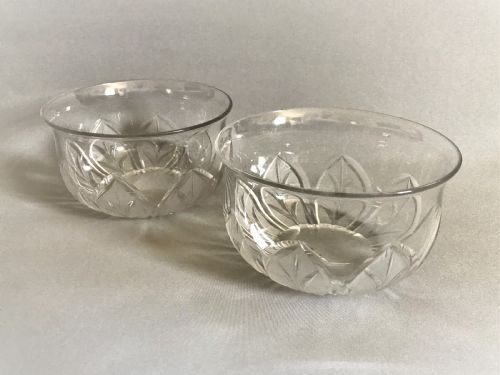
These Victorian glass dessert bowls bring nineteenth-century dining tables to life with rich coloured glass, cut crystal and delicate silver mounts.
Victorian Glass Dessert Bowl
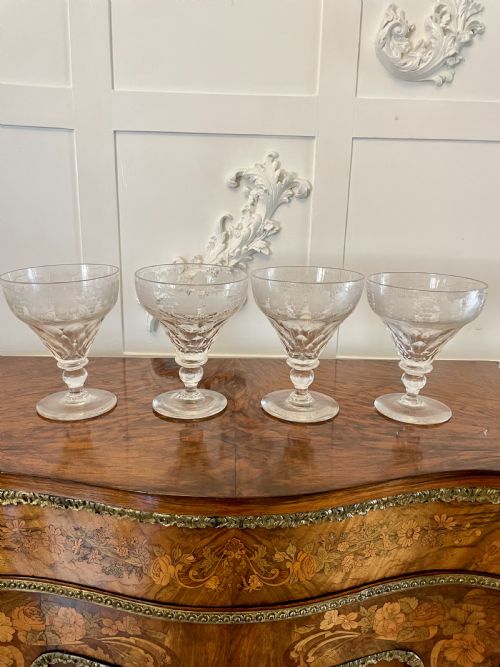
A Victorian glass dessert bowl represents the height of nineteenth-century tableside refinement, taking forms such as finger bowls, custard cups, tazzas, champagne coupes and decorative dishes.
You will most frequently encounter nineteenth-century examples in clear glass, cut glass, lead crystal, ruby glass and frosted glass, often originating from English workshops around the eighteen-sixties and eighteen-eighties.
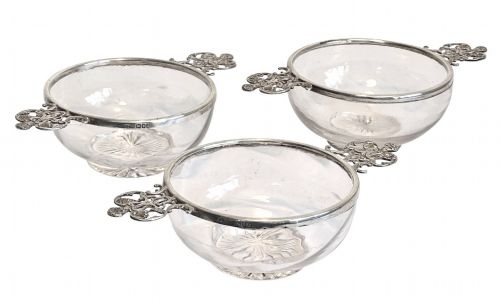
The selection ranges from single decorative bowls to matching sets of four or six, occasionally accompanied by sterling silver mounts or pierced spoons.
How they were made
Makers shaped molten glass using traditional blowing and moulding techniques before employing wheel-cutting, engraving or etching to create crisp decorative patterns such as Greek key motifs and fruiting vines.
Some vessels feature cased glass construction, layering yellow or red glass over a clear crystal base, while others integrate sterling silver elements fastened securely around the rim.
Some nineteenth-century dessert wine glasses secretly glow a vibrant green under ultraviolet light due to uranium content in the glass.
What varies in quality
The standard of a Victorian glass dessert bowl rests upon the clarity of the metal, the precision of the wheel-cut or engraved detailing, and the crispness of any overlay work.
Matched sets and pieces retaining original silver components or accompanying tableware elements command greater interest than isolated examples found alone.
William Comyns
The Victorian Glass Dessert Bowl Glossary
- Finger bowl
- A small vessel used for rinsing fingers between courses at formal nineteenth-century dining tables. These often display fine cut or engraved patterns.
- Custard cup
- A small handled or straight-sided vessel designed for serving individual portions of custard or cream. Early Victorian examples frequently utilise heavy cut crystal.
- Tazza
- An elevated decorative dish set upon a stem and foot, used historically for serving fruit or sweets. They frequently showcase cased glass or vibrant colourways.
- Overlay
- A technique where a layer of coloured glass is fused over a clear crystal body, allowing the artisan to cut through the outer layer to reveal the contrasting glass beneath.
Victorian Glass Dessert Bowl: Frequently Asked Questions
How were finger bowls used?
Diners used finger bowls during formal meals to rinse their fingertips between courses, typically placing them on a small matching plate with a doily.
Over the nineteenth century, these vessels evolved into decorative table accessories that showcased fine cut glass patterns and matching sets.
What is cranberry glass?
Cranberry glass is a rich pinkish-red decorative material created by adding gold chloride to the molten glass mixture during production.
Victorian makers utilised this striking hue extensively for tableware services, dessert bowls and decorative dishes.
How do I date a glass bowl?
Dating these pieces relies on examining the manufacturing techniques, pontil marks, stylistic motifs and the depth of the glass metal.
Nineteenth-century examples frequently exhibit specific Victorian engraving styles, such as Greek keys or fruiting vines, alongside period silver mounts.
Are these bowls safe for food?
These nineteenth-century items were originally created for functional dining use, serving custards, desserts and fruit at Victorian tables.
Modern owners generally use them for display, light table service or holding small decorative items rather than heavy daily dining.