


Cranberry Cut Glass
Cranberry cut glass pieces bring rich colour and precise wheel-cut facets to the table, and collectors prize them for their striking visual presence.
Cranberry Cut Glass
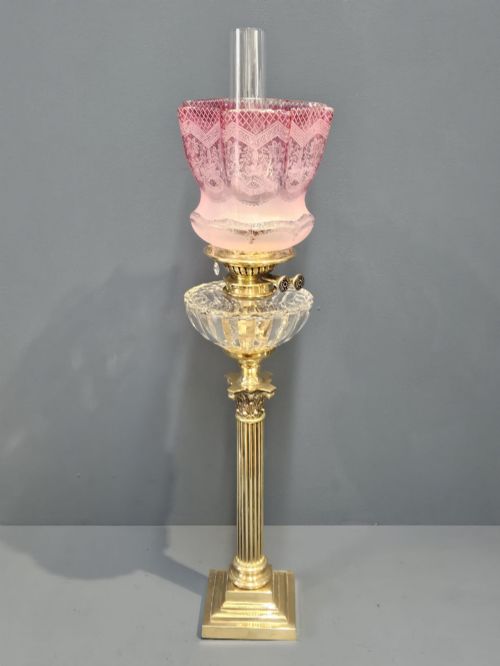
Cranberry cut glass encompasses a diverse range of objects created primarily during the Victorian and Edwardian periods, including scent bottles, oil lamps, decanters, and table glass. Buyers searching this phrase encounter items spanning from the mid-nineteenth century up to the early twentieth century, originating from English and Bohemian workshops.
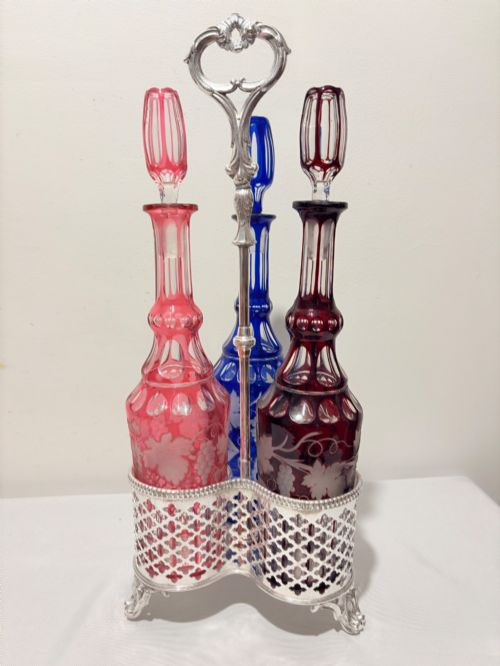
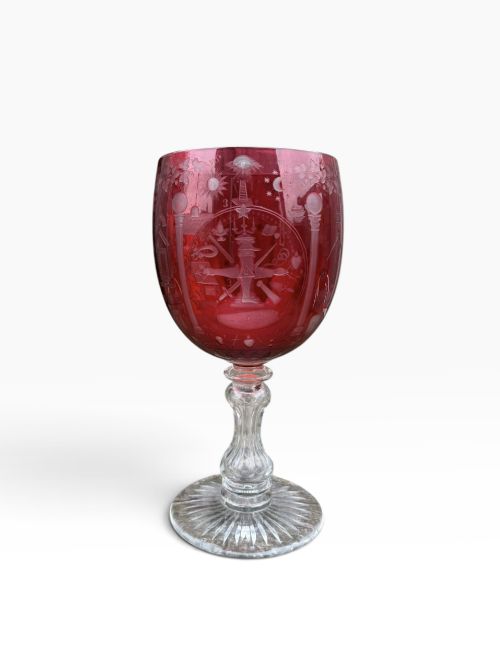
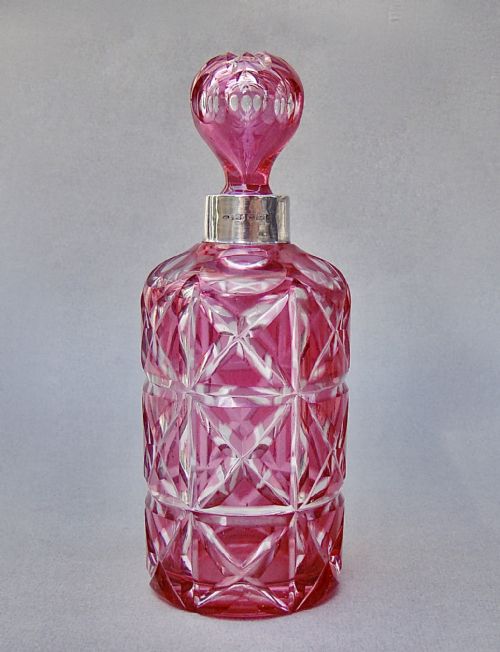
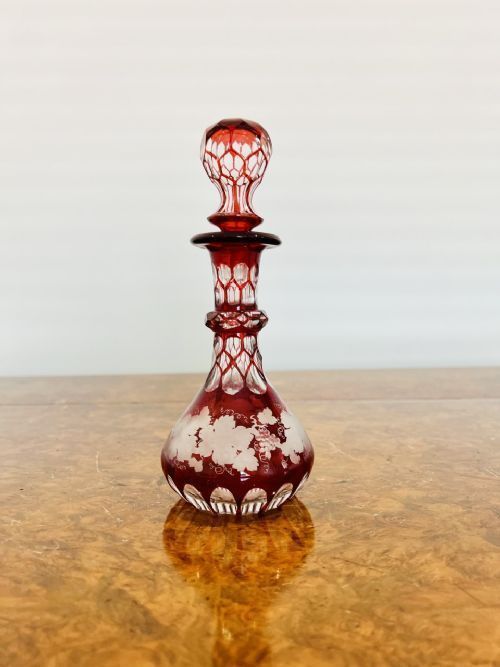
The most common forms on this page include decanters, wine glasses, scent bottles, and table lustres, often utilising overlay techniques where a layer of cranberry glass covers a clear crystal base. These pieces display distinct cutting that reveals the clear glass beneath, creating sharp geometric or floral patterns.
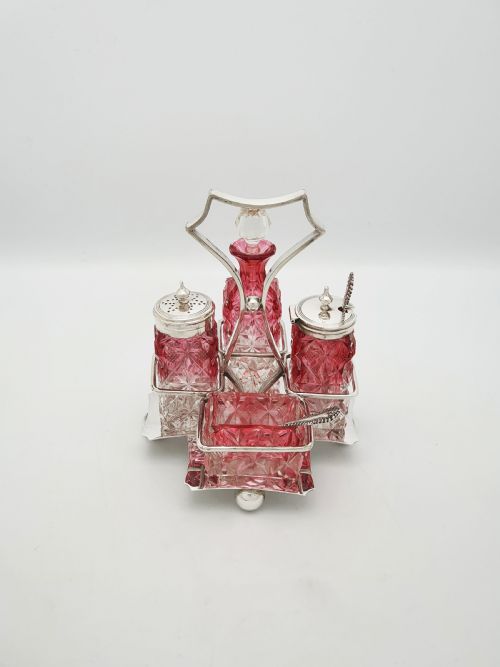
Varying styles across the inventory range from plain blown glass with cut facets to elaborate Bohemian engraved items and silver-mounted accessories. Victorian and Edwardian makers frequently combined the deep pinkish-red glass with silver plate, solid silver, or brass mounts.
Materials and production methods
Makers produced cranberry glass by adding gold chloride to the molten glass batch to achieve the characteristic rich red-pink hue. Craftsmen then applied this coloured glass over a clear crystal base in an overlay technique before sending the vessel to the cutter.
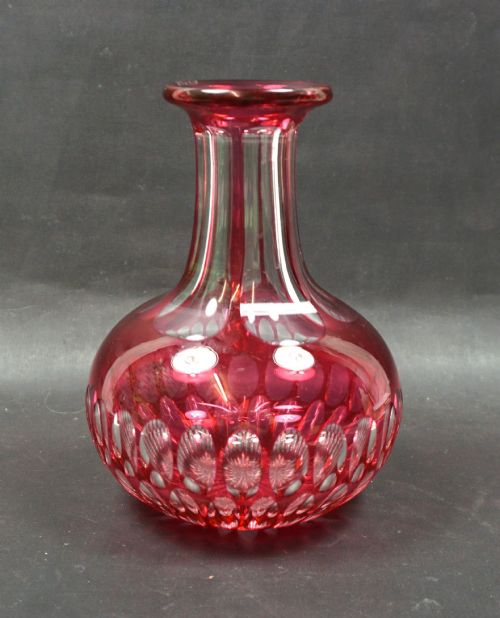
The cutting process involved pressing the cooled glass against rotating iron and stone wheels to carve away portions of the outer cranberry layer. This technique exposed the clear crystal underneath to form panels, flutes, and intricate geometric motifs.
Many items received supplementary decoration through wheel engraving, etching, or acid-cutting to depict birds, vines, and floral scrolls. Workshops frequently finished these glass bodies with fitted components made from silver plate, solid silver, or brass.
Victorian ladies carried miniature cranberry scent bottles in their reticules, ensuring a dash of smelling salts remained permanently within arm's reach.
Assessing quality in cranberry cut glass
Quality depends heavily on the depth and crispness of the wheel-cutting, where sharper facets and deeper penetration into the underlying clear layer create higher contrast. Well-executed cutting displays clean edges without tool marks or uneven depth across the design.
The richness and consistency of the cranberry colour also determine the grade of the piece, as superior examples show an even, saturated tint without cloudiness or streaks in the metal. The integration of metal mounts, such as silver tops or brass bases, separates standard production items from finer fitted pieces.
Harold Bushell and Co·William Hutton
The Cranberry Cut Glass Glossary
- Overlay glass
- A manufacturing method where a layer of coloured glass is fused over a clear crystal body before being cut away to reveal the contrasting layer underneath.
- Mantle lustre
- An ornamental glass vase hung with prismatic crystal drops, typically displayed on a fireplace mantel during the Victorian era.
- Cruet set
- A matched collection of small glass bottles or jars held in a metal stand, used for holding condiments and sauces at the dining table.
- Flashed glass
- A thin superficial coating of coloured glass applied over a clear base, requiring less material than an overlay while achieving a similar visual effect.
Cranberry Cut Glass: Frequently Asked Questions
Can I use these decanters for wine?
Most antique decanters function well for serving wine, provided the interior is thoroughly rinsed and inspected before use.
Check the ground glass stoppers to ensure a proper fit, and avoid storing liquids in them for long periods to protect the glass.
How do I date an oil lamp?
Examine the base materials and burner mechanism, as Victorian examples often feature heavy brass columns or combination glass bodies paired with specific patent burners.
Look for registration marks or manufacturer stamps on the metal fittings to narrow down the decade of production.
What is the difference between overlay and flashed glass?
Overlay glass involves a substantial layer of coloured glass fused over clear crystal, allowing deep cuts to expose the base without wearing through to the middle.
Flashed glass uses a much thinner superficial skin of colour that can wear away more easily near sharp edges.