




Victorian Flashed Glass
Victorian flashed glass pieces are layered glass vessels and decorative items that bring rich colour and tactile depth to a room.
Victorian Flashed Glass
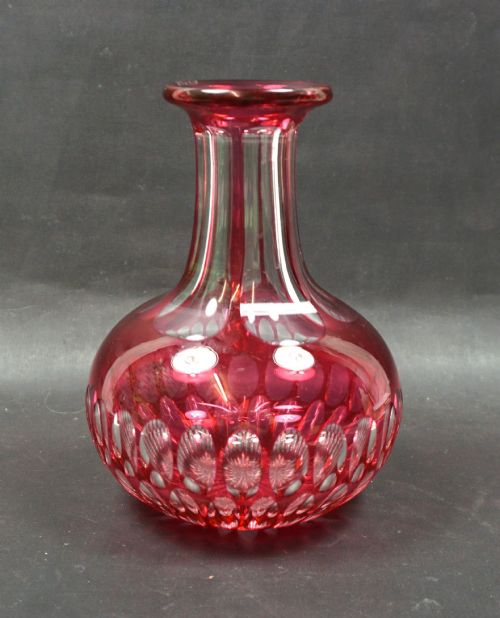
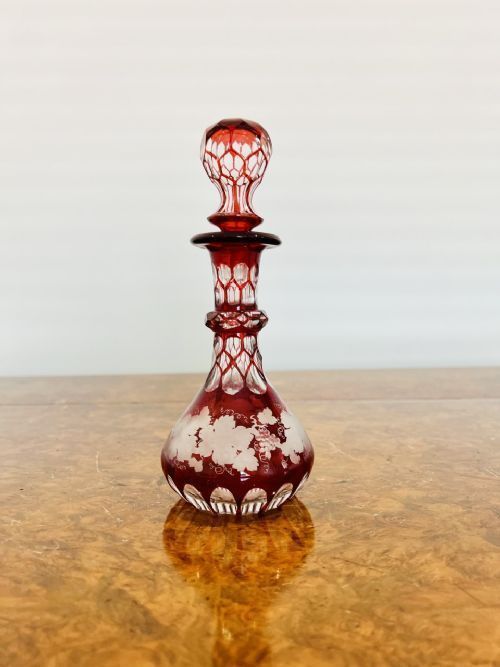
When you search for Victorian flashed glass, you encounter items shaped by nineteenth-century glassmakers using a thin layer of coloured glass fused over a clear or contrasting crystal base. These pieces span decanters, vases, carafes, and various tablewares produced across English and Bohemian workshops.
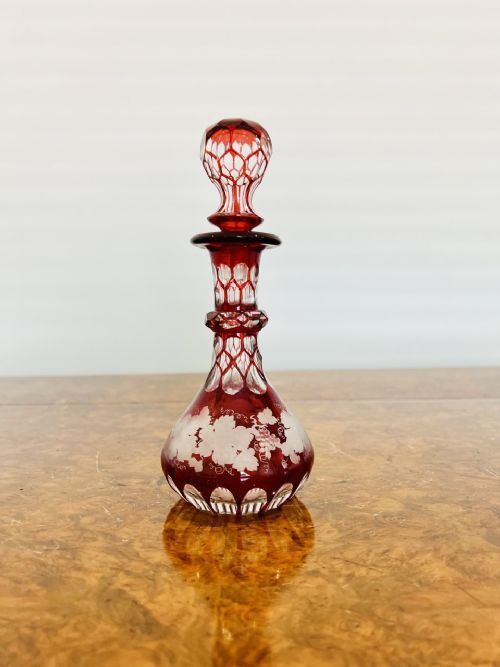
The selections on this page highlight deep ruby and cranberry hues alongside cobalt blue and yellow, often manipulated through cutting, etching, or gilding to reveal the clear crystal beneath.
Materials and construction
The method relies on gathering a thin skin of coloured glass over a colourless core during the blowing process, creating a layered blank that can be worked while hot. Makers then utilised wheel-cutting, engraving, and acid-etching to cut through the exterior skin and expose the contrasting crystal underneath.
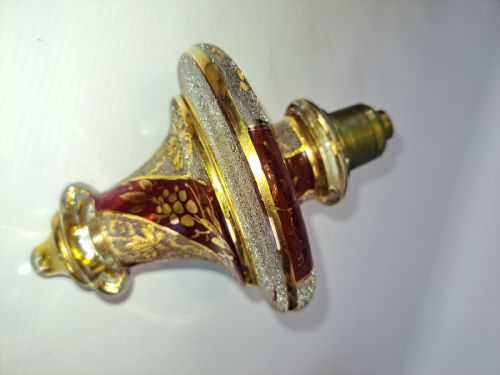
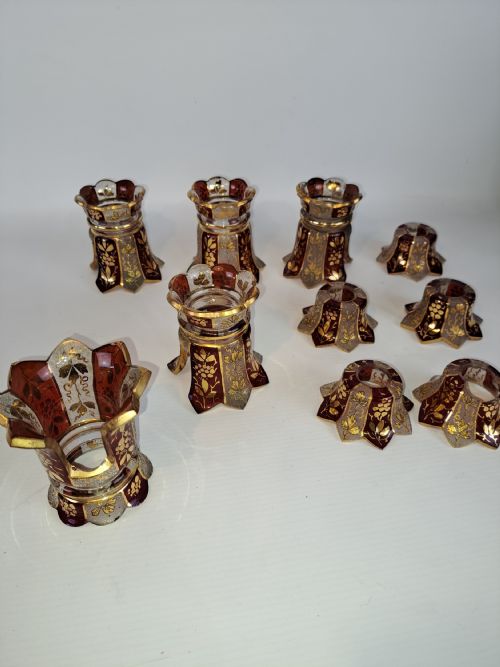
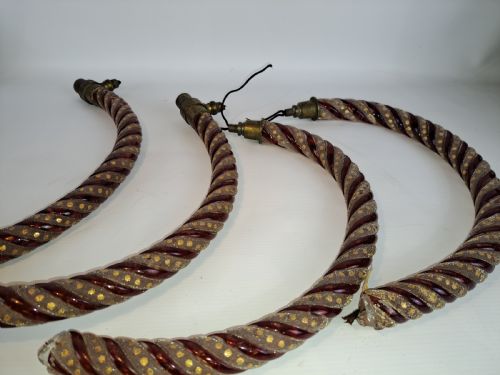
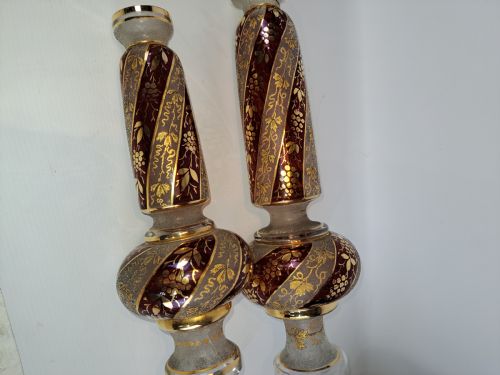
Many examples are further enhanced with gold leaf, enamel decoration, or brass mounts, combining rich metallic touches with the luminous qualities of ruby, cranberry, or cobalt glass.
Listings feature items from the 18th century, 19th century, 1850, 1860, 1875, 1880, 1900, and the Victorian and Edwardian periods.
Assessing quality
Quality rests in the precision of the glass cutting and the clarity of the underlying crystal where the surface layer has been removed. Crisp engraving with fine detail, such as birds among vines, distinguishes superior vessels from simpler production pieces.
The richness and evenness of the flashed colour layer, combined with careful gilding and the weight of the lead crystal base, mark out the finest examples from this era.
The Victorian Flashed Glass Glossary
- Flashed glass
- A vessel made with a thin outer layer of coloured glass fused to a clear or contrasting body. This technique allowed makers to achieve deep, saturated tones while retaining the brilliance of crystal beneath.
- Overlay glass
- A similar method involving a thicker exterior layer of glass that is substantially cut away to create bold patterns and panels. It offers deeper relief work than standard flashing.
- Lustre
- A mantel ornament featuring a bowl with a hanging fringe of cut crystal prisms. These pieces combine flashed glass bodies with light-catching pendants.
- Tazza
- An elevated shallow cup or bowl raised on a stem and foot. They often served as centrepieces on Victorian dining tables.
- Prunt
- An applied blob of molten glass pressed into a decorative shape. They appear on various decorative vessels for texture and grip.
Victorian Flashed Glass: Frequently Asked Questions
What is flashed glass?
Flashed glass is made by applying a thin skin of coloured glass over a clear crystal base during manufacture. This dual-layer approach allows artisans to cut through the outer colour to create patterns.
Items made this way combine the intense colour of ruby, cranberry, or cobalt glass with the refractive sparkle of clear lead crystal.
Are these items English or Bohemian?
Both regions produced significant quantities of flashed and overlay glass during the nineteenth century. English makers often favoured deep cranberry tones on decanters and carafes, while Bohemian workshops frequently produced rich ruby items with elaborate gilding and etching.
Stylistic cues and engraving motifs help differentiate between the two traditions.
How do I spot cut to clear?
Cut to clear describes pieces where the outer coloured layer is carved away entirely in geometric or floral patterns to reveal the transparent crystal underneath. You can feel the distinct ridge where the wheel has cut through the surface layer.
This technique creates a high-contrast visual effect that catches the light from multiple angles.