
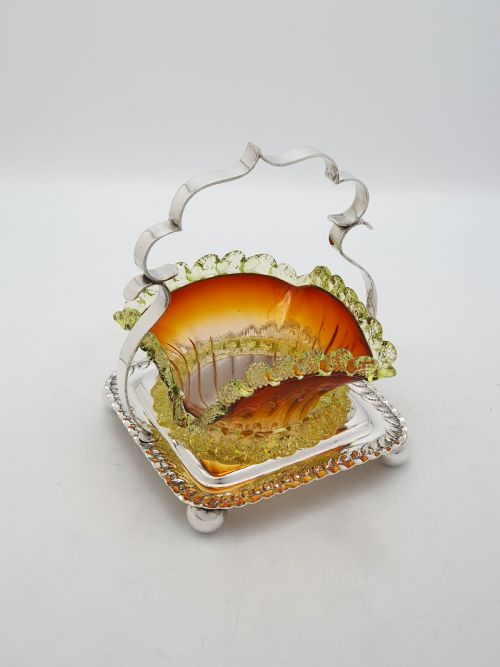


Victorian Glass Centerpiece
A victorian glass centerpiece brings weight and colour to a table, combining moulded or cut crystal with silver plate, brass, or gilt mounts.
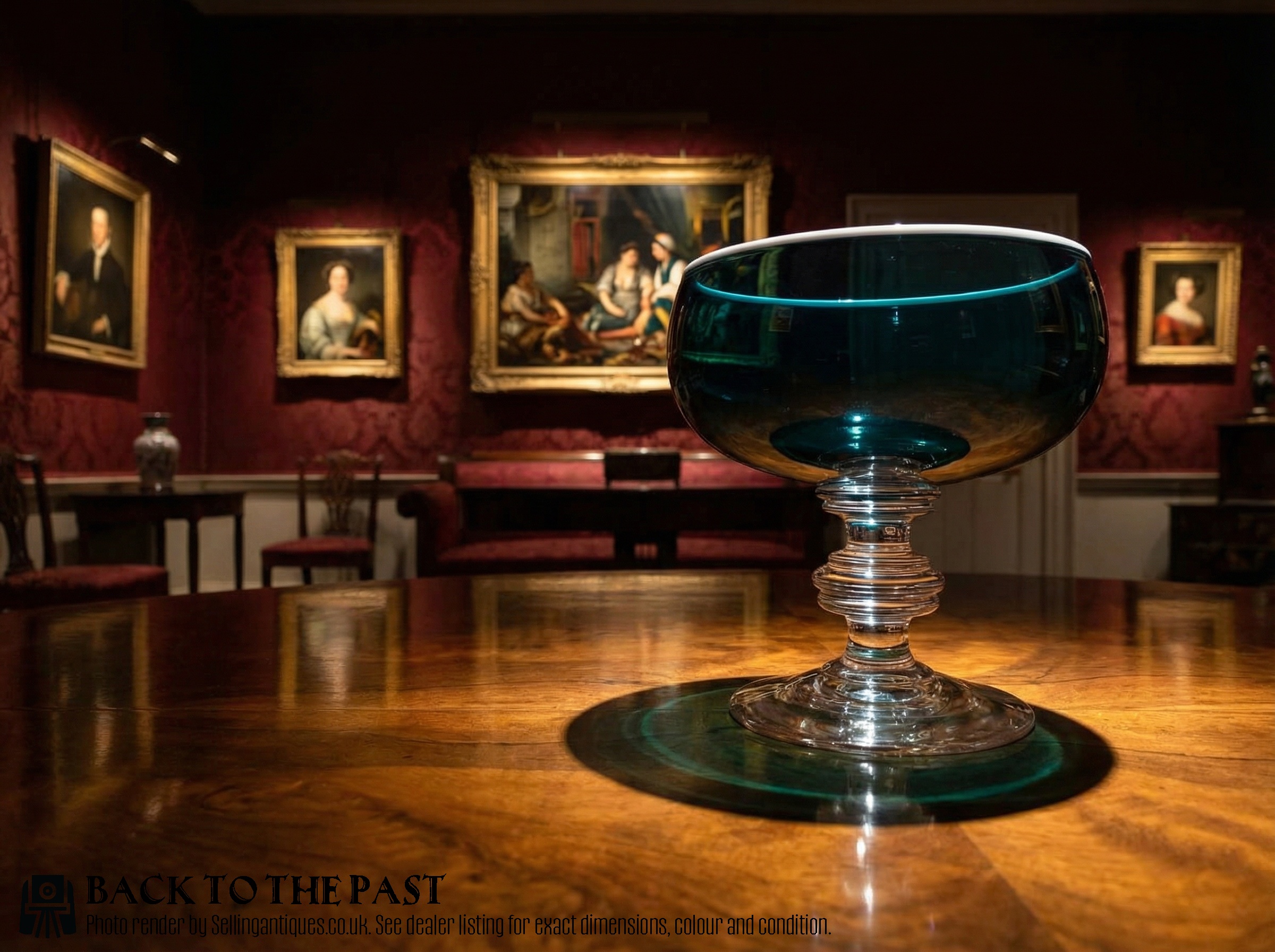
Victorian Glass Centerpiece
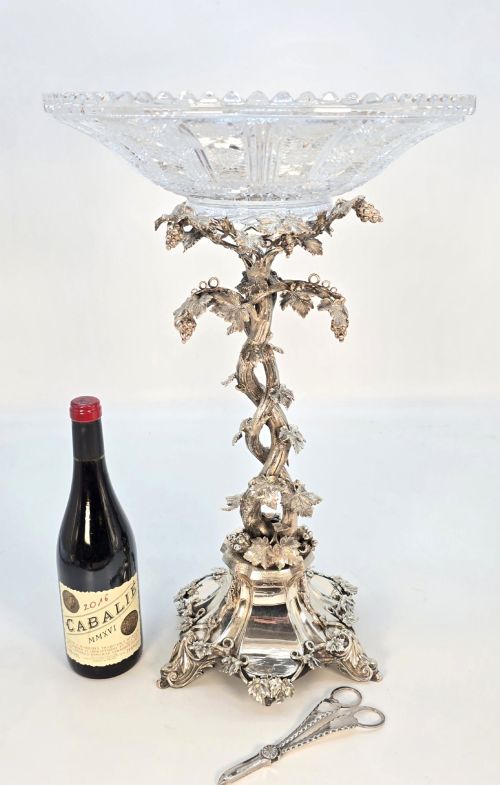
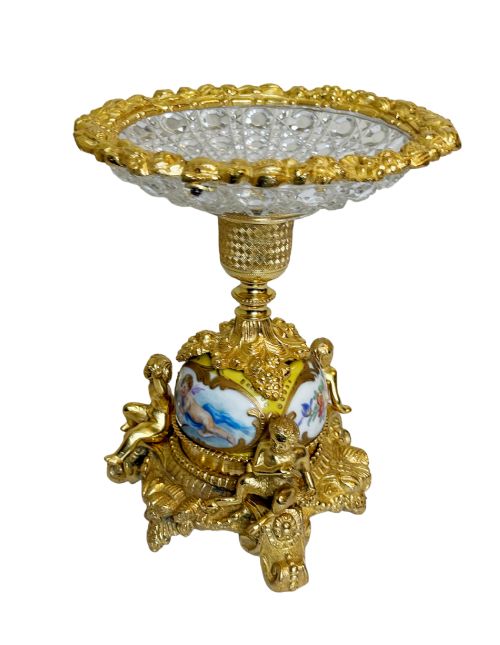
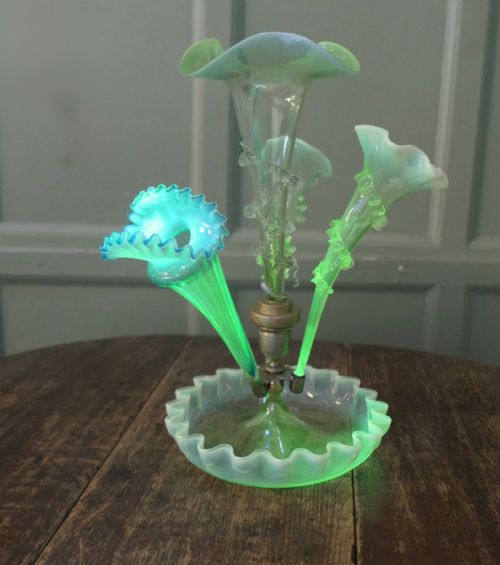
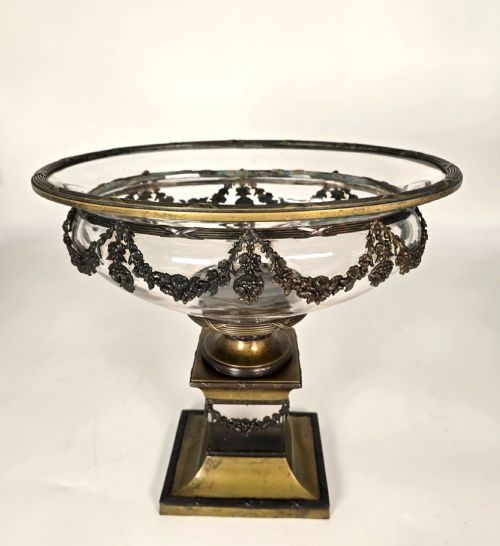
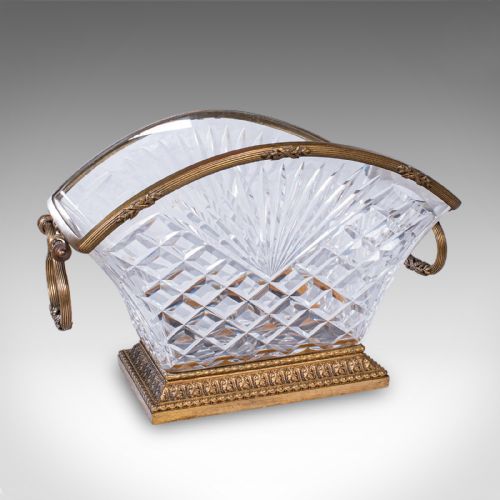
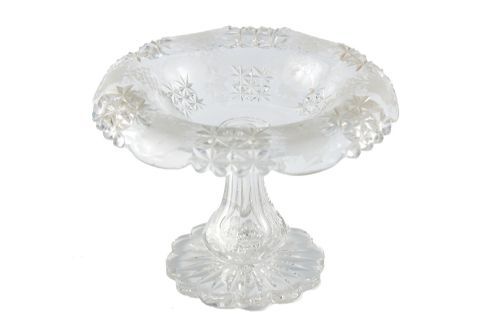
A victorian glass centerpiece serves as the focal point of a formal dining table, taking the form of large pedestal bowls, comports, and multi-trumpet epergnes. These pieces originate predominantly from the nineteenth century, spanning the Victorian and Edwardian eras with occasional Georgian and later examples.
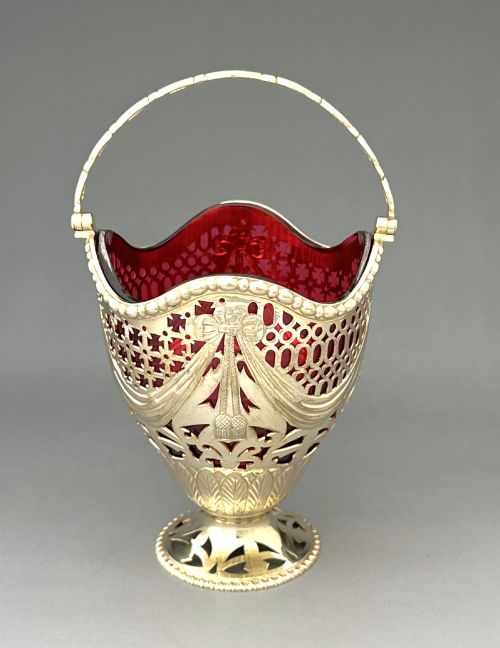
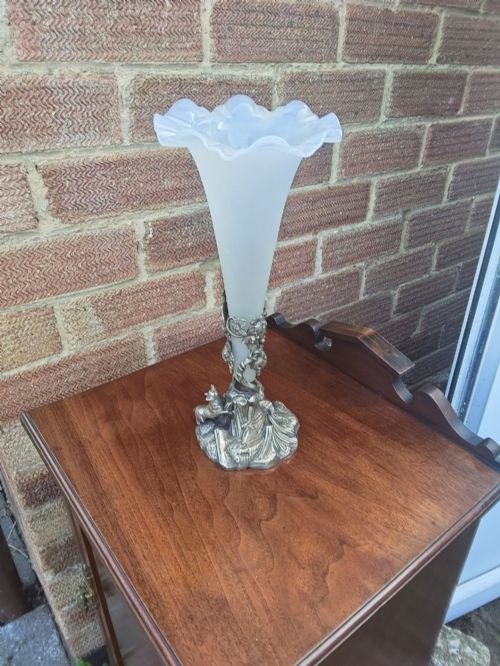
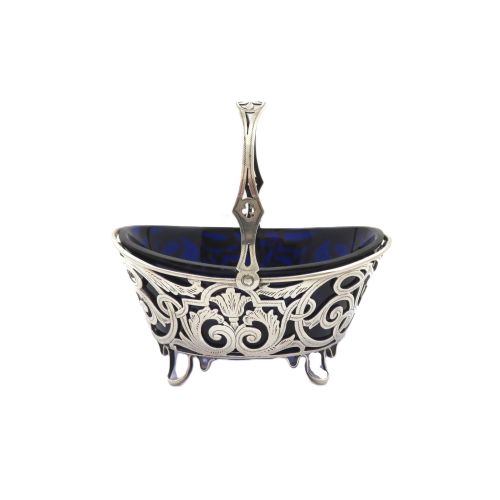
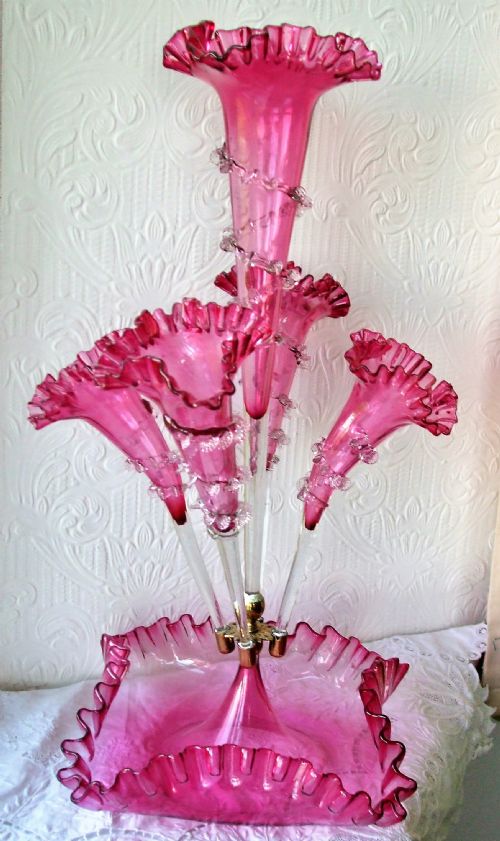
The most common formats on this page pair a glass bowl, basket, or vase with a metal stand or frame. They range from simple cut crystal dishes to elaborate epergnes featuring multiple hanging baskets and trumpets designed to hold flowers or fruit.
Materials and Construction
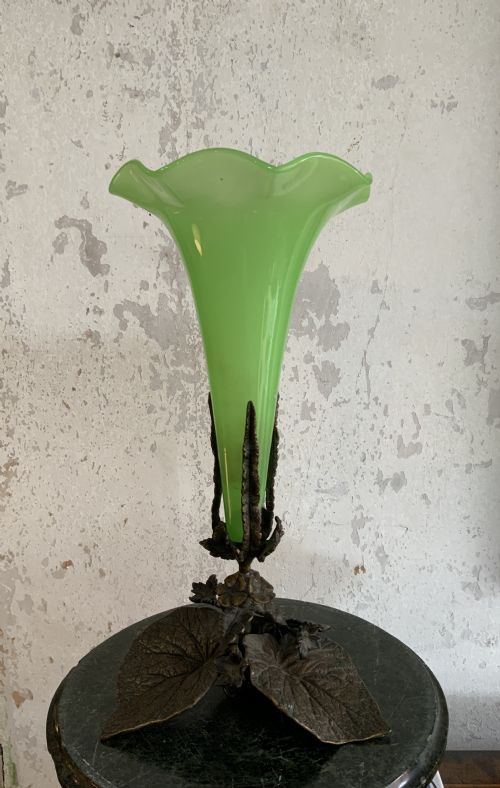
Makers combined heavy lead crystal, cut glass, and coloured glass such as cranberry, vaseline, uranium, and ruby glass with metal frames of silver plate, ormolu, brass, and white metal. Hand-blown vessels sat within pierced or cast metal mounts, sometimes secured with fitted collars or frames.
Glass components display wheel-cutting, etching, and moulding techniques, while metalwork incorporates silver plating over base metals, cast bronze with mercury gilding, and carved wooden stands in Black Forest styles.
Common configurations include multi-trumpet epergnes, pedestal bowls, and sweetmeat baskets mounted in brass, ormolu, or silver plate.
Design and Execution
Quality rests upon the crispness of the glass cutting, the depth of the metal plating, and the harmony between the glass vessel and its support. Finer examples display precise wheel engraving, heavy lead crystal weight, and robust casting in the mounts.
Makers such as WMF and Walker & Hall brought distinct design standards to their metalwork, while specialist glasshouses supplied coloured and opalescent vessels that retained clarity and rich saturation.
Walker & Hall·Josiah Williams & Co·Stuart for Liberty·WMF
The Victorian Glass Centerpiece Glossary
- Epergne
- A tiered table centrepiece featuring a central bowl or dish surrounded by multiple small hanging baskets, vases, or trumpets for flowers.
- Tazza
- An ornamental shallow bowl or cup raised on a high foot and a single stem, used for serving fruit or sweets.
- Cranberry glass
- A transparent red glass produced by adding gold chloride to the molten batch during the nineteenth century.
- Vaseline glass
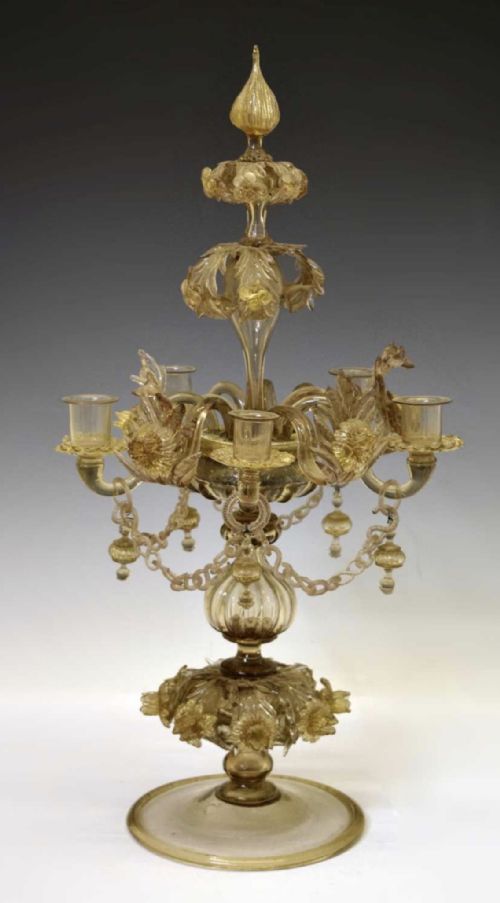
- A transparent or translucent yellow-green glass containing uranium dioxide that glows under ultraviolet light.
- Ormolu
- A gilded brass or bronze finish applied to decorative mounts and stands using mercury or electroplating methods.
Victorian Glass Centerpiece: Frequently Asked Questions
What is a victorian glass centerpiece used for?
These pieces served as ornamental displays on dining tables, holding fruit, sweetmeats, or arrangements of fresh flowers during formal meals.
Larger epergnes and pedestal bowls were designed to command attention from every seat at the table, reflecting candle or gas lighting through coloured and cut glass surfaces.
How do I clean a victorian glass centerpiece?
Wash glass components gently in warm water using mild soap, avoiding sudden temperature changes that might crack older material. Take care around silver-plated or gilt mounts, keeping moisture away from vulnerable joints and older adhesives.
How do I date a glass epergne?
Examine the manufacturing marks on the metal base, the thickness and colour of the glass, and the assembly methods used for the frame. Victorian examples often display registry marks, hand-finished cutting, and specific colour palettes like cranberry or vaseline.
Can I use an epergne for flowers?
Many epergnes feature water-tight trumpets and baskets specifically intended for holding cut floral arrangements. Ensure the metal frame remains stable and balanced before filling the individual vessels with water.