


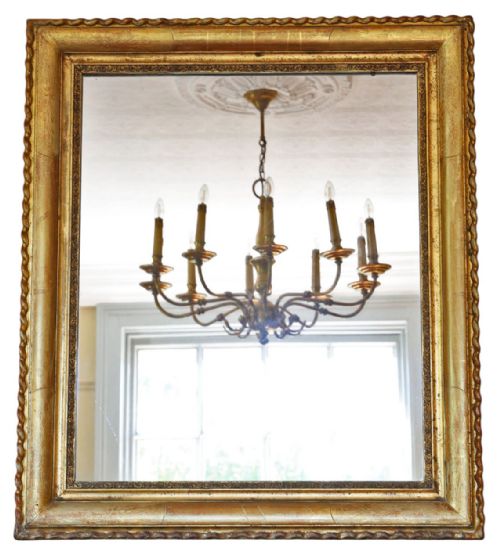


Victorian Gilded Looking Glass
A victorian gilded looking glass brings depth and reflected light to a room, cast in heavy giltwood, gesso or walnut frames.
Victorian Gilded Looking Glass
When you search for a victorian gilded looking glass, you are looking at wall mirrors, overmantle mirrors and hanging looking glasses shaped by nineteenth century taste. These pieces range from simple oval frames to ornate overmantle mirrors designed to sit above a fireplace.
The most common examples on this page are oval and rectangular gilt framed mirrors dating from the late nineteenth century. You will also find walnut fretwork mirrors, cast brass frames and pieces showing Rococo revival, Neoclassical and French Louis Philippe styles.
How they were made
Makers built these frames using wood such as walnut or oak as a solid base, often applying gesso to form intricate moulded ornament. Gold leaf or gilt finish was then laid over the surface to give the characteristic metallic sheen.
Mirror glass was set into these heavy frames, sometimes hand painted or shaped to fit grand overmantle and pier console proportions. Traditional joinery and hand applied gesso work defined the construction of each piece.
Materials recorded across the inventory include oak, walnut, cast brass, gesso and gold leaf.
What varies in quality
Quality rests in the crispness of the gesso mouldings and the depth of the gilding on the frame. Finer examples display sharp, well defined ornamentation rather than soft or heavy handed plaster work.
The integrity of the underlying wood and the preservation of the original mirror glass further separate standard items from superior pieces. Original surfaces retain their warmth and character without heavy overpainting.
The Victorian Gilded Looking Glass Glossary
- Giltwood
- Wood carved and covered with gold leaf or a gilt finish. This material forms the bright, reflective frames typical of nineteenth century looking glasses.
- Gesso
- A plaster mix applied to a wooden frame and carved or moulded into decorative patterns. It provides the raised relief work seen on ornate Victorian mirrors.
- Overmantle
- A large mirror designed to hang specifically above a fireplace mantelpiece. These pieces often feature wide proportions to span the width of the hearth.
- Pier glass
- A tall, narrow mirror designed to hang on the wall space between two windows. They make efficient use of narrow architectural spaces.
- Rococo revival
- A nineteenth century design style characterised by asymmetrical scrollwork, curves and natural motifs. It draws inspiration from earlier eighteenth century French decorative arts.
Victorian Gilded Looking Glass: Frequently Asked Questions
Where should I hang an overmantle mirror?
An overmantle mirror sits naturally above a fireplace mantelpiece, anchoring the wall space and reflecting light across the room.
Ensure the wall fixings safely support the weight of the heavy wooden and gesso frame before mounting.
How do I clean a gilt frame?
Dust the ornate gesso and giltwood frame gently with a soft, dry brush to avoid damaging the delicate metallic surface.
Keep moisture away from the gilding and use standard glass cleaner applied to a cloth rather than the frame itself.
What is the difference between a looking glass and a mirror?
The terms are often used interchangeably, though historical pieces from the nineteenth century are frequently catalogued as looking glasses.
Both describe a reflective glass plate set within a decorative frame meant for domestic wall hanging.
How do I identify a Victorian mirror?
Look for construction traits such as nineteenth century wood types, gesso ornament and specific revival styles like Rococo or Neoclassical.
Frames often combine walnut, oak and moulded gesso characteristic of the period between eighteen fifty and nineteen ten.