


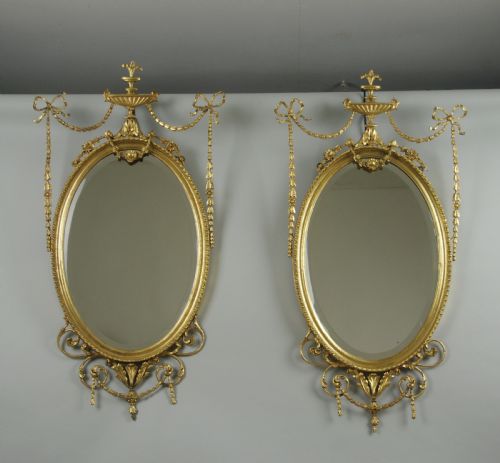


Pair Oval Gilt Mirrors
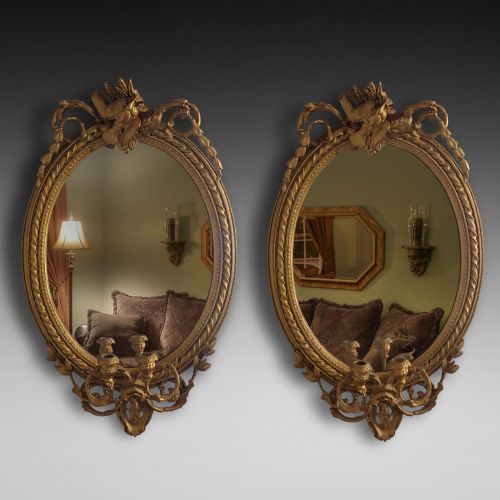
Pair oval gilt mirrors bring symmetrical brilliance to a room, offering reflective depth framed in polished gold leaf and carved wooden contours.
Pair Oval Gilt Mirrors
When you search for pair oval gilt mirrors, you encounter balanced sets of matching wall-hanging looking glasses spanning the eighteenth century through to the early twentieth century. These objects function primarily as decorative architectural elements, often placed symmetrically above mantelpieces, consoles, or sideboards.
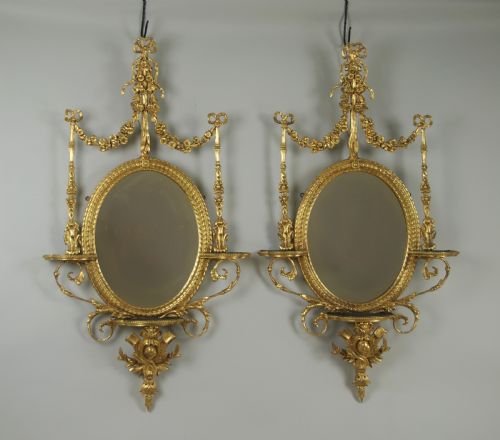
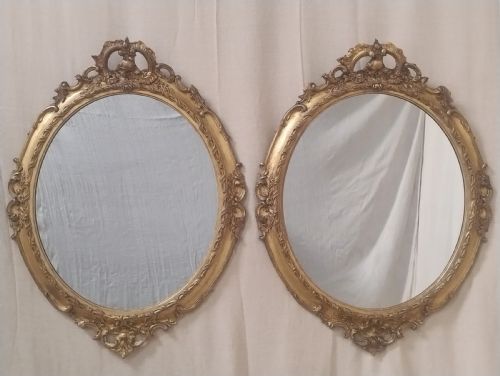
The most common examples met on this page date from the Victorian era and the nineteenth century, executed in styles ranging from Neoclassical and Adam to elaborate Rococo Revival. Forms include standard wall mirrors, girandoles fitted with candle sconces, and grand country house specimens scaling up to several feet in height.
How they were made
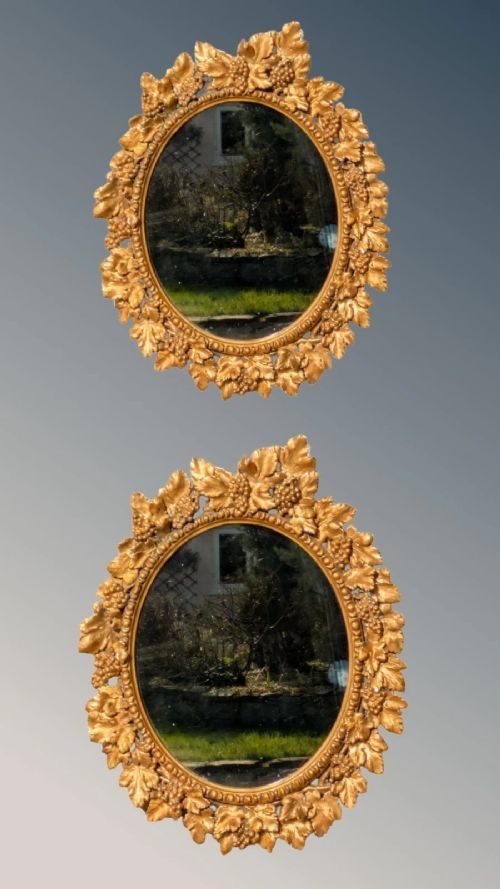
Makers constructed the foundational frames using timber such as wood, carved by hand with delicate motifs including vine leaves, ribbons, and cherubs. Artisans applied layers of gesso to the carved wooden surface to create a smooth preparation for subsequent gilding.
Gilding involved adhering thin sheets of gold leaf or employing water gilding techniques onto the prepared gesso ground. Metal components, gilt brass, and composition mouldings also appear across different periods to achieve ornate relief ornamentation.
Listings demonstrate materials spanning gesso, giltwood, mirror glass, and gilt brass across periods from the eighteenth century to the 1920s.
What varies in quality
The distinction between ordinary and superior examples rests upon the crispness of the hand-carved detail and the depth of the gesso relief. Frames possessing deep, undercut carving and original gold leaf display a tactile vitality absent in mechanical press-moulded composition work.
Proportion and scale dictate desirability, where grander architectural pairs or those retaining original mirror glass and gilding command greater attention from collectors. The integration of functional elements such as display brackets or candle arms further elevates the sophistication of a matched pair.
The Pair Oval Gilt Mirrors Glossary
- Giltwood
- Timber that has been coated with gold leaf or gold paint. This material forms the primary structural and decorative body for the majority of antique frames.
- Gesso
- A plaster-like mixture applied to wood frames to provide a smooth surface for gilding. It accepts fine carving and moulding details before the application of gold leaf.
- Girandole
- A decorative wall mirror fitted with branching candle sconces attached to the frame. These fixtures reflect candlelight to illuminate surrounding interior spaces.
- Adam Style
- An eighteenth-century neoclassical design vocabulary characterised by symmetrical restraint, urns, ribbons, and classical swags. Pairs from this tradition exhibit balanced, linear elegance.
- Parcel-gilt
- Woodwork where only specific carved elements or raised details receive gold leaf, leaving the remaining areas in exposed wood or ebonised finishes.
Pair Oval Gilt Mirrors: Frequently Asked Questions
Where should I hang these mirrors?
These pieces suit symmetrical placement above mantelpieces, flanking doorways, or positioned above console tables in reception rooms.
Their balanced proportions create a natural focal point while amplifying natural light within interior spaces.
How do I identify the period?
Dating relies on observing the framing style, carving depth, and the formulation of the underlying gesso. Adam and Regency aesthetics point to the eighteenth and early nineteenth centuries, while ornate cresting often signals Victorian production.
Examining the reverse of the wooden panels and the characteristics of the mirror glass provides further clues regarding age.
Were all girandoles used for candles?
Girandoles specifically incorporate candle sconces designed to hold wax lights or tapers in front of the reflective glass surface. The polished gold frames multiplied the flickering illumination throughout dark rooms before the advent of electricity.
Some surviving examples retain their original brass or gilt arms for holding candles.
How do I care for antique gilt surfaces?
Maintenance requires gentle dusting with a soft, dry brush to prevent accumulation on delicate carved gesso and gold leaf. Moisture and chemical cleaners must be strictly avoided to protect the fragile metallic surface.
Professional handling ensures the historical gilding remains intact for future generations.