
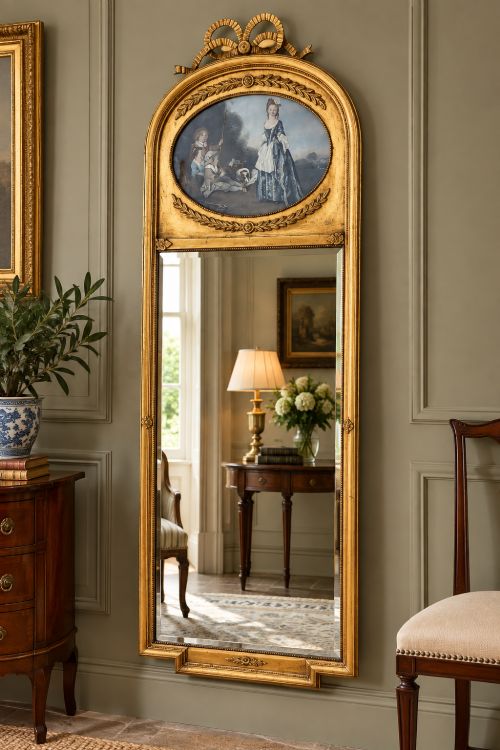
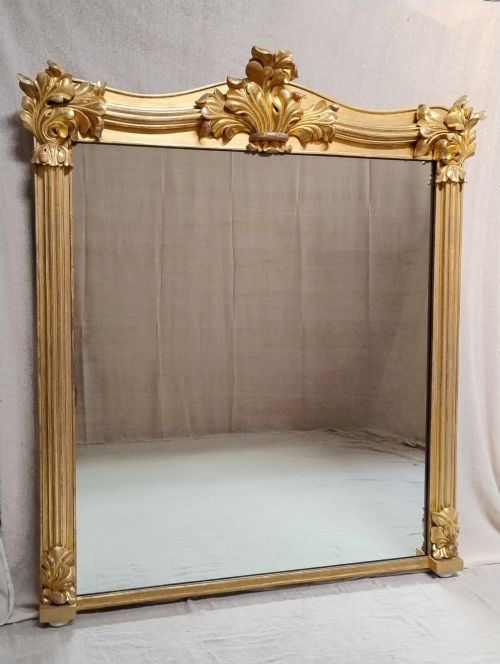

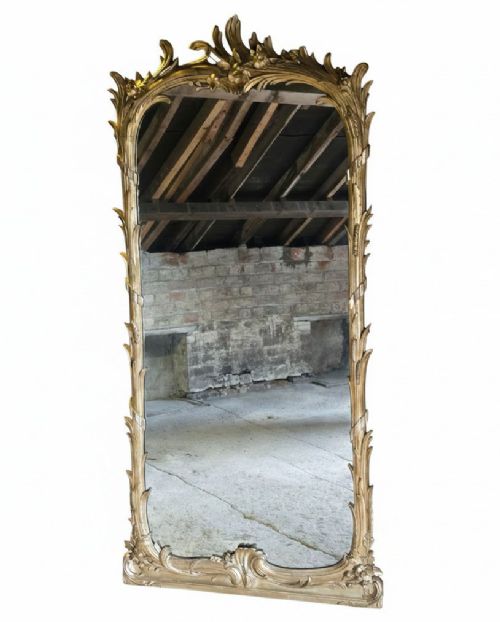
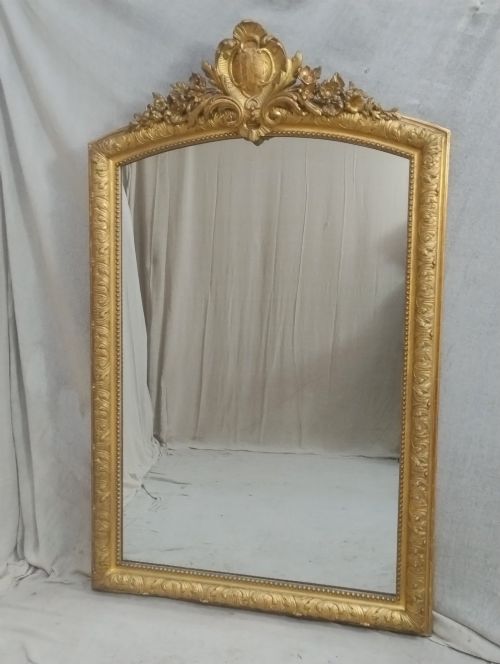


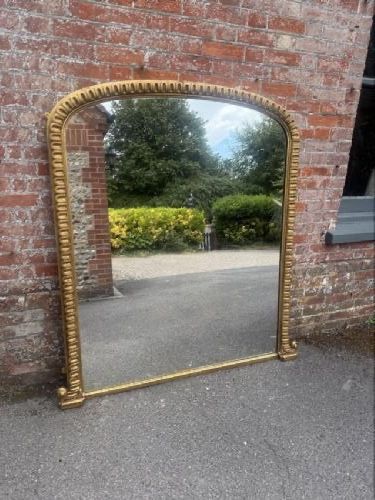
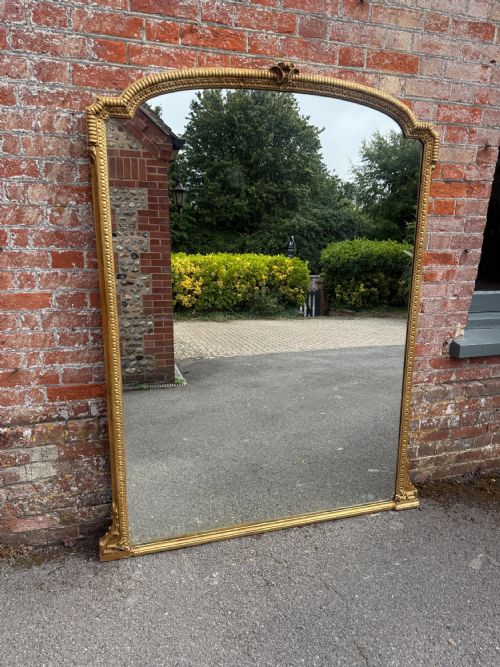
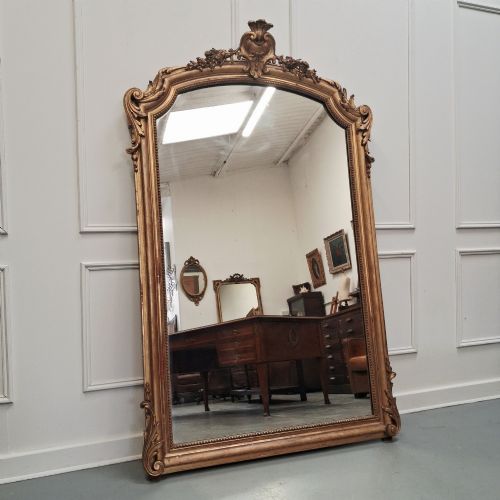
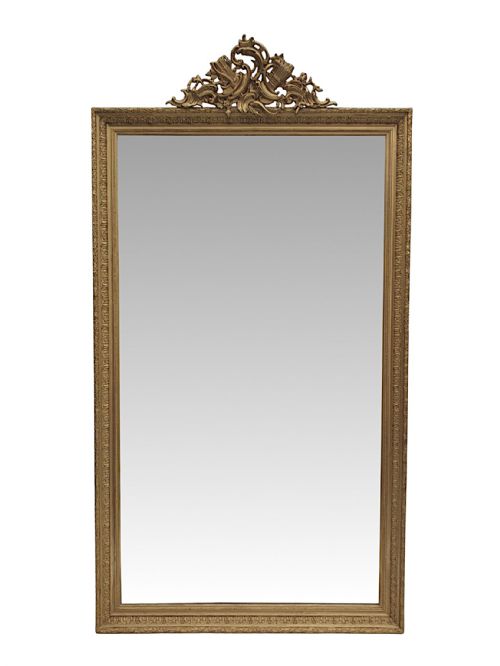
Victorian French Style Mirror
These pieces for a victorian french style mirror bring together ornate carved frames and grand proportions to create a striking focal point in any interior.
Victorian French Style Mirror
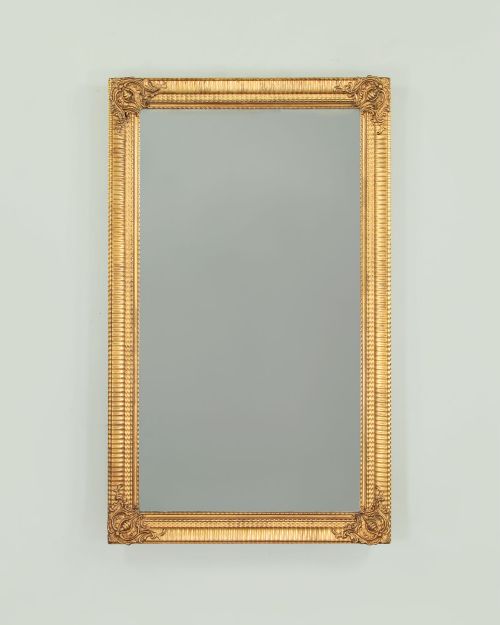
A victorian french style mirror encompasses large wall pieces, overmantel mirrors, and girandoles designed to reflect light and add architectural weight to a room. The items on this page span the nineteenth century into the edwardian period, originating primarily as English or French decorative furnishings.
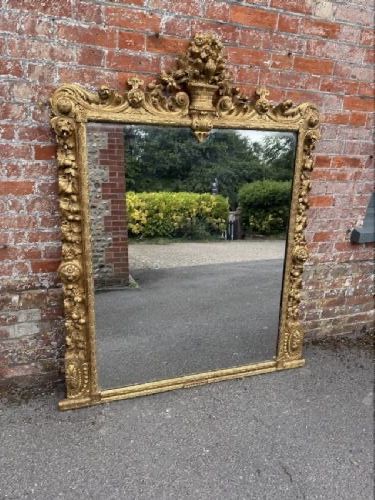
Most examples lean towards heavy gilding and substantial timber frames, often incorporating arched tops, shaped crests, or triple plates. Overmantel mirrors dominate the selection, built originally to sit above fireplace mantels and command the principal elevation of a reception room.
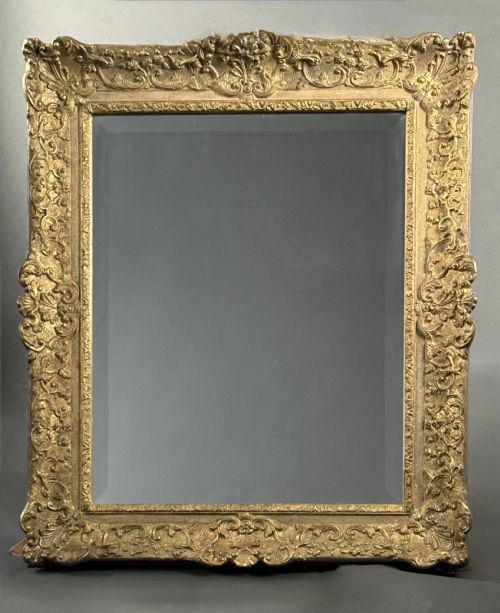
Moulded plaster, composition ornament, and carved wood give these objects their sculptural presence. Alongside the grander gilded statement pieces, buyers encounter smaller dressing table mirrors and walnut toilet mirrors with ormolu mounts.
How they were made
Makers built the structural carcases of these frames from timber such as oak, walnut, or pine, providing a rigid foundation for the decorative elements. Carved wood and turned elements required skilled carpentry, especially on items featuring rope twist details or faux bamboo effects.
Ornate surface enrichment relied on gesso and plaster applied over the wood base, which artisans then sculpted or stamped with botanical motifs, scrollwork, and crests. Gold leaf or gilding was laid over these prepared surfaces to achieve the reflective metallic finish characteristic of the style.
Mirror plates were set into the rebated frames, utilising bevelled edges on finer examples to catch and refract light at oblique angles. Backboards of plain timber secured the glass and protected the interior construction from dust and moisture.
Listings feature nineteenth-century and edwardian periods, utilising materials such as giltwood, gesso, glass, and walnut across various wall and overmantel forms.
What varies in quality
The depth and crispness of the carving separate standard production pieces from exceptional works, with hand-tooled wooden ornament displaying sharper undercut details than moulded composition. The complexity of the frame design, such as elaborate rococo revival scrolls or triple-plate configurations, dictates the level of craftsmanship involved.
The integrity of the gilding and the preservation of the gesso layer heavily influence the visual impact, as heavily worn or later repainted surfaces obscure the original crispness of the relief work. Substantial scale combined with balanced proportions ensures certain overmantel and wall mirrors function as cohesive architectural statements rather than mere reflections.
The Victorian French Style Mirror Glossary
- Giltwood
- Wood that has been coated with gold leaf or a metallic gilding finish. This material forms the primary visual surface for the grander nineteenth century wall mirrors.
- Gesso
- A plaster-like mixture applied to a wooden base and carved or moulded into relief decoration. It provides the smooth, detailed ground necessary for subsequent gilding.
- Overmantel Mirror
- A large mirror specifically proportioned to hang above a fireplace mantel. These pieces frequently feature arched or crested tops designed to mirror architectural fireplace surrounds.
- Girandole
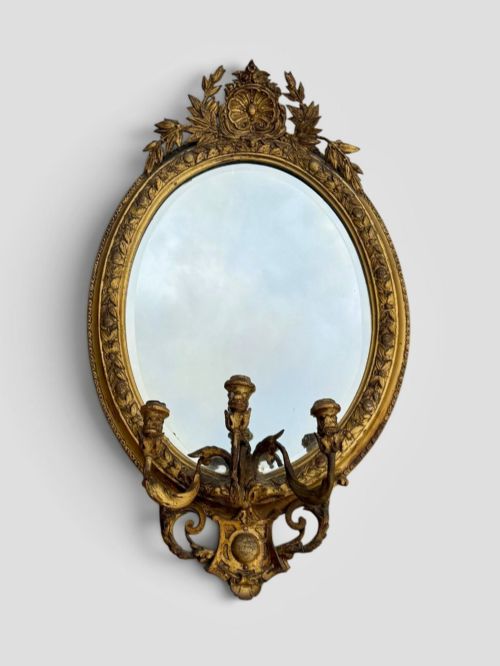
- A decorative wall mirror fitted with candle sconces attached to the frame. The polished branches hold candles to multiply the ambient light within the room.
- Rococo Revival
- A nineteenth century design style referencing the asymmetric curves, C-scrolls, and naturalistic shell motifs of the eighteenth century French rococo. Frames in this taste display exuberant, flowing ornamentation.
Victorian French Style Mirror: Frequently Asked Questions
Where should I hang an overmantel mirror?
These mirrors were originally engineered to sit directly upon or be secured to the wall above a fireplace mantelpiece. Placing them at this traditional height anchors the room's main reception wall and reflects light across the seating area.
Alternatively, larger examples function effectively as leaner mirrors positioned directly on the floor against a principal wall. Ensure the wall fixings match the substantial weight of the timber and gesso construction.
How do I identify a rococo revival frame?
Rococo revival frames are distinguished by their flowing, asymmetric scrollwork, C-scrolls, and plant-based motifs like rose vines. The ornamentation avoids rigid symmetry in favour of dynamic, sweeping curves.
Look for moulded plaster and gesso details built up over a carved wood or composition base to create high-relief depth across the crest and corners.
What is the difference between wall and girandole mirrors?
Standard wall mirrors serve a purely decorative and reflective purpose, mounted flat against the wall surfaces of nineteenth century interiors. They rely on the carved frame or gilt finish for their visual impact.
Girandoles incorporate integrated candle brackets or sconces projecting from the base of the frame. These functional attachments held wax candles to amplify illumination in candlelit rooms.
How do I care for nineteenth century gilt surfaces?
Giltwood and gesso surfaces require delicate handling, as moisture and abrasive cleaners can strip the metallic leaf or soften the underlying plaster. Dusting should be performed gently with a dry, soft brush.
Keep these mirrors away from direct sources of heat and damp environments to prevent the wood from warping and the gesso from cracking or separating from the frame.