
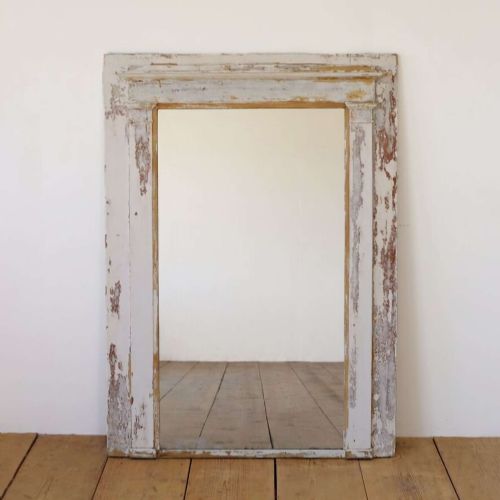
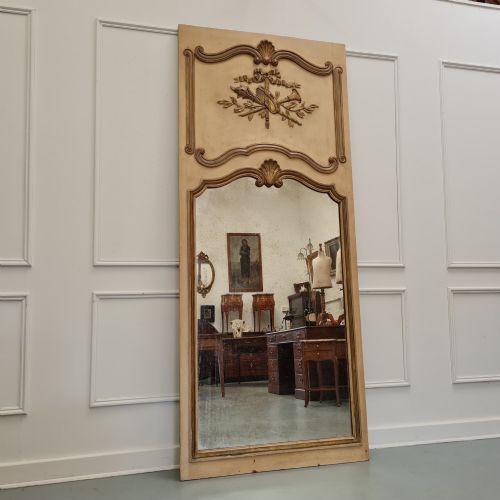


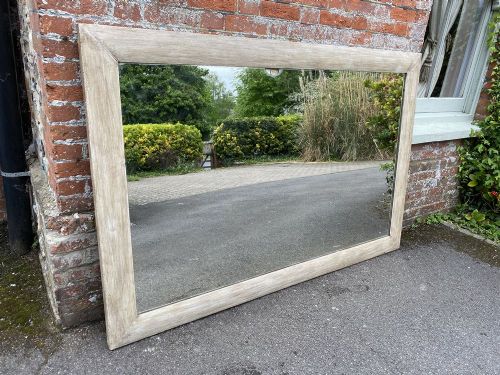


Painted Wooden Floor Mirror
These painted wooden floor mirror examples combine grand proportions with decorative French styling, offering a practical yet striking addition to any room.
Painted Wooden Floor Mirror
A painted wooden floor mirror typically presents as a large, full-height dressing or wall glass framed in timber that has received decorative paint or gesso layers. These items draw heavily from French aesthetic traditions, spanning styles like Louis Philippe, Neoclassical, and French Provincial.
The pieces available showcase substantial dimensions, often featuring arched, shaped, or plain tops designed to lean against a wall or stand independently. Dating predominantly from the nineteenth and early twentieth centuries, they reflect periods from 1850 through to 1920.
Buyers frequently encounter variations that incorporate carved wood and gesso ornamentation beneath the painted finish. These large formats serve both functional dressing purposes and grand decorative roles within interiors.
Materials and construction methods
Makers constructed these frames using wood, moulded timber, and carved wood as the primary structural foundations. Artisans then applied layers of gesso to create smooth surfaces and relief detailing before finishing the timber with paint and occasional gold leaf accents.
Glass plates provide the reflective surface, fitted carefully within the heavy timber and gesso housings. The combination of carved wood, gesso, and paint allows for intricate scrollwork, such as Vitruvian scroll motifs, and architectural moulding.
Design styles represented across the selection include French Chateau, Neoclassical, and Louis Philippe.
Distinctions in craftsmanship and finish
Quality separates objects by the depth and precision of the carved wood and gesso ornamentation applied to the frame. Finer examples display crisp moulding details and harmonious proportions across their large dimensions.
The integrity of the painted surface and the preservation of the original gesso work also define the standard of a piece. Superior execution ensures that the decorative elements remain balanced and structurally sound over time.
The Painted Wooden Floor Mirror Glossary
- Gesso
- A plaster-like mixture applied to wood frames to create a smooth surface for painting or carving. It allows artisans to shape intricate relief ornamentation before applying the final coat.
- Trumeau
- A decorative mirror or panel designed to fit into wall architecture, often incorporating painted woodwork. These items frequently feature ornate carvings above the glass.
- Vitruvian scroll
- A classical repeating ornamental band composed of wave-like scrolls. This decorative motif appears on architectural mouldings and frame borders.
- Louis Philippe
- A mid-nineteenth-century French style characterised by understated elegance and curved upper frame corners. It avoids excessive ornamentation in favour of clean, graceful lines.
- Neoclassical
- A style reviving classical Roman and Greek architectural elements. It employs symmetrical designs, restrained decoration, and formal proportions.
Painted Wooden Floor Mirror: Frequently Asked Questions
How do I place a floor mirror?
These large mirrors are typically designed to lean securely against a sturdy wall in a bedroom, hallway, or living space. Their substantial weight and height allow them to stand safely without permanent wall fixings.
Positioning the glass opposite a window helps to maximise natural light and create a sense of expanded space within the room.
What periods do these mirrors span?
The pieces available originate primarily from the nineteenth and early twentieth centuries, specifically covering dates between 1850 and 1920. French stylistic influences heavily dominate this selection.
Craftsmanship from these decades often incorporates traditional wood carving and gesso techniques typical of European workshops.
How do I identify French regional styles?
French regional and revival styles show distinct decorative traits, ranging from the curved lines of Louis Philippe designs to the elaborate carvings of Rococo and Neoclassical frameworks. Examining the motifs on the wood and gesso helps determine the specific aesthetic lineage.
Details like Vitruvian scrolls or provincial paint finishes point towards particular decorative traditions from these eras.
Are painted wooden frames original?
Many frames retain their period paint finishes, which have matured over the decades through normal ageing and wear. Examining the layers of paint and gesso under close inspection reveals the historical application methods.
Preserved surfaces show the authentic character and texture developed since the nineteenth century.