



Victorian French Revival Furniture
Victorian French Revival furniture brings together ornate Continental forms and nineteenth-century British cabinet-making, offering lavish statement pieces for grand rooms.
Victorian French Revival Furniture
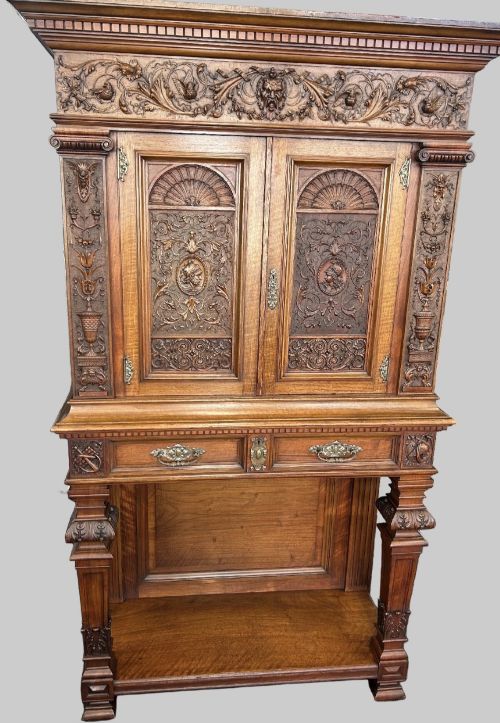
Victorian French Revival furniture encompasses ornate decorative objects produced during the nineteenth century, drawing heavily on earlier Continental court styles. Makers channelled the exuberant curves of Rococo and Louis XV aesthetics into everyday domestic forms such as writing tables, credenzas, and display cabinets.
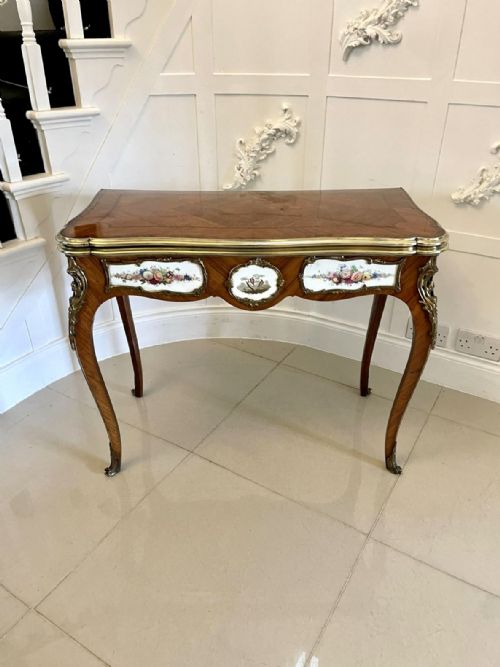
The pieces appearing most frequently on this page combine nineteenth-century British and Continental craftsmanship with explicit revival motifs. Walnut, rosewood, and kingwood carcasses support elaborate surface ornamentation, establishing a distinct visual language of status and leisure.
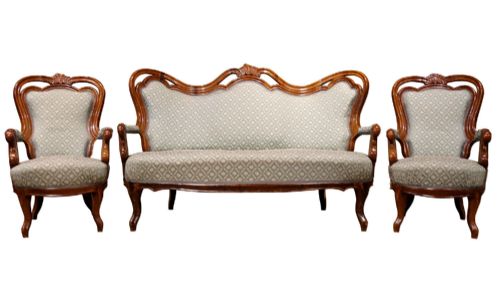
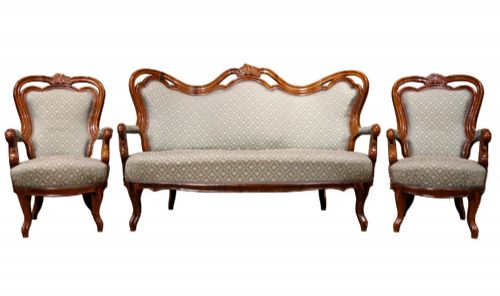
Buyers encounter a diverse range of functional items, from kidney-shaped writing desks to multi-piece salon suites. These furnishings reflect a Victorian appetite for historicism, executed with considerable material wealth and decorative ambition.
How they were made
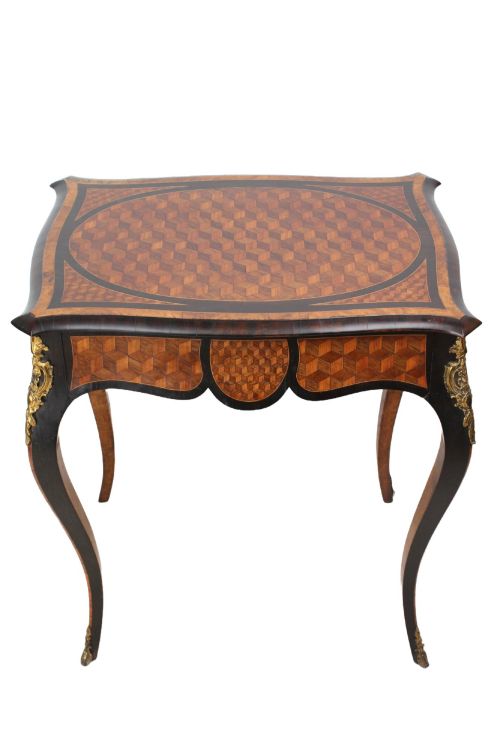
Workshops built these furnishings around sturdy timbers such as walnut, oak, and satinwood, applying intricate veneers of kingwood, rosewood, and amboyna to the primary surfaces. Marquetry and parquetry patterns set geometric or floral designs directly into the wood grain.
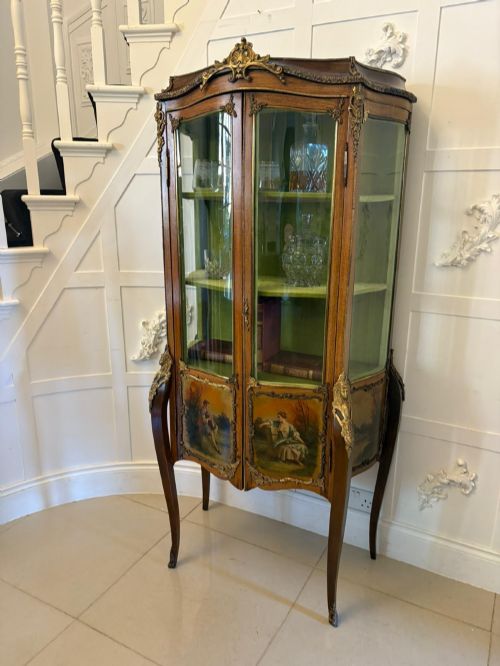
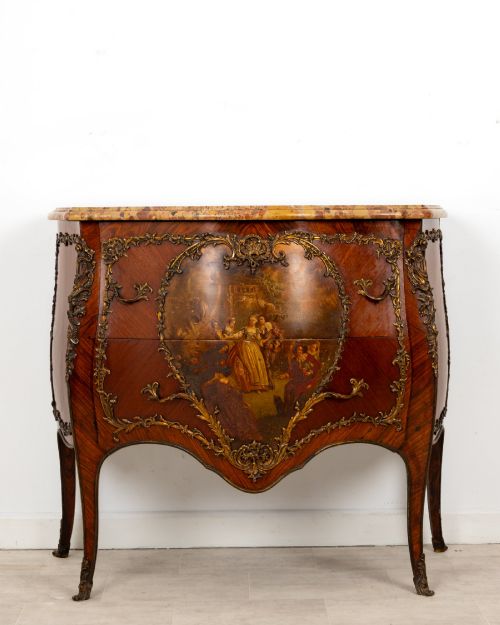
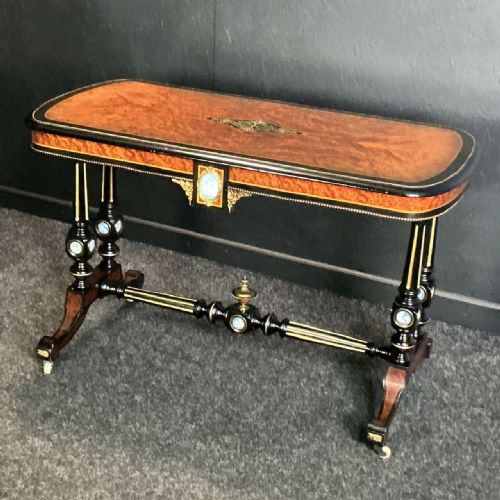
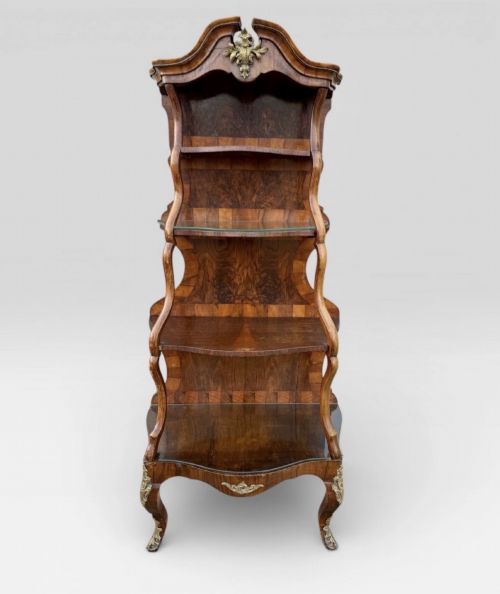
Gilding and metal mounts formed a vital part of the construction, utilising ormolu and gilt-bronze to accent corners, edges, and panel borders. Sevres porcelain plaques and painted panels were frequently inset into cabinet doors and tabletop centres.
Specialist techniques included ebonising timber to imitate costly exotic hardwoods and employing Vernis Martin lacquering for glossy painted finishes. Joinery relied on precise parquetry alignment and stable carcass construction to support heavy marble tops and bronze hardware.
The listings here span the nineteenth century, with specific dates recorded from 1850 through 1900.
What varies in quality
The distinction between standard production and exceptional execution lies in the depth of hand-carving and the precision of the parquetry. Superior examples exhibit crisply cast ormolu mounts that fit flush against the wood contours without excess adhesive or awkward gaps.
Material selection dictates much of the value, separating simple walnut frames from densely figured kingwood, amboyna, and calamander veneers. The inclusion of painted Sevres plaques, detailed marquetry, and signed maker stamps elevates an ordinary table or cabinet into a work of master craftsmanship.
JAS Shoolbred·G T Morant·Donald Ross·Holland and Sons·Gillows·Town and Emanuel
The Victorian French Revival Furniture Glossary
- Ormolu
- A gilded brass or bronze finish applied to decorative mounts. It provides a bright golden accent to dark woods like walnut and ebonised timber.
- Marquetry
- The art of applying pieces of veneer to a structure to form decorative patterns. Craftsmen use various tinted woods to create elaborate floral or geometric scenes.
- Credenza
- A low cabinet or sideboard often featuring glass doors or inset panels. Victorian versions frequently incorporate porcelain plaques and gilt bronze mounts.
- Parquetry
- A geometric mosaic of wood pieces used for floor surfaces or furniture panels. It differs from marquetry by relying on angular, repeating shapes rather than pictorial designs.
- Vernis Martin
- A type of simulated Japanese lacquer developed in France. It produces a translucent, polished finish often seen on fine display cabinets and vitrines.
Victorian French Revival Furniture: Frequently Asked Questions
How do I identify French Revival style?
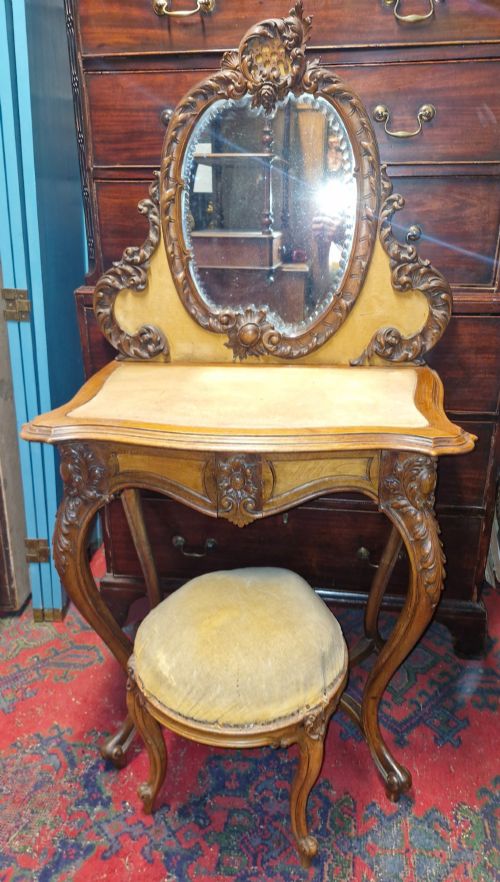
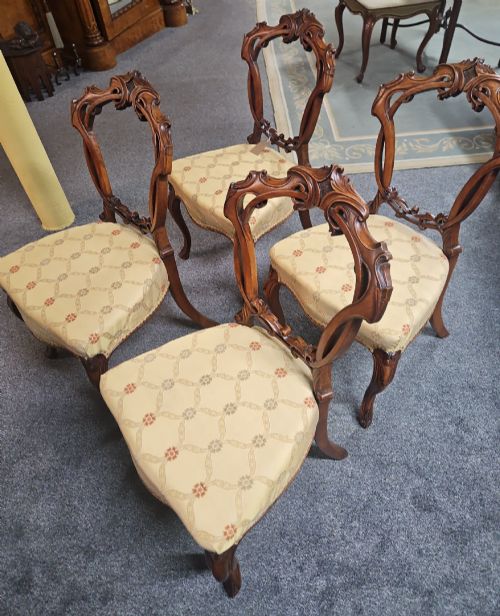
French Revival furniture is marked by curved serpentine lines, exuberant scrolling foliage, and symmetrical flourishes derived from eighteenth-century court aesthetics. Look for cabriole legs, prominent ormolu mounts, and decorative motifs associated with Louis XV design.
Nineteenth-century British cabinet-makers adapted these Continental elements for domestic interiors, frequently combining them with rich native and exotic veneers like walnut and rosewood.
Where were these pieces placed originally?
These furnishings were designed for the principal reception rooms of Victorian homes, including drawing rooms, boudoirs, and formal salons. Credenzas and vitrines displayed prized ceramics and glassware, while centre tables occupied the middle of large entertaining spaces.
Smaller items like writing tables and work tables served practical domestic functions in private studies or ladies' chambers, balancing utility with aesthetic display.
Are marble tops original?
Many console tables, commodes, and sideboards feature fitted marble tops designed to protect the wooden carcass and provide a durable, cooling surface. These slabs were typically shaped to follow the serpentine or curved contours of the piece.
While original marble is common, replacement tops do occur due to accidental damage over the course of the nineteenth and twentieth centuries.
How should I care for Ormolu?
Ormolu mounts require gentle dusting with a soft, dry cloth to prevent the accumulation of grit in the recesses of the cast bronze. Avoid chemical cleaners and abrasive polishes, which can strip the thin layer of gold gilding from the base metal.
Maintaining a stable indoor humidity helps protect both the gilt-bronze mounts and the underlying wood veneers from cracking or loosening over time.