


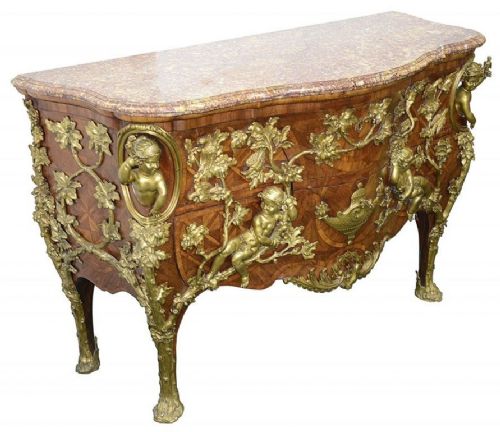


French Bombee Commode
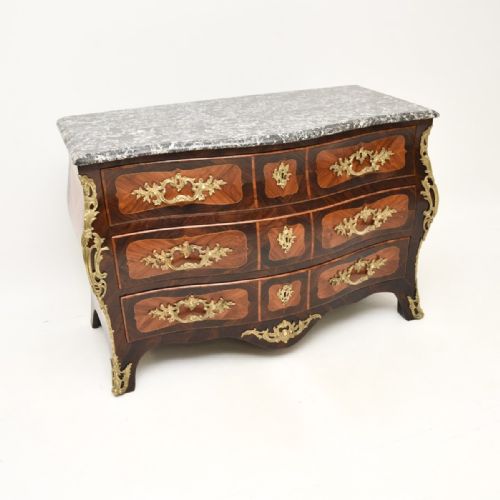
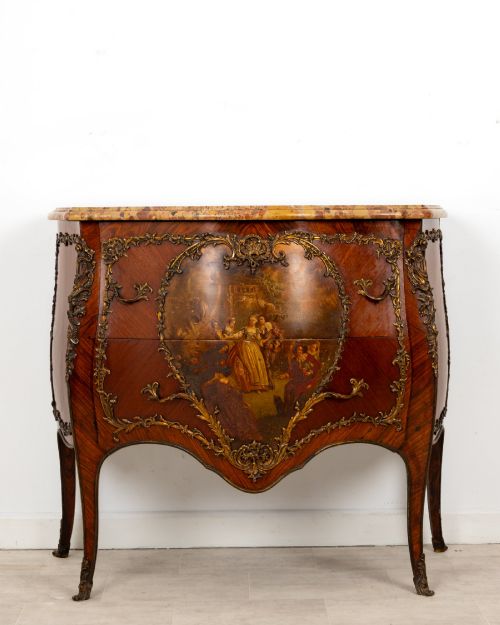
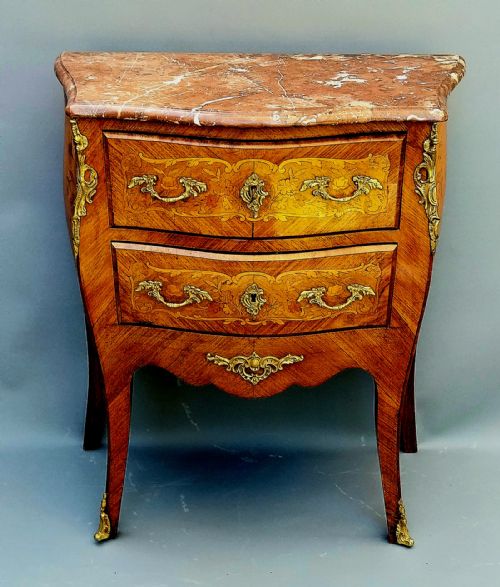
A french bombee commode brings sweeping serpentine curves and fine parquetry into a room, offering both generous storage and monumental presence.
French Bombee Commode
A french bombee commode is a distinctively swelling chest of drawers defined by its curved fronts and sides, rooted in the exuberant design vocabulary of the eighteenth century. Buyers seeking this form often encounter nineteenth-century revival pieces that emulate the sweeping lines of the original Louis XV period.
Examples on this page span several centuries, featuring eighteenth-century forms alongside later nineteenth-century interpretations and twentieth-century revivals. The common thread among them is the pronounced swelling silhouette and the integration of substantial marble tops.
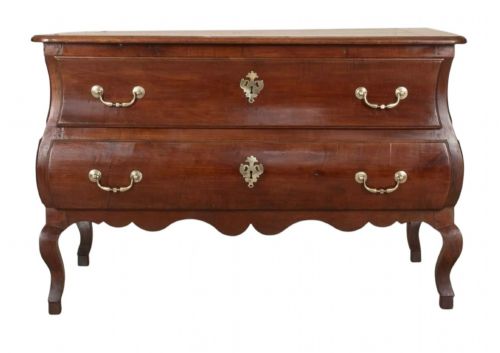
The typology encompasses traditional drawer configurations alongside related cabinet forms, all sharing the characteristic bombé profile. These items frequently appear dressed in rich veneers or warm fruitwoods, serving as focal points in period and eclectic interiors alike.
How they were made
Cabinetmakers constructed these undulating carcases using dense hardwoods and intricate wood veneers such as kingwood, walnut, and cherrywood applied over solid timber frames. The curved contours required specialist joinery to shape the timber without compromising structural integrity.
Surface ornamentation relied heavily on cast or chased ormolu and gilt bronze mounts, which protected vulnerable corners and accentuated the swelling lines. Heavy marble slabs, often cut with moulded edges, were fitted precisely to the shaped wooden tops.
The inventory spans the eighteenth, nineteenth, and twentieth centuries, incorporating Louis XV and rococo revival styles.
What varies in quality
The distinction between tiers of quality rests in the crispness of the gilt bronze mounts and the precision of the veneer work across complex curves. Superior examples display seamless alignment of grain patterns that follow the difficult contours of the swelling body.
Heavier, better-integrated marble tops and substantial timber carcases separate finer cabinetwork from more utilitarian production. The articulation of the carving and the weight of the mounts signal the level of craftsmanship invested in the piece.
Jacques Bircklé·Charles Cressant
The French Bombee Commode Glossary
- Bombe
- A swelling or bulging contour characteristic of furniture fronts and sides from the rococo period. This curved profile requires advanced mastery of wood shaping.
- Ormolu
- Gilded bronze mounts applied to furniture for decorative and protective purposes. The metal is cast and chased to achieve sharp decorative detail.
- Marquetry
- The art of applying pieces of veneer to a structure to form decorative patterns and pictures. Craftsmen utilise various natural timbers to create tonal contrast.
- Vernis Martin
- A type of decorative lacquer finish developed in France to imitate Asian lacquerwork. It is applied in translucent layers over painted surfaces.
French Bombee Commode: Frequently Asked Questions
What is a french bombee commode?
A french bombee commode is a decorative chest of drawers characterised by its pronounced swelling or bulging sides and front. These pieces originated in France during the eighteenth century and gained renewed popularity through nineteenth-century revival movements.
They are typically finished with elaborate wood veneers and topped with thick shaped marble slabs.
How do I date a commode?
Dating relies on examining the construction methods, timber species, and secondary woods used inside the drawers. Eighteenth-century examples display hand-cut joinery and period-specific framing, while later nineteenth-century revival pieces often incorporate machine-sawn elements.
Stylistic markers such as the casting quality of ormolu mounts also help distinguish original period pieces from later revivals.
Where should I place one?
These commodes work well as focal points in entrance halls, living rooms, or bedrooms due to their sculptural silhouettes and decorative presence. Their flat marble tops provide a practical surface for lamps, mirrors, or display objects.
Because of their substantial depth and curved profiles, they require adequate floor space to be viewed properly.
Are the marble tops original?
Many pieces retain their fitted marble tops, which were designed specifically to follow the complex serpentine contours of the wooden carcase. Replacement marble is sometimes fitted during restoration if the original top suffered damage over the centuries.
Examining the underside and the fit against the wood helps determine the age of the stone.