
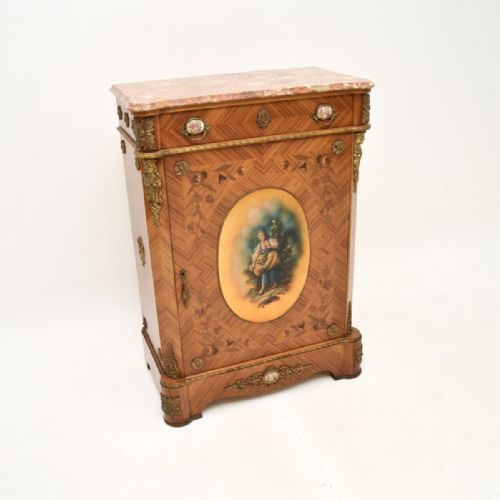


Vernis Martin Furniture
Vernis martin furniture brings French Rococo Revival elegance into a room through decorative painted panels and gilt mounts.
Vernis Martin Furniture
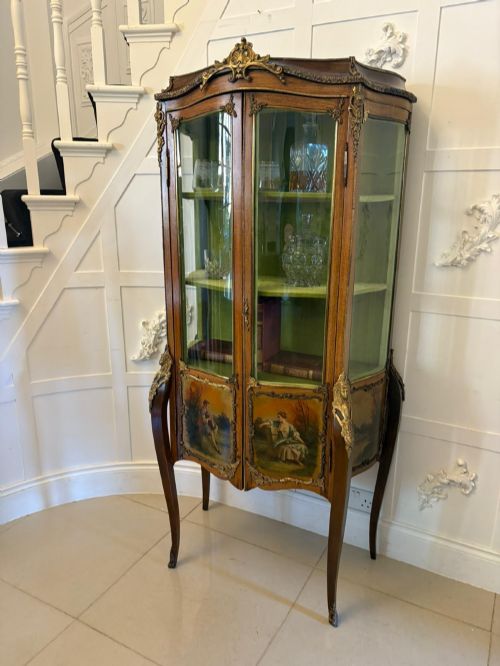
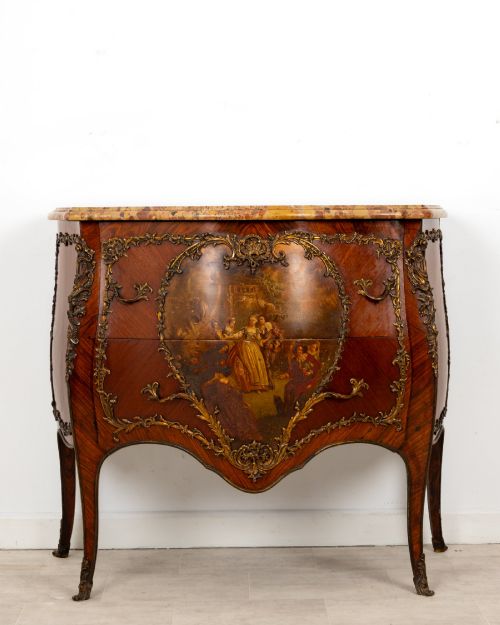
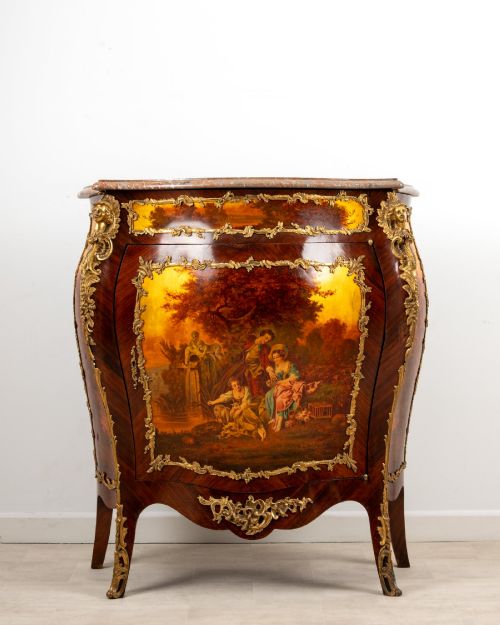
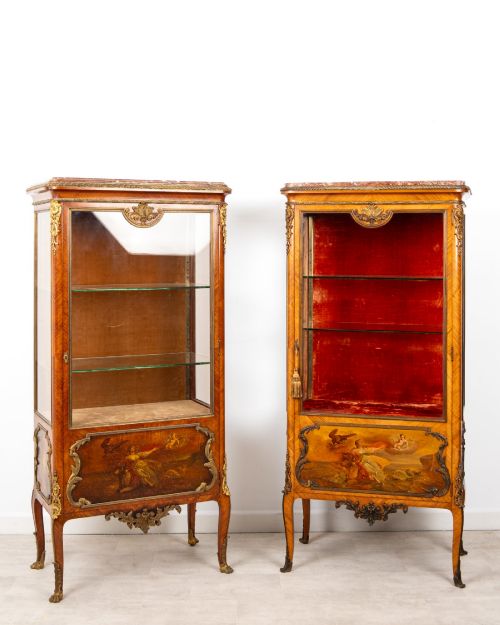
Vernis martin furniture spans a range of nineteenth-century French cabinet-making, predominantly comprising commodes, vitrines, and display cabinets from the Victorian era and the years around nineteen hundred. These pieces emerge in Louis XV Revival and French Rococo styles, capturing the ornate aesthetic of eighteenth-century France through curved forms and decorative painted panels. A buyer examining this selection will frequently encounter vitrines and side cabinets featuring marble tops and gilt-bronze mounts.
The objects serve primarily for display and storage, incorporating glass panels for cabinets or fitted writing surfaces in secretaires and bonheur du jour forms. Smaller pieces such as two-tier occasional tables also appear alongside larger commodes and chests of drawers. Each form utilises painted lacquer techniques to emulate the sophisticated finish originally developed by the Martin brothers.
How they were made
Cabinet-makers constructed these pieces using underlying timbers of kingwood and rosewood, applying lacquer and paint directly onto wooden panels to create the characteristic vernis martin finish. Artisans then mounted ormolu and gilt bronze accents around the edges, corners, and legs to accentuate the sweeping contours of the French Rococo style. Marble tops were frequently fitted to the upper surfaces of commodes and cabinets to provide a durable and contrasting finish.
Makers shaped the wood into bombé curves and serpentine fronts, housing glazed doors in vitrines and concealing secret drawers within secretaires. The combination of painted scenes, gilt metal mounts, and exotic wood veneers required collaborative work between woodworkers, bronze-casters, and decorative painters.
Listings feature pieces spanning the nineteenth and early twentieth centuries, predominantly utilising kingwood, marble, ormolu, and painted lacquer panels.
What varies in quality
Quality in vernis martin furniture rests upon the execution of the painted panels and the precision of the gilt-bronze or ormolu mounts. Finer pieces demonstrate depth and detail in the painted scenes, whereas simpler examples rely on more basic decorative panels. The weight and crispness of the cast bronze mounts also distinguish standard production from exceptional cabinet-making.
The selection of underlying timbers, such as figured kingwood veneer versus plain wood, marks a difference in workshop ambition. Additionally, the integration of matching pairs or signed work by notable makers elevates the standing of a piece within the range.
François Linke·Befort Jeune·Mathieu Befort
The Vernis Martin Furniture Glossary
- Vernis Martin
- A type of lacquer finish developed in eighteenth-century France by the Martin brothers, imitated in later revival furniture through painted panels. It mimics Asian lacquer work using resin and varnish layers.
- Ormolu
- Gilt bronze mounts applied to furniture edges and feet for decoration. The technique involves applying gold leaf or mercury gilding to a cast bronze base.
- Kingwood
- A dense, richly grained tropical timber used extensively for veneering in fine French cabinet-making. Its distinct dark figuring complements gilt bronze mounts.
- Vitrine
- A glass-fronted display cabinet designed to showcase porcelain and decorative objects. These pieces often feature glass on the sides as well as the main doors.
- Bombé
- A swelling, outward-curved contour characteristic of Rococo furniture forms. This bulbous shape demands advanced woodworking skill to veneer successfully.
Vernis Martin Furniture: Frequently Asked Questions
What is vernis martin furniture?
Vernis martin furniture refers to nineteenth-century French revival pieces decorated with painted lacquer panels that imitate Asian lacquer techniques. These items typically include vitrines, commodes, and cabinets produced in the Louis XV and Rococo styles.
The term also describes pieces incorporating painted panels alongside kingwood veneers, marble tops, and gilt-bronze or ormolu mounts. They reflect a nineteenth-century European fascination with eighteenth-century French design.
How do I identify a vitrine?
A vitrine is a glazed display cabinet intended for exhibiting delicate items such as porcelain, glass, or small collectibles. They feature glass panels in the doors and frequently in the sides to maximise light exposure.
These cabinets often sit on slender cabriole legs and may include mirrored backs or glass shelves. In this selection, vitrines frequently incorporate marble tops and elaborate gilt-bronze mounts.
Where were these pieces made?
The pieces originate primarily from workshops and cabinet-makers working in France, notably in Paris, during the nineteenth and early twentieth centuries. Parisian workshops produced much of the high-end revival furniture for international markets.
Craftsmen in these centres utilised traditional French techniques combined with period styles like Rococo Revival. Specific pieces carry signatures from notable makers active in Paris during this era.
How do I care for marble tops?
Marble top cabinets require gentle cleaning with a soft cloth and neutral soap to avoid scratching the polished stone surface. Acidic substances should be kept away from the marble to prevent dulling or etching.
The stone is heavy and rests upon the wooden framework of the commode or cabinet, secured by its own weight. Regular dusting maintains the finish without needing harsh polishes.