


Louis XV Revival Chest
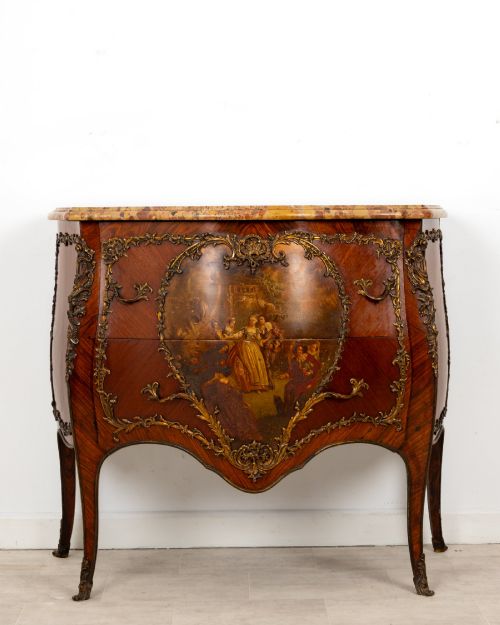
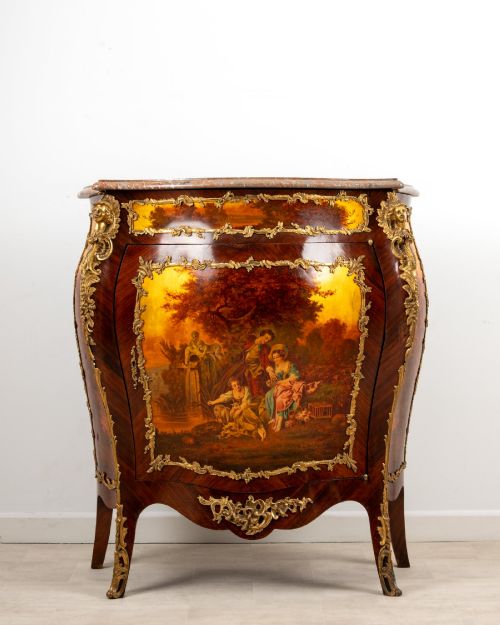
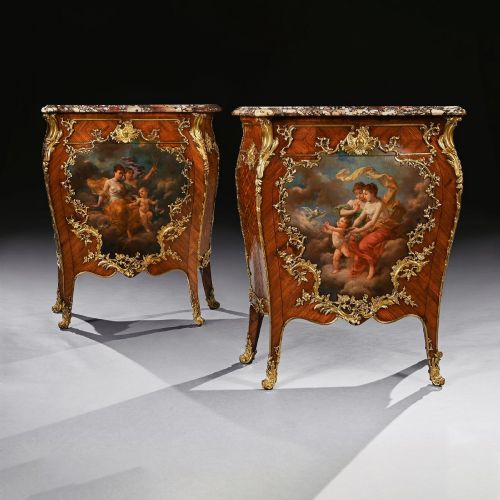
These pieces known as a louis xv revival chest are opulent French commodes and cabinets designed to bring dramatic Rococo curves and rich marquetry into a room.
Louis XV Revival Chest
A louis xv revival chest is typically encountered as a serpentine commode or cabinet dating from the nineteenth century. These forms draw directly on eighteenth-century French designs, favouring fluid, bombêcute silhouettes and bombé profiles that stand out in any interior.
The selection ranges from grand salon commodes down to intimate bedside chests and dressing tables. Most examples on the market emerge from nineteenth-century workshops inspired by the French Louis XV style, often featuring distinct marquetry work.
Materials and construction
Maker's workshops built these pieces using supportive carcases of timber veneered in exotic woods such as kingwood and walnut, frequently finished with intricate marquetry patterns. Marble tops, often shaped to follow the serpentine curves of the carcase, provide a heavy and contrasting surface.
Cast ormolu and gilt bronze mounts define the angles and handles, accentuating the organic outlines of the design. Where vernis martin is employed, layered varnishes create painted panels that mimic Japanese lacquer work.
Some nineteenth-century makers could not resist adding serpentine curves to the smallest bedside tables, ensuring every corner catches the light.
Distinctions in quality
Quality rests heavily on the crispness of the gilt bronze or ormolu mounts and the precision with which they fit the wooden contours. Superior pieces display deeply chased metalwork rather than flat, mass-produced castings.
The complexity and execution of the marquetry and the choice of marble top also dictate the tier of the piece. Finely figured kingwood veneers and hand-painted vernis martin panels separate standard production items from exceptional workshop creations.
The Louis XV Revival Chest Glossary
- Ormolu
- Gilded bronze used for decorative mounts on furniture. It provides a bright metallic contrast against dark timber veneers.
- Bombêcute
- A bulging, outward-curving shape characteristic of French furniture forms. This silhouette requires advanced cabinetmaking skill to execute.
- Marquetry
- Inlaid wood patterns forming pictorial or geometric designs. Different timber species are cut and fitted together across the surface.
- Serpentine
- A line that curves inward and outward in a continuous wave. This contour is common on the fronts and tops of commodes.
- Vernis Martin
- A type of simulated Japanese lacquer developed in France. It uses multiple coats of varnish over painted decorations.
Louis XV Revival Chest: Frequently Asked Questions
Where should I place a louis xv revival chest?
These pieces suit living rooms, grand hallways or bedrooms where their decorative surfaces can be appreciated. Their serpentine shapes and marble tops make them focal points.
Ensure the room has sufficient space to accommodate the curved profile without blocking walkways. Pairing them with understated surroundings allows the marquetry and ormolu mounts to stand out.
How do I clean the marble top?
Use a soft cloth dampened with warm water and mild, pH-neutral soap to wipe the surface. Avoid abrasive cleaners or acidic substances that etch marble.
Dry the stone thoroughly after wiping to prevent water spots. Natural stone wax can be applied periodically to maintain the sheen.
What is the difference between a commode and a bedside chest?
A commode is a larger chest of drawers intended for primary rooms, featuring substantial proportions and elaborate ormolu mounts. Bedside chests are scaled down for use next to a bed.
Both share the same stylistic vocabulary of curved lines and veneered woods, but their scale determines their historical function in the home.
How can I tell the period of these pieces?
Examine the construction methods inside the drawers and the backboards for signs of nineteenth-century or early twentieth-century manufacturing techniques. Tool marks and timber ageing help confirm the era.
The style of the gilt bronze mounts and the specific combinations of kingwood, walnut, and marquetry also align with nineteenth-century revival periods.