
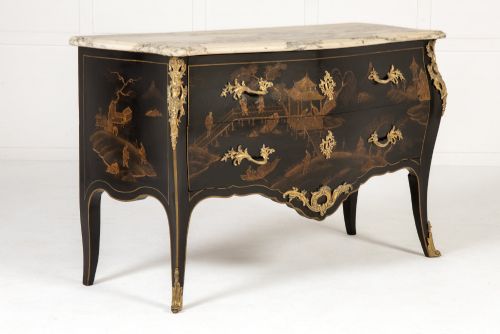


Gilt Bronze French Commode
When you search for a gilt bronze french commode, you are looking at substantial case furniture mounted with rich metalwork designed to anchor a formal interior.
Gilt Bronze French Commode
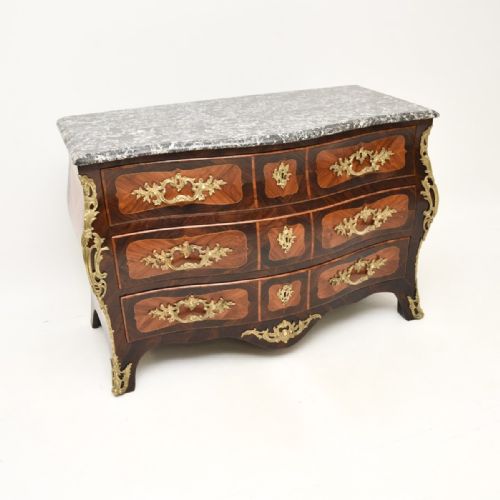
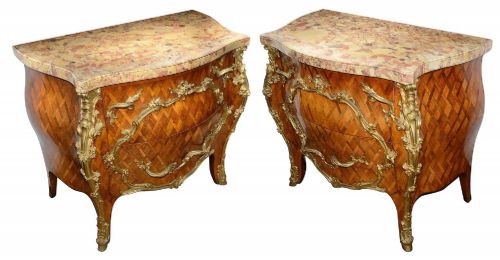
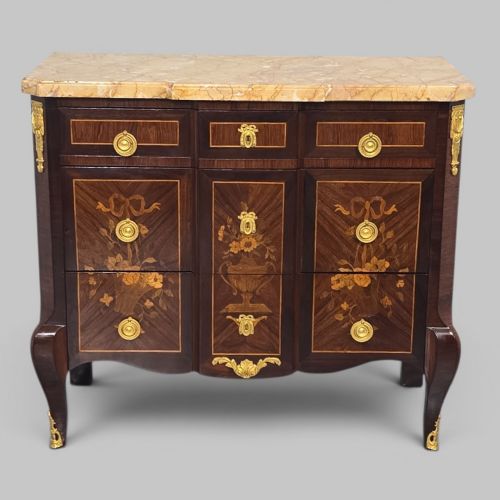
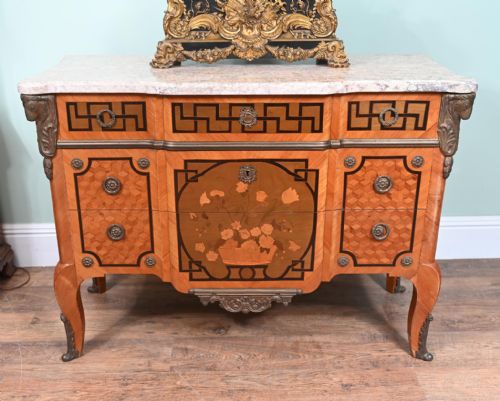
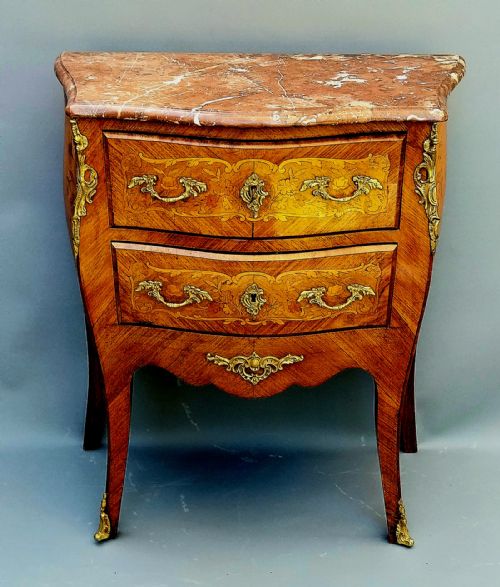
A gilt bronze french commode is a low chest of drawers or cabinet built primarily in the eighteenth and nineteenth centuries, often completed with a shaped marble top. These pieces originated in Parisian workshops to serve aristocratic rooms as both functional storage and decorative centrepieces.
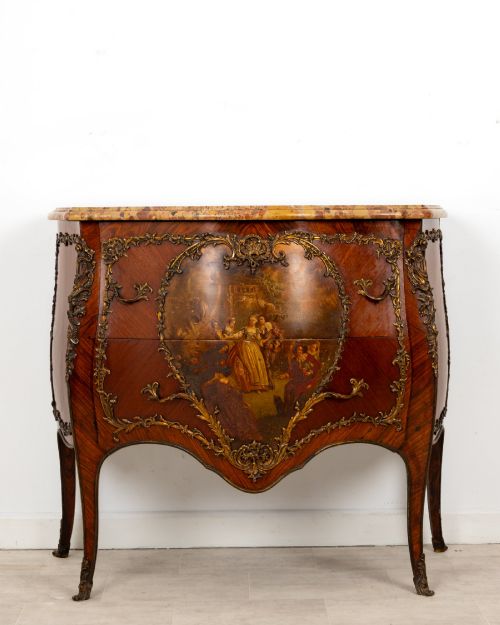
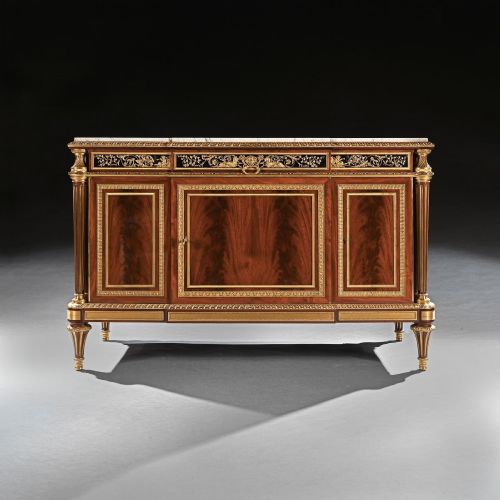
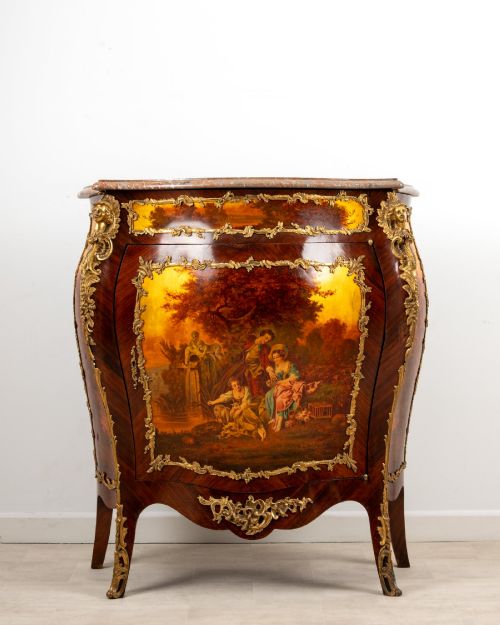
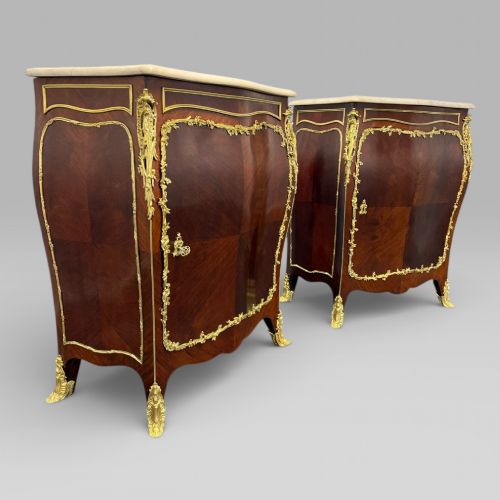
The versions most commonly met on this page date from the nineteenth century, reflecting the revivals of the Louis XV and Louis XVI periods. Alongside standard chests of drawers, listings include side cabinets, petite bedside tables and bombé shaped cabinets.
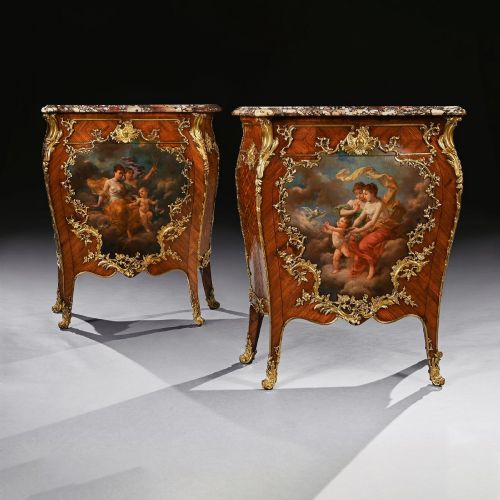
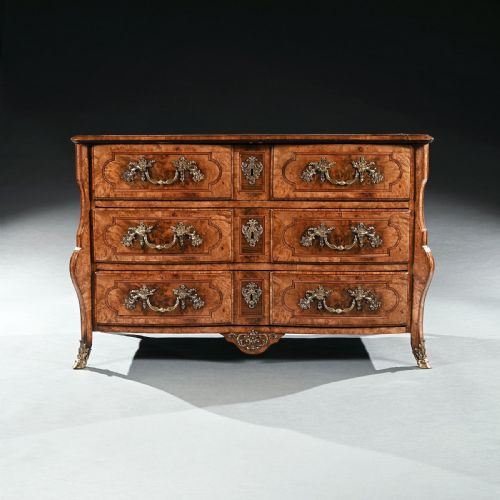
The form relies on curved or serpentine carcases veneered in exotic timbers like kingwood and rosewood, or decorated with marquetry and painted panels. Such pieces functioned historically in salons and bedrooms to display porcelain and hold linen.
Judging the standard
The crispness and depth of the gilt bronze chasing separate standard production from exceptional work, as finer mounts show distinct hand-tooling rather than soft, cast details. The precision of the cabinetmaking is evident in how seamlessly the drawers fit within the carcase and how cleanly the timber grains align across the front.
Attribution to known makers or adherence to historical models by designers like Weisweiler and Riesener elevates a piece. Furthermore, the selection of the marble top and the complexity of the underlying marquetry or Vernis Martin panels dictate the overall ambition of the commode.
Certain commodes doubled as music cabinets, hiding sheet music behind serpentine doors while looking like grand living room furniture.
Jacques Birckle·Henry Dasson·E Kahn·Thomas Hache·Joseph Zwiener·Jean Henri Riesener·Paul Sormani·Charles Cressant
The Gilt Bronze French Commode Glossary
- Ormolu
- Gilt bronze mounts applied to furniture. This technique involves gilding a mercury and gold amalgam onto cast bronze.
- Bombe
- A bulging, convex shape characteristic of mid eighteenth century case furniture. The sides and front curve outward in sweeping lines.
- Vernis Martin
- A type of simulated Japanese lacquer developed in France. It uses successive layers of varnish to create glossy, painted decorative panels.
- Marquetry
- Patterns formed by inserting pieces of veneer into a wood ground. Craftsmen utilise varied timber grains to create pictorial or geometric designs.
- Demi-lune
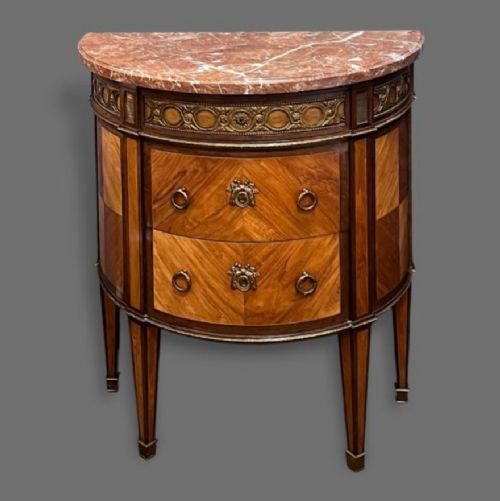
- A half moon shape in plan. Commodes of this form feature a flat back to sit against a wall and a curved front.
Gilt Bronze French Commode: Frequently Asked Questions
What is a gilt bronze french commode?
It is a decorative low chest of drawers or cabinet originating from France, distinguished by cast metal mounts and fine timber veneers.
These pieces were built primarily during the eighteenth and nineteenth centuries for formal domestic interiors.
How were these commodes used?
They served as functional storage units for clothing or valuables while providing a surface to display decorative objects.
Placed in salons, bedrooms or hallways, their marble tops also offered a durable ledge for lamps and porcelain.
How do I live with one?
Position the piece away from direct sunlight and heat sources to protect the wood veneers and prevent the timber from splitting.
Maintain the surface with a dry cloth and avoid harsh chemical polishes that might damage the gilt bronze or lacquer.
How do I tell periods apart?
Louis XV pieces typically show asymmetrical curves, bombé shapes and exuberant rococo mounts. Louis XVI examples favour stricter symmetry, straight tapering legs and neoclassical mounts.
Nineteenth century revival pieces often combine these historical design elements with heavier mechanical construction.