
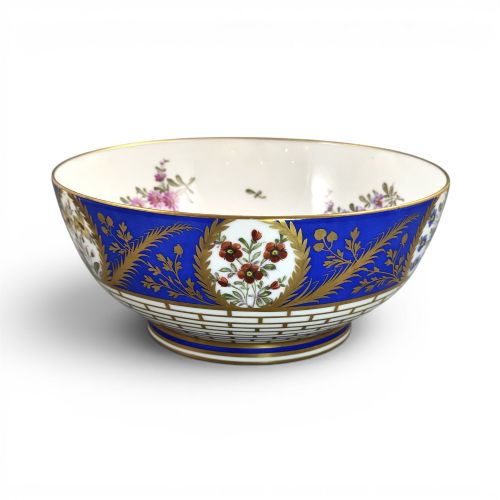


Victorian French Centrepiece Bowl
A victorian french centrepiece bowl anchors a dining table with heavy bronze mounts, rich enamel, and cut crystal.
Victorian French Centrepiece Bowl
A victorian french centrepiece bowl brings nineteenth century continental display to the dining table or sideboard through ornate vessels designed for visual impact. You will encounter large pedestals, tazzas, and comports rather than simple serving dishes, intended to hold fruit or stand alone as decorative sculpture.
The pieces on this page span the 1860s to 1900, reflecting Victorian enthusiasm for French design idioms. Common forms combine deep glass or porcelain bodies with elaborate metal mounts, often raised on figurative feet or pedestals.
Makers and makers' styles include Sevres style porcelain, Samson Paris in the Chelsea-Derby manner, and François-Eugène Rousseau with Baccarat. The aesthetic draws on French Rococo Revival, Second Empire, Empire taste, and Chinoiserie.
How They Were Made
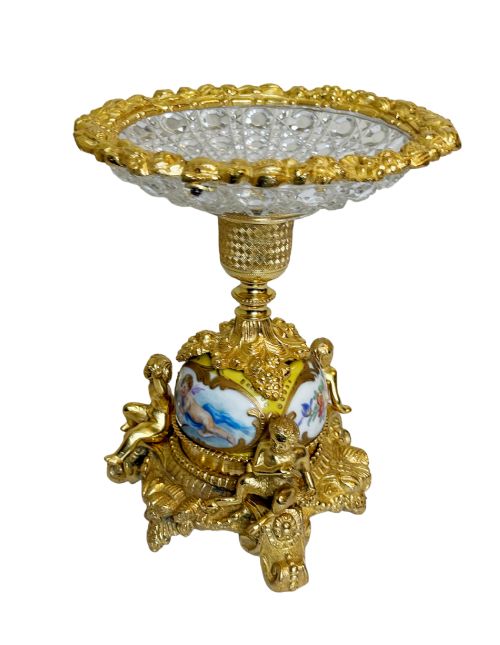
Foundries cast bronze and ormolu into intricate mounts, cherubs, and scrolling foliage, applying fire gilt to achieve a bright metallic finish. Artisans combined these metals with hand-cut crystal, pressed glass, and carved black forest wood.
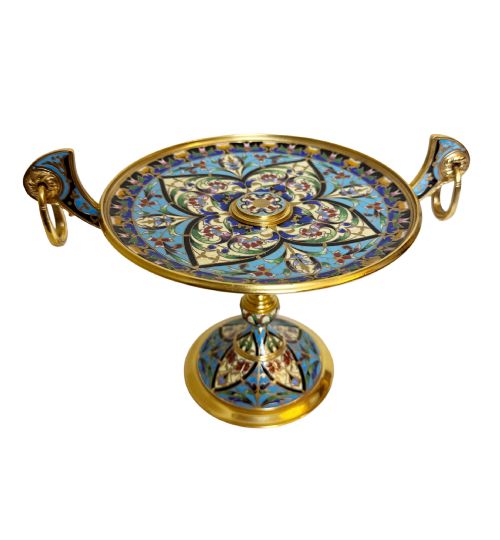
Porcelain bodies feature painted decoration and champlevé enamel work, where coloured glass paste fills recessed metal channels before firing. Baccarat crystal bowls sit within these metal frames, secured by collars and screws.
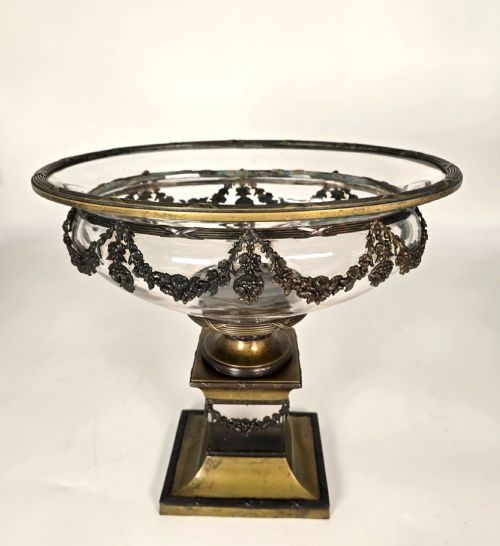
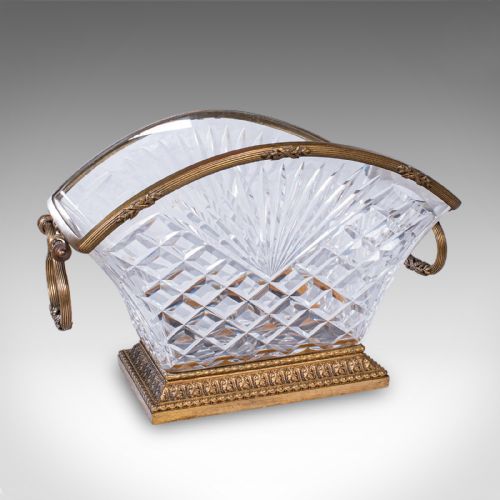
Listings feature cut crystal, Sevres style porcelain, and champlevé enamel mounted in gilt bronze and ormolu.
What Varies in Quality
The weight and crispness of the bronze and ormolu casting separate ambitious workshop production from standard commercial output. Sharp chasing on the metal surface and depth in the hand-cut crystal indicate superior execution.
The quality of the porcelain body and the complexity of the champlevé enamel work dictate the tier of the piece. Integrated compositions where mounts, porcelain, and glass share a unified design scale outrank assembled combinations.
Samson Paris·François-Eugène Rousseau·Baccarat
The Victorian French Centrepiece Bowl Glossary
- Ormolu
- Gilded bronze used for decorative mounts on furniture and ceramics. The technique involves applying a gold and mercury amalgam to cast bronze before heating.
- Champlevé
- An enamelling technique where cells are gouged out of a metal surface and filled with vitreous enamel. These coloured pastes are then fired and polished flush with the metal.
- Comport
- A high-footed dish or bowl used for serving fruit or sweets at the table. These pieces sit elevated above standard tableware to create varied levels in a table setting.
- Tazza
- A shallow bowl or saucer standing on a high foot. Originating in the Renaissance, the form was revived extensively during the nineteenth century in glass and metal.
- Epergne
- A large table centerpiece featuring a central bowl with multiple subsidiary branches or hanging baskets. They frequently combine carved wood or metal frames with cut crystal dishes.
Victorian French Centrepiece Bowl: Frequently Asked Questions
What were centrepiece bowls used for?
These bowls stood in the middle of formal dining tables during the nineteenth century, often holding fresh fruit or sweetmeats. They served as ornamental focal points designed to display wealth and taste to guests.
Beyond dining use, they functioned as permanent decorative objects on sideboards and consoles, catching light through their crystal and gilt bronze surfaces.
How do I style a centrepiece bowl?
Place the bowl on a large dining table, a mahogany sideboard, or a marble-topped console where its height and materials can be appreciated from multiple angles. Keep the surrounding surface clear to let the ornate mounts and glass stand out.
Leave the interior empty to showcase painted porcelain scenes and cut crystal patterns, or fill it with seasonal fruit in the traditional manner.
How do I tell an 1860 piece from 1900?
Pieces from the 1860s often display robust Second Empire proportions and heavy cast bronze mounts, reflecting mid-century taste. Toward 1900, designs frequently incorporate lighter Belle Epoque aesthetics or specific revival styles like Chinoiserie and Chelsea-Derby.
Examining the depth of the champlevé enamel work and the style of the porcelain painting helps place the object within the broader nineteenth-century timeline.
What is the difference between ormolu and bronze?
Bronze is an alloy of copper and tin used as the structural and sculptural base for many decorative objects. Ormolu refers specifically to the gilt surface treatment applied to that bronze.
The process involves coating the cast metal in a gold mixture and firing it, producing a bright golden finish that resists tarnish.