


Antique Gilded Bronze Dish
An antique gilded bronze dish brings brilliant metallic lustre and classical design to a room.
Antique Gilded Bronze Dish
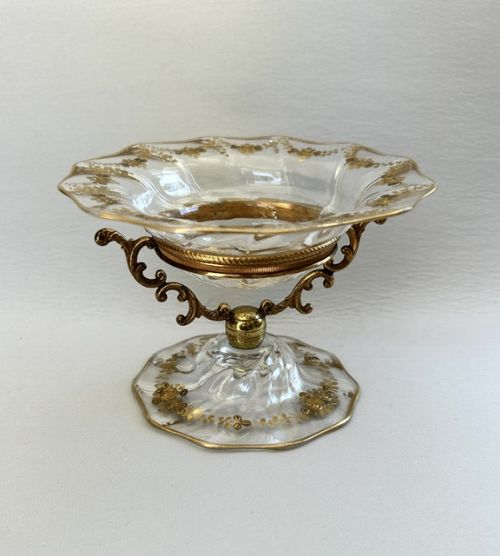
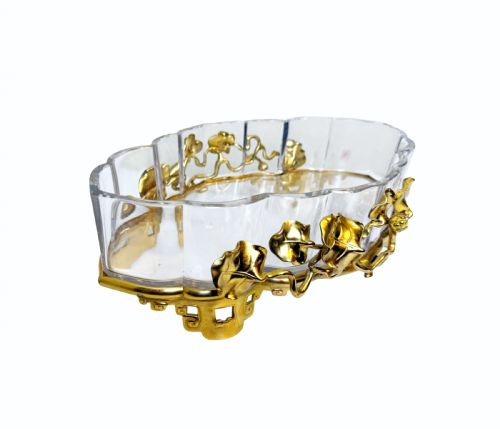
An antique gilded bronze dish encompasses an array of decorative metalware designed for display, often taking the form of a centrepiece, tazza, tray, or bowl. Buyers searching for an antique gilded bronze dish encounter works shaped by French taste, spanning periods from the Regency era through to the early twentieth century.
Originating largely from French workshops, these items reflect historical revivals including Empire and Rococo styles. A buyer is most likely to meet pieces mounted in gilt bronze or ormolu, showcasing elaborate casting and decorative metalwork.
How they were made
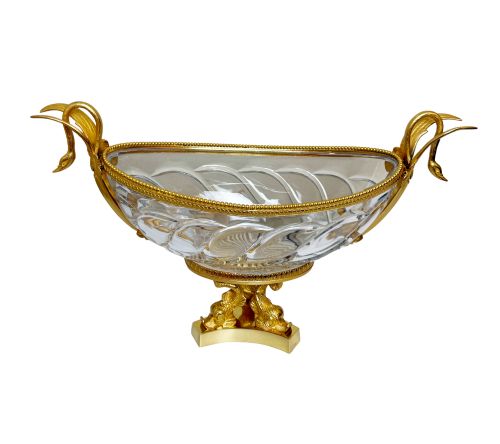
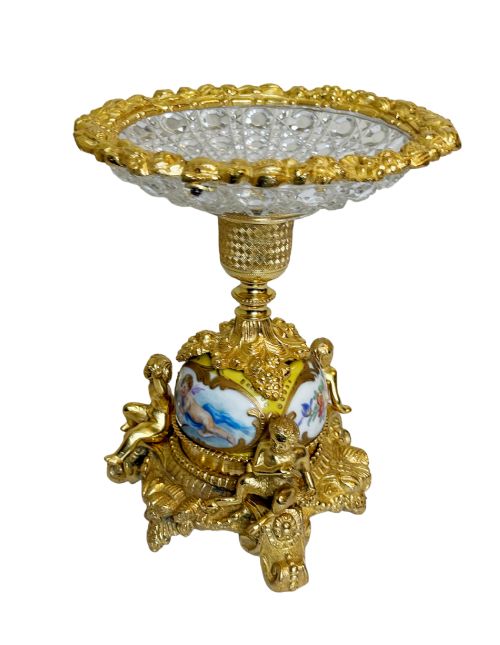
The manufacture of these objects relies on bronze casting combined with mercury gilding or modern electroplating to achieve the rich golden surface known as ormolu. Artisans then integrated transparent cut crystal, pressed glass, or hand-painted porcelain bowls and plaques into the metal frames.
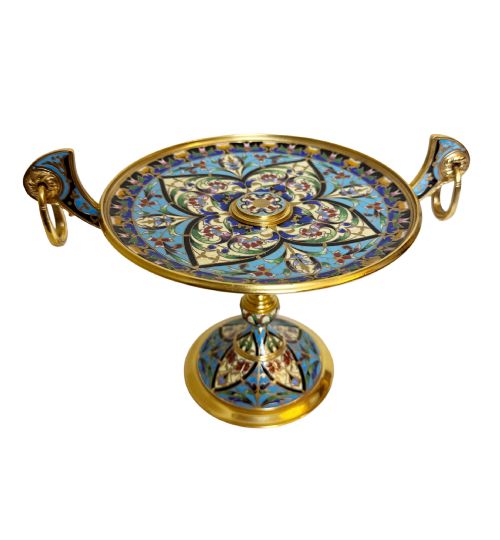
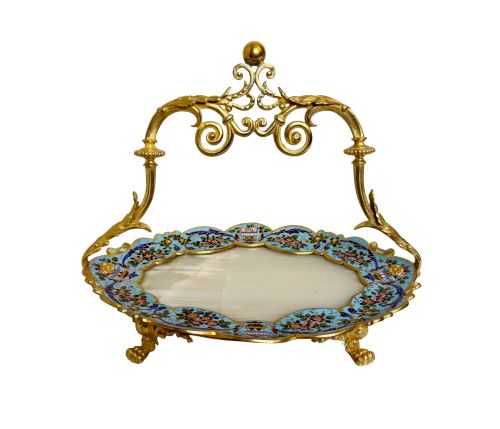
Many examples incorporate champlevé and Limoges enamel work, where coloured glass pastes are fused into recessed metal compartments. Detailed sculptural elements, such as cherubs, eagles, and mermen, were cast separately and fastened to the main structure with mechanical fittings.
Listings feature materials including gilt bronze, ormolu, porcelain, enamel, champleve enamel, crystal, cut crystal, and glass across the nineteenth and early twentieth centuries.
What varies in quality
The integration of secondary materials also dictates the standard of the piece. Heavy, deeply cut crystal and finely detailed enamel plaques denote a higher grade of craftsmanship compared to simpler glass inserts and plain metal castings.
The Antique Gilded Bronze Dish Glossary
- Ormolu
- Gilded bronze, where a layer of gold amalgam is applied to a bronze base and heated to drive off the mercury. This technique produces a distinctive warm yellow finish characteristic of nineteenth-century French metalwork.
- Tazza
- A shallow bowl or cup mounted on a stem and foot, used for display or serving. These elevated vessels often feature elaborate gilt bronze rims and crystal basins.
- Champlevé
- An enamelling technique where troughs or cells are carved into the surface of the metal and filled with vitreous enamel before firing. It frequently appears alongside ormolu mounts in nineteenth-century decorative pieces.
- Centrepiece
- A large ornamental object placed in the middle of a table or furniture piece. They combine gilded bronze frames with glass or porcelain to anchor a room's decorative scheme.
Antique Gilded Bronze Dish: Frequently Asked Questions
What is an antique gilded bronze dish?
An antique gilded bronze dish is a decorative vessel cast in bronze and finished with a gold surface layer, often produced in nineteenth-century France. These items include small pin trays, tazzas, and larger centrepieces.
They frequently incorporate materials such as cut crystal, porcelain, and enamel to enhance their visual appeal.
How do I date an ormolu centrepiece?
Dating relies on the stylistic revival movements and manufacturing techniques evident in the piece. Objects from the Regency era display distinct early nineteenth-century neoclassical traits, while pieces from the 1880s and 1900s often blend Rococo Revival or Empire styles with champlevé enamel.
The specific combination of cast bronze motifs and glass cutting helps narrow the period of origin.
Where were these pieces made?
The surviving evidence points predominantly to French workshops and factories active during the nineteenth and early twentieth centuries. Makers utilised traditional casting and enamelling methods associated with Parisian decorative arts.
Specific regional styles, such as Sevres porcelain inserts or Limoges enamel plaques, further confirm French provenance.
How should I display an antique dish?
These decorative metal objects suit placement on sideboards, mantels, or central tables where their gilded surfaces catch the light. Centrepieces and tazzas stand well on their own as sculptural focal points in a room.
Smaller trinket dishes and pin trays can be used to hold small items or left empty to showcase the enamel and crystal work.