


French Porcelain Tray
These french porcelain tray examples bring refined continental craft to your room, combining hand-painted ceramic surfaces with polished metal mounts.
French Porcelain Tray
A french porcelain tray brings together ceramic production and metalwork from the eighteenth, nineteenth, and early twentieth centuries. You will frequently encounter nineteenth-century production alongside earlier eighteenth-century examples and later art deco items.
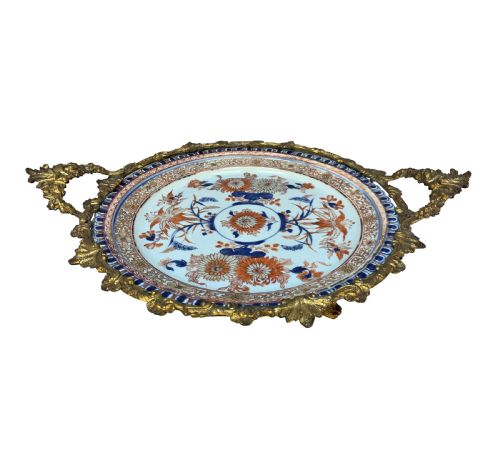
The objects take various forms including decorative dishes, breakfast sets, centrepieces, and inkwells. Many pieces integrate mounts of ormolu, gilt bronze, brass, or champlevé enamel to frame the porcelain centre.
Assessing Quality
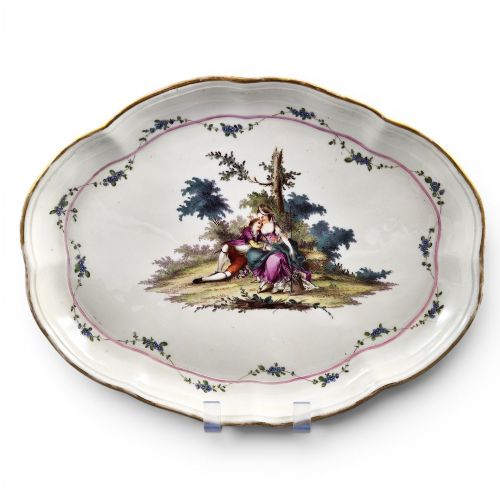
The standard of painting on the ceramic surface distinguishes finer examples from simpler production, with detailed figurative work showing greater artisan skill. Crispness in the casting and chasing of the ormolu or gilt bronze mounts indicates higher workshop standards.
The integration between the porcelain body and its metal frame reveals the care taken during assembly. Better pieces maintain secure mounts and balanced proportions across the entire object.
Joseph Gaspard Robert·Samson Paris·Louis Pierre Malpass
The French Porcelain Tray Glossary
- Ormolu
- Gilded bronze used for decorative mounts on furniture and porcelain. This technique involves applying a mercury and gold mixture to a bronze base and heating it.
- Champlevé enamel
- A technique where troughs are dug into a metal surface and filled with enamel powder before firing. The resulting design sits flush with the surrounding metal.
- Bleu céleste
- A bright sky blue glaze colour associated with porcelain production. This shade appears frequently on decorative wares from major factories.
- Japonesque
- A style reflecting Japanese artistic influences adopted by European makers. This aesthetic emerged in nineteenth-century decorative arts.
- Half doll
- A ceramic figure modelled from the waist up, often used on vanity items or smoking accessories. These figures date primarily to the early twentieth century.
French Porcelain Tray: Frequently Asked Questions
How do I date a french porcelain tray?
Examine the style of the painting, the composition of the porcelain body, and any marks on the underside. Metal mounts also help determine the period based on casting techniques and finishing styles.
Eighteenth-century items often show different glaze characteristics compared to nineteenth-century revival pieces or twentieth-century art deco examples.
Were these trays used for dining?
Many items served specific functions within wealthy households, such as holding desk accessories, serving breakfast, or presenting desserts.
Others functioned purely as decorative centrepieces or pin trays rather than active tableware.
How should I clean my porcelain tray?
Dust the surface gently with a soft, dry cloth to remove everyday particles. Avoid harsh chemical cleaners or soaking pieces with metal mounts.
Moisture can damage exposed metal joins or affect older enamel work, so keep cleaning methods minimal and dry.
What is the difference between ormolu and gilt brass?
Ormolu specifically denotes gilded bronze, which has a deeper and heavier metal composition. Gilt brass uses a lighter yellow metal base underneath the gold layer.
Better quality pieces tend to employ bronze mounts rather than brass.