

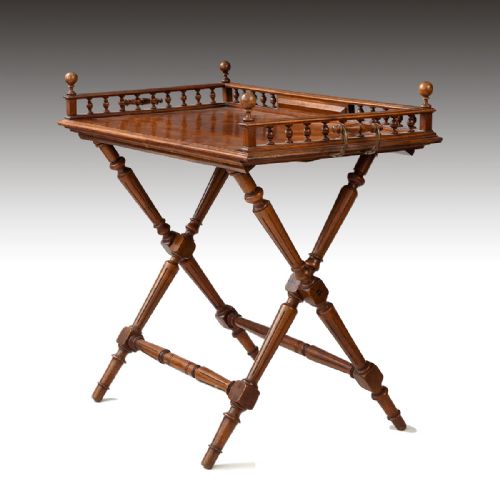
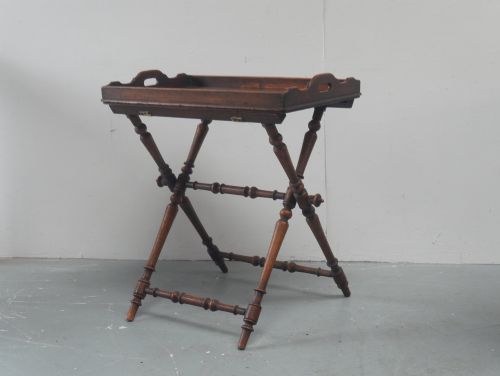
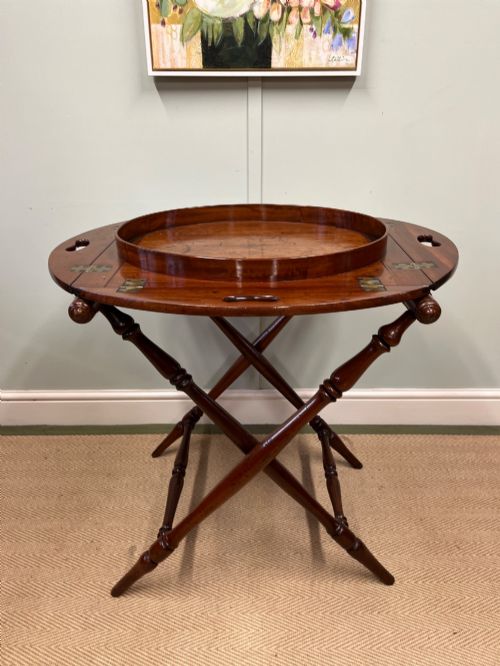
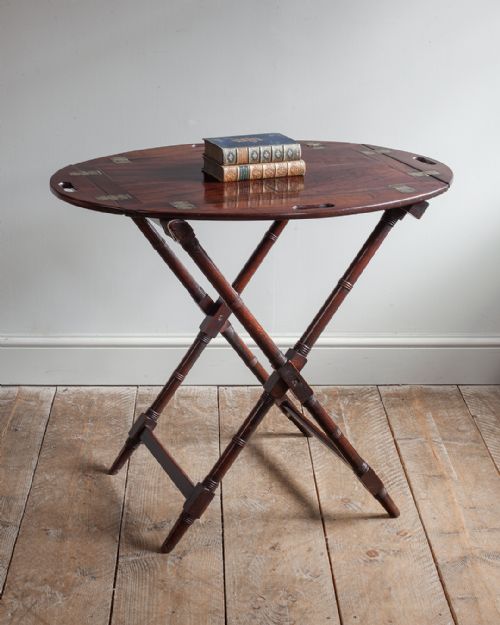
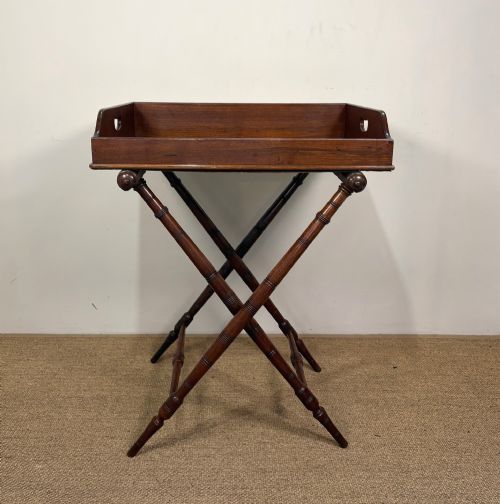


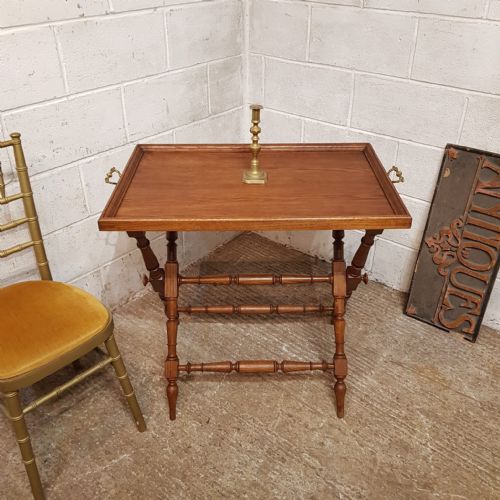


Victorian Folding Tray Stand
A victorian folding tray stand offers practical portability and period charm, serving as a versatile piece for modern entertaining and display.
Victorian Folding Tray Stand
A victorian folding tray stand combines a removable top with a collapsible wooden or metal base, designed originally for domestic service. When exploring a victorian folding tray stand, expect to encounter forms ranging from simple serving trays on X-frame supports to elaborate tiered furniture.
The materials span traditional cabinet timbers such as mahogany, oak, and walnut, alongside occasional examples incorporating brass fittings or copper tops. Pieces frequently date from the nineteenth century, including Victorian and Edwardian periods, with variations spanning side tables, occasional tables, and dumb waiters.
Materials and Construction
Cabinet makers utilised dense hardwoods like mahogany, walnut, and oak to construct both the tray borders and the supporting frames. Joints commonly employ sturdy joinery techniques suited to daily movement and weight bearing.
Folding mechanisms rely on hinged wooden cross-frames or webbing supports that allow the base to collapse flat when not in use. Metal components such as brass hinges and copper tops provide functional durability and decorative contrast.
Victorian Folding Tray Stand Retail Price Guide 2026
Typical asking prices for victorian folding tray stand among the pieces listed under this phrase on Sellingantiques today, from the lower quarter to the upper quarter. They describe what is for sale here now, not the wider market.
Listings feature items spanning the 19th century and early 20th century, constructed from mahogany, oak, walnut, pine, rosewood, brass, and copper.
Assessing Quality and Merit
Quality rests primarily on the integrity of the folding mechanism and the retention of the original stand alongside the tray. Examples featuring matching timbers and original hardware command greater interest than assembled pairings.
Carved detailing, depth of timber grain, and structural solidity distinguish finer workshops from utilitarian items. The presence of specific regional or provenance details further elevates the character of individual pieces.
The Victorian Folding Tray Stand Glossary
- Butler tray
- A portable serving tray with hinged or fixed sides, designed to sit atop a collapsible stand.
- Dumb waiter
- A multi-tiered stand used for holding dishes and serving items without requiring direct servant attendance.
- X-frame
- A folding cross-base design that provides collapsible support for portable table tops.
- Gothic Revival
- A nineteenth-century design style incorporating medieval architectural motifs, pointed arches, and heavy carved woodwork.
- Webbing
- Strong woven material used across folding stands to support trays and distribute weight evenly.
Victorian Folding Tray Stand: Frequently Asked Questions
How are these stands used today?
These pieces function well as portable cocktail tables, side tables, or display surfaces in living areas and dining rooms.
Their collapsible design allows owners to store the stands easily when extra floor space is required.
Are the trays removable from the stands?
Most trays lift entirely off the folding base, which was originally intended for carrying food and drink from kitchens to reception rooms.
Some variations secure the tray with fixed ledges or hinges, though loose trays remain the most common form.
How do I identify a Victorian piece?
Look for dense hardwoods like mahogany and walnut, traditional joinery methods, and characteristic turned wooden legs on the folding base.
Design motifs often align with nineteenth-century cabinet-making styles, including Gothic Revival or plain polished timber finishes.
What woods were commonly used?
Cabinet makers relied heavily on mahogany, oak, and walnut for both strength and rich grain appearance.
Pine, rosewood, and hardwood also appear across various examples, sometimes paired with brass or copper elements.