


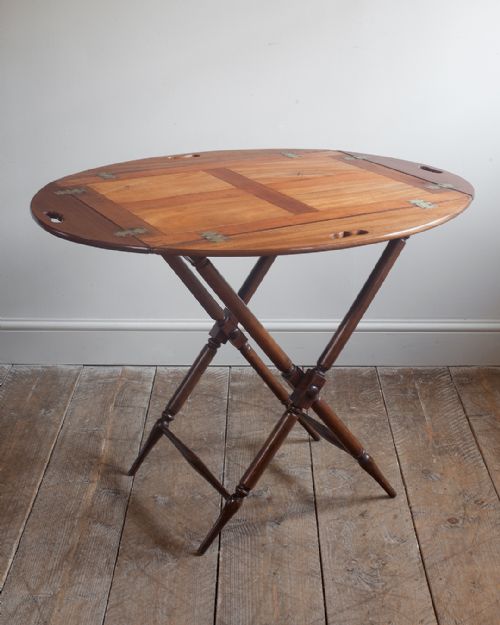
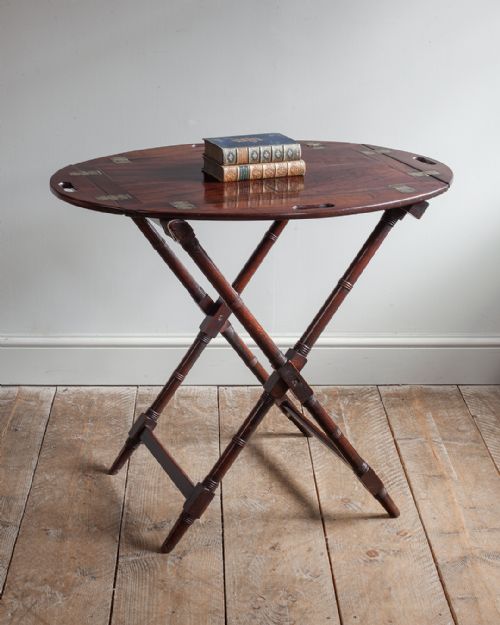
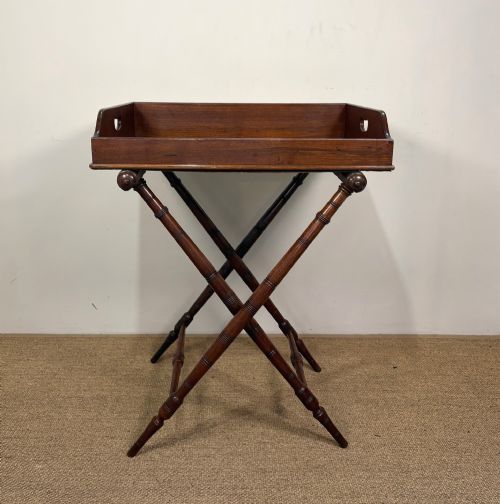
Butler Tray on Stand
A butler tray on stand combines a portable serving surface with a folding or fixed base, offering versatile function and classic proportions.
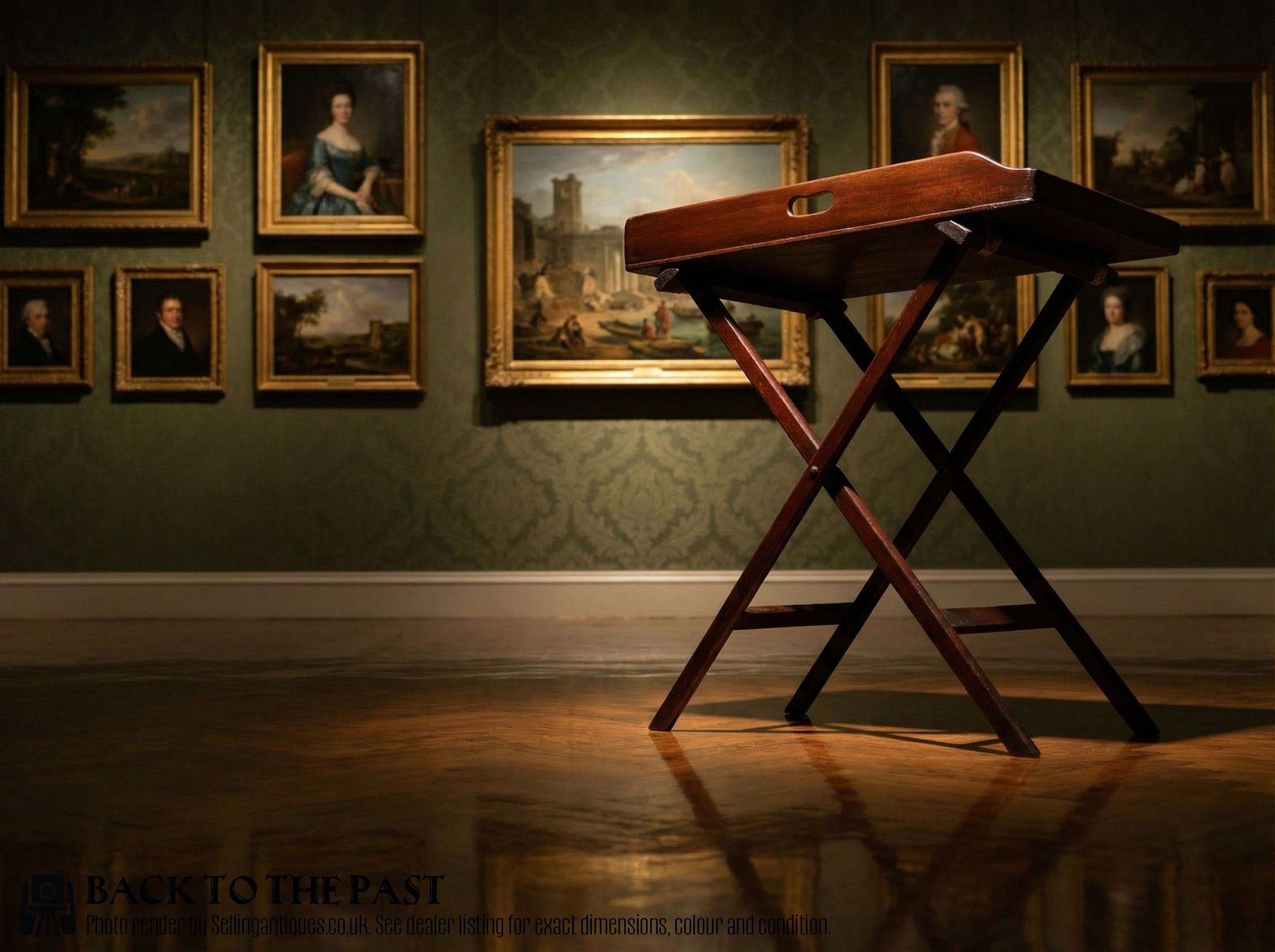
Butler Tray on Stand
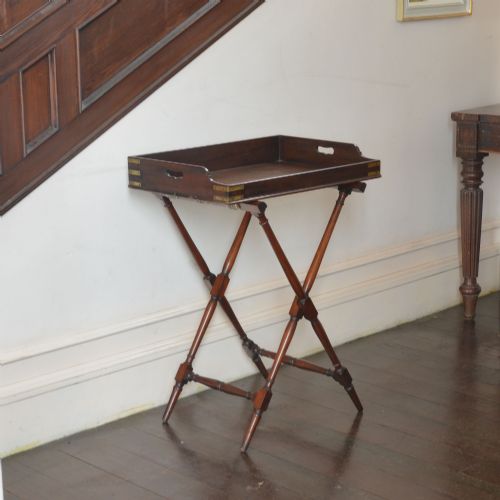
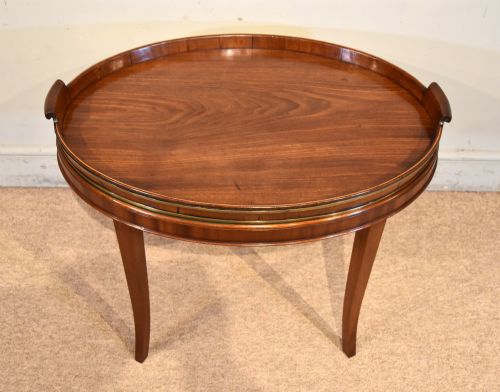
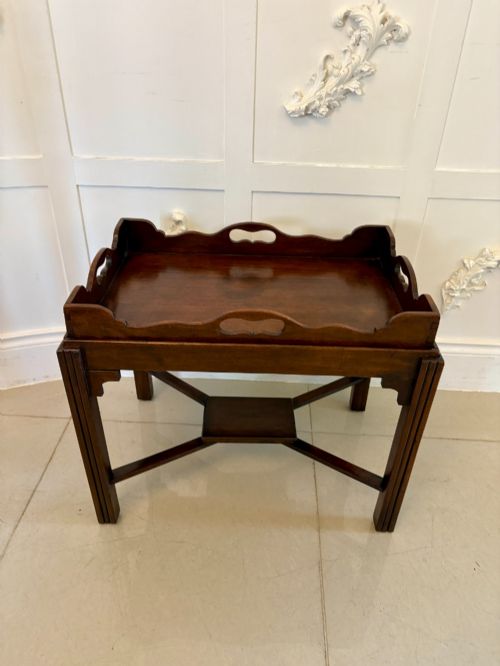
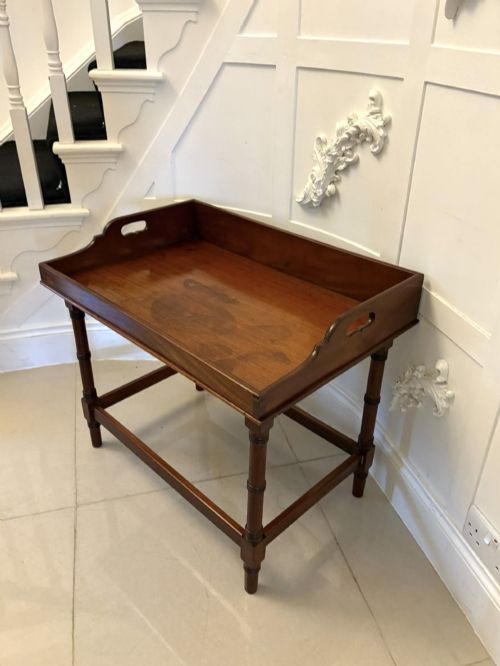
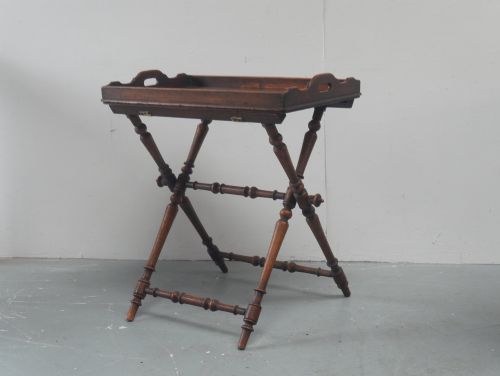
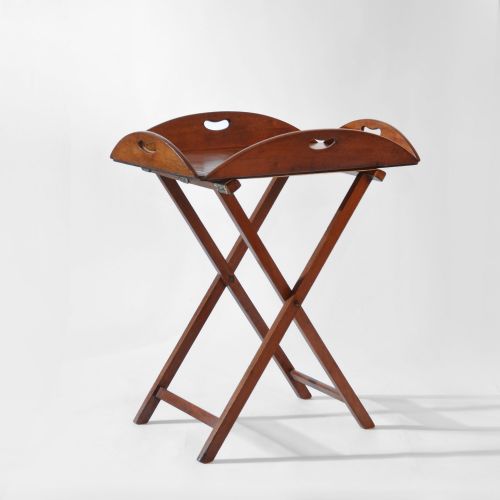
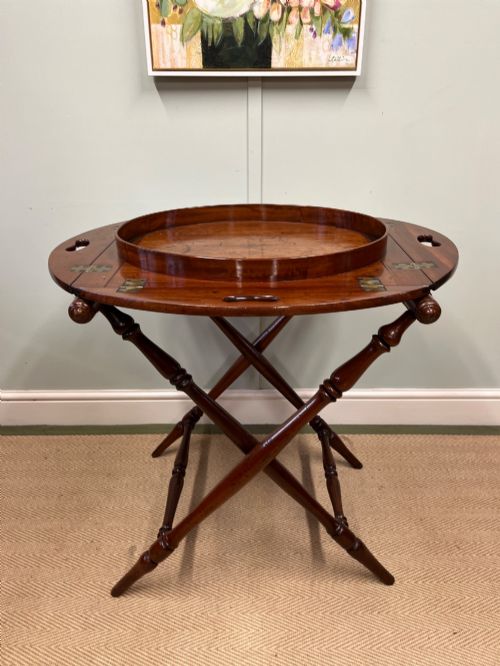
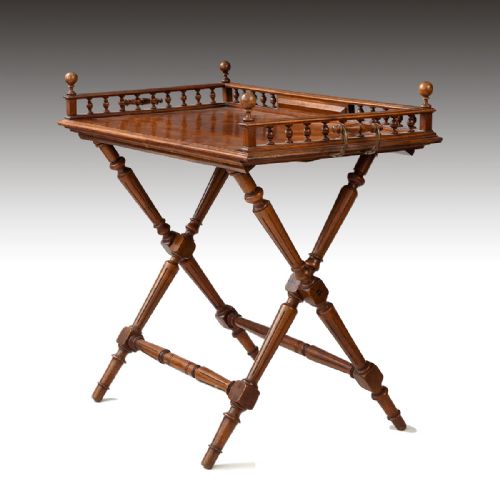
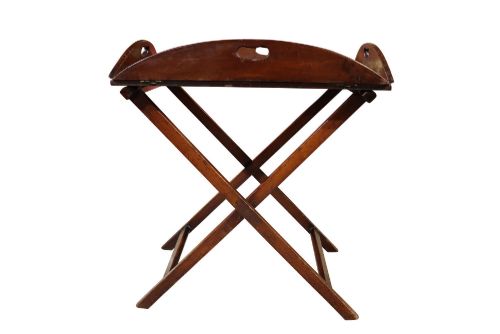
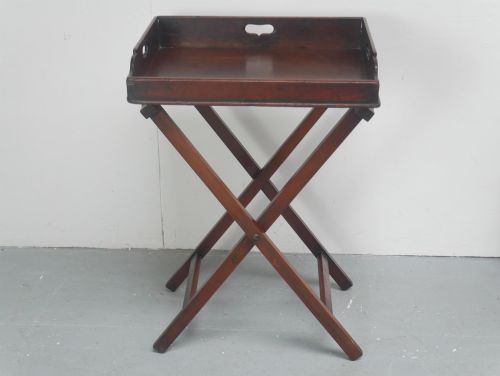
When searching for a butler tray on stand, buyers encounter portable serving tables designed for domestic utility and flexible entertaining. The form typically pairs a rectangular, oval, or shaped wooden tray featuring hinged or cutout carrying handles with a supporting folding stand.
The pieces appearing on this page span the 18th, 19th, and early 20th centuries, covering Georgian, Victorian, and Edwardian eras. Mahogany remains the most common timber, alongside oak, walnut, rosewood, and lacquered papier-mâché.
Most examples function as occasional tables, side tables, or coffee tables within modern interiors. The standard version meets the buyer as a mahogany tray resting upon an x-frame or turned folding support, echoing its original use for moving service items between rooms.
Materials and construction methods
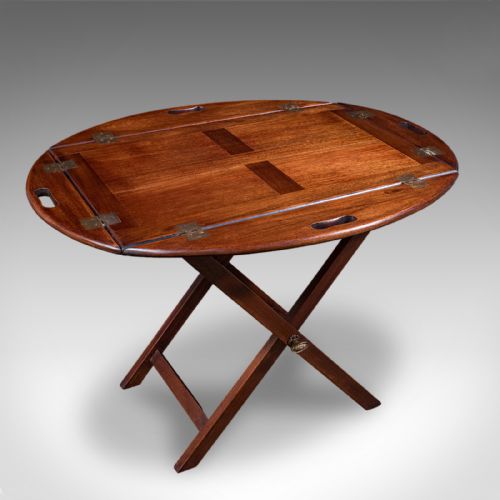
Cabinetmakers constructed these trays primarily from dense hardwoods like mahogany and oak, often selecting figured timber for top surfaces. Edges frequently feature raised galleries, sometimes pierced with handgrips or fitted with brass hinges on drop-flaps.
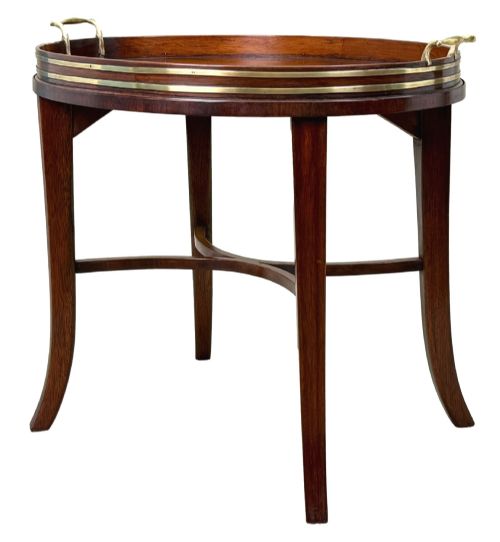
Stands were engineered to fold flat for efficient storage, utilising hinged cross-frames or specialised joints. Finer examples incorporate brass bound decoration, marquetry inlay, or hand-carving along the tray borders and support legs.
Butler Tray on Stand Retail Price Guide 2026
Typical asking prices for butler tray on stand among the pieces listed under this phrase on Sellingantiques today, from the lower quarter to the upper quarter. They describe what is for sale here now, not the wider market.
Some Victorian households pressed their trays into nautical service, labeling boat and oar designs alongside standard tea service.
Distinctions in craftsmanship
Quality in a butler tray on stand rests upon the selection of timber and the integrity of the original joints. Superior pieces exhibit carefully figured wood grain on the tray base and robust hardware that secures the folding mechanism without wobble.
The presence of an original stand matching the exact period of the tray elevates a piece above those paired with later replacements. Subtle details such as finely turned legs, brass corner brackets, and crisp carving distinguish workshop standards.
The Butler Tray on Stand Glossary
- Gallery
- A raised wooden border surrounding the edge of a tray to prevent items from sliding off. This feature is often shaped or pierced to form carrying handles.
- Drop-flap
- A hinged section on the side of a tray that can be lowered or raised to expand the surface area. These flaps are commonly secured with brass hinges.
- X-frame
- A folding support structure formed by two intersecting legs shaped like the letter X. This design allows the stand to collapse flat when not in use.
- Papier-mâché
- A composite material made from paper pulp mixed with glue and resin, pressed into moulds and finished with lacquer or paint. It provides a smooth surface for decorative painting and Chinoiserie scenes.
- Patina
- The surface sheen and mellowing developed by wood over decades of handling and polishing. It serves as an indicator of age and continuous use.
Butler Tray on Stand: Frequently Asked Questions
How were butler trays used originally?
Servants used these trays to carry food, porcelain, and drinks from the kitchen to the dining or drawing rooms. Once placed upon the folding stand, the tray served as a temporary side table for serving guests.
After the meal, the tray could be lifted off and the stand folded away to save space. This portability made them essential items in large domestic households.
Are the stands usually original to the trays?
Many surviving trays have become separated from their original bases over centuries of use. Consequently, some pieces combine an older tray with a later replacement stand.
Examining the wood species, wear patterns, and construction style helps determine whether the tray and stand originated together. Original pairings command greater interest among collectors.
Can these tables be used as coffee tables?
Their low profile and generous surface area make them well-suited for use as coffee tables in contemporary living spaces. The raised gallery keeps books and decorative objects securely contained.
Homeowners appreciate the flexibility of moving the tray or folding the stand when adjusting room layouts.
How do I identify a Georgian period tray?
Georgian examples, dating from the 18th and early 19th centuries, typically feature solid mahogany construction with oval shapes and delicate finger joints. They often display deep patination and hand-cut handgrips rather than added metal handles.
Inspect the underside for older secondary woods and hand-planed surfaces that reflect period workshop practices.