






Oak Butler Tray
An oak butler tray brings functional history indoors, combining a sturdy serving surface with a folding stand.
Oak Butler Tray
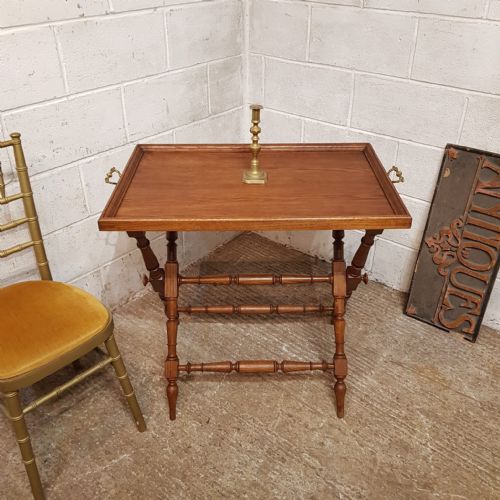
An oak butler tray is a portable serving surface traditionally paired with a folding stand, designed for domestic service and entertaining. You will frequently encounter Victorian and Edwardian examples on this page, alongside earlier Georgian iterations and later twentieth-century pieces.
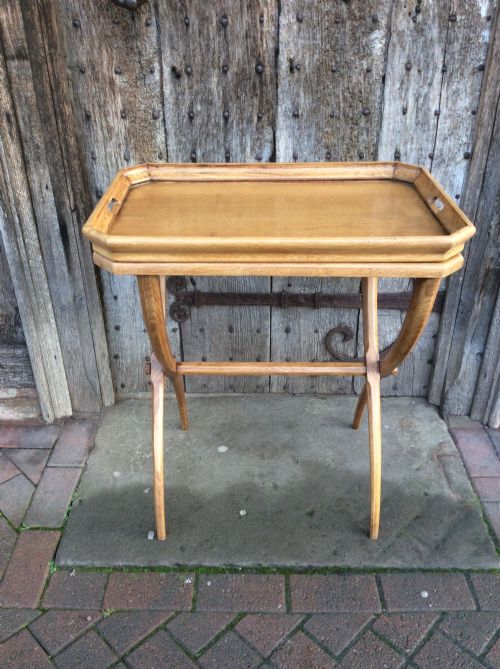
The form typically comprises a heavy wooden tray with raised sides, often pierced with cut-out handles for lifting, resting upon an X-frame or turned wooden stand. These pieces transition easily between serving functions and use as occasional tables or coffee tables in modern rooms.
How they were made
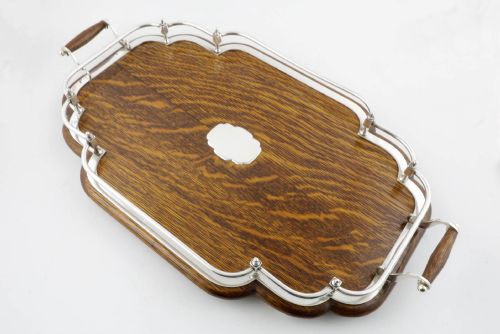
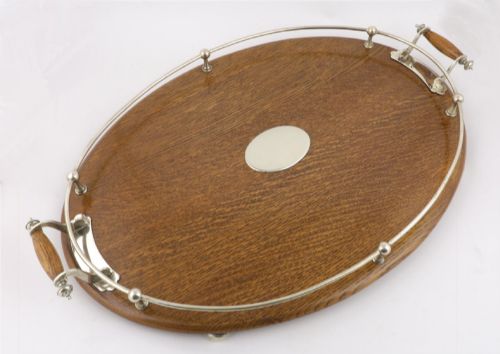
Makers utilised solid timber, frequently employing dovetail joints for tray construction and turned or folding mechanisms for the supporting stands. Brass hinges, handles, and gallery rails appear alongside silver plate and sterling silver mounts on select serving and drinks variations.
Surface finishing relies on period joinery techniques, ranging from simple moulded edges to carved detailing and Gothic Revival motifs. Structural integrity depends upon the grain orientation of the wood and the precise fitting of the folding stand joints.
Oak Butler Tray Retail Price Guide 2026
Typical asking prices for oak butler tray among the pieces listed under this phrase on Sellingantiques today, from the lower quarter to the upper quarter. They describe what is for sale here now, not the wider market.
Listings feature periods spanning from the eighteenth century through the 1930s, constructed primarily in oak with brass, silver plate, and glass.
What varies in quality
Quality rests in the weight of the timber, the crispness of any carved decoration, and the original matching of the tray to its stand. Pieces featuring integrated brass handles, galleried edges, or substantial dovetail construction demonstrate superior workshop standards.
The degree of preservation in the wood finish and the smoothness of the folding mechanism distinguish standard utility items from finer country house or campaign pieces produced for wealthy households.
The Oak Butler Tray Glossary
- Butler tray
- A portable wooden serving tray, often featuring hinged or fixed sides, designed to sit upon a separate folding stand. They were originally utilised by domestic staff to transport food and drinks.
- Campaign
- A style of portable furniture designed for military officers or travel, characterised by folding stands, recessed brass hardware, and sturdy construction. These items pack flat for easy transport.
- Cruet set
- A matched collection of glass bottles for condiments, held within a fitted stand or incorporated directly onto a serving tray. They frequently feature silver plate or sterling silver mounts.
- Gallery
- A raised border around the edge of a tray or table, designed to prevent items from sliding off during transport. They can be pierced or solid.
- Dovetail joint
- A method of joining two pieces of wood by interlocking wedge-shaped fingers, prized for its tensile strength in box and tray construction.
Oak Butler Tray: Frequently Asked Questions
What is an oak butler tray used for?
These pieces served households as portable servers for carrying food, cutlery, and drinks from kitchens to living spaces. The removable top allowed staff to clear rooms efficiently while the stand remained stationary.
Today, they function well as portable cocktail stations, side tables, or low coffee tables. Their folding design makes them adaptable for rooms requiring flexible furniture arrangements.
How do I tell a Victorian tray from an Edwardian one?
Victorian examples often display heavier proportions, darker patination, and sometimes carved Gothic Revival motifs or robust turned stands. They were built for heavy country house utility.
Edwardian pieces tend toward lighter framing, occasionally incorporating gallery rails, maps, or refined silver-plated mounts. The overall aesthetic shifts toward decorative drinks service and lighter oak tones.
Are the stands usually original to the trays?
Many surviving pieces retain their original folding X-frame or turned wooden stands, which were made to fit the specific dimensions of the tray base. Because trays and stands parted ways easily during decades of use, replacement stands do occur.
Matching timber colour, wear patterns, and joint construction help confirm whether a tray and its stand have spent their lives together. Original pairings command distinct interest among collectors.
How do I care for an antique oak tray?
Protect the wood surface by avoiding excessive moisture, direct heat sources, and prolonged direct sunlight. A gentle application of beeswax helps maintain the natural lustre of the oak without building up heavy residues.
Lift the tray by its designated handles rather than the gallery rails to preserve structural joints. Regular dusting with a soft, dry cloth keeps the timber surface safe from abrasive particles.