

Folding Oak Side Table
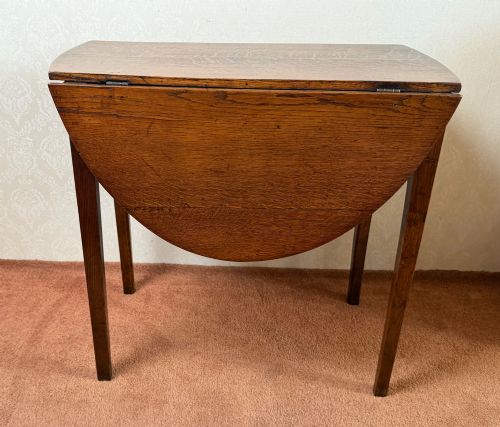
A folding oak side table offers compact utility and period timber character, ranging from seventeenth-century gatelegs to twentieth-century drop-leaves.
Folding Oak Side Table
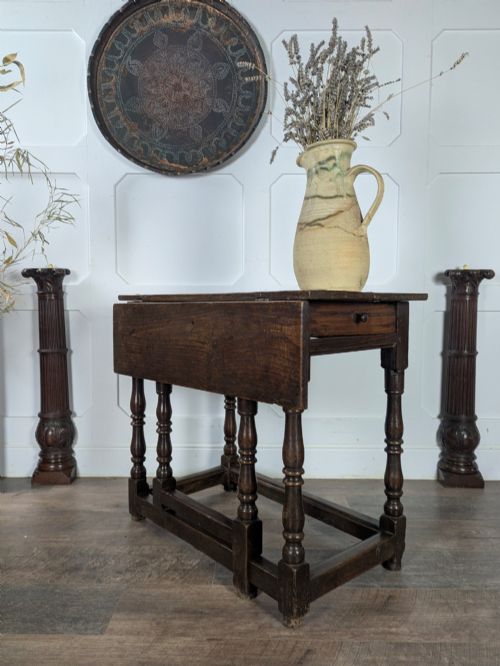
A folding oak side table combines a space-saving folding or drop-leaf mechanism with traditional timber construction. Buyers exploring this category encounter forms ranging from seventeenth-century gatelegs and credence tables to nineteenth-century butlers' trays on stands and twentieth-century occasional tables.
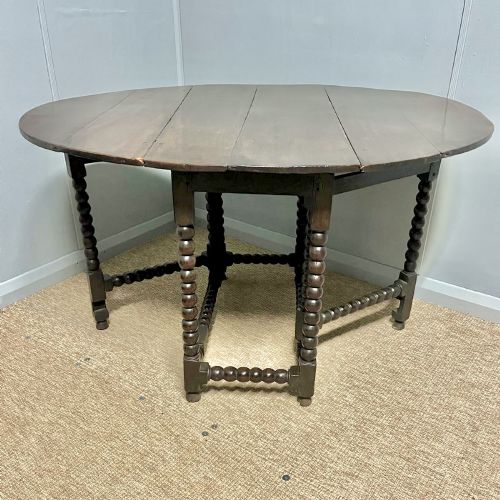
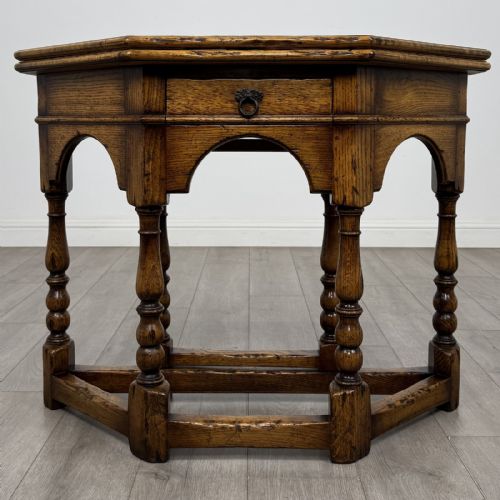
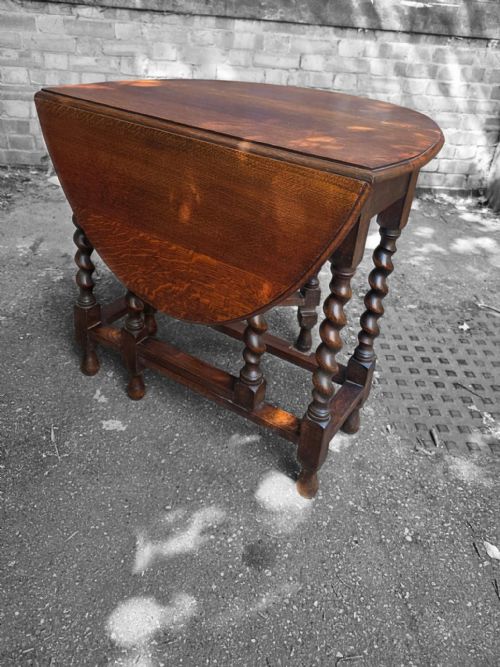
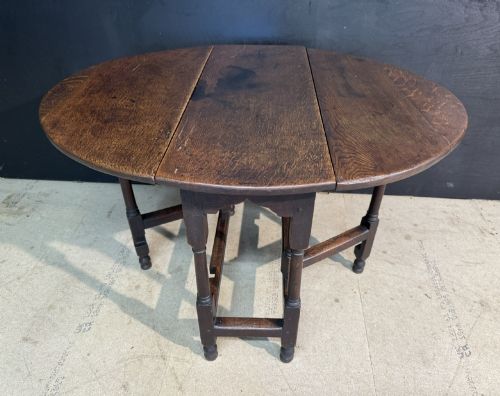
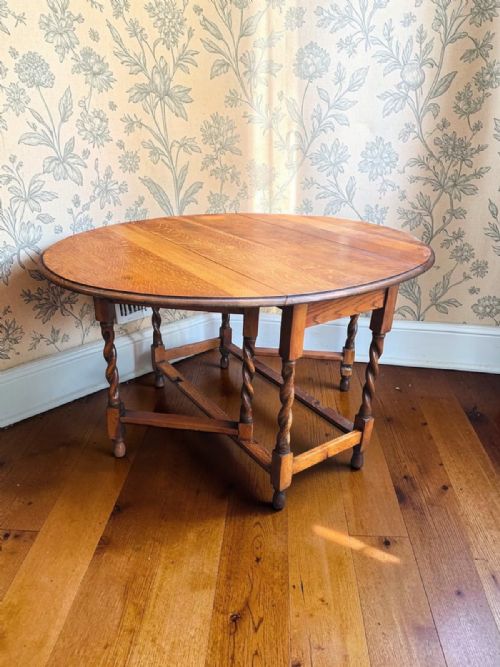
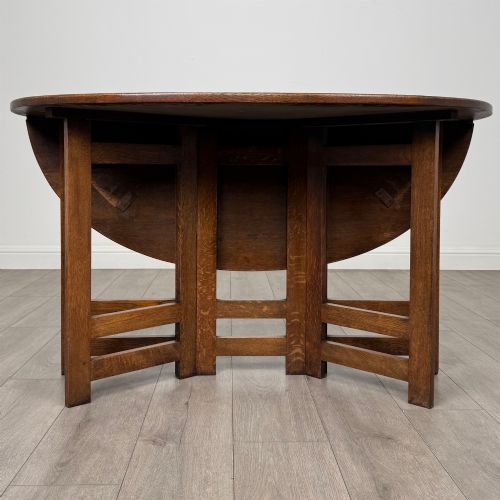
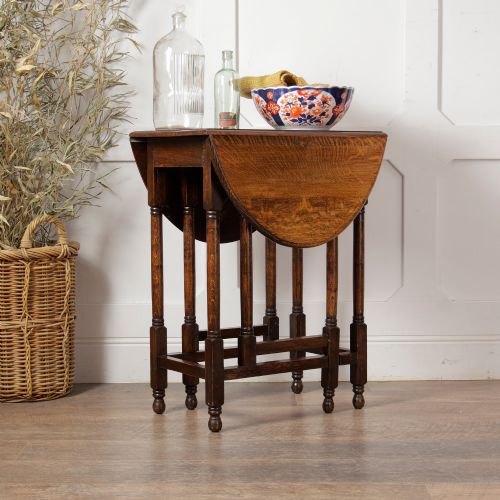
The version most commonly met on this page is the gateleg or drop-leaf table in solid oak, often featuring turned supports such as barley twists or bobbin legs. These pieces originate from periods spanning the seventeenth century through to the 1930s, reflecting centuries of domestic utility and changing interior requirements.
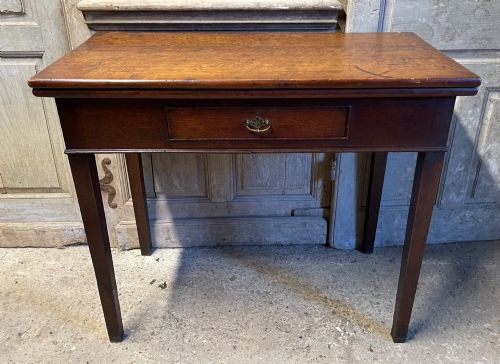
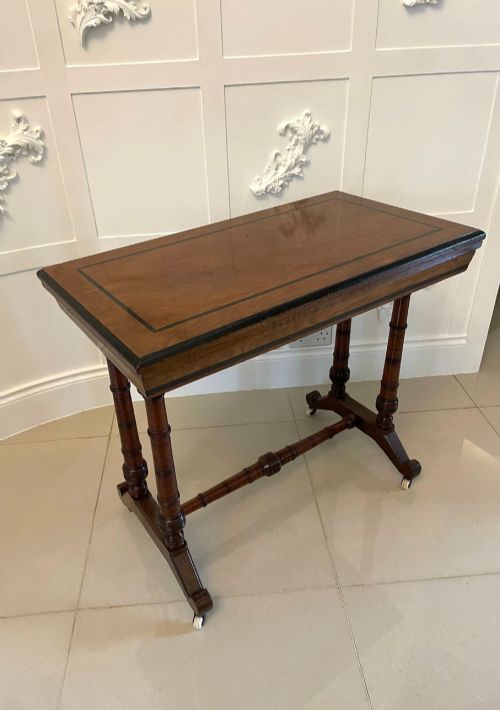
Beyond standard gatelegs, the selection includes specialised forms such as card tables, coaching tables, and butlers' trays with folding stands. These variations demonstrate how utilitarian folding furniture adapted for dining, games, and serving across different eras.
Assessing Quality
Quality rests in the integrity of the folding mechanism and the stability of the frame under use. Superior examples maintain tight joints and smooth action in drop-leaves or gatelegs without excessive play in the hinges or legs.
The depth of the timber's grain, the crispness of turned elements like barley twists, and the proportion of solid oak versus later timber replacements dictate the standing of a piece within the range.
Folding Oak Side Table Retail Price Guide 2026
Typical asking prices for folding oak side table among the pieces listed under this phrase on Sellingantiques today, from the lower quarter to the upper quarter. They describe what is for sale here now, not the wider market.
Listings feature solid oak across centuries, incorporating brass hardware, iron brackets, and contrasting ebony details.
Heals
The Folding Oak Side Table Glossary
- Gateleg table
- A table with hinged leaves supported by legs that swing outward on a gate action. This design allows a compact surface to expand significantly for dining or working.
- Barley twist
- A type of turning resembling a spiral rope, popular in seventeenth-century furniture and revived during the nineteenth and early twentieth centuries. It adds dynamic vertical movement to table legs.
- Butlers tray
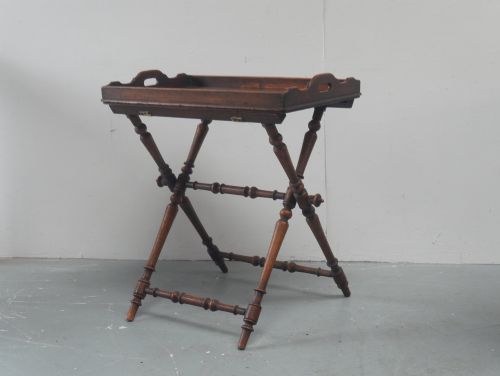
- A rectangular wooden tray, often with hinged sides, designed to sit upon a separate folding stand. Originally used for serving, it functions today as a portable coffee table.
- Credence table
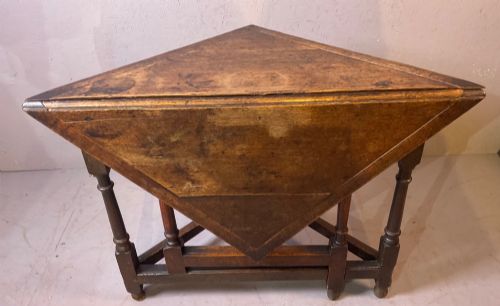
- A folding or triangular table from the seventeenth century featuring a pivoting top that reveals a concealed compartment. These ecclesiastical and domestic pieces represent high-status joinery.
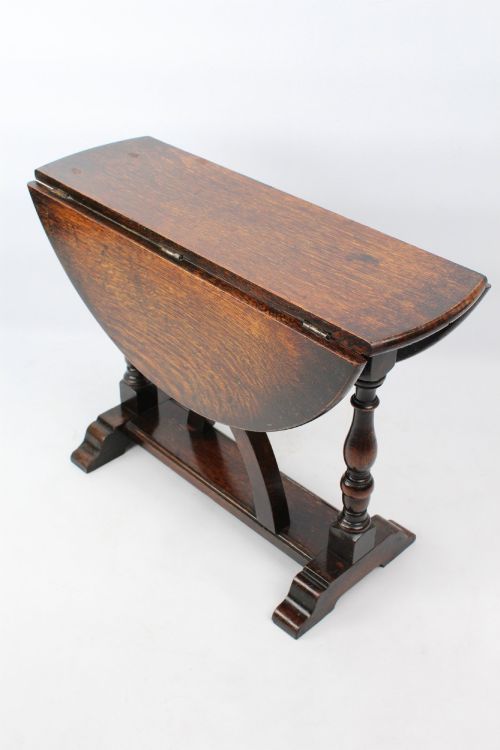
- Drop-leaf table
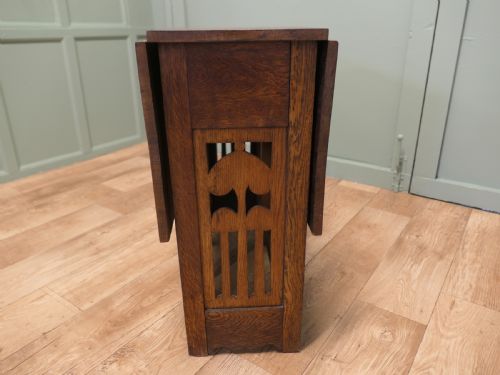
- A table with a fixed central section and hinged flaps that fold down at the sides. Brackets or legs support the leaves when raised.
Folding Oak Side Table: Frequently Asked Questions
How do I date a folding oak side table?
Dating relies on examining construction marks, hinge types, and the style of turning on the legs. Seventeenth and eighteenth-century examples exhibit hand-pegged joints and dense timber patination.
Later revival pieces from the Victorian and Edwardian eras often use standardised iron hinges and machine-turned barley twists. Comparing the joinery methods against known period characteristics clarifies the age.
Were these tables used for dining?
Many larger gateleg variants served as primary dining or supper tables in historic homes. Their folding leaves allowed them to be pushed against a wall when not in use to save floor space.
Smaller iterations functioned as side, occasional, or games tables for cards and reading. Their versatility made them suitable for multiple rooms in the house.
How do I care for antique oak timber?
Antique oak benefits from consistent indoor humidity and protection from direct sunlight to prevent the timber from drying out or splitting. Regular application of traditional beeswax nourishes the grain and maintains the surface sheen.
Avoid silicone-based polishes, which build up over time and attract dust. Gentle dusting with a dry cloth keeps the finish secure.
What is the difference between a gateleg and a drop-leaf?
A gateleg table utilises a swinging leg integrated into the frame to physically support the dropped leaf from underneath. This provides sturdy support for the entire extended surface.
A standard drop-leaf may rely on swing-out brackets, lopers, or simpler pivoting arms rather than a full leg gate. Both designs achieve a compact footprint when folded.