

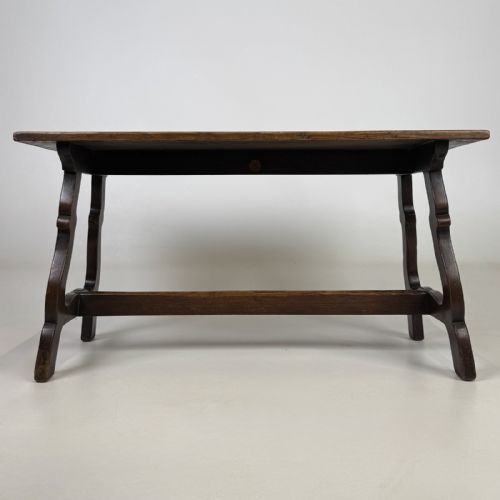
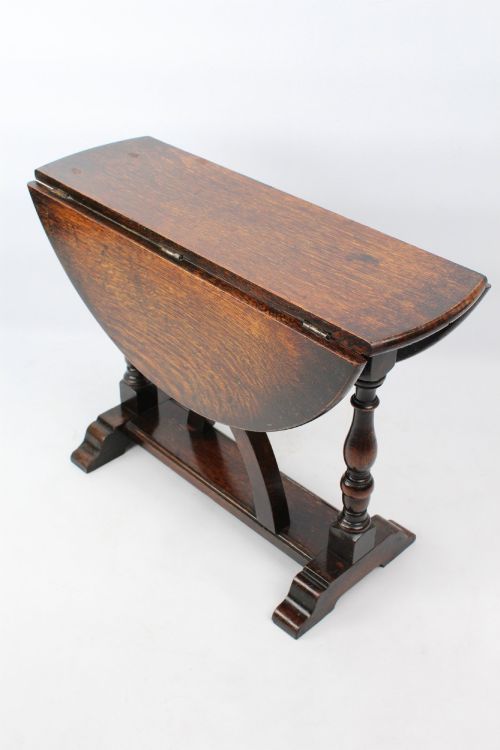
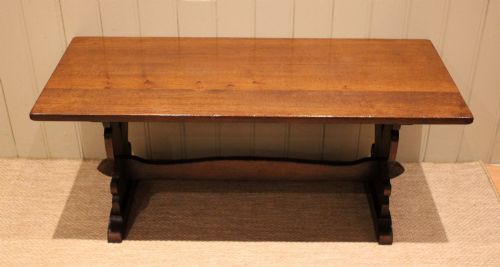
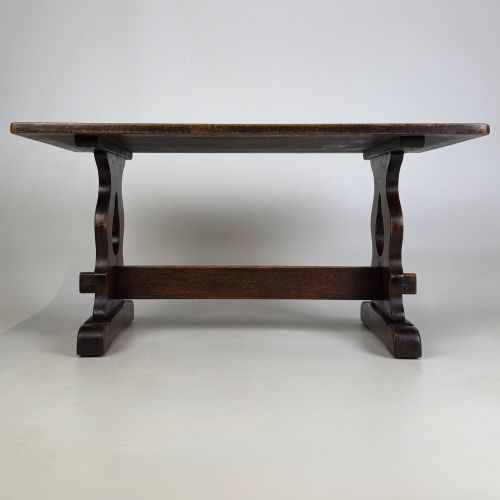




Trestle Base Coffee Table
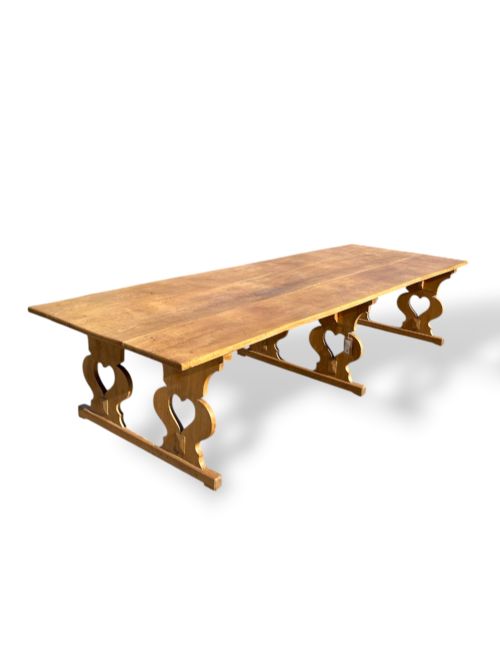
These trestle base coffee table examples range from sturdy oak country pieces to carved walnut designs, offering practical surfaces with solid period character.
Trestle Base Coffee Table
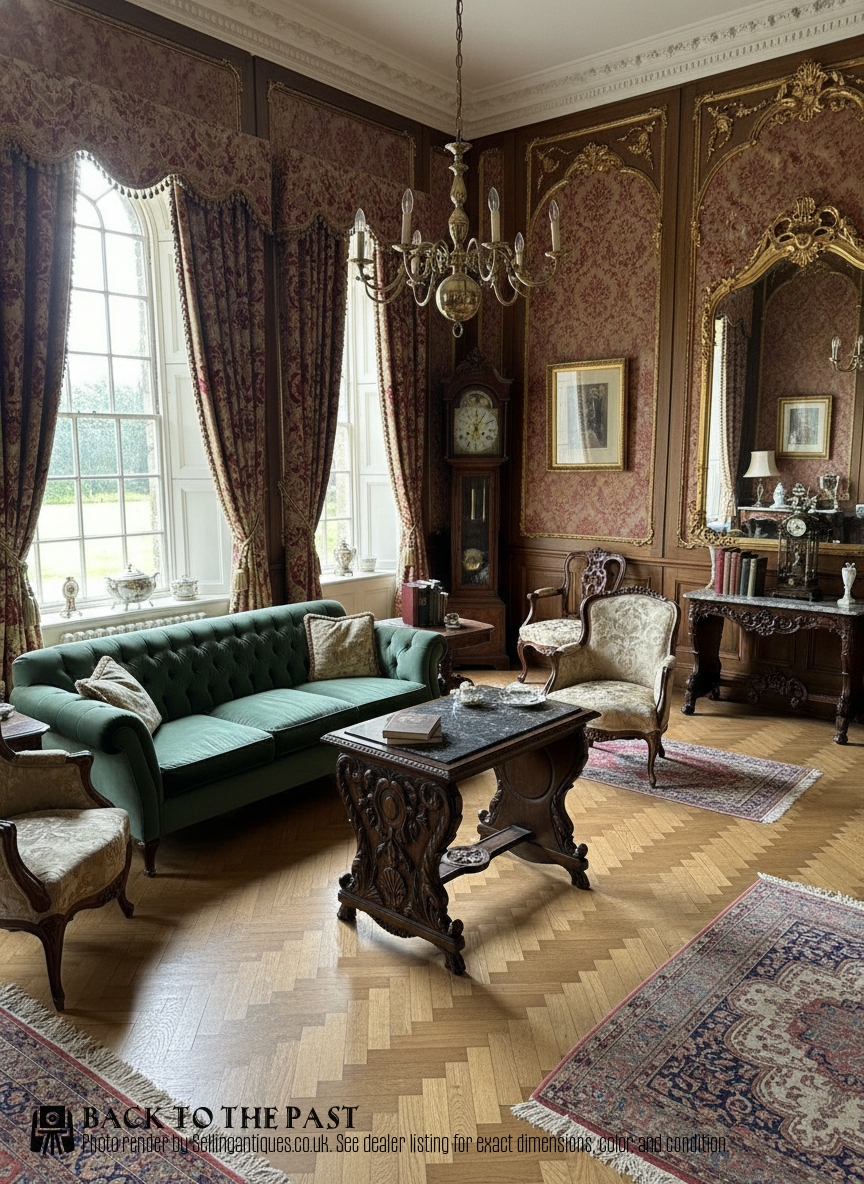
When you search for a trestle base coffee table, you encounter a selection drawn from the eighteenth, nineteenth and early twentieth centuries. These low tables range from large oak country pieces to refined Victorian walnut designs with marble tops.
Makers adapted earlier dining and refectory forms into lower proportions suited to sitting rooms and libraries. Their origins stretch across English workshops and Irish production, showing styles from rustic country to late Victorian interpretation.
How they were made
Joinery relies heavily on solid English oak and walnut, shaped with hand tools and pegged joints to form stable underframes. Timbers were selected for grain pattern and strength, particularly for the longitudinal beams and uprights that carry the weight of the top.
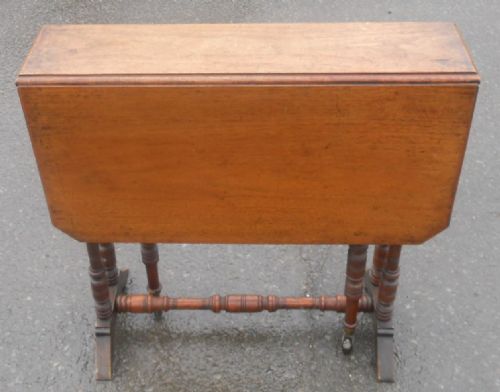
Surface treatments vary from polished wood finishes to marquetry inlays and inlaid marble inserts. Drop-leaf mechanisms and folding trestle supports utilise traditional hinges and pivoting wooden brackets built directly into the framework.
Trestle Base Coffee Table Retail Price Guide 2026
Typical asking prices for trestle base coffee table among the pieces listed under this phrase on Sellingantiques today, from the lower quarter to the upper quarter. They describe what is for sale here now, not the wider market.
Some tables double as multi-tasking household survivors that began life doing entirely different jobs before finding their feet as coffee tables.
What varies in quality
The distinction between standard utility items and finer examples lies in the selection of timber and the ambition of the carving. Dense, well-figured oak and figured walnut command greater attention than plain commercial timber.
Assembly methods and decorative details also set pieces apart, from simple pegged stretchers to intricate marquetry work and carved walnut pedestals. The integrity of the original joints dictates how firmly the top sits upon its base.
The Trestle Base Coffee Table Glossary
- Trestle base
- A support system comprising two or more upright frames connected by a horizontal beam. This design provides robust floor contact and leaves leg room underneath.
- Gateleg
- A table with hinged legs that swing out to support folding leaves on either side. It allows the surface area to expand when needed.
- Occasional table
- A small, portable table designed for specific, intermittent use within a room. These pieces often serve beside seating or in halls.
Trestle Base Coffee Table: Frequently Asked Questions
What is a trestle base coffee table?
A trestle base coffee table is a low surface supported by upright frames joined by a central beam rather than four standard corner legs.
These pieces adapt historical table designs to domestic living spaces, providing sturdy support and distinct architectural character.
How do I date a wooden coffee table?
Dating relies on examining the timber species, construction joints, tool marks and overall style relative to known periods.
Earlier examples from the eighteenth century display hand-sawn boards and pegged joinery, while twentieth-century pieces show more uniform machining.
Where were these tables used originally?
Many of these forms originated as larger dining or refectory tables before being shortened or designed specifically for lower proportions.
Victorian and Edwardian drawing rooms, libraries and country houses utilised them as central or occasional surfaces.
How do I care for antique wood surfaces?
Maintenance involves keeping timber away from direct heat sources and sudden humidity changes to prevent splitting. Regular dusting with a soft cloth and occasional application of appropriate wax preserves the polish.