

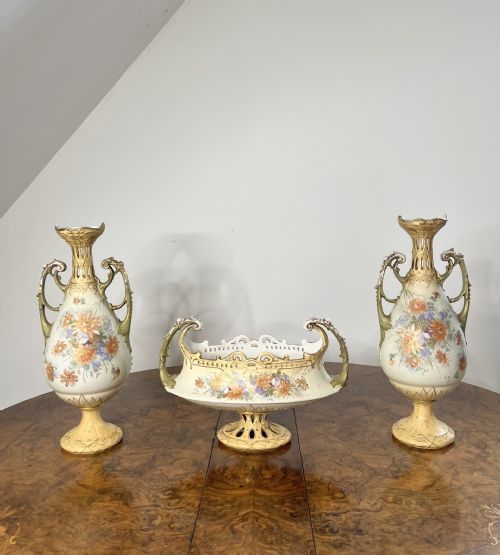
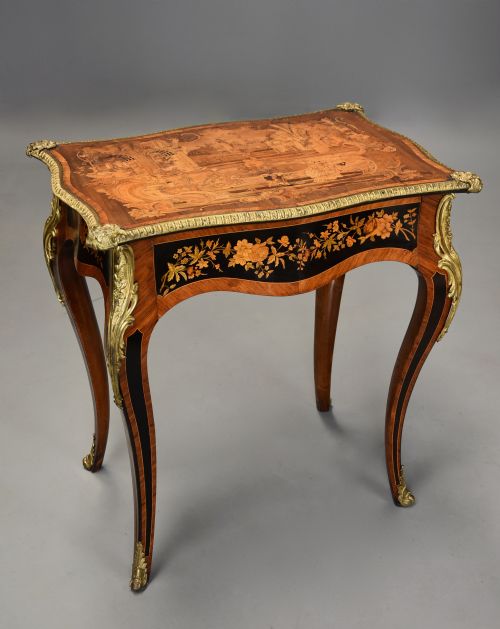


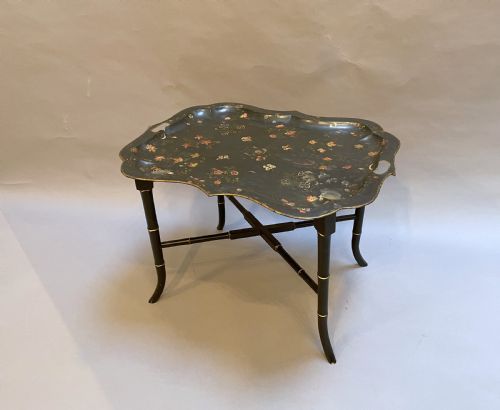


Victorian Floral Side Table
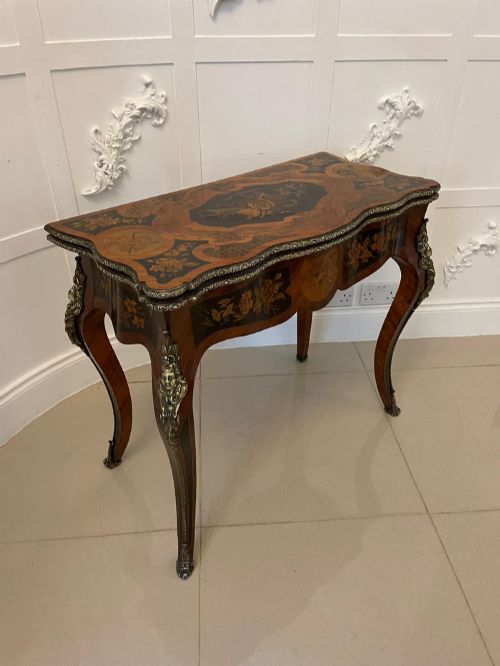
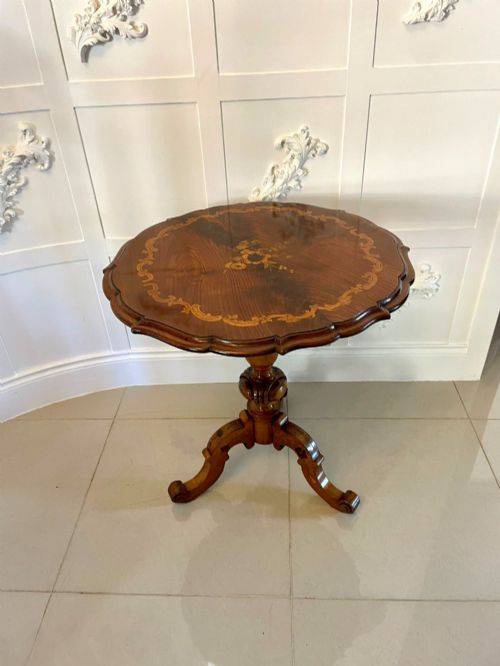
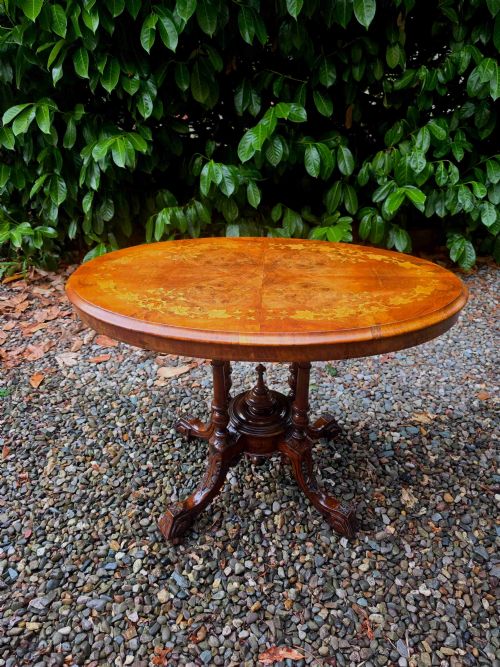
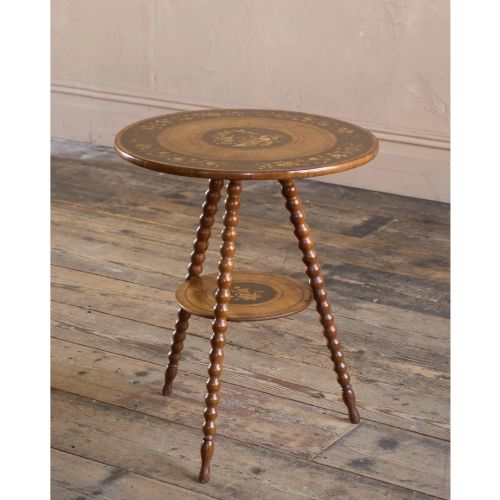
A victorian floral side table brings rich timber and delicate marquetry together, offering a practical surface with distinct period character.
Victorian Floral Side Table
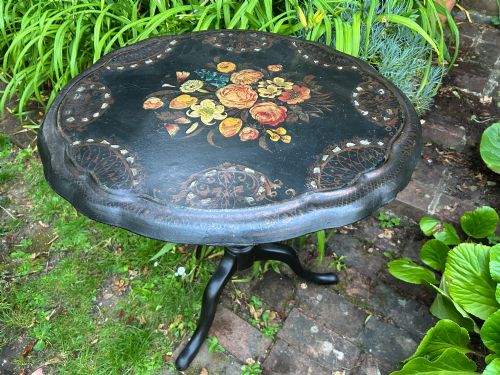
A victorian floral side table is an occasional or centre piece created during the nineteenth century, often featuring botanical inlay or painted decoration.
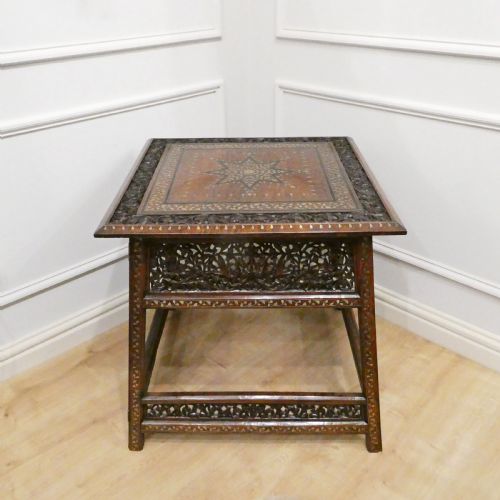
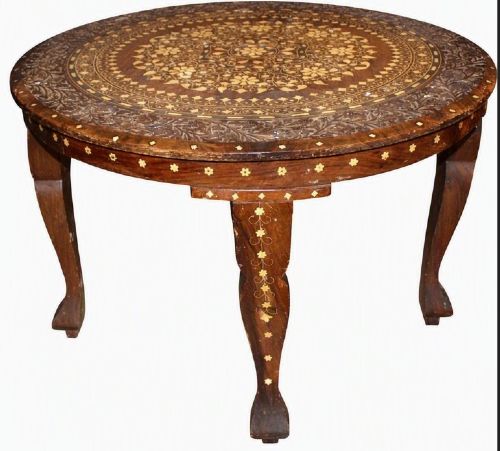
The selections here span from mid Victorian burr walnut examples to late period pieces influenced by French styles and Anglo-Indian craftsmanship.
Forms vary from oval Sutherland tables and card tables to octagonal and lamp tables, each designed for domestic display and utility.
Materials and construction
Cabinet makers utilised dense hardwoods such as walnut, rosewood, kingwood, and mahogany as foundations for intricate surface decoration.
Floral motifs take shape through wood inlay, marquetry, and hand-painted details, frequently enhanced by brass mounts, bone, and ormolu.
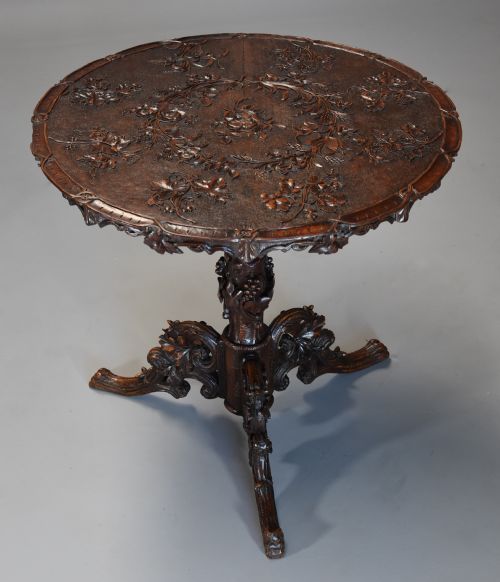
Structural elements range from bobbin-turned legs and tripod bases to carved linden wood and papier mâché.
Listings feature walnut, rosewood, kingwood, and mahogany alongside materials like papier mâché, brass, marble, and bone inlay.
Distinguishing better examples
Quality rests in the precision of the marquetry and the crispness of any carving, where tighter joints and varied timber tones elevate the piece.
The choice of primary and secondary woods dictates durability, with burr walnut and kingwood marking higher grades of production.
Artisanal execution in floral details and secondary materials like ormolu or brass mounts separates standard utility furniture from finer works.
Liberty & Co·Edwards & Roberts
The Victorian Floral Side Table Glossary
- Marquetry
- Decorative veneer applied to a structure in patterns, forming pictorial floral designs.
- Ormolu
- Gilded bronze mounts attached to furniture corners and legs for ornamentation.
- Burr walnut
- Timber taken from the root growth of a walnut tree, showing swirling grain patterns.
- Etagere
- A set of open shelves for displaying small objects, often seen in French revival styles.
- Sutherland table
- A narrow drop-leaf table with hinged flaps that fold down nearly vertically.
Victorian Floral Side Table: Frequently Asked Questions
Where did people place a victorian floral side table?
These pieces sat in drawing rooms, parlours, and hallways to hold lamps, cards, or decorative objects.
Their compact footprints allowed them to move easily between seating areas depending on daily domestic needs.
How do I date a victorian floral side table?
Dating relies on timber choice, construction methods, and stylistic influences recorded in the period.
Mid nineteenth century examples often favour burr walnut with marquetry, while later decades show varied revival styles and exotic inlays.
What is the difference between a side table and a centre table?
Side tables typically stood against a wall or beside seating, while centre tables stood free in the middle of a room.
Centre tables often feature decoration finished on all four sides or a circular top to be viewed from any angle.
How should I care for a wood and marquetry table?
Keep the timber away from direct heat sources and strong sunlight to prevent the veneers from drying out.
Routine dusting with a dry cloth protects the polished surface and the delicate floral inlay work.