
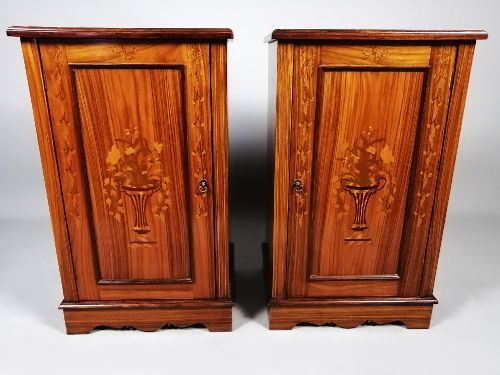
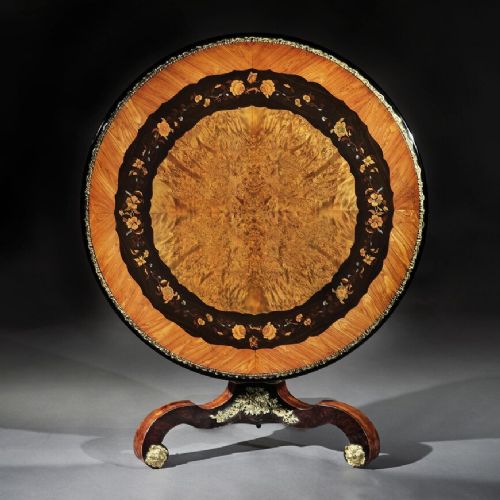
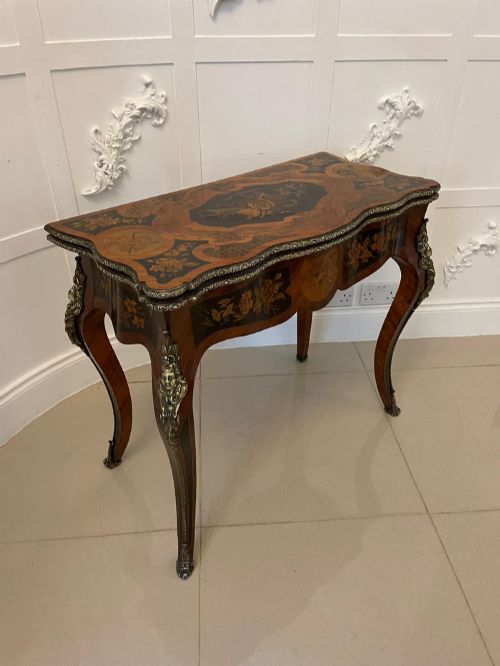

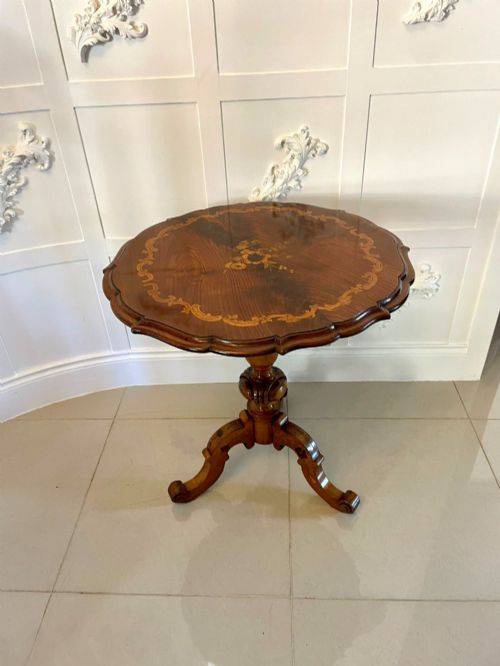
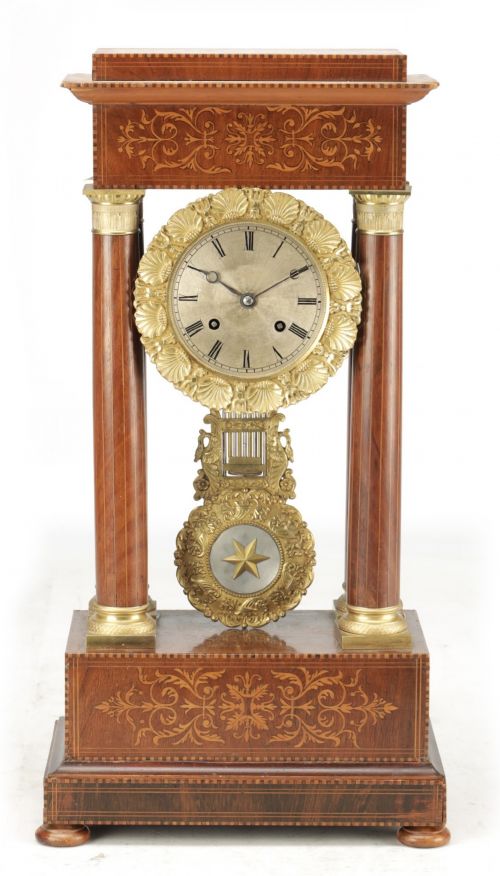
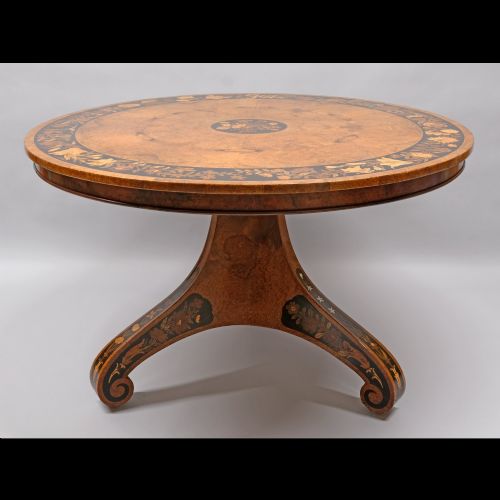
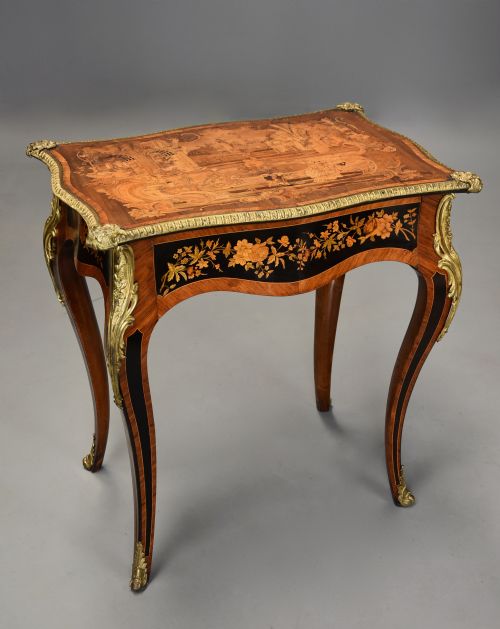
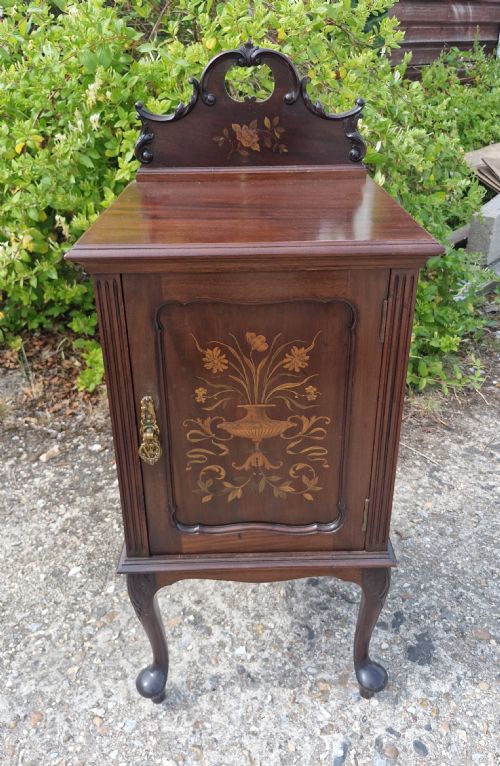


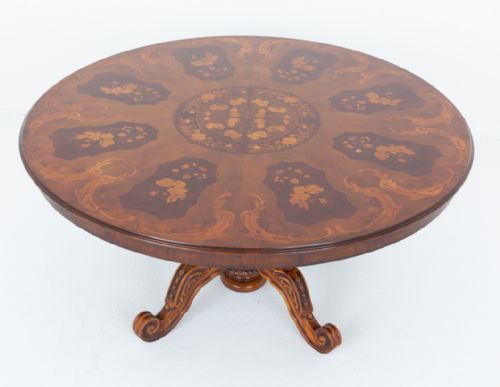
Victorian Floral Marquetry Table
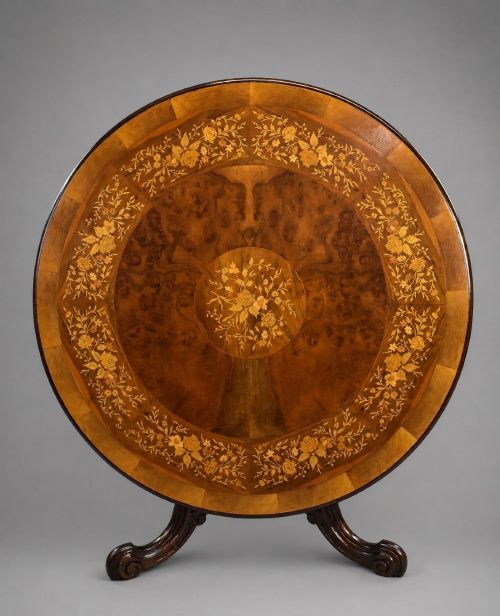
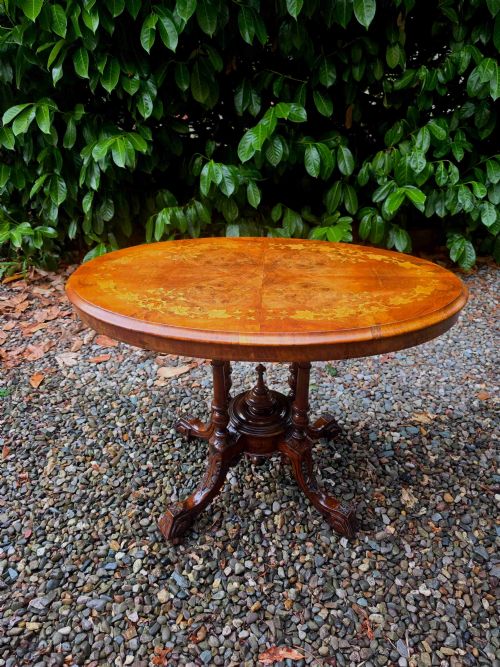
When you search for a victorian floral marquetry table, you find pieces showcasing elaborate wood inlay and rich walnut surfaces designed for display.

Victorian Floral Marquetry Table
A victorian floral marquetry table brings together decorative wood veneers arranged in botanical patterns on surfaces intended for formal reception rooms.
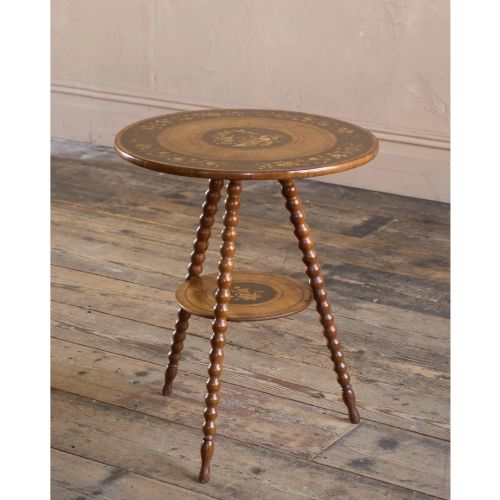
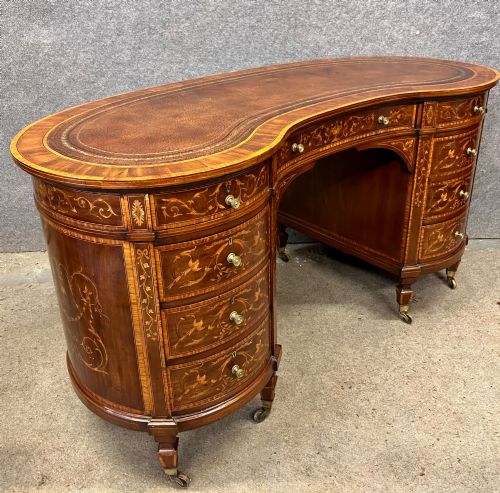
The selections available here include centre tables, card tables, writing desks, and occasional tables originating primarily from the nineteenth century.
Burr walnut and rosewood serve as the main carcase woods, often enriched with floral motifs composed of lighter contrasting timbers.
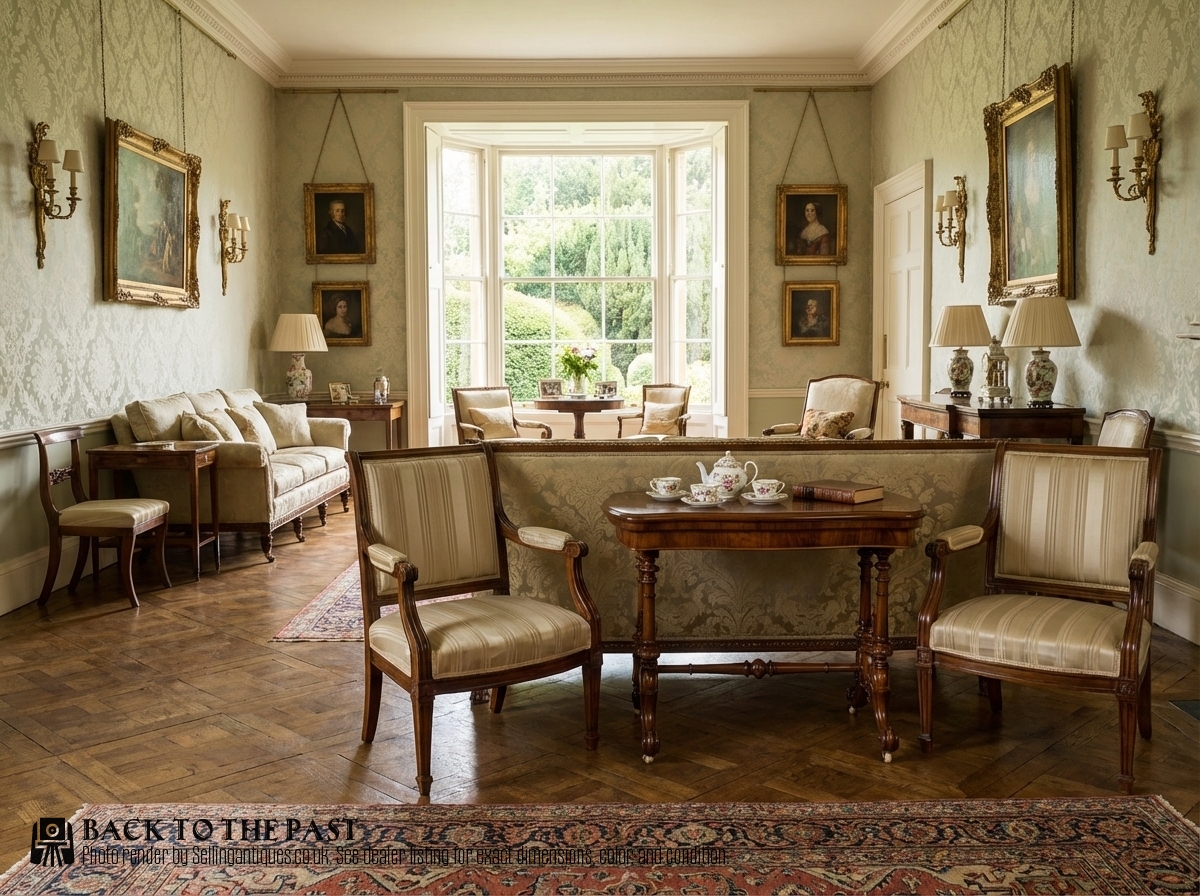
Materials and construction
Cabinet makers utilised walnut, kingwood, and rosewood foundations, applying thin veneers of contrasting woods to the top surfaces to create detailed floral panels.
Brass mounts, ormolu details, and occasional bone inlays were integrated to accent the complex marquetry designs on tables and cabinets.
Frames incorporate structural timbers like mahogany and walnut, supporting the intricate top surfaces with turned legs, pillar supports, or cabriole legs.
Listings feature burr walnut, rosewood, and kingwood timbers alongside French revival and Victorian styles.
Quality variations
The finesse of the veneer cutting and the botanical detail in the marquetry distinguish standard production from exceptional cabinet work.
The choice of primary wood, such as heavily figured burr walnut or dense kingwood, dictates the visual depth of the piece.
The precision of ormolu mounts and the retention of original brass hardware indicate the level of craftsmanship invested in the table.
Edward Holmes Baldock·Edwards and Roberts
The Victorian Floral Marquetry Table Glossary
- Marquetry
- A decorative technique applying pieces of veneer to a structure to form ornamental patterns and pictures. It differs from inlay by covering the entire surface rather than being set into hollowed recesses.
- Burr walnut
- Wood taken from a walnut tree growth, yielding swirling grain patterns that create rich visual texture. This timber frequently forms the background for floral marquetry.
- Ormolu
- Gilt bronze mounts used to decorate furniture edges and feet. These additions provide metallic contrast to the dark wood veneers.
- Centre table
- A freestanding table designed to be viewed from all sides in the middle of a room. These forms frequently feature comprehensive marquetry on the top.
Victorian Floral Marquetry Table: Frequently Asked Questions
What rooms suit a floral marquetry table?
These pieces function well in drawing rooms and studies where their decorative tops can be seen clearly.
They pair effectively with traditional and eclectic interior schemes alike.
How do I care for burr walnut veneer?
Keep wooden furniture away from direct sunlight and steady humidity levels to prevent the veneer from lifting.
Apply traditional wax polish sparingly to maintain the finish.
What is the difference between a centre table and a side table?
Centre tables are finished on all sides for placement in the middle of an interior space.
Side tables sit against walls and typically feature plain secondary timber on the reverse edge.
How can I identify nineteenth century marquetry?
Examine the wood types and the precision of the veneer joints under magnification.
Nineteenth-century examples often utilise walnut and rosewood foundations with hand-cut floral arrangements.