


Victorian Flatware Set
A victorian flatware set brings substantial silver and fitted presentation into daily dining, holding the weight of nineteenth-century craftsmanship on the table.
Victorian Flatware Set
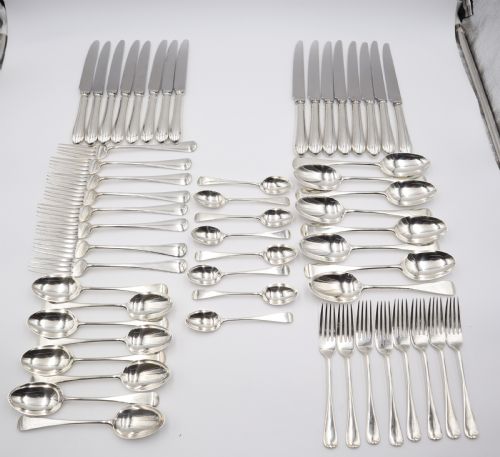
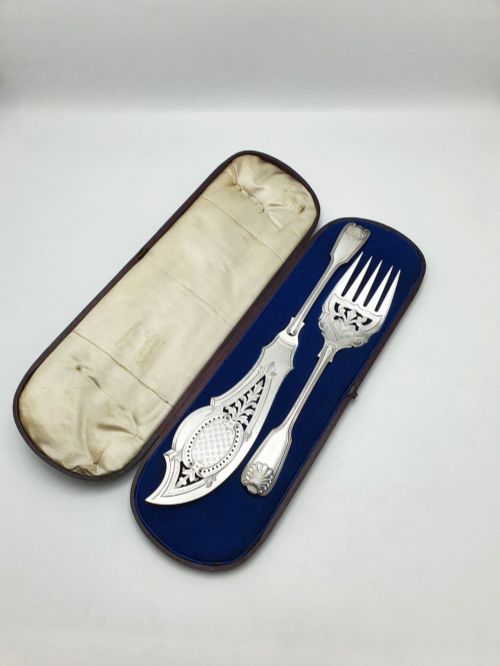
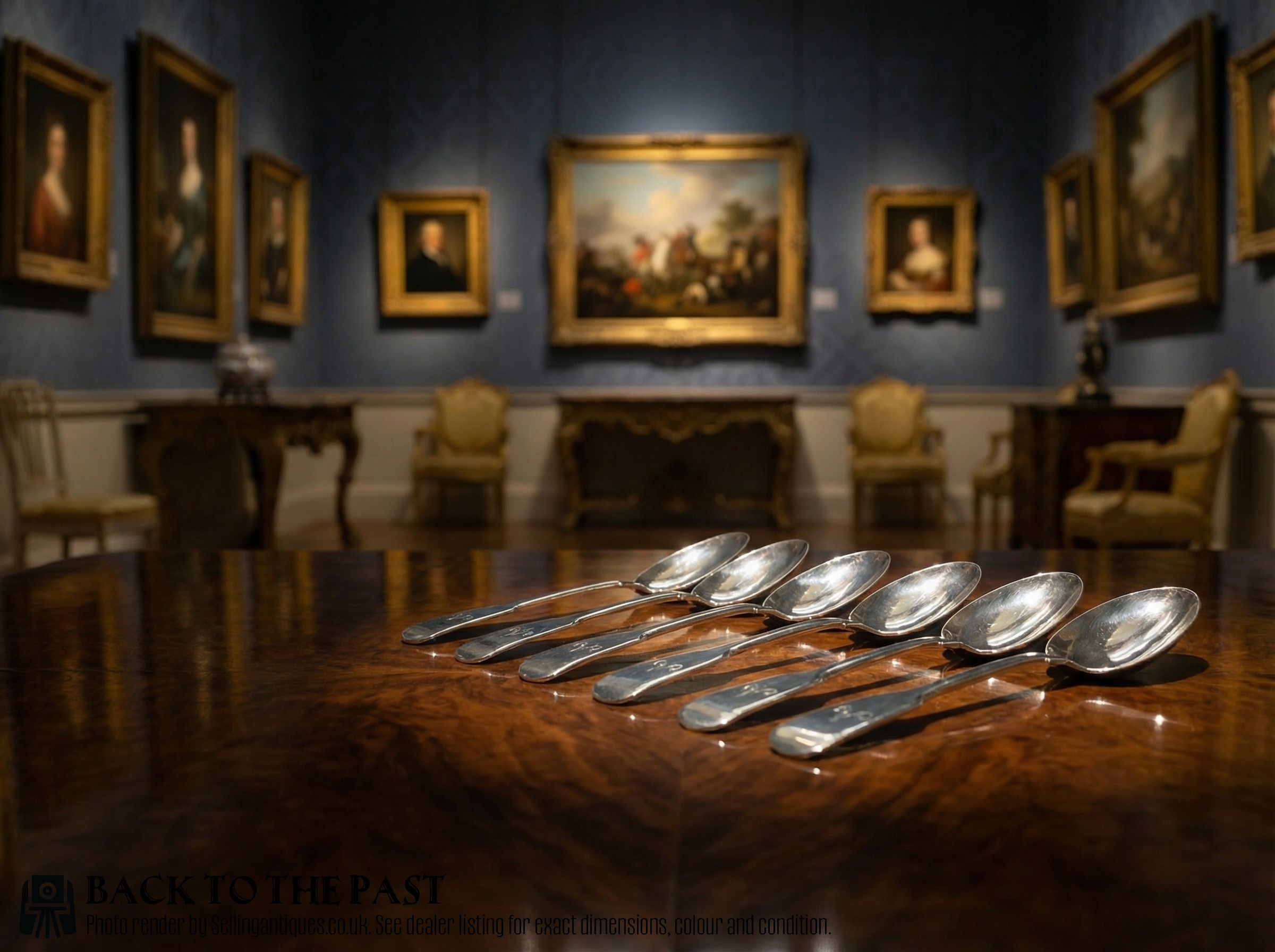
A victorian flatware set encompasses everything from full canteens for twelve persons down to small boxed groups of silver teaspoons, fish servers, and christening sets. Buyers encounter individual canteens housed in oak boxes, paired serving spoons, and matched sets of cutlery designed for fruit or fish. The periods span the Victorian era alongside Edwardian examples and nineteenth-century pieces.
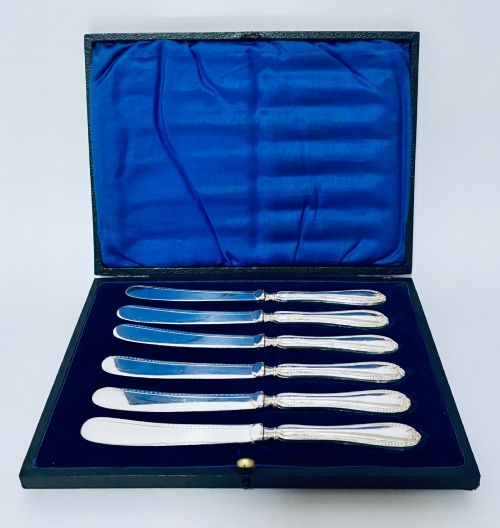
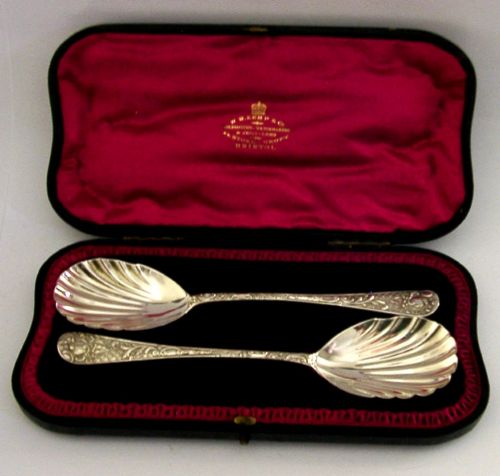
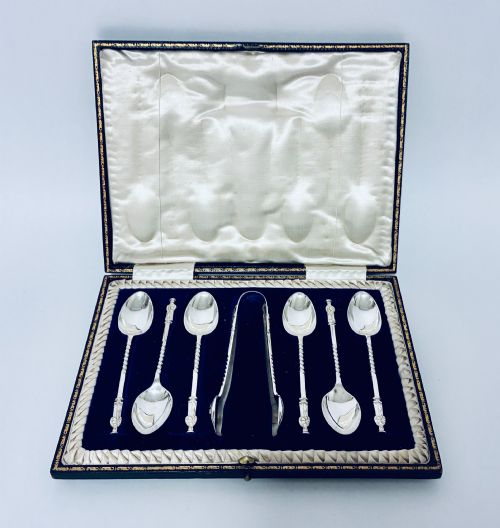
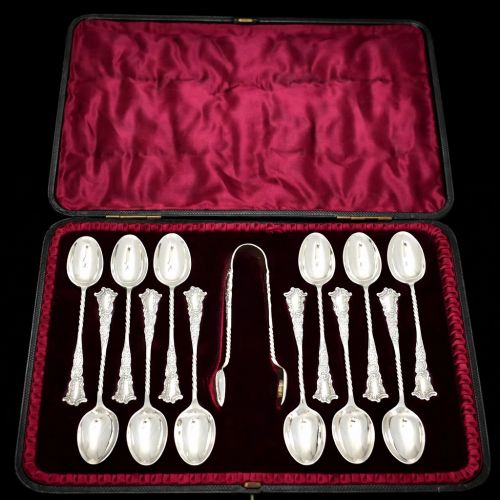
Cased sets frequently feature fitted interiors lined with velvet, silk, or satin inside leatherette or wooden outer boxes. These configurations protect the contents, which range from fiddle pattern cutlery to apostle spoons and sugar tongs. The forms reflect specific domestic rituals of the period, including dedicated tea, coffee, and dessert services.
Materials and construction
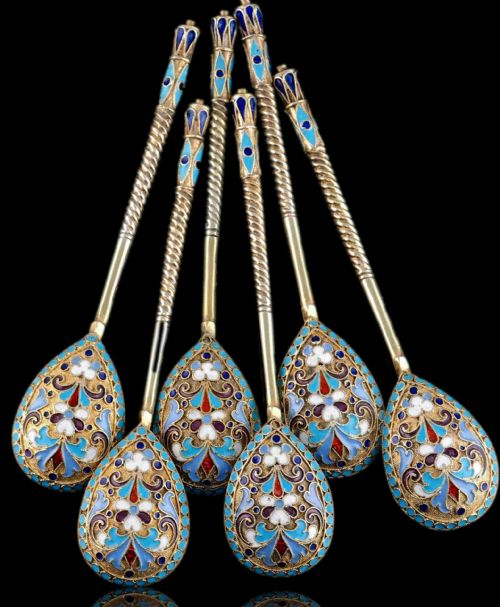
Makers utilised sterling silver and silver plate for the primary utensils, pairing them with steel blades on knives and occasional antler handles on fish servers. Horn, enamel, and specialised metals appear in specific regional styles such as Russian cloisonné work. The metalwork relies on traditional smithing techniques, shaping solid silver or applying plating over base metals.
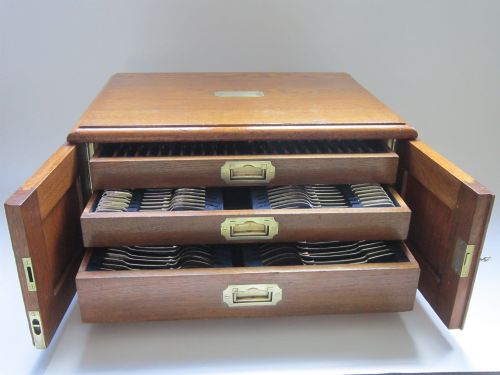
Storage housings combine structural wood like oak with protective internal linings of satin, silk, and velvet, secured within leatherette or wooden exterior casings. These presentation boxes are constructed to measure, securing individual forks, spoons, and knives within custom slots. The integration of metal components with organic handles demonstrates nineteenth-century assembly methods.
Listings feature periods spanning from the early 1800s through the Edwardian era, incorporating materials such as sterling silver, silver plate, oak, velvet, and silk.
Craftsmanship and preservation
Quality separates by the crispness of the chased or engraved patterns on handles, such as the distinct motifs found on Queens pattern or fiddle pattern cutlery. Deeper relief work and heavier gauge silver indicate superior initial manufacture, whereas thinner plate shows wear over time. Enamelled pieces and detailed cloisonné work display varying degrees of artistic precision in the coloration and metal borders.
The integrity of the original fitted case significantly influences the standing of a set. Well-preserved wooden canteens with intact velvet or satin linings and operational hardware retain their complete context. Sets where utensils remain uniformly matched in pattern and maker demonstrate greater compositional harmony than mixed groupings assembled later.
Walter & John Barnard·Dmitrii Nikolaevich Nikolaev·Robert Stebbings
The Victorian Flatware Set Glossary
- Fiddle pattern
- A nineteenth-century flatware handle design characterised by a narrow stem that broadens into a shape resembling a fiddle or violin. It remains a standard style across many regional services.
- Queens pattern
- An ornate, highly decorative nineteenth-century flatware style featuring shell and scroll motifs along the border of the handle. This design denotes formal dining services.
- Canteen
- A fitted box, chest, or case specifically designed to house a complete set of cutlery or flatware. These containers often feature multiple tiers or slotted trays.
- Cloisonné
- An enamelwork technique where thin metal wires are soldered to a metal base to create compartments filled with coloured paste. It appears on specialised spoon sets.
- Christening set
- A small, specialised grouping of silver items such as a spoon, fork, and knife presented as a traditional gift for a naming ceremony. They are usually housed in dedicated velvet-lined boxes.
Victorian Flatware Set: Frequently Asked Questions
What is included in a cased christening set?
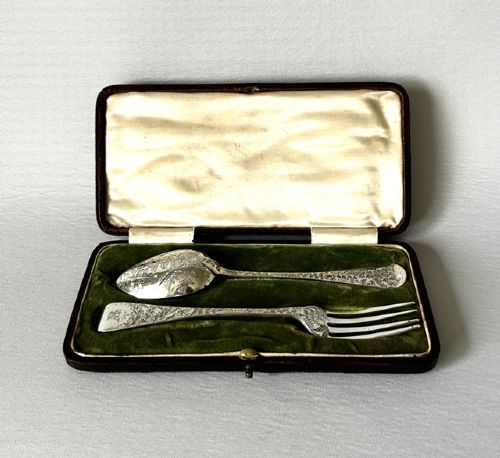
A cased christening set typically comprises a small combination of silver items, such as a spoon, fork, and knife, manufactured for infant use. These groupings are housed in fitted boxes lined with silk or velvet.
Such sets function primarily as commemorative gifts rather than standard daily tableware. They showcase smaller scales and often feature detailed engraving suited to ceremonial occasions.
What are fish servers used for?
Fish servers consist of a specialised large fork and a wide, flat knife or slice designed specifically for serving fish courses. The broad blade assists in lifting delicate flesh cleanly from the bone.
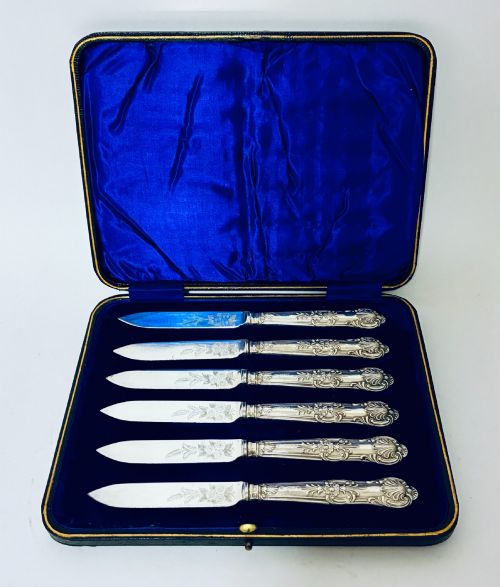
These implements often feature engraved decoration on the metal blade and alternative materials for the grip, such as antler or horn. They are frequently found preserved within dedicated presentation cases.
How were nineteenth century canteens stored?
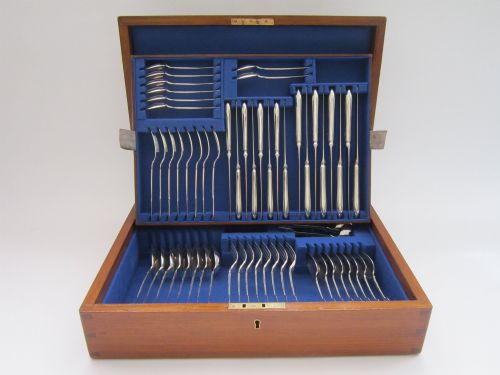
Nineteenth-century canteens were stored in fitted wooden boxes, such as oak cases, designed to protect the contents from tarnish and physical damage. The interior compartments feature custom slots lined with materials like velvet or satin.
This method of housing kept full sets for twelve persons or mixed flatware organised and secure between uses. The exterior boxes often include metal hardware and locks.