
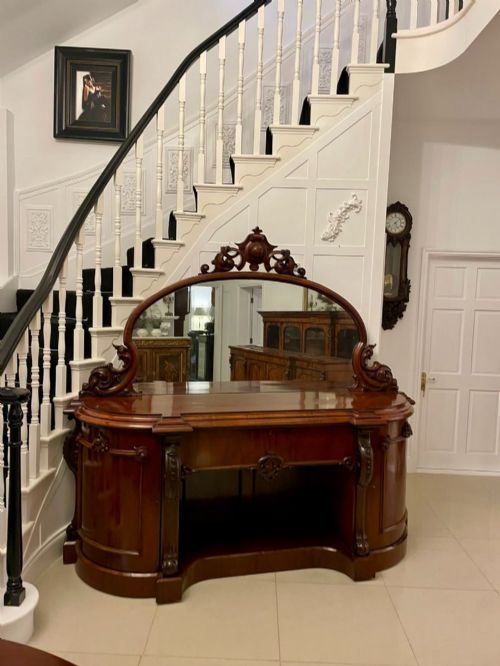
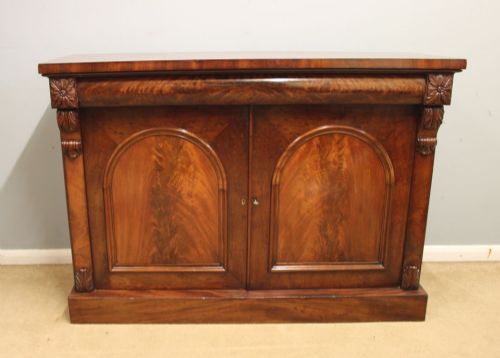
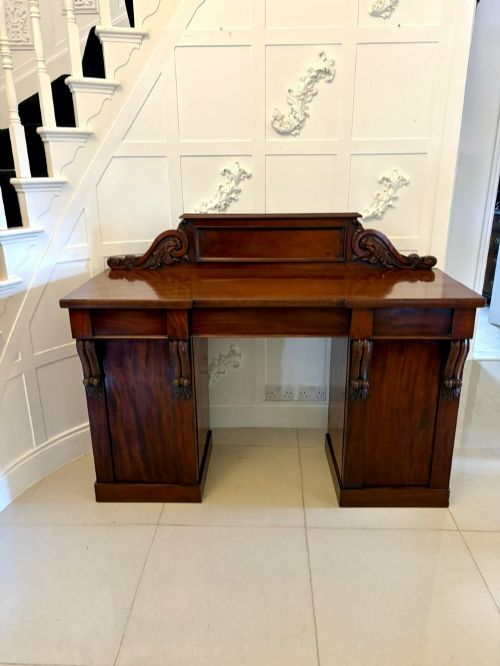
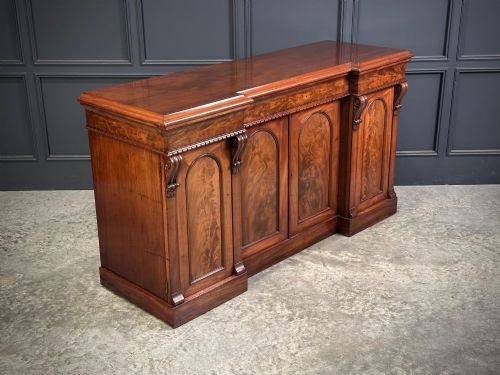
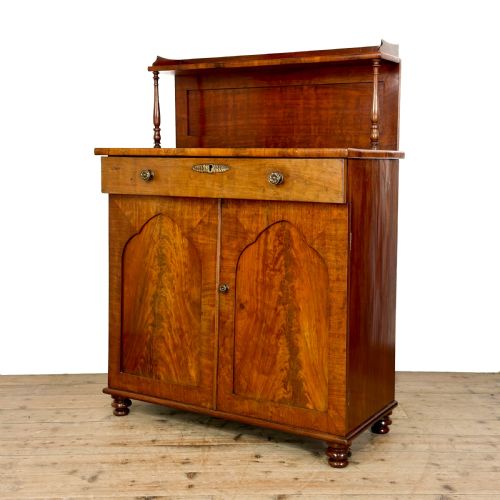


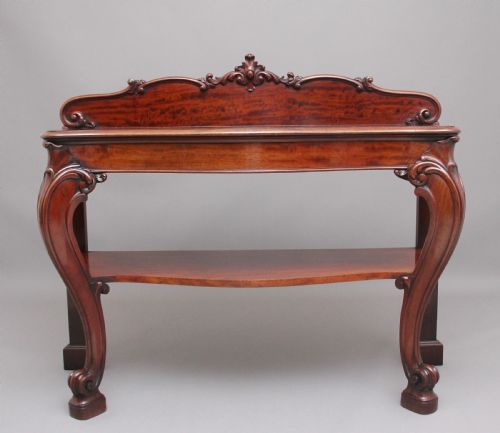
Victorian Flame Mahogany Buffet
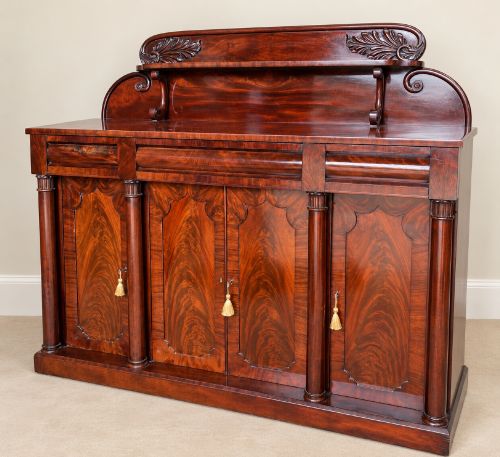
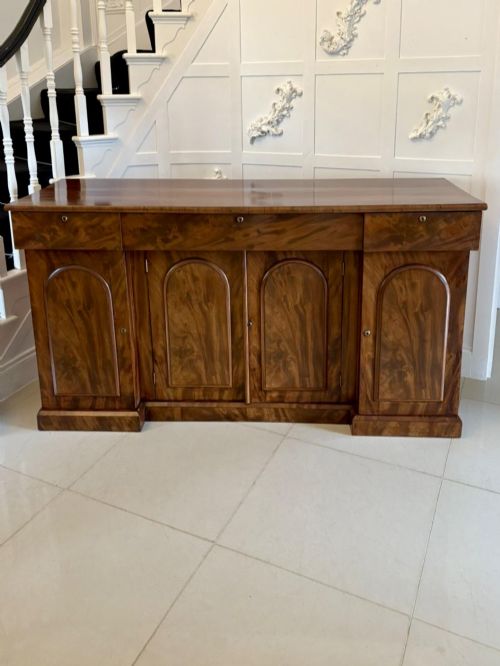
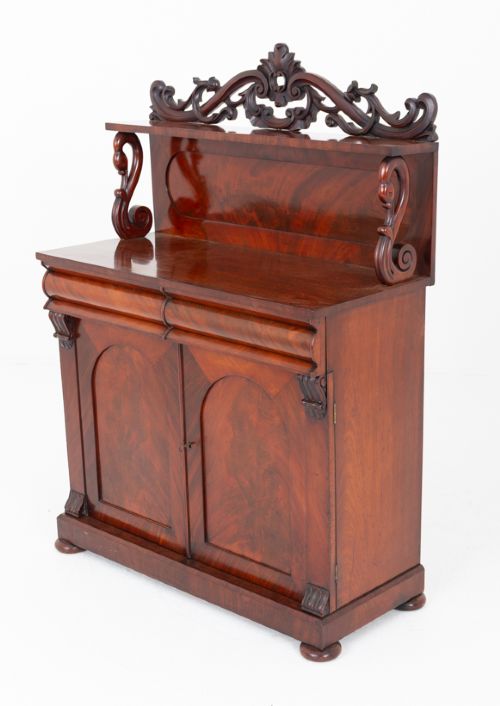
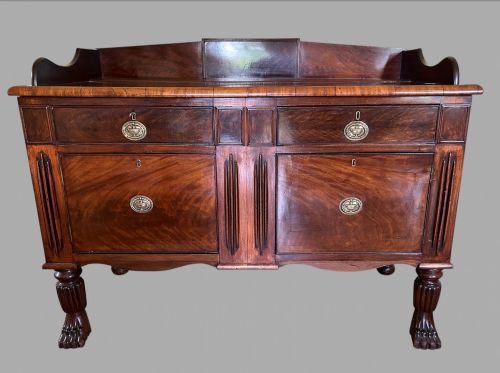
A victorian flame mahogany buffet brings deep wood grain and substantial nineteenth-century presence to a dining room or hall.
Victorian Flame Mahogany Buffet
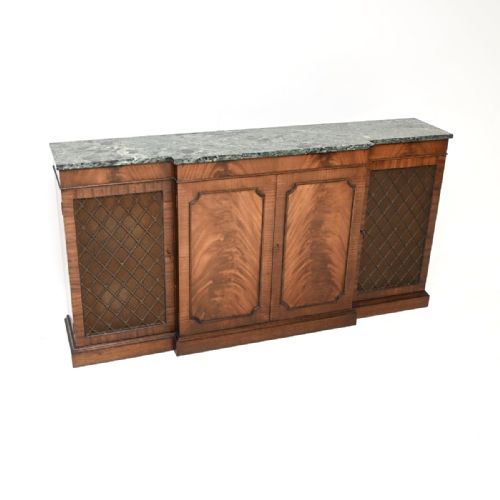
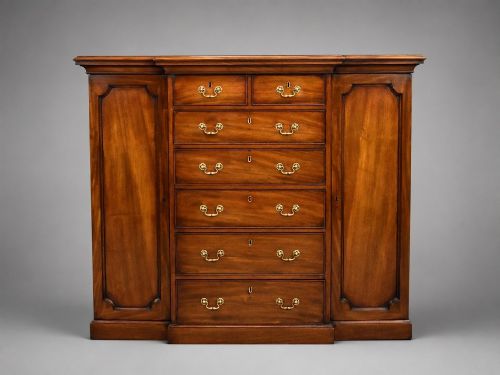
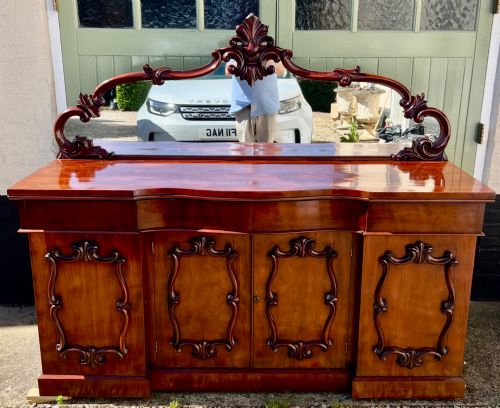
These pieces are substantial nineteenth-century storage furniture designed for dining rooms and grand hallways, taking forms such as sideboards, chiffoniers, and serving tables. A buyer searching for a victorian flame mahogany buffet encounters heavy timber cabinetry spanning periods from the 1840s through to the end of the century. The most common format on this page is the large pedestal or breakfront sideboard featuring multiple doors and occasionally a mirror back.
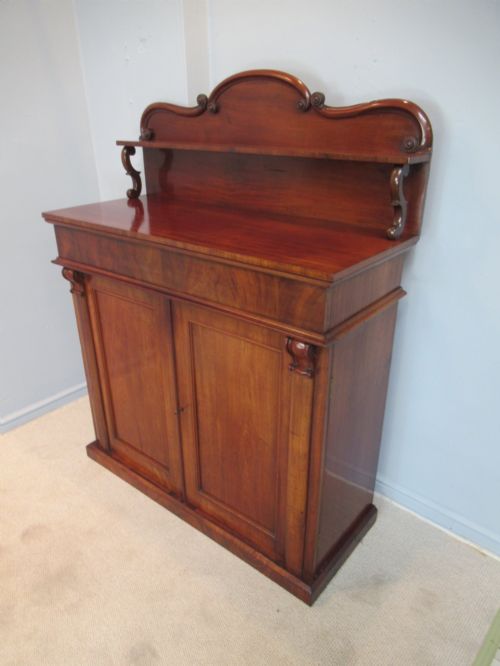
Makers and workshops produced these servers in various configurations including three-door and four-door models, as well as smaller chiffoniers. Stylistic influences range from standard Victorian and Regency to William IV and Chippendale Revival. Buyers select these items for their generous proportions and heavy timber construction.
The category encompasses functional serving pieces and display cabinets outfitted with marble tops, brass fittings, and glass elements. Pieces span the entire nineteenth century, incorporating regional variations in carving depth and door arrangement. Each example provides enclosed storage behind panelled timber doors.
How they were made
Cabinetmakers constructed these pieces using solid mahogany frames overlaid with figured flame mahogany veneer to create undulating grain patterns across the doors and drawer fronts. Carved wooden details and applied mouldings add depth to the timber surfaces.
Secondary materials such as marble, brass, and mirror glass appear on specific forms, providing contrasting textures to the dark wood. Workshops joined structural elements with traditional cabinetmaking joints designed to support heavy timber tops.
Some nineteenth-century sideboards arrived with secret cellaret drawers lined to keep your claret cool before refrigeration existed.
What varies in quality
The distinction between standard examples and top-tier items rests in the selection of the veneer and the ambition of the carving. Superior pieces display symmetrical flame patterns matched across multiple doors, while simpler versions rely on plainer mahogany timber.
Carved embellishments on the backsplashes, mirror frames, and pedestals separate basic storage units from exceptional architectural servers. The crispness of the hand-carved mouldings and the integration of fitted interior drawers indicate the level of craftsmanship invested in the piece.
Robson & Sons
The Victorian Flame Mahogany Buffet Glossary
- Flame mahogany
- A distinct timber veneer cut from the branching points of the mahogany tree, creating swirling, flame-like grain patterns. Cabinetmakers utilised this veneer on prominent surfaces like drawer fronts and cabinet doors.
- Chiffonier
- A compact sideboard or low cabinet typically fitted with shelves enclosed by doors and occasionally a raised back. This form served smaller dining spaces or drawing rooms during the nineteenth century.
- Breakfront
- A piece of furniture whose central section projects forward from the flanking outer sections. This architectural arrangement creates depth and shadow across the front elevation of large sideboards.
- Pedestal sideboard
- A heavy dining room server featuring two substantial cupboards supporting the main board. These units often incorporate cellarets or interior drawers for storage.
Victorian Flame Mahogany Buffet: Frequently Asked Questions
What is a flame mahogany buffet?
A flame mahogany buffet is a large nineteenth-century dining room server characterised by highly figured wood grain and enclosed cupboard storage.
These pieces function as sideboards or chiffoniers, providing surfaces for serving food and interior space for tableware.
How do I date a Victorian sideboard?
Dating relies on stylistic markers such as mirror back designs, heavy pedestals, and specific revival influences like Chippendale or Gothic touches.
Cabinet construction methods and the presence of flame veneer also help narrow down the decade of production within the nineteenth century.
Where were these buffets used?
Original placement was primarily in grand Victorian dining rooms, formal halls, and drawing houses for storing silver, linen, and dining accessories.
Modern interiors utilise them in similar settings as statement storage pieces or dining room servers.
What is the difference between a sideboard and a chiffonier?
A sideboard is typically a long, heavy dining room server designed for large quantities of china and silver.
A chiffonier is generally smaller in scale, often functioning as a side cabinet with a low back for smaller reception rooms.