

Victorian Fireplace Screen
A victorian fireplace screen protects a room from radiant hearth heat while dressing a fireplace opening when the fire is unlit.
Victorian Fireplace Screen
When you search for a victorian fireplace screen, you encounter physical barriers designed to manage coal or wood hearths. The selection ranges from folding fan configurations to rigid glass panels and textile screens mounted on stands.
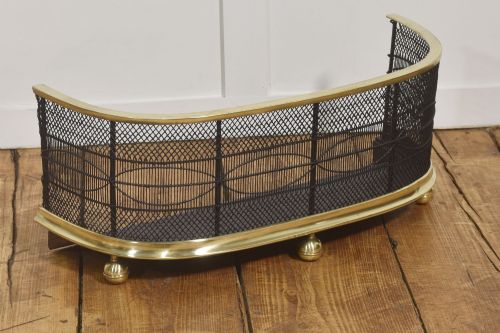
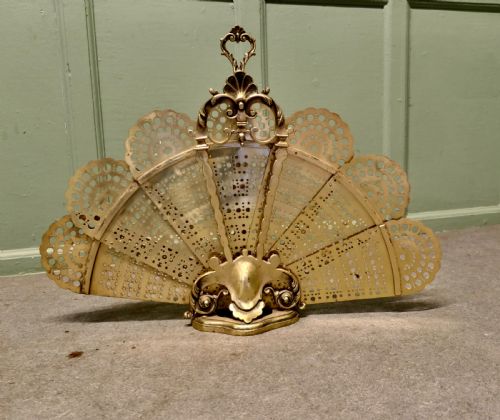
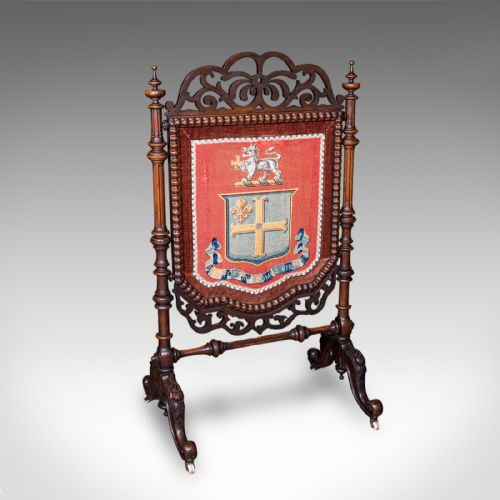
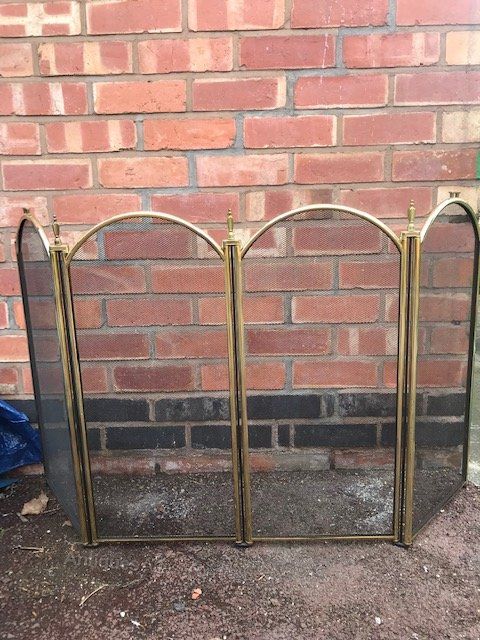
The most common versions employ brass frames and folding wire mesh or articulated fan blades. Alongside these, textile panels mounted in rosewood, mahogany or walnut frames appear regularly across the nineteenth century.
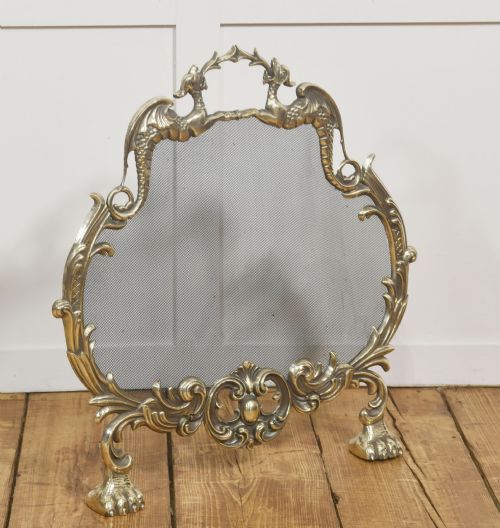
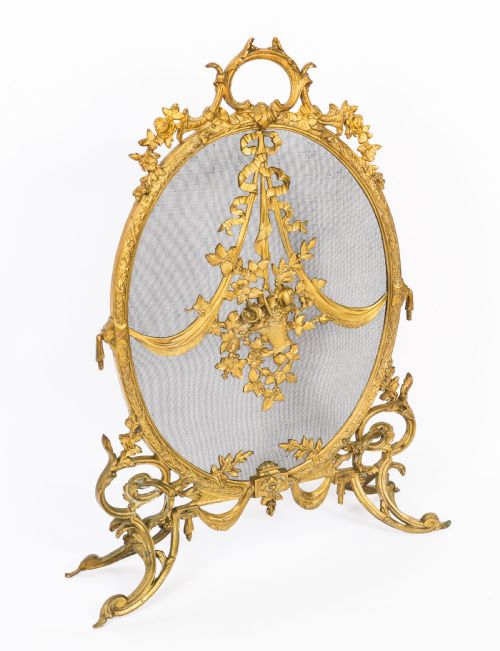
Objects vary from simple nursery guards intended for child safety to ornate French rococo revival or arts and crafts designs meant for formal reception rooms.
How they were made
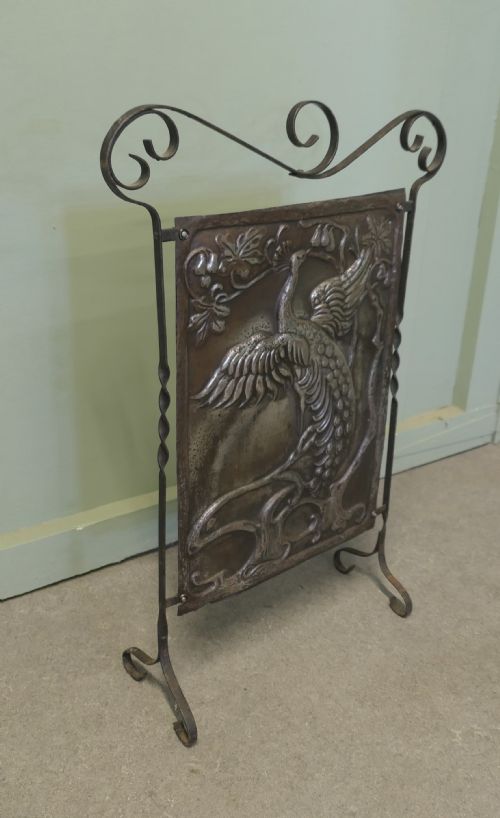
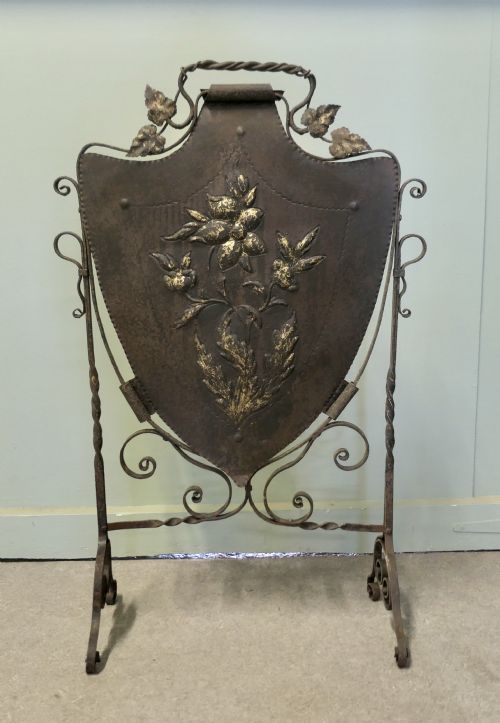
Construction relies on metals like brass, iron, copper and wire mesh shaped into rigid frames or articulated folding sections. Artisans also utilised timber frames in mahogany, walnut, rosewood and oak to house inserted textile panels.
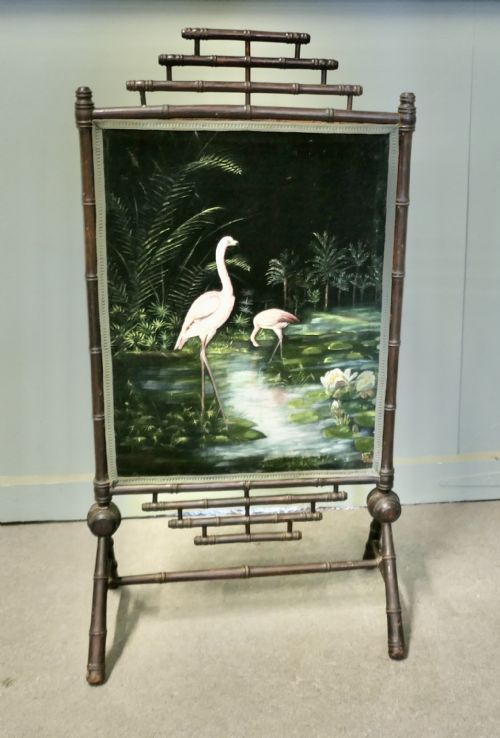
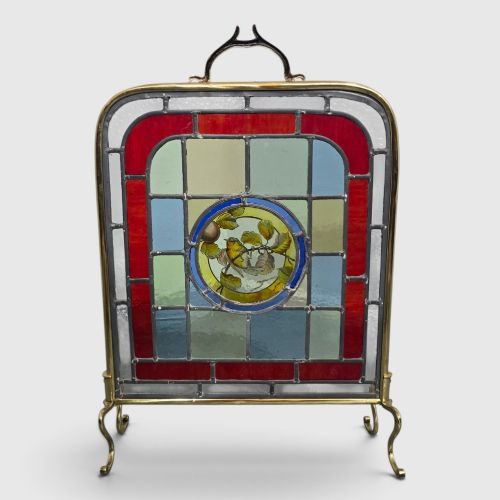
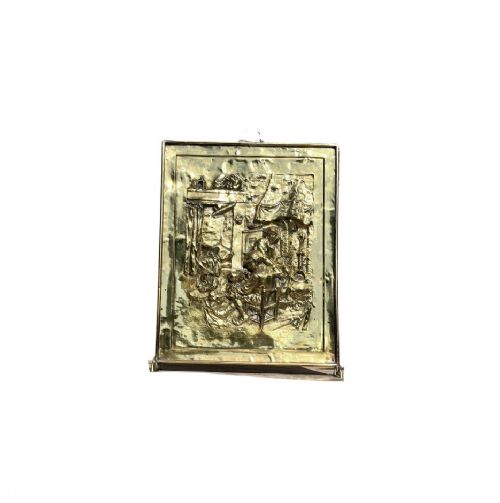
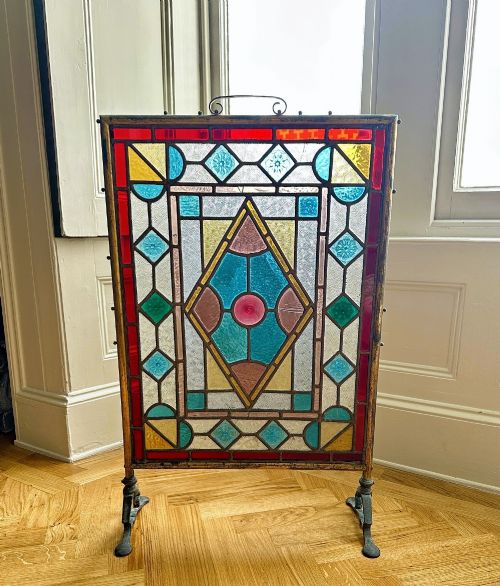
Decorative work incorporates needlepoint, woolwork, tapestry, embroidery and stained glass secured within metal or wooden armatures. Surface enrichment includes hand painting on black lacquer, along with embossed and chased brass details.
Flamingos painted on black lacquer bring unexpected tropical plumage to nineteenth-century hearth defenses.
What varies in quality
Quality rests in the weight of the metal castings and the stability of folding joints on fan screens. Heavy gauge brass and solid bronze components hold their shape better under frequent handling than thin pressed sheet metal.
Artisanal execution marks the difference in textile panels, where dense woolwork, intricate needlepoint and hand embroidery show superior skill compared to machine-woven substitutes. Timber framing displays similar divergence, moving from simple softwood carcasses to finely turned rosewood or mahogany stands with carved details.
The Victorian Fireplace Screen Glossary
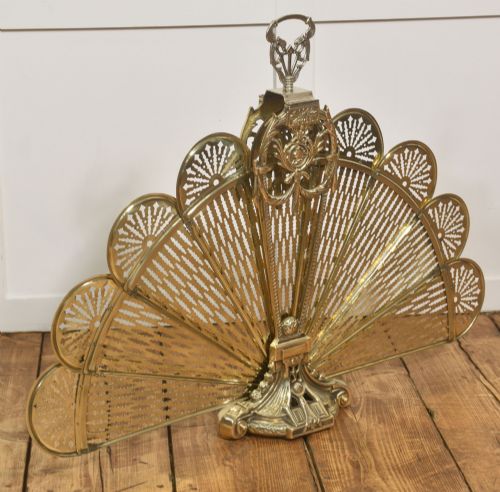
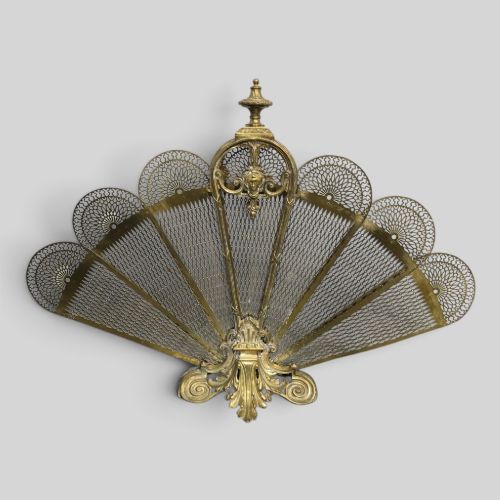
- Peacock fan
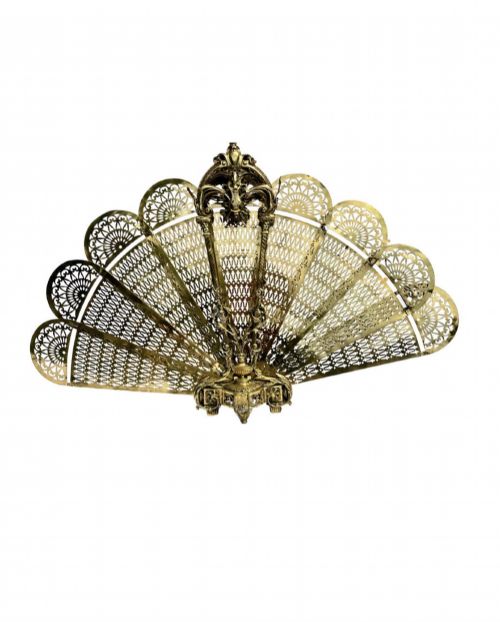
- A folding screen composed of overlapping metal blades that expand outward like a tail. This form opens to block the hearth opening and collapses flat when the fire is lit.
- Pole screen
- A vertical stand supporting an adjustable panel that slides up and down on a central shaft. Users positioned the shield to deflect radiant heat away from the face.
- Cheval screen
- A self-standing frame supported by two side pillars on feet, allowing the central panel to pivot on horizontal axis pivots.
- Nursery guard
- A tall protective metal barrier enclosing the hearth area to keep children and stray embers safely separated. These often include an integrated rail for airing clothes.
- Needlepoint
- Hand-stitched canvas embroidery utilising wool or silk threads to build pictorial or floral motifs. This technique frequently forms the central display panel of wooden screens.
Victorian Fireplace Screen: Frequently Asked Questions
How do you use a fireplace screen?
These screens stand before the fireplace opening to block stray embers when a fire burns or to hide an empty hearth during warmer months. Folding fan designs adjust their width to fit varying fireplace openings.
Heavier framed glass and textile panels stay in a fixed position, serving as decorative room furniture when the hearth is inactive.
What is a pole screen used for?
A pole screen allows a seated person to adjust the height of an embroidered or tapestry shield along a vertical wooden rod. This movable panel shielded the face from intense radiant heat emitted by open coal fires.
In modern rooms, they function as decorative standing floor pieces rather than functional heat deflectors.
How do I identify a Victorian screen?
Victorian examples combine period manufacturing methods like cast brass frames, wrought iron stands and hand-worked needlepoint or wool tapestry panels. Stylistic cues include gothic revival shields, arts and crafts ironwork and french rococo scrollwork.
Materials are typically restricted to solid hardwoods like mahogany and rosewood, heavy brass, copper and wire mesh.
Can these screens fold away?
Many brass variations feature folding sections or articulating fan blades designed to retract when not in use. This mechanism permitted easy storage beside the hearth during active fires.
Rigid wooden or glass panel screens remain fixed and do not collapse.