

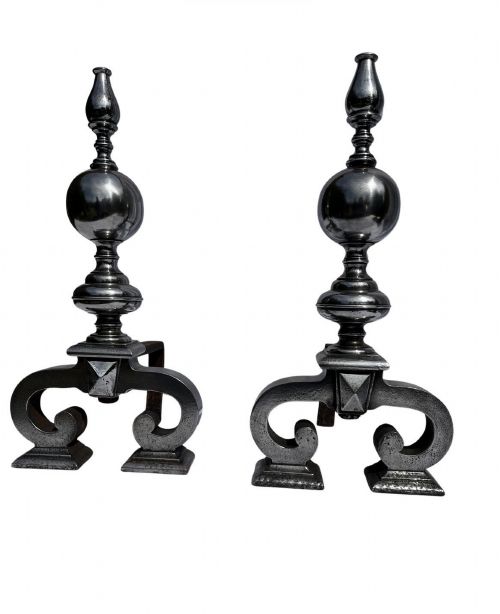


Victorian Firedogs
Victorian firedogs are heavy hearth supports built to hold logs above the hearth floor, bringing period weight and function to an open fireplace.
Victorian Firedogs
Victorian firedogs, also known as andirons, sit inside open hearths to support fuel wood and encourage proper air circulation beneath the fire. They appear in diverse forms throughout this selection, ranging from simple utility pieces to ornate decorative furnishings designed to match complete fireplace suites.
The versions most commonly met on this page span the nineteenth century, taking the shape of heavy cast or wrought iron frames and polished brass uprights. Many examples incorporate matching fire baskets, companion tools, or tool rests to create a unified hearth arrangement.
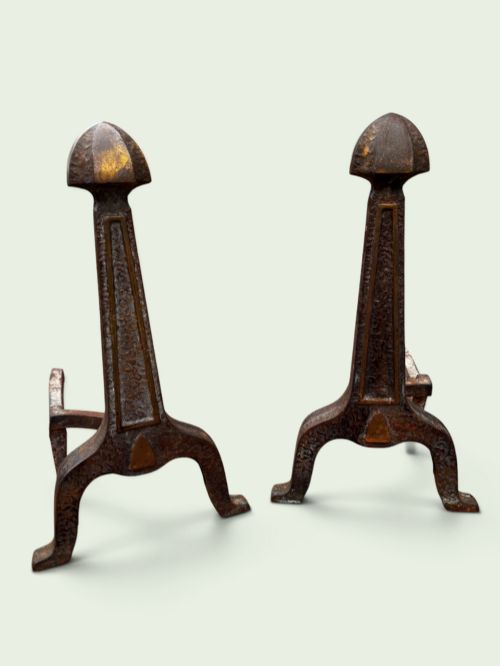
Makers drew on varied stylistic revivals during the period, producing pieces that reflect Gothic, Baroque, and Neoclassical tastes alongside cleaner Arts and Crafts and Aesthetic Movement designs. These objects served a practical daily purpose while anchoring the visual centre of the nineteenth-century drawing room.
How they were made
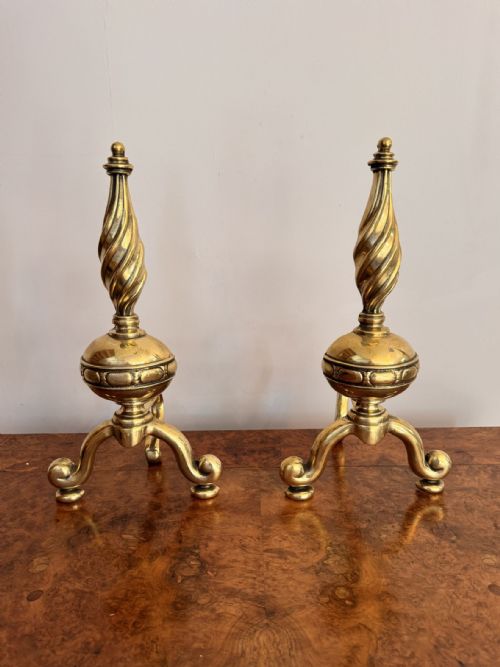
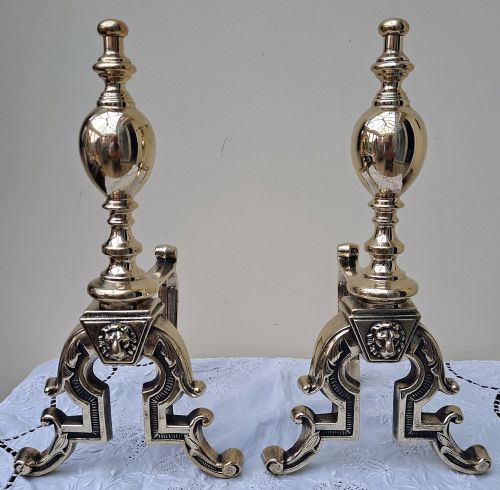
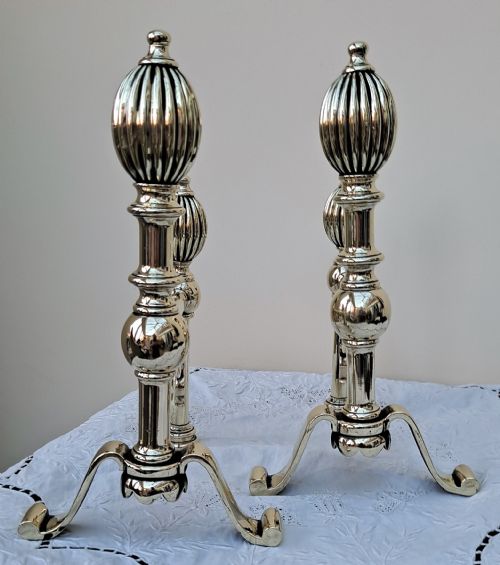
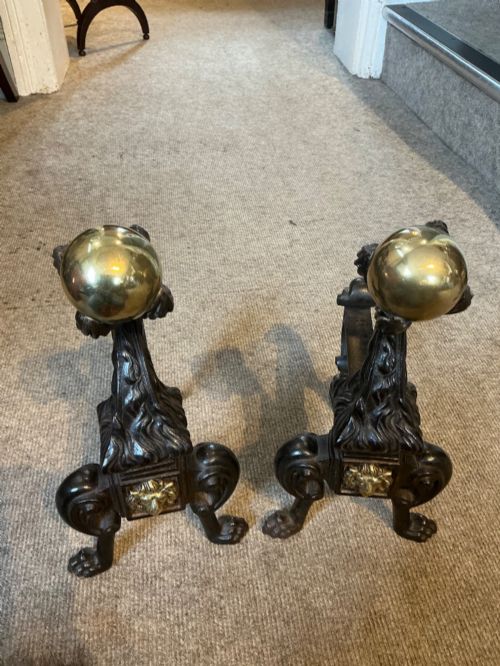
Foundry workers utilised traditional casting methods for brass, bronze, and iron components, pouring molten metal into detailed moulds to achieve crisp surface relief. Heavy brass fire dogs often display finely chased or polished finishes that catch the firelight, while iron variants rely on the robust strength of the cast material.
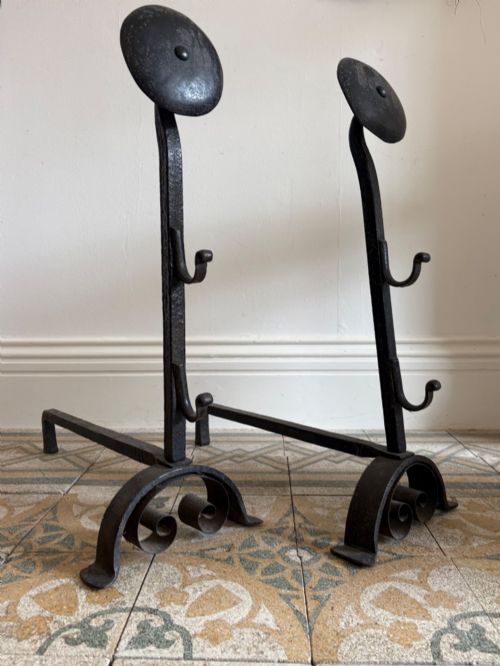
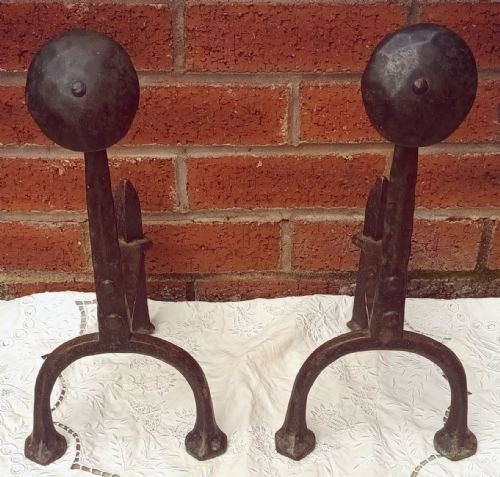
Blacksmiths shaped wrought iron and steel elements through traditional forging techniques, hammering and bending the hot metal to form sturdy support billets and scrollwork. Copper and bronze additions appear on select pieces, adding tonal variation and decorative contrast to the primary metal structure.
Some nineteenth-century brass firedogs doubled as tidy storage stations for poker handles, keeping the hearth tools neatly cornered.
What varies in quality
Weight and structural substance separate standard hearth furniture from exceptional examples, as heavier castings and thicker gauge wrought iron provide greater durability under high heat. The crispness of surface detail on brass ornamentation reveals the skill of the original pattern maker and founder.
Design integrity distinguishes ordinary production from pieces attributed to notable designers or workshops, where proportions, motifs, and material combinations display deliberate artistic thought. The presence of matching original components, such as integrated fire baskets or tool rests, elevates the coherence of the set.
Thomas Jeckyll·William Tonks·James Cartland & Sons·James Cartland & Son
The Victorian Firedogs Glossary
- Firedog
- A metal support placed in a fireplace to hold logs above the hearth floor. They usually feature a decorative vertical front and a horizontal bar behind.
- Andiron
- An alternative term for a firedog. The two words are used interchangeably in nineteenth-century hearth inventories.
- Fire Basket
- A metal grate designed to hold coal or wood, frequently paired with andirons or manufactured as a single integrated unit. These units sit within the fireplace opening to contain the fuel.
- Wrought iron
- Iron that has been heated and hammered into shape by hand, resulting in a fibrous internal structure and high tensile strength. It resists cracking under repeated thermal shock.
- Aesthetic Movement
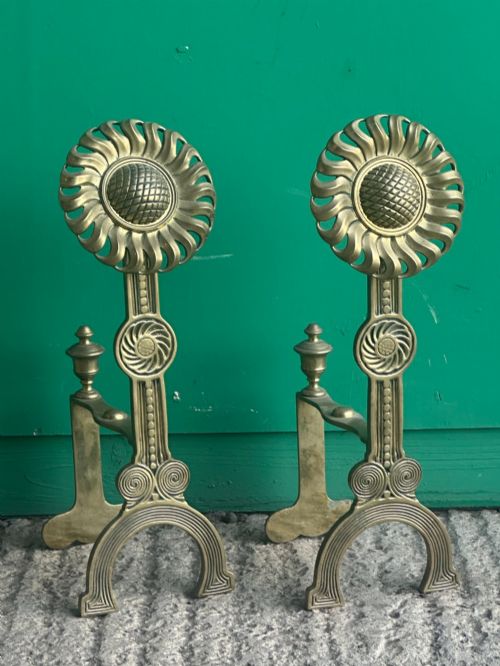
- A late nineteenth-century design style emphasising visual beauty and artistic expression over strict historical revival. Pieces from this movement often feature stylised natural motifs like sunflowers.
Victorian Firedogs: Frequently Asked Questions
What is the difference between firedogs and andirons?
There is no functional or physical difference between the two terms, as both describe the metal supports used to hold logs in an open hearth. Regional vocabulary and individual dealer preference dictate which word appears on a given listing.
Historical records use both designations interchangeably for nineteenth-century hearth equipment. Buyers can treat the terms as identical when searching for fireplace accessories.
How were victorian firedogs used in the home?
These pieces sat on the hearth floor inside the fireplace opening to elevate logs above the masonry base. Raising the wood allowed air to circulate underneath, improving combustion and reducing smoke.
They also served as physical stops to prevent burning logs from rolling out onto the carpet. Many sets included integrated tool rests or matching fire baskets to complete the fireside arrangement.
How do I identify arts and crafts firedogs?
Arts and Crafts pieces typically display visible hand-working marks, simpler geometric or stylised natural motifs, and a focus on the honest qualities of wrought iron or brass. They eschew heavy historical revival ornamentation in favour of clean lines and functional integrity.
Makers inspired by designers like Christopher Dresser or the Aesthetic Movement often incorporated stylised sunflowers or abstract geometric plates into the upright standards.
Can these pieces be used in a working fireplace?
Most nineteenth-century cast iron and brass firedogs remain entirely suitable for use in an active open fireplace, provided the scale matches the hearth opening. Solid metal construction handles high temperatures without losing structural integrity.
Buyers should verify the weight and stability of the log billets before lighting a fire. Delicate decorative models with applied copper or thin brass plating are better suited for decorative hearth displays.