


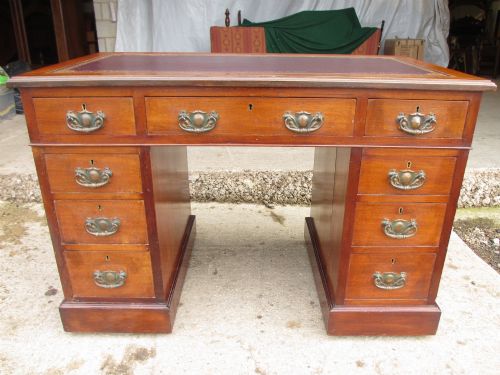
Victorian Executive Writing Desk
These robust victorian executive writing desk pieces span multiple woods and regional revivals, offering substantial working surfaces designed for serious study.
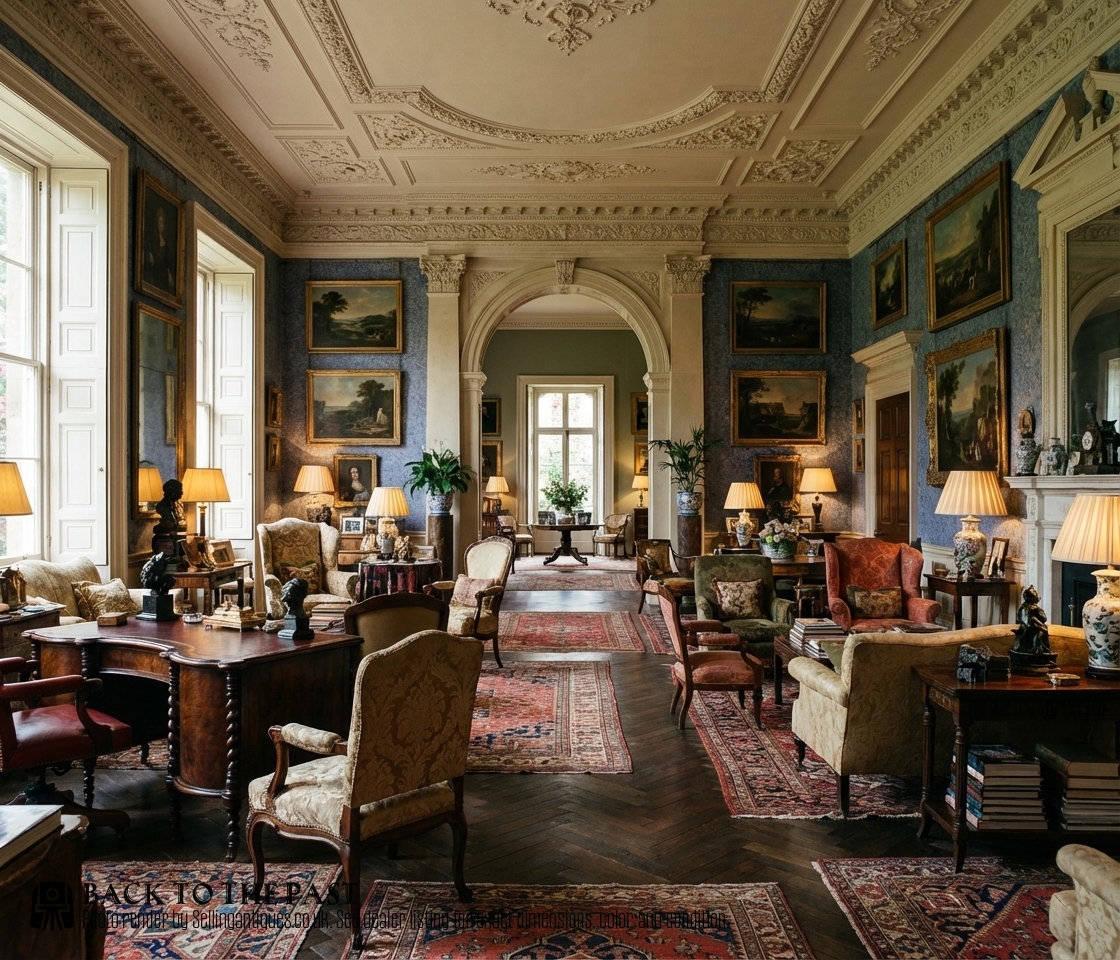
Victorian Executive Writing Desk
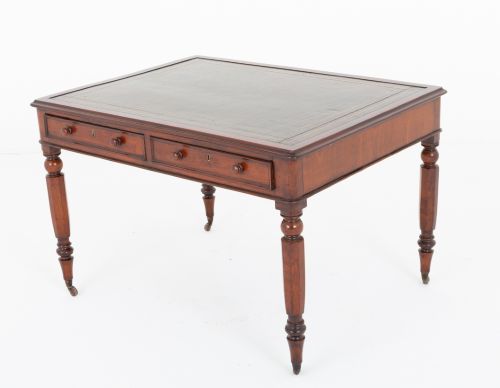
When buyers search for a victorian executive writing desk, they encounter substantial library tables, partners desks, and pedestal forms produced across the nineteenth century. These heavy items provide deep drawers, writing slides, and capacious tops designed for administrative or scholarly tasks.
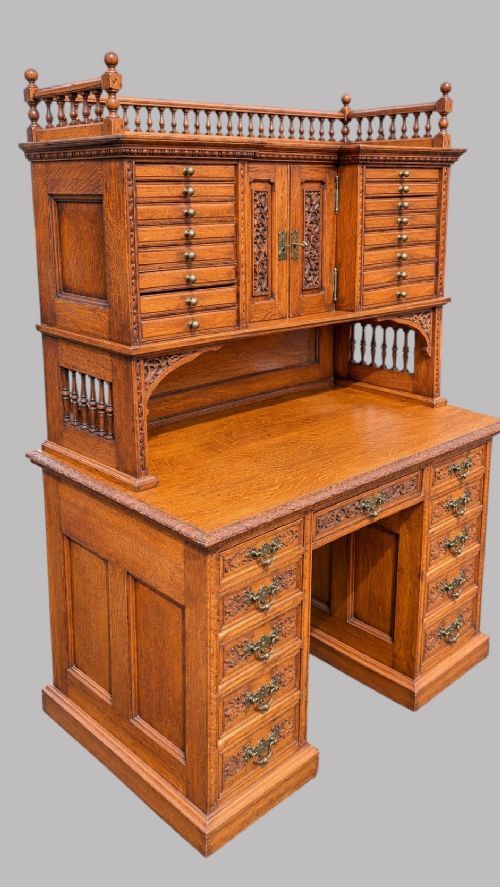
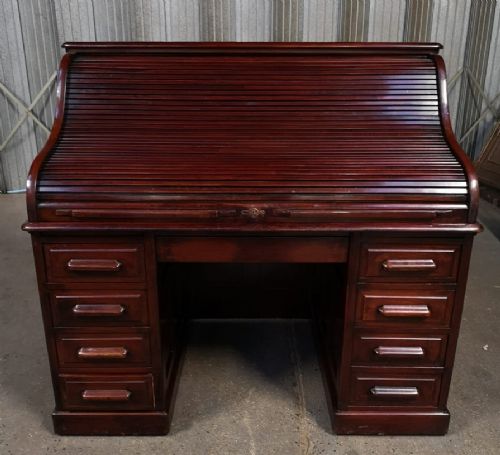
Mahogany and oak pedestal formats dominate current listings, alongside burl walnut and rosewood variations. Most examples date from the middle decades of the Victorian era through to the late nineteenth century.
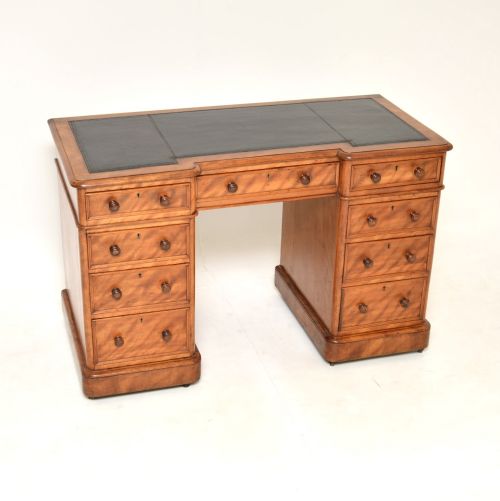
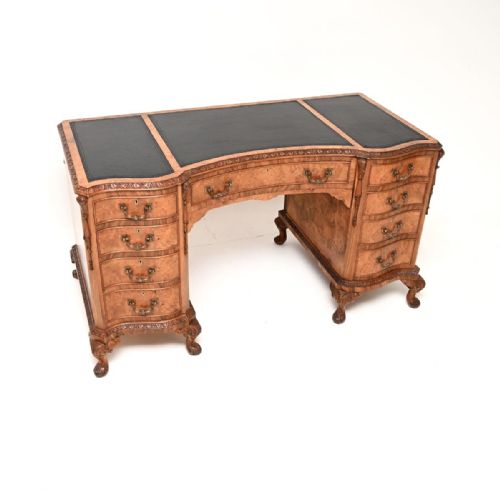
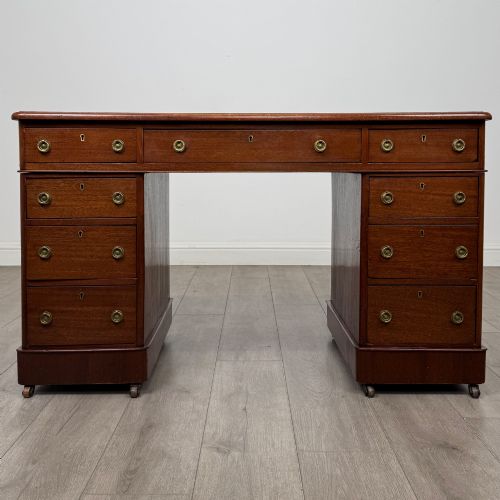
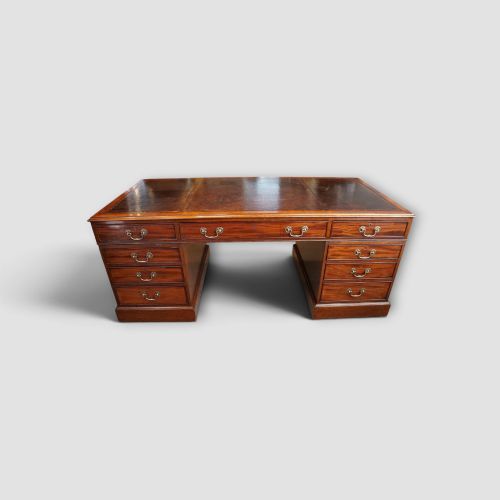
Buyers frequently select double-sided partners desks or kneehole configurations featuring fitted stationery compartments and original brass hardware. Stylistic influences range from straightforward Georgian revivals to elaborate Aesthetic Movement and Louis XV expressions.
Materials and construction
Carpenters utilised dense timbers such as mahogany, oak, and walnut, frequently applying burr walnut veneers or ebonised details to prominent surfaces. Secondary woods provided structural stability within drawer linings and internal dividers.
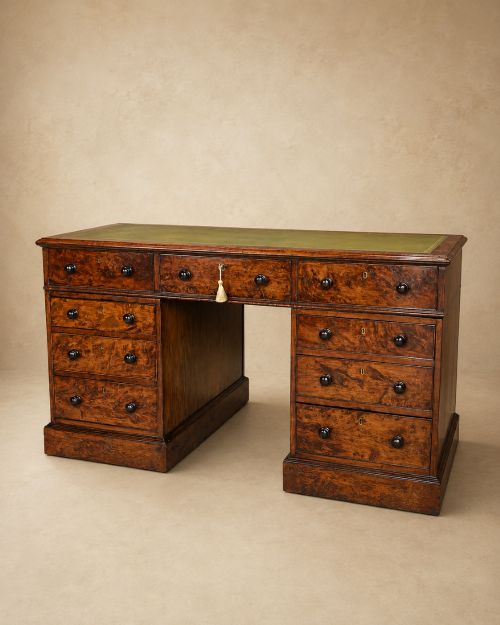
Writing surfaces incorporated inset tooled leather panels, often framed by decorative blind tooling or gilt borders. Drawer construction relied on hand-cut dovetails, while brass handles, locks, and caster fittings secured operational longevity.
Several desks retain hidden stationery compartments and secret drawers designed to guard private correspondence from curious onlookers.
Markers of quality
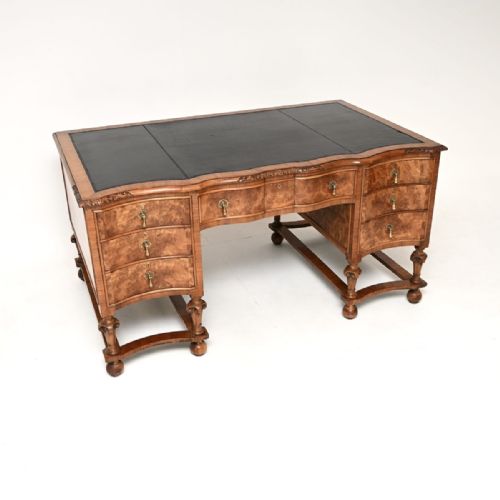
Superior examples demonstrate cabinetmaking skill through book-matched veneers, secondary timber selection, and fully finished back panels intended for free-standing room placement. Workshop attribution to notable makers elevates the standing of specific furniture.
The survival of original leather inserts, matching hardware, fitted stationery interiors, and functioning locks distinguishes exemplary specimens from altered or assembled pieces.
Edwards and Roberts·Maple and Co·Trollope and Sons·Johnstone and Jeanes·Hobbs and Co
The Victorian Executive Writing Desk Glossary
- Partners desk
- A large double-sided desk with drawers and cupboards on both faces, allowing two people to work opposite one another.
- Kneehole desk
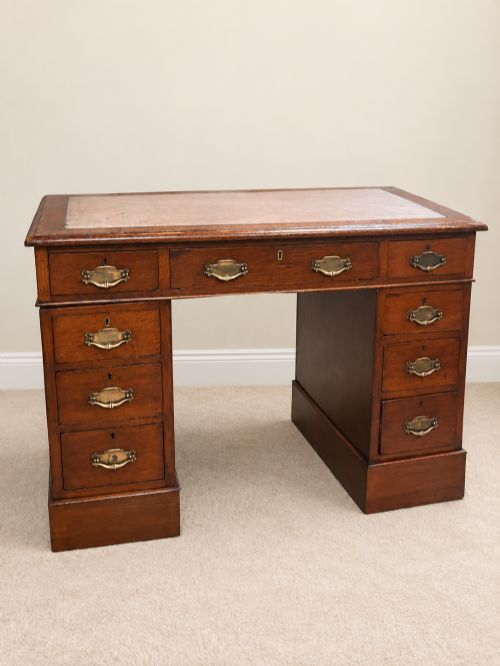
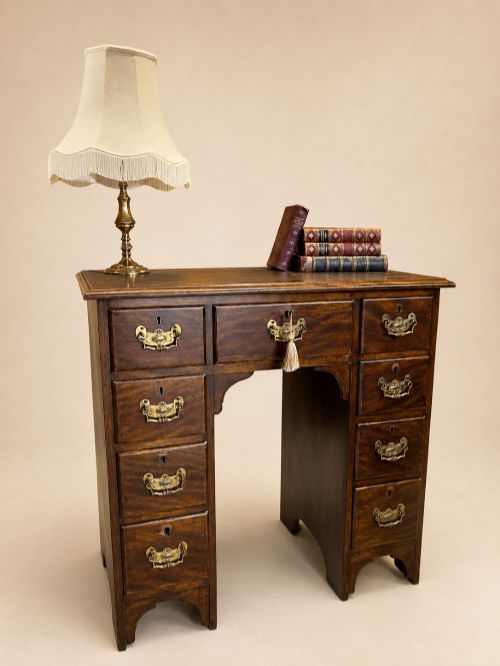
- A single-sided pedestal desk featuring a central recess for the user's legs, flanked by vertical banks of drawers.
- Pedestal desk
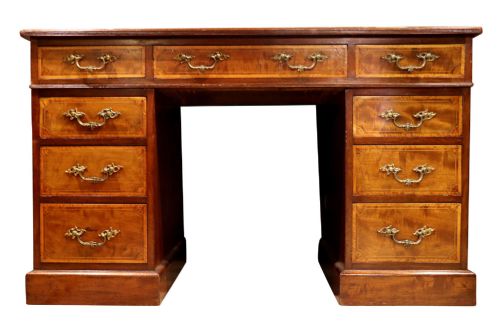
- A heavy freestanding desk comprising two supporting banks of drawers beneath a rectangular top.
- Bureau plat
- A freestanding writing table fitted with drawers beneath the main surface, originating from French cabinetmaking traditions.
- Writing slide
- A pull-out board housed beneath the desk top, providing additional surface area for correspondence.
Victorian Executive Writing Desk: Frequently Asked Questions
What is a partners desk?
A partners desk is a large, double-sided writing table designed with drawer banks on both faces so two individuals can work simultaneously.
These pieces typically feature substantial pedestals and were historically utilised in large libraries, banks, and executive offices.
How do I identify a Victorian desk?
Victorian desks are identified by nineteenth-century timber choices like mahogany, walnut, and oak, combined with period construction methods such as hand-cut dovetails.
Stylistic cues often draw upon Georgian, Aesthetic Movement, or Louis XV revival motifs popular during the reign of Queen Victoria.
Are these desks suitable for modern offices?
These large wooden desks provide ample surface area and extensive storage through deep drawers and writing slides, fitting well into contemporary studies.
Their finished backs allow free-standing placement in the centre of a room rather than pushing against a wall.
What is a kneehole desk?
A kneehole desk is a single-sided pedestal desk that incorporates a central recess beneath the writing surface for the user to sit comfortably.
Flanking banks of drawers provide partitioned storage for documents and stationery supplies.