





Curved Mahogany Writing Desk
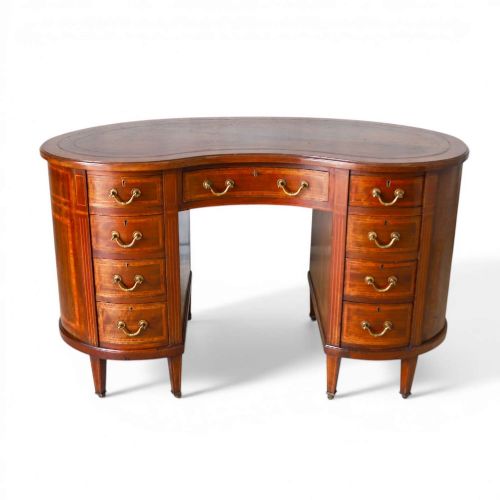
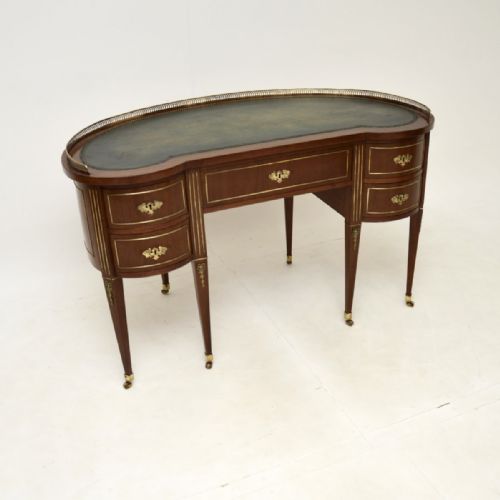
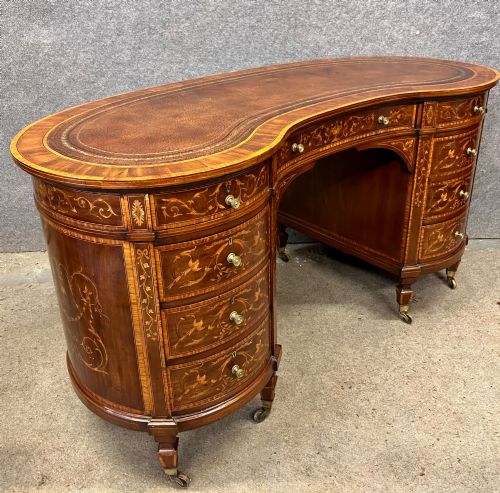
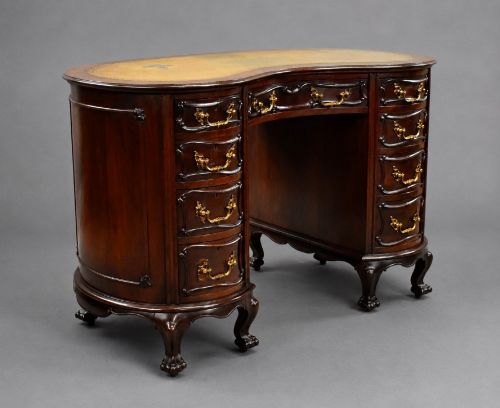
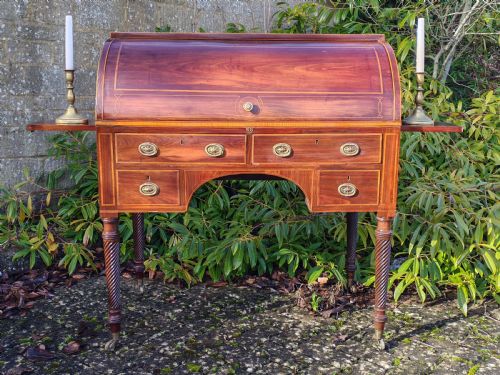
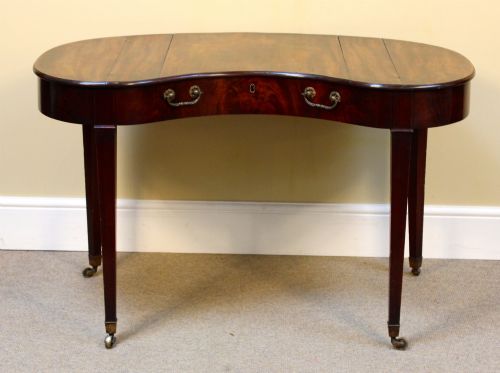
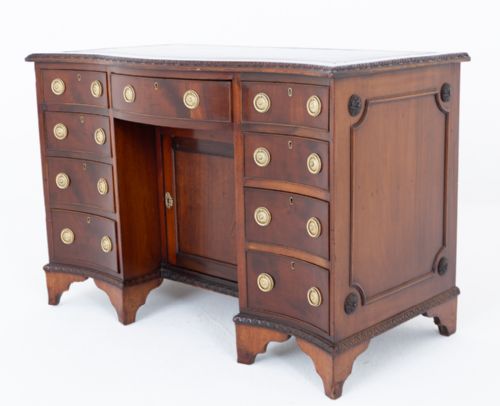
A curved mahogany writing desk offers a sweeping work surface built in timber, combining practical writing space with refined proportions.
Curved Mahogany Writing Desk
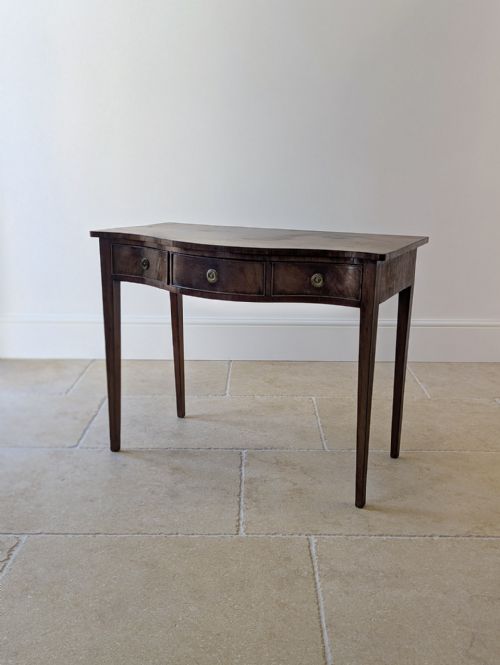
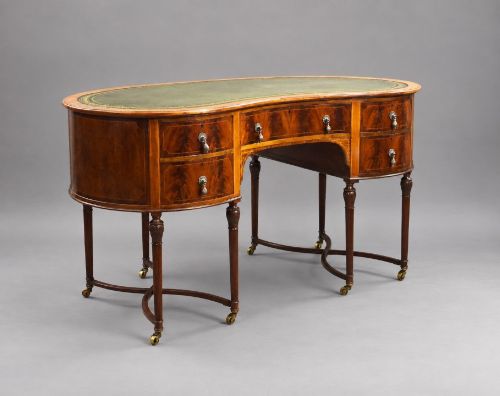
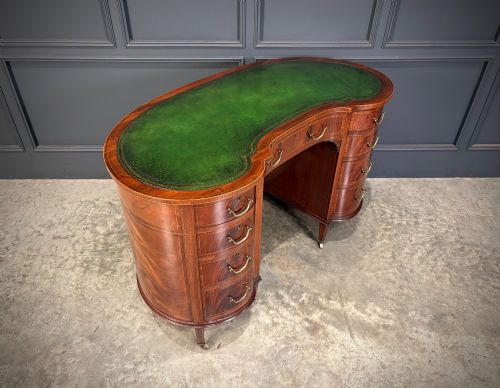
A curved mahogany writing desk encompasses varied curvilinear forms, most notably kidney-shaped tables and serpentine fronts originating from Georgian, Victorian, and Edwardian periods.
The evidence shows these tables emerging across the late eighteenth and nineteenth centuries, continuing into the early twentieth century through revival styles such as Sheraton and Sheraton Revival.
Makers produced these pieces as writing tables, occasional items, and pedestal desks, though the kidney-shaped writing desk remains the dominant version met on this page.
Materials and construction
Cabinetmakers utilised solid mahogany and flame mahogany veneers over secondary timbers, often shaping the timber into sweeping curves and serpentine fronts requiring precise joinery.
Surfaces frequently incorporate inset leather writing panels, while decorative details involve satinwood inlay and marquetry work executed by skilled hands.
Hardware such as brass handles and drawer pulls completed pieces intended for principal rooms, supported by tapered legs or twin pedestals.
Listings feature mahogany, satinwood inlay, brass, and leather across Georgian, Victorian, and Edwardian periods.
Quality and execution
The distinction between standard production and superior craftsmanship rests on the choice of timber figures, where matched flame mahogany veneers and intricate satinwood inlay elevate the visual depth of the curve.
Structural integrity depends on how cleanly the sweeping contours of the kidney shape or serpentine front are joined, alongside the preservation of original leather writing inserts and interior drawer construction.
Wolfe and Hollander·Edwards and Roberts·Collinson and Lock
The Curved Mahogany Writing Desk Glossary
- Kidney-shaped
- A desk or table featuring a concave front curve that wraps around the user. This distinct contour defines many Edwardian and Victorian writing tables.
- Serpentine
- A furniture front characterised by a central convex curve flanked by two concave curves. It provides a fluid, undulating silhouette to side tables and desks.
- Flame mahogany
- A veneer cut from timber where the grain creates a flickering, flame-like pattern. Cabinetmakers reserved this highly decorative wood for prominent surfaces.
- Inlay
- A technique where pieces of contrasting wood, such as satinwood, are inserted into recesses to form decorative patterns. It frequently outlines the top surfaces of Edwardian desks.
- Escritoire
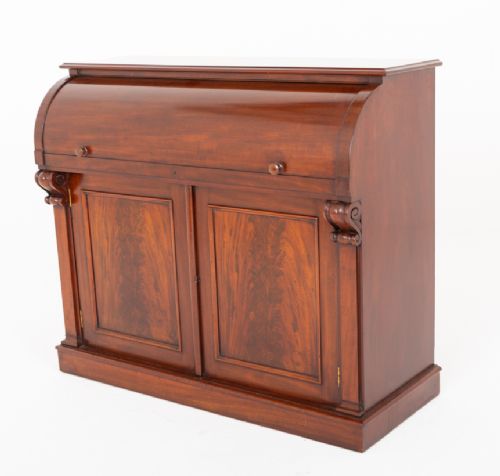
- A writing cabinet or desk used for correspondence and document storage. These pieces often feature fitted compartments behind a cylinder or drop-front.
- Cylinder desk
- A writing desk featuring a curving cylindrical shutter that rolls back to reveal a writing surface and interior pigeonholes. It combines enclosed storage with a compact footprint.
Curved Mahogany Writing Desk: Frequently Asked Questions
What periods do these curved desks come from?
The pieces span from the Georgian era through the Victorian and Edwardian periods, including late nineteenth-century interpretations of earlier designs.
Revival styles such as Sheraton Revival also appear among pieces produced around nineteen hundred.
How were kidney desks used originally?
These tables served as personal writing desks placed within parlours, studies, or drawing rooms for correspondence and letter writing.
The curved indentation allowed the writer to sit comfortably closer to the drawers and writing surface.
What is the difference between a writing table and a pedestal desk?
Writing tables generally stand on four legs or slender supports beneath a single drawer tier, offering an open, lighter silhouette.
Pedestal desks incorporate banks of drawers on either side beneath the top, providing heavier structural storage.