


Victorian Entry Umbrella Rack
These Victorian entry umbrella racks combine storage for wet weather gear and coats with grand hallway presence.

Victorian Entry Umbrella Rack
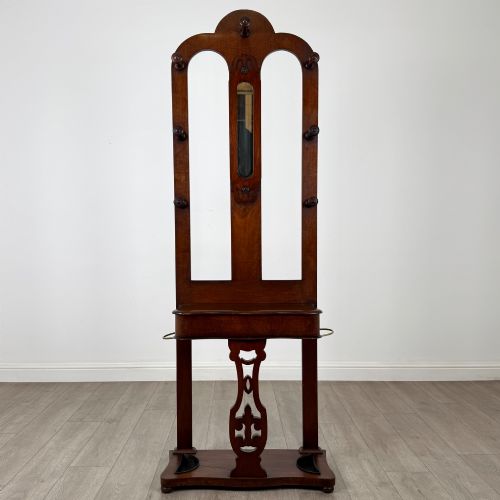
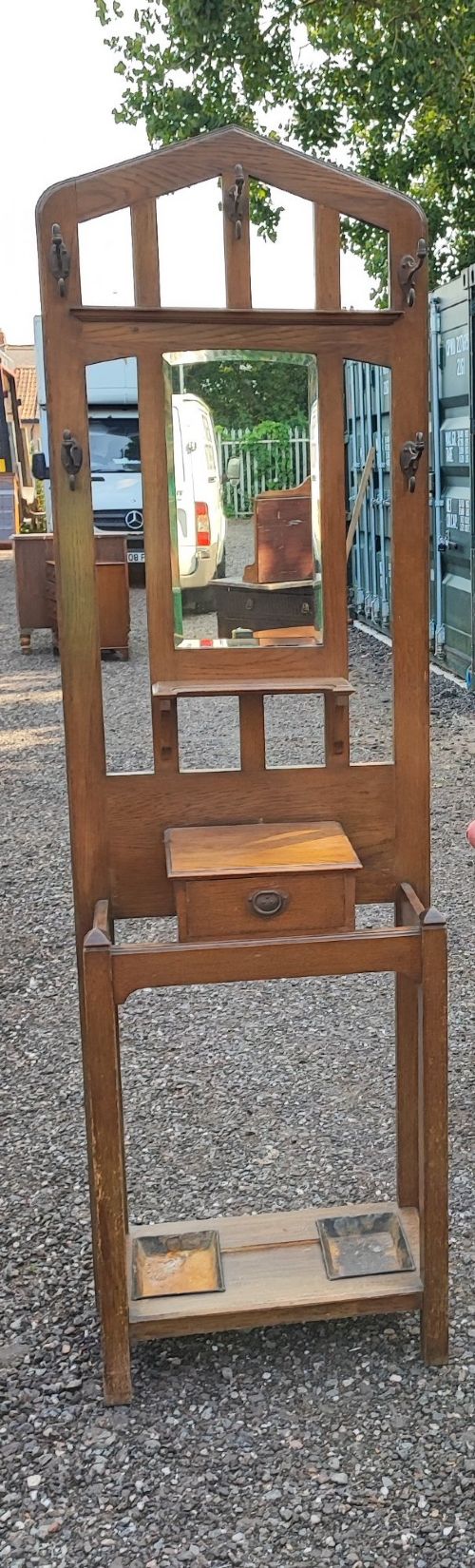
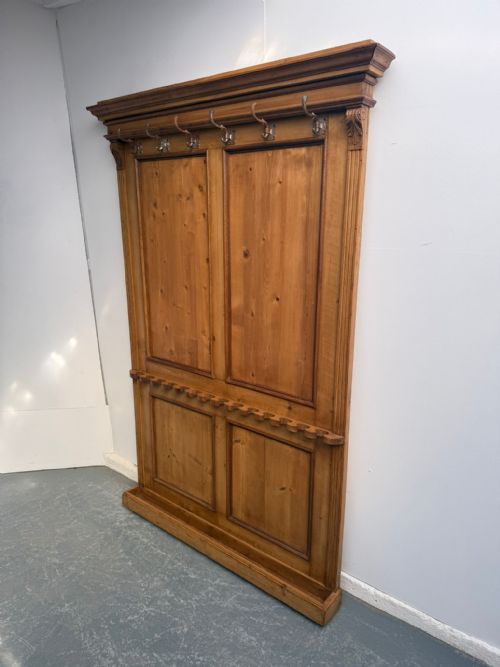
When you search for a Victorian entry umbrella rack, you find substantial hallway furniture designed to hold wet weather gear, hats, and coats upon entering a home. The pieces on this page appear primarily as tall hall stands with integrated stick stands and drip pans, alongside dedicated stick stands in cast iron.
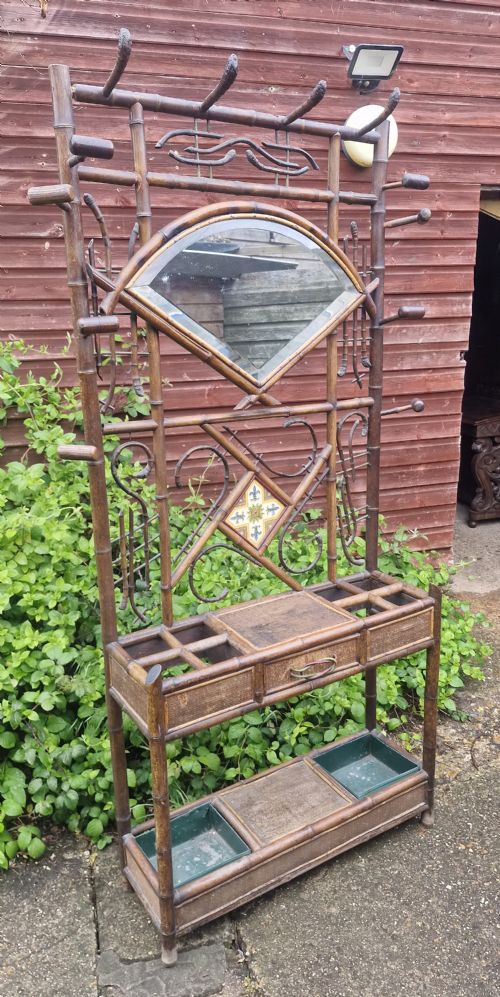
The dominant forms span sturdy oak, mahogany, and walnut hallstands, often incorporating mirrors and carved woodwork. You also encounter lighter bamboo and bentwood versions, plus decorative cast iron designs associated with country houses.
Materials and construction
Carpenters utilised dense hardwoods such as oak, mahogany, and walnut for the main structure, carving panels with foliage, strapwork, or figural motifs like the Greenman. Turning and steam bending shaped alternative pieces in bamboo and bentwood.
Foundries cast heavy iron into openwork patterns for standalone stick stands, incorporating removable metal drip trays at the base to catch rainwater. Glass and marble elements occasionally appear as inset components or mirrors mounted within the wooden frames.
Listings feature oak as the most frequent timber, alongside mahogany, walnut, bamboo, and cast iron across nineteenth-century forms.
Qualities of craftsmanship
The distinction between standard examples and finer works rests upon the depth of the carving and the selection of timber figure. Elaborate architectural cornices, substantial bevelled mirrors, and heavy brass or cast iron hardware elevate certain pieces above simpler functional hall furniture.
Structural integrity depends on how firmly the stick stand base connects to the upper coat hooks and mirror frame. The presence of original metal drip trays and intact hooks indicates a well-preserved piece that retains its complete utility.
Coalbrookdale
The Victorian Entry Umbrella Rack Glossary
- Hall stand
- A tall piece of hallway furniture combining coat hooks, a central mirror, and a base compartment for umbrellas and walking sticks. These items served as the primary greeting point in nineteenth-century entrance halls.
- Stick stand
- A compact piece designed specifically to hold umbrellas and walking sticks upright. They frequently feature heavy metal bases or cast iron frames to withstand daily use.
- Bentwood
- Wood softened by steam and bent into curved structural shapes. This technique created lightweight hall stands with flowing linear profiles.
- Greenman
- A sculptural motif depicting a human face carved from or entwined with leaves and vines. This decorative detail frequently ornaments carved oak panels.
- Aesthetic Movement
- A late nineteenth-century design style emphasising visual beauty over narrative function. Pieces from this movement often utilise bamboo and lighter structural forms.
Victorian Entry Umbrella Rack: Frequently Asked Questions
How do I clean an oak hall stand?
Dust the carved wooden surfaces regularly with a dry cloth to prevent dirt from settling in the deep crevices of the foliage and figures. Apply a traditional beeswax sparingly to nourish the timber and maintain a soft sheen without building up a heavy residue.
Avoid placing the piece in direct sunlight or near heat sources to protect the wood and any integrated mirror from warping or cracking over time.
Where should I place an umbrella rack?
Position these pieces in an entrance hall or porch where guests naturally deposit wet umbrellas, hats, and heavy outerwear upon entering the home. Ensure there is adequate wall space to support the height of combined hall stands and clearance for hanging coats.
Leave sufficient room around the base so that umbrellas placed in the metal drip pans do not dampen adjacent walls or floor coverings.
How do I tell oak from mahogany pieces?
Oak displays a pronounced grain with visible medullary rays, appearing in lighter honey tones or darkened patinas depending on age and finishing. Mahogany presents a tighter, smoother grain with deep reddish-brown coloration that naturally darkens over centuries.
Carved oak pieces often feature bold, rustic relief work, whereas mahogany examples typically show a finer, smoother polish suited to formal reception rooms.
Can I use the mirror every day?
The integrated mirrors on these hall stands are designed for a quick final check of your appearance before stepping out the front door. They function identically to modern entryway mirrors, though older silvering may show slight ageing or spotting.
Clean the glass gently with a standard glass cleaner applied to a cloth rather than sprayed directly, protecting the surrounding wooden frame from moisture damage.