

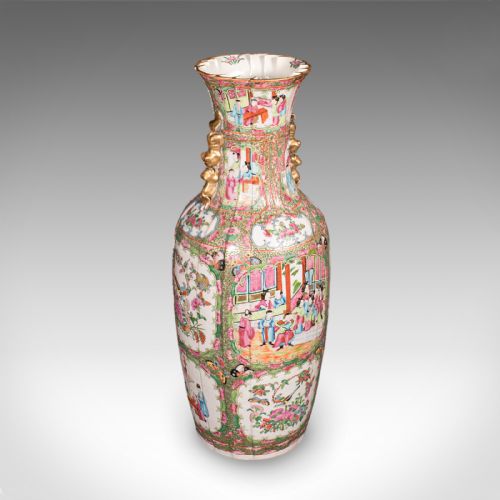


Victorian Enamel Vase
A victorian enamel vase brings rich colour and painted detail to a room, catching the light through ruby, cranberry, or opaline glass.
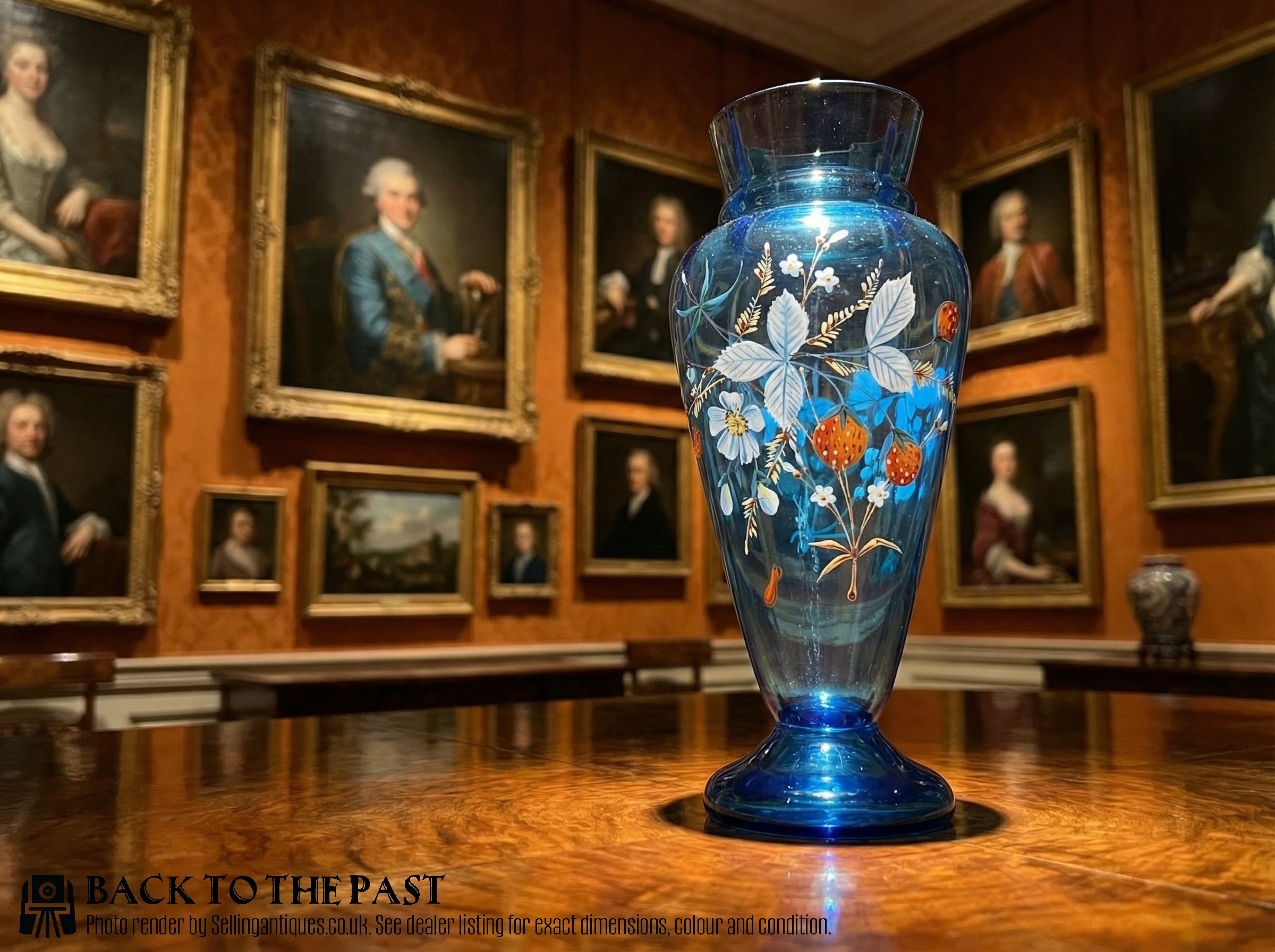
Victorian Enamel Vase
When you search for a victorian enamel vase, you find pieces spanning the nineteenth century, most often taking the form of glass vessels, mantel lustres, and table lamps. These objects combine coloured or opaque glass with painted enamel decoration, reflecting nineteenth century tastes from English workshops to Bohemian and French centres.
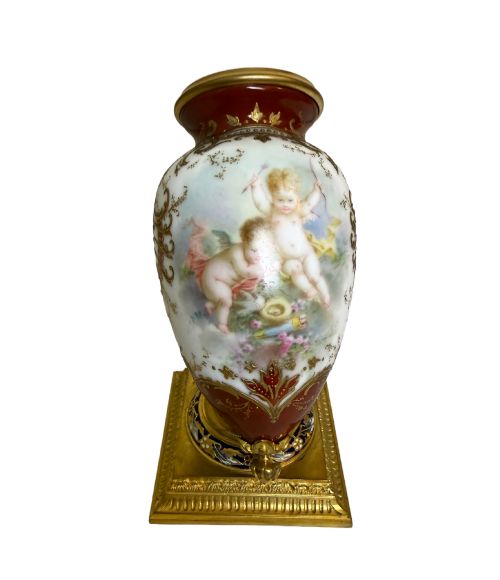
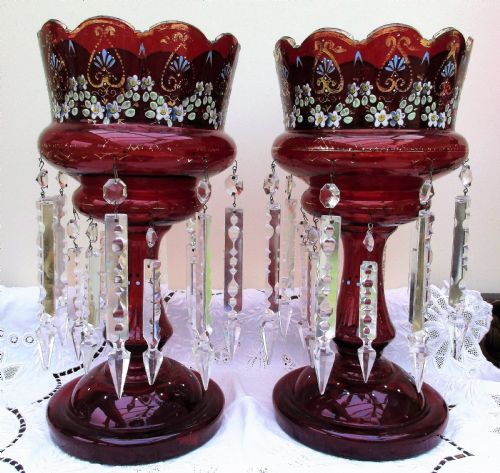
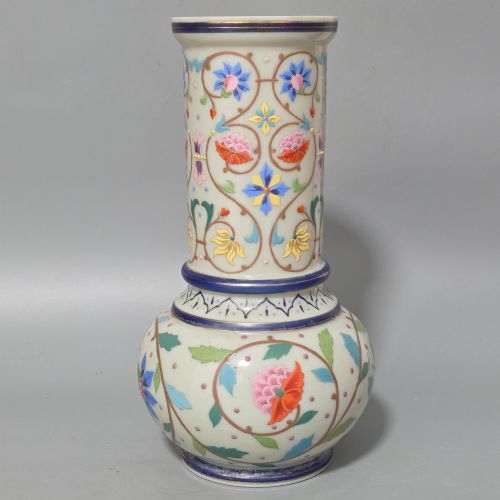
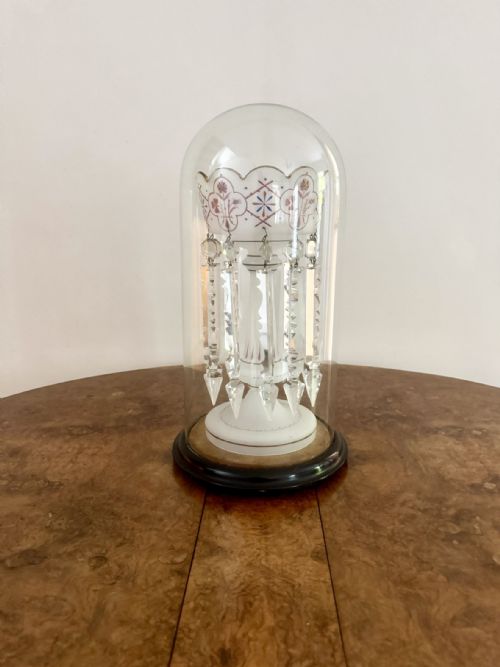
The most common examples on this page are glass vases and lustres rendered in rich shades of cranberry, ruby, green, and opaline glass. Makers applied detailed enamel floral motifs, animal scenes, or classical figures directly onto the glass body, sometimes pairing the vessels with matching sets or glass domes.
How they were made
Makers formed these vessels using hand blown glass, opal glass, and crystal, often employing overlay techniques to layer contrasting colours before cutting or etching the surface. Coloured glass bodies in cranberry, ruby, and green provided a saturated backdrop for subsequent decoration.
Artisans applied enamel paints by hand, fusing the coloured glass pigments to the vessel through heat. Many pieces incorporated additional detailing in gold leaf, bronze mounts, or brass fittings to complete the decorative effect.
A painted fox hunting scene gallops across one green glass vessel.
What varies in quality
The distinction between standard production and top tier examples lies in the precision and complexity of the hand painted enamel work. Finer pieces display crisp, multi-coloured botanical or figural scenes with careful shading, whereas simpler items rely on heavier, flat application.
Quality also rests in the depth and clarity of the base glass, particularly in overlay and cranberry pieces where even colour saturation and clean glass blowing separate superior examples from routine ones.
Thomas Webb·Moser·George Tye·Harrach
The Victorian Enamel Vase Glossary
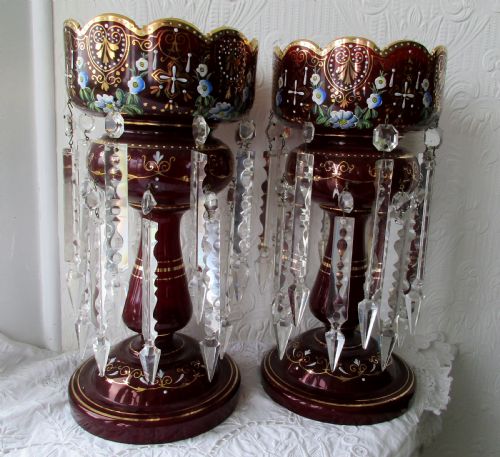
- Mantel lustre
- A decorative glass vase hung with cut glass prisms designed to catch the light on a fireplace mantel. These pieces frequently appear in pairs alongside matched Victorian glass vases.
- Opaline glass
- An opaque, pale glass that imitates porcelain, often tinted in soft shades of blue, pink, or white. It served as a smooth ground for hand painted enamel flowers and neoclassical scenes.
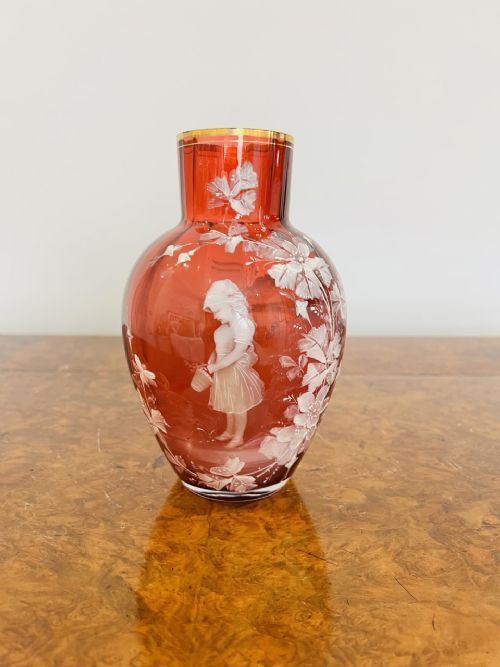
- Mary Gregory glass
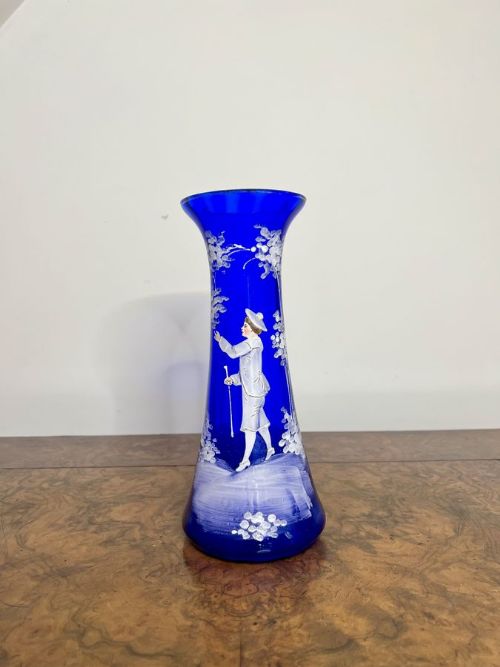
- Victorian glassware decorated with white enamel silhouettes of children playing amidst foliage. The technique appears on cranberry, blue, green, and red glass bodies.
- Overlay glass
- A vessel constructed from two or more distinct layers of coloured glass fused together. Artisans cut away portions of the outer layer to reveal the contrasting glass beneath.
Victorian Enamel Vase: Frequently Asked Questions
How do I clean a Victorian enamel vase?
Dust these pieces gently with a soft, dry cloth to protect the delicate surface enamel. Avoid soaking or using chemical cleaning agents, as moisture can lift the hand applied paint.
Keep glass vessels out of direct, prolonged sunlight to prevent fading of the coloured glass and enamel pigments over time.
Were these vases made as pairs?
Many Victorian glass vessels and mantel lustres were produced as matched pairs to flank a clock or mirror on a mantelpiece. Single pieces also appear, having been separated from garniture sets over the decades.
Displaying a matched pair offers a balanced arrangement, while single vases work well as standalone centrepieces on a table.
What is Mary Gregory glass?
Mary Gregory pieces feature distinct white enamel paintings of Victorian children engaged in outdoor pursuits against coloured glass backgrounds. Cranberry, green, and blue glass were common choices for this style.
Attribution to the American artist is traditional, though most of these decorated wares originated in Bohemian and English glasshouses.