
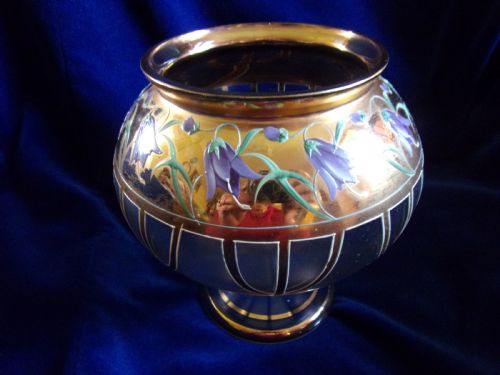


Floral Enamelled Glass Vase
A floral enamelled glass vase brings vibrant colour and botanical detail into a room, catching the light through hand-painted blooms.
Floral Enamelled Glass Vase
A floral enamelled glass vase combines coloured or opaque glass bodies with raised or flat enamel painting depicting flowers and foliage. Buyers searching for a floral enamelled glass vase encounter vessels ranging from mid-nineteenth-century bulb shapes to early twentieth-century Art Nouveau and Art Deco creations.
The selection on this page centres on nineteenth-century Victorian and Edwardian periods, stretching into the nineteen-thirties with distinct Art Deco forms. These decorative vases appear in various glass grounds, including opaline, amber, amethyst, and uranium glass.
Most examples rely on hand-painted floral motifs such as wild roses and irises, sometimes enhanced with gilding or cameo glass techniques. Forms vary from simple bulb vases to tall display pieces and handled vessels.
How they were made
Makers formed these vessels using free-blown or mould-blown glass methods, working with coloured, opaline, or clear glass formulas. The base material often received layered treatments, such as cameo glass carving or gold leaf application.
Artisans applied opaque and translucent enamel pigments by hand, firing the glass to fuse the botanical designs permanently to the surface. Many pieces integrated polychromatic enamelling and gilding to accentuate the painted flowers.
Materials recorded across the selection include opaline, uranium, amber, and amethyst glass alongside applied gold leaf.
What varies in quality
The distinction between standard production and superior work lies in the delicacy and precision of the enamel brushwork. Finer pieces display raised, multi-layered enamelling with intricate shading on petals and leaves, rather than flat, simplified applications.
The underlying glass quality and the integration of supplementary techniques, such as fire-gilding or cameo carving, elevate the standing of a vessel. Well-executed forms by known makers maintain crisp detail in both the glass body and the painted decoration.
Moser·Daum·Karl Palda·George Tye
The Floral Enamelled Glass Vase Glossary
- Enamel
- A powdered glass compound fused to a glass surface through heat, creating durable coloured decoration. It sits slightly raised above the background.
- Opaline glass
- An opaque or semi-translucent glass, often pale blue or white, developed during the nineteenth century to imitate porcelain. It provides a smooth backdrop for floral painting.
- Cameo glass
- A vessel created by fusing two or more layers of contrasting glass and carving away the outer layer to reveal the design. This technique requires significant skill.
- Uranium glass
- Glass containing a small percentage of uranium dioxide, which glows brightly under ultraviolet light. It appears in green or yellow shades within decorative glassware.
- Gilding
- The application of gold leaf or powdered gold to the surface of the glass. It highlights rims, handles, and painted botanical motifs.
Floral Enamelled Glass Vase: Frequently Asked Questions
Are these vases safe to hold water?
Many nineteenth and early twentieth-century decorative vessels hold water safely, but internal residue from age requires careful inspection. Glass lined with delicate gilding or sensitive enamel is better used for dry display.
If you choose to use water, insert a small glass vial inside the vase to protect the historic interior surface from moisture damage.
How can I tell Victorian pieces apart from later ones?
Victorian examples frequently utilise opaque opaline, amber, or amethyst glass grounds with naturalistic painted wild roses and heavy gilding. They often feature simple bulbous or globular shapes.
Later pieces from the twentieth century lean towards stylised Art Nouveau organic curves or geometric Art Deco forms, sometimes incorporating cameo carving or uranium glass.
Where should I display a floral glass vase?
Place the vessel in a spot with natural light to highlight the translucent qualities of the glass and the colours of the enamel. Ensure it rests away from direct sunlight that could fade sensitive pigments over time.
Position the vase on a stable surface away from foot traffic to protect the hand-painted exterior from accidental knocks.