



Green Decorative Glass Vessel
A green decorative glass vessel brings rich colour and organic form to a room, catching the light through cameo carving and iridescent finishes.
Green Decorative Glass Vessel
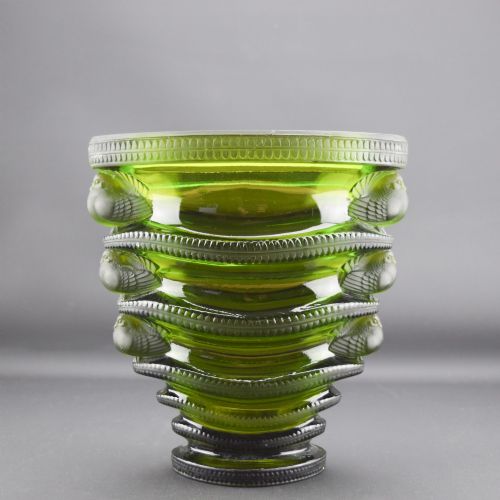
A green decorative glass vessel spans structural forms from baluster vases to wide decorative bowls created across the opening decades of the twentieth century. These objects bridge several distinct aesthetic movements, taking shape during the Art Nouveau, Art Deco, and Arts & Crafts periods.
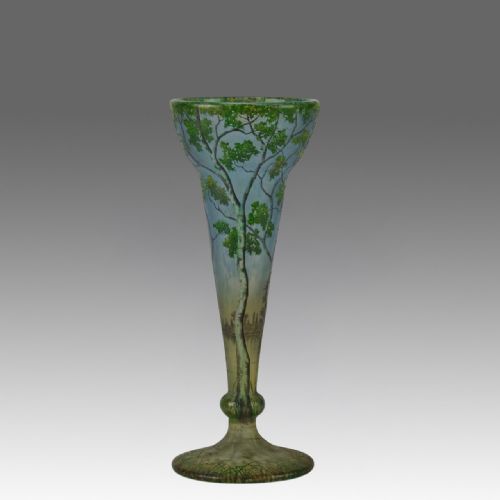
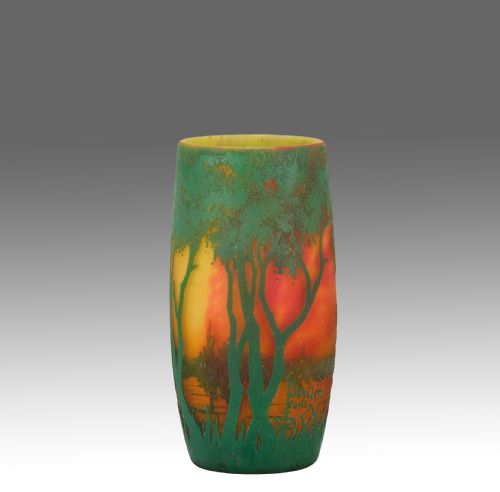
The version a buyer is most likely to encounter on this page is an early twentieth century piece utilising cameo glass or hand-blown techniques. Makers across Britain and continental Europe produced these vessels in varying shades of green, incorporating botanical motifs and patterned inclusions.
Many examples originate from renowned glasshouses of the nineteen hundreds and nineteen thirties, showing established forms such as the Saint-Marc and Graines vases. These items serve primarily as decorative focal points rather than utilitarian vessels.
How they were made
Makers utilised molten lead crystal and glass, employing hand-blown methods alongside optical blowing to shape the body of each vessel while hot. Artisans achieved varied surface textures through moulding and frosting the exterior.
Cameo glass techniques involved acid-etching and carving multiple coloured layers to reveal intricate botanical designs such as oak leaves, acorns, and landscape scenes. Enamel and enamel inclusions added further chromatic depth and pattern to the finished surface.
Green Decorative Glass Vessel Retail Price Guide 2026
Typical asking prices for green decorative glass vessel among the pieces listed under this phrase on Sellingantiques today, from the lower quarter to the upper quarter. They describe what is for sale here now, not the wider market.
Some nineteenth century artisans blew glass into carved wooden moulds that slowly scorched and smoked away as the vessel took shape.
What varies in quality
The definition and depth of the cameo carving distinguish finer works from simpler moulded productions, as skilled acid-etching demands precise control over multi-layered glass. Surface effects like iridescence and optical blowing require exact thermal manipulation during the cooling process.
The prestige of the producing house and the complexity of the colourway significantly influence the standing of each vessel. Pieces displaying distinct botanical motifs or controlled enamel inclusions demonstrate superior artistic execution.
Rene Lalique·Daum Freres·James Powell·Monart Glass·Stuart England·Loetz factory
The Green Decorative Glass Vessel Glossary
- Cameo Glass
- Glass formed with multiple distinct layers of different colours, which are then carved or acid-etched away to create a raised design in relief. This technique creates high contrast between the background and the foreground motif.
- Baluster Vase
- A vase characterised by a rounded body that tapers toward a narrower neck and a flared rim. The silhouette resembles a traditional architectural baluster column.
- Optically Blown
- A technique where molten glass is inflated into a ribbed or patterned mould before being removed and further expanded by hand. This process imparts subtle internal patterns and texture to the vessel walls.
- Iridescent Glass
- Glass treated with metallic salts while hot to produce a shimmering, rainbow-like sheen across the surface. The Loetz factory became particularly noted for this lustrous finish.
- Enamel Inclusions
- Coloured powdered glass or enamel fused into the body of the vessel during the heating process. This creates suspended patterns and mottled colourways within the transparent or translucent material.
Green Decorative Glass Vessel: Frequently Asked Questions
How do I care for a glass vessel?
Dust the surface gently with a soft, dry cloth to prevent scratching the delicate cameo or frosted finishes. Avoid using chemical cleaning agents or submerging vessels with enamel inclusions in water.
Keep the items away from direct, strong sunlight to preserve the richness of the green glass over time. Handle antique pieces with both hands, supporting the base rather than the rim.
What is cameo glass?
Cameo glass is formed by fusing two or more layers of contrasting coloured glass together in a furnace. Artisans then carve away the outer layers by hand or use acid to reveal the design beneath.
This painstaking process allows for intricate shading and detailed relief work, often depicting natural scenes or botanical motifs.
How are different periods identified?
Pieces from the nineteen hundreds frequently display organic Art Nouveau forms with naturalistic cameo carving and iridescent finishes. Items from the nineteen thirties lean toward cleaner lines and distinct patterns such as the Paisley shawl design.
Examining the signature, factory mark, and specific glass technique helps place the vessel within its correct decade of production.
Where were these vessels made?
Production centres spanned Britain and continental Europe, including notable glasshouses in France, Austria, and Scotland. Each region developed distinct methods, from Bohemian iridescence to Scottish Monart bowls.
English makers such as James Powell and Stuart also contributed significant designs, often collaborating with retail houses like Liberty.