
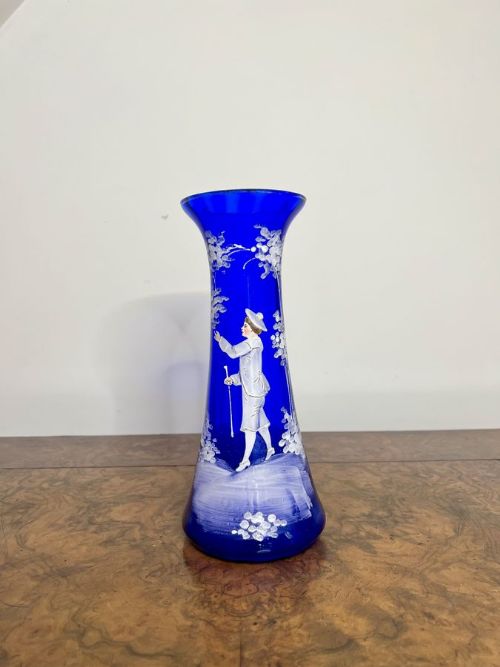

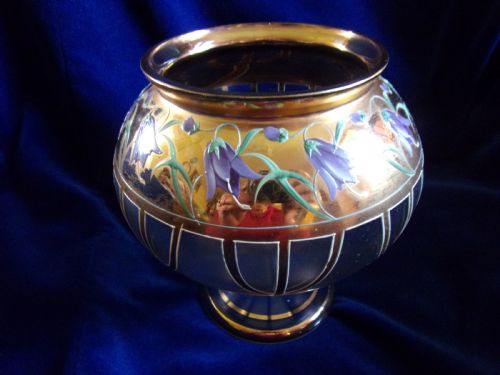


Hand Enamelled Glass Vase
These hand enamelled glass vase pieces combine coloured glass with painted enamel detail, offering rich Victorian and Art Nouveau decorative appeal for your home.
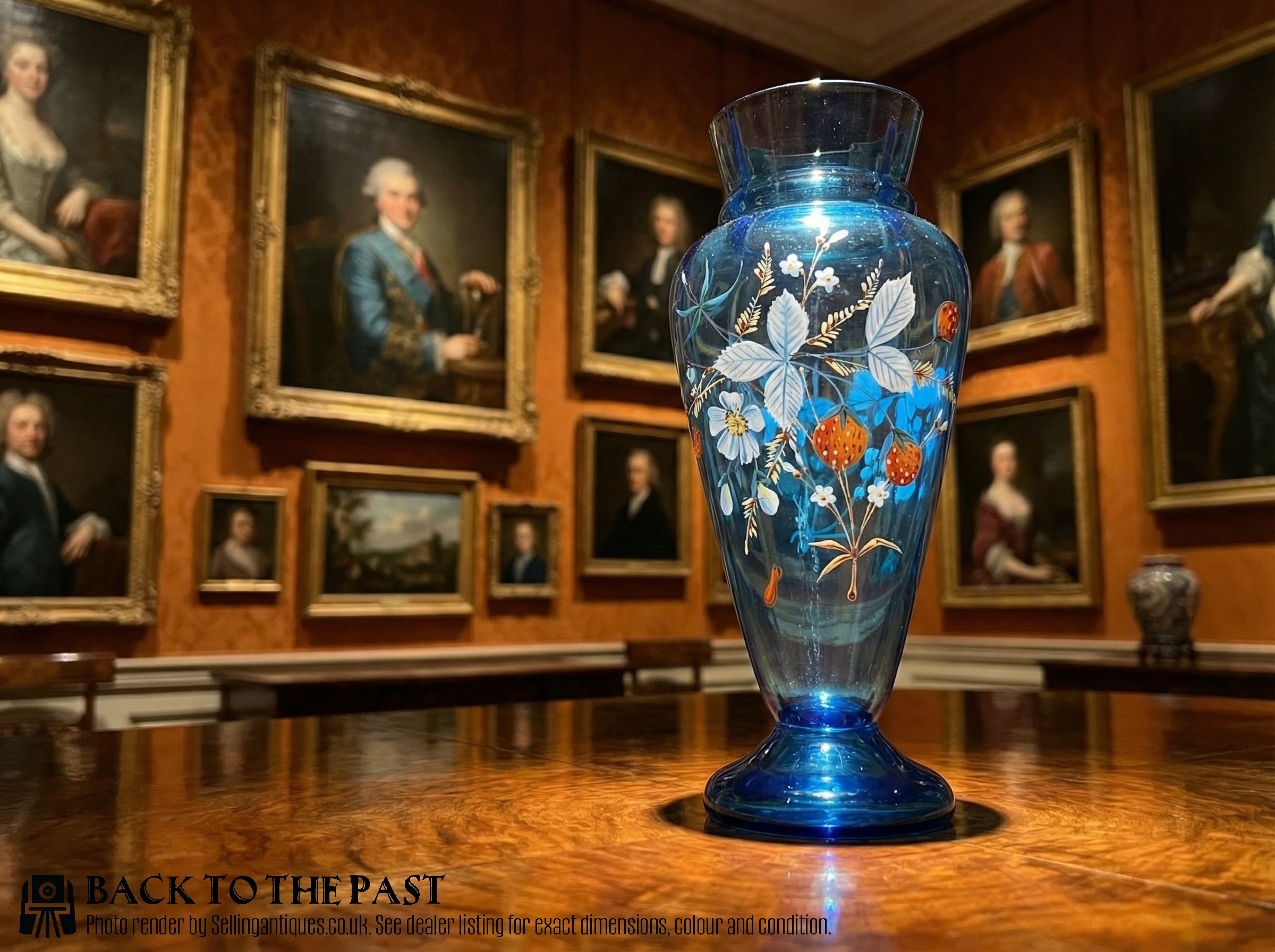
Hand Enamelled Glass Vase
A hand enamelled glass vase brings together nineteenth century decorative glass forms and careful painted enamel decoration. When you search this phrase, you encounter pieces spanning from the mid nineteenth century through the early twentieth century, including Victorian, Art Nouveau, and Bohemian styles.
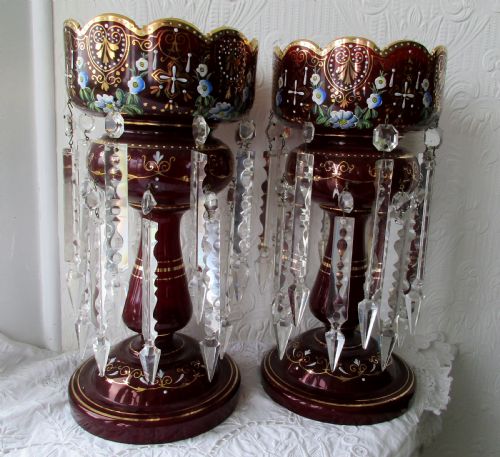
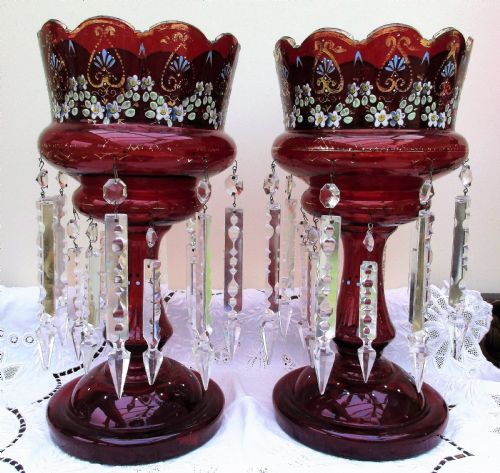
The most common forms you meet are bulbous vases, mantel lustres, and garniture sets in rich colours such as cranberry, ruby, green, and opaline. Makers applied detailed motifs ranging from floral sprays and wild roses to portraits and hunting scenes directly onto the glass body.
Many examples originate from English and Bohemian workshops, reflecting the favoured aesthetic movements of the period including Japonisme and the Victorian Aesthetic Movement. These vessels served primarily as decorative table centrepieces and mantel ornaments in period interiors.
Assessing quality and finish
Quality in these pieces rests upon the precision of the enamel painting and the richness of the underlying glass colour. Finely executed brushwork depicting intricate subjects like wildlife, figures, or botanical studies distinguishes finer examples from simpler production wares.
The weight of the lead crystal or glass body, alongside the crispness of any gilding or glass overlay work, indicates the care taken during manufacture. Pairs and matched garniture sets that retain their original pendants or matching lustre drops command greater interest.
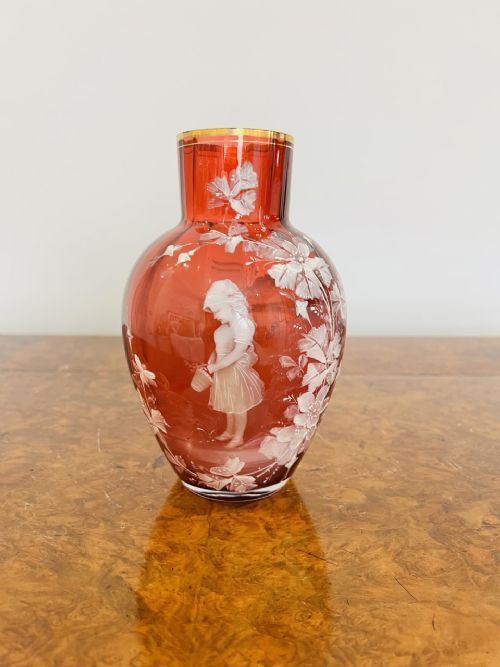
Watch closely for the tiny painted Victorian children hiding beneath white enamel on cranberry glass.
Moser·Harrach·Legras·George Tye
The Hand Enamelled Glass Vase Glossary
- Mary Gregory glass
- A style of glass decorated with white enamel silhouettes, usually depicting Victorian children amidst foliage or landscapes. This technique appears frequently on cranberry and blue glass grounds.
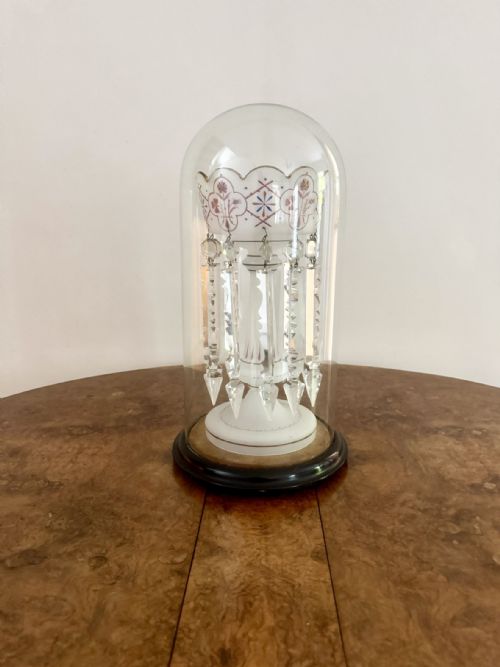
- Mantel lustre
- A decorative glass vase or pedestal fitted with hanging crystal prisms designed to catch the light. They were traditionally displayed on mantelpieces in pairs alongside matching vases.
- Opaline glass
- An opaque or translucent pale glass developed during the nineteenth century, often tinted in soft shades of white, blue, or green. It provided an ideal smooth background for painted enamel floral motifs.
- Overlay glass
- A technique involving layers of different coloured glass fused together, where sections of the outer layer are cut away to reveal the contrasting colour beneath. This method creates striking dimensional patterns.
- Garniture set
- A matching group of three or more decorative vessels, typically consisting of a central vase flanked by matching smaller vases or lustres for display on a sideboard or mantel.
Hand Enamelled Glass Vase: Frequently Asked Questions
Where were these glass pieces made?
Production was centered primarily in England, Bohemia, and France during the nineteenth and early twentieth centuries. Regional workshops developed distinct styles, such as Bohemian overlay techniques and English opaline flower vases.
Continental makers often exported large quantities of decorated glassware to the British market, where they aligned with Victorian and Edwardian interior tastes.
What is cranberry glass?
Cranberry glass is a rich red-pink transparent glass coloured by the addition of gold chloride to the molten batch. It became exceptionally popular during the Victorian era for decorative tableware and mantel pieces.
This vibrant glass often served as the backdrop for white Mary Gregory enamel painting or elaborate gilt decoration.
How do I date a glass vase?
Dating relies on examining the glass manufacturing technique, the colour palette, and the specific artistic style of the enamel decoration. Pontil marks on the base often indicate older hand blown methods from the nineteenth century.
Stylistic shifts from Victorian floral motifs to Art Nouveau whiplash lines help narrow down the period of production.