
Victorian Elm Seat Armchair
A victorian elm seat armchair brings sturdy regional character to a room, offering the tactile warmth of traditional timber work.
Victorian Elm Seat Armchair
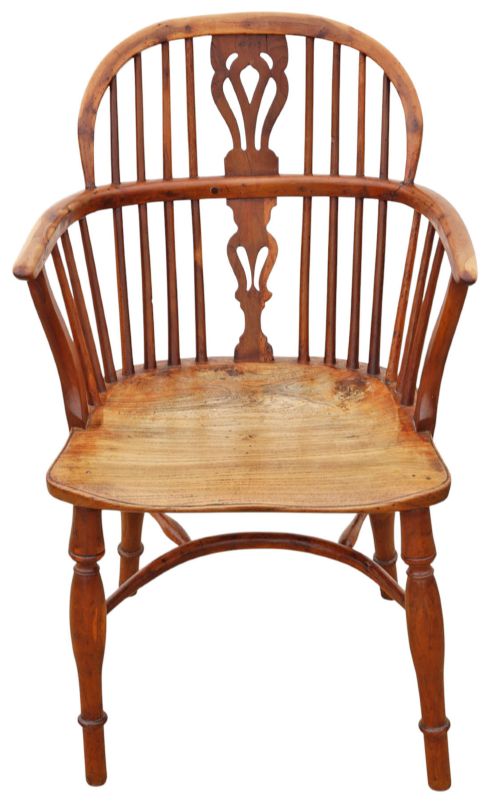
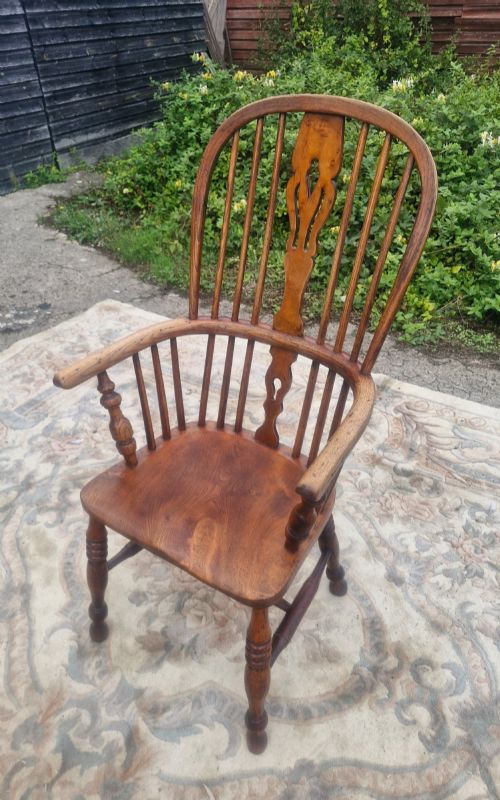
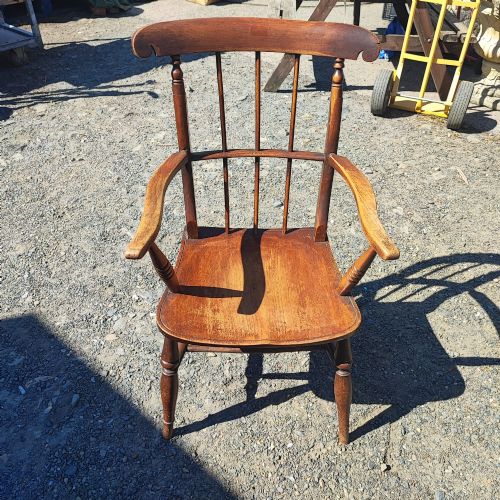
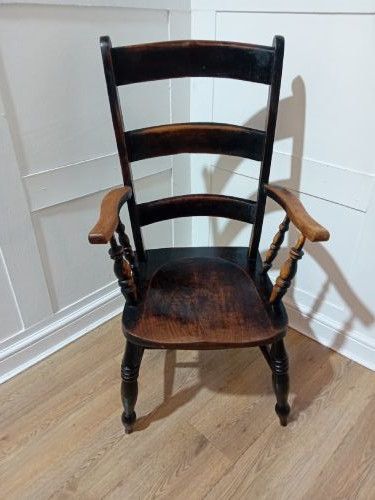
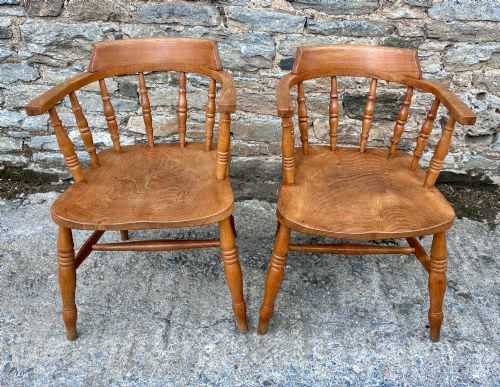
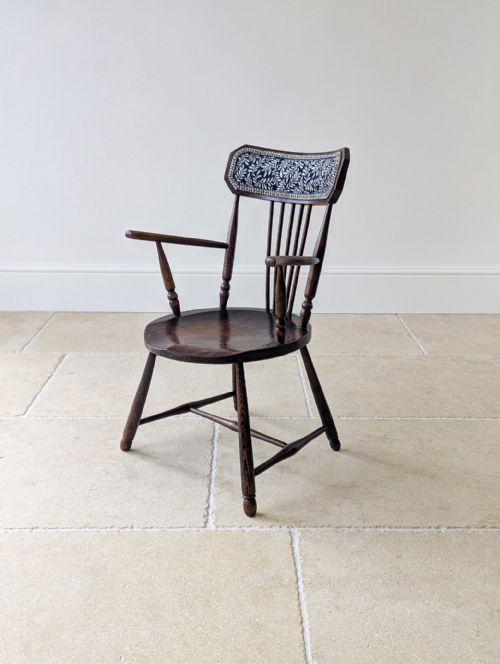
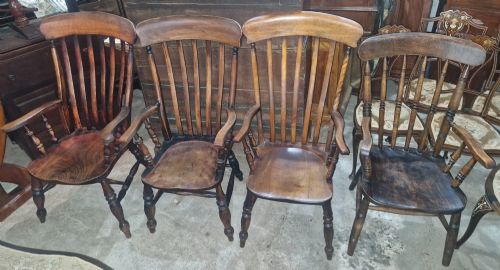
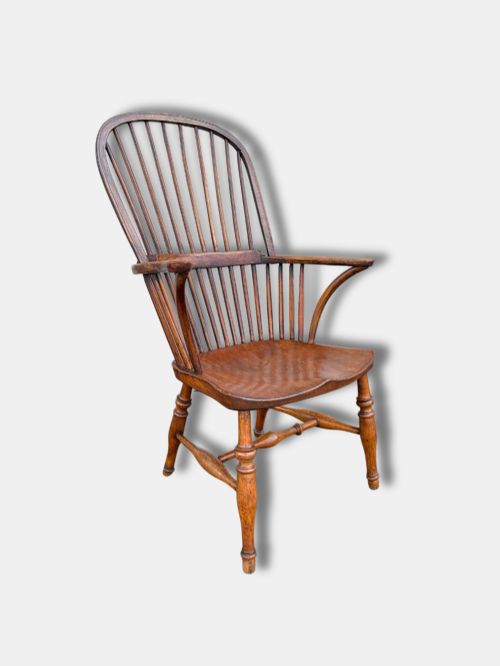
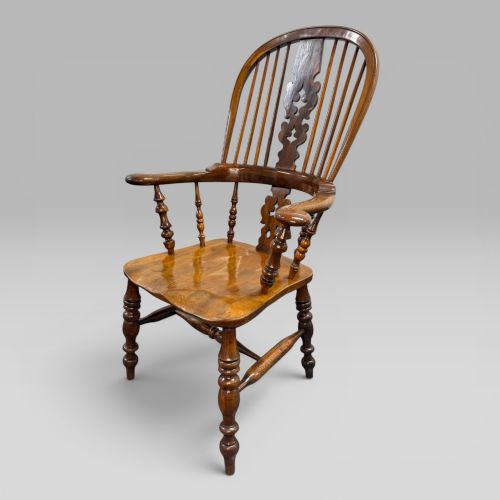
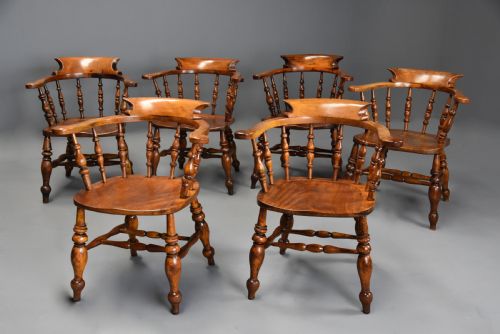
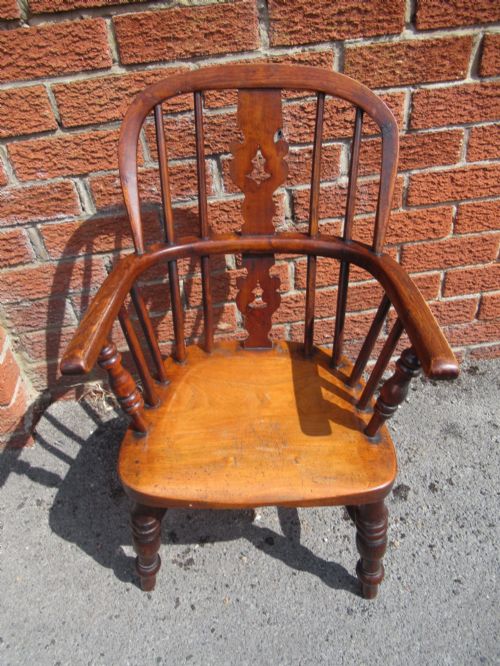
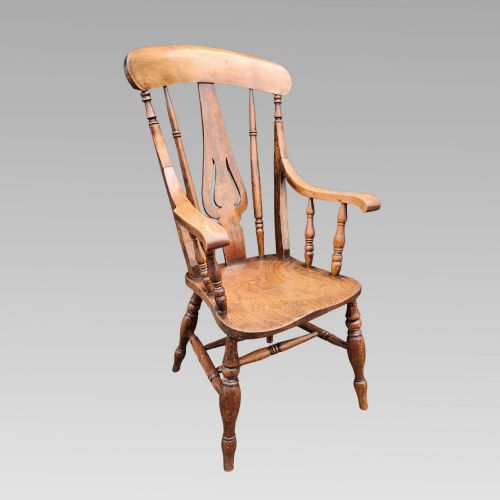
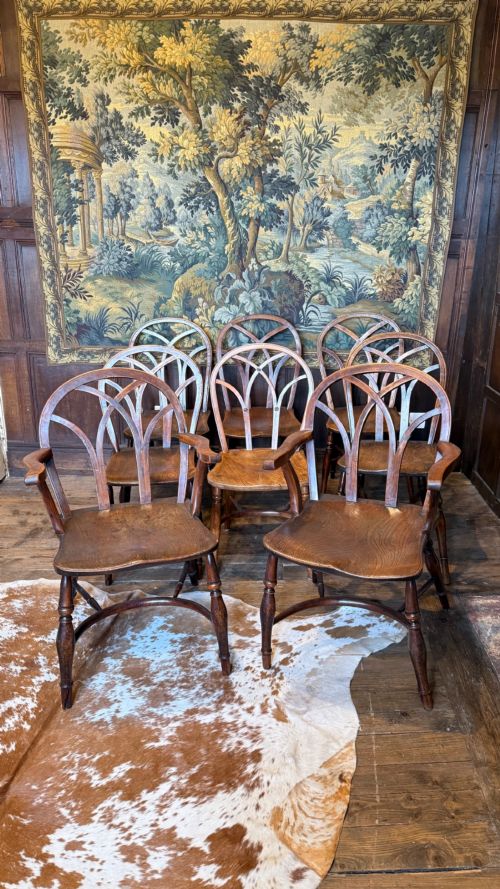
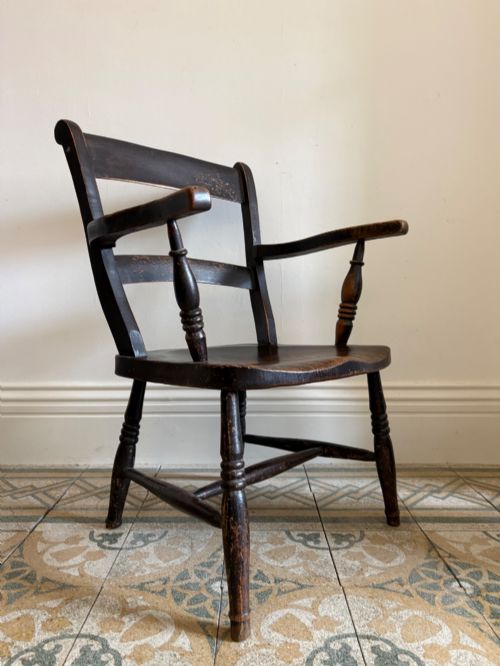
A victorian elm seat armchair is typically found in the form of a Windsor, smokers bow, or farmhouse elbow chair originating from the nineteenth century. These seats appear in regional styles such as Thames Valley, West Country, and Nottinghamshire variations, alongside Arts and Crafts and Gothic Revival designs.
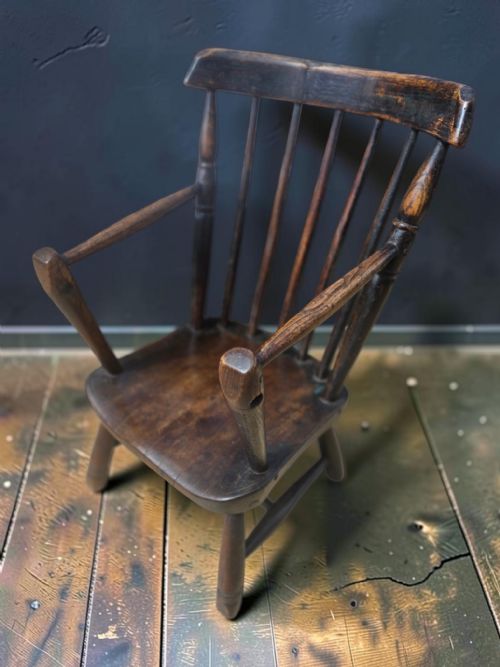
The selection ranges from high-back and low-back Windsor armchairs to compact children's chairs, desk chairs, and rush seat dining or farmhouse carvers. Most pieces combine solid elm saddles with supporting timbers like ash, beech, yew, fruitwood, and oak.
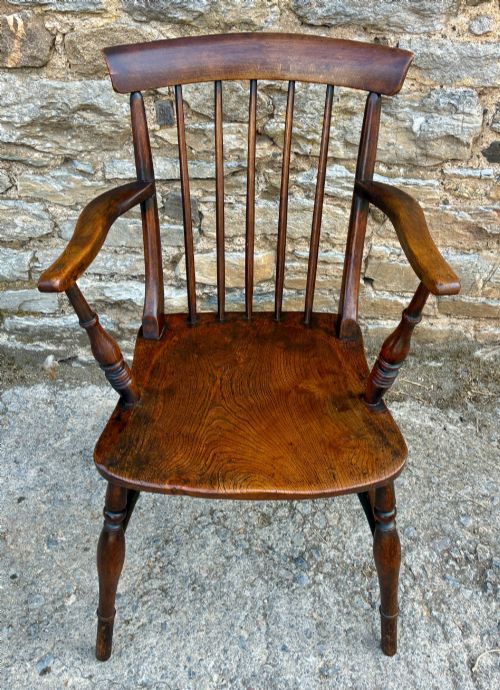
Buyers encounter everything from simple stick-back and wheelback farmhouse seating to finely turned spindle and lyre back models. These chairs served utility in kitchens, farmhouses, and offices before becoming appreciated for vernacular design.
How they were made
Maker construction relies on contrasting timbers, pairing sturdy elm for the carved saddle seat with pliable woods like ash, beech, yew, or fruitwood for the bentwood bows, spindles, and legs. Elm provides a tough, interlocking grain that resists splitting under heavy daily use.
Turned components, steam-bent bows, and wedged tenon joints form the structural skeleton of these chairs. Many examples retain original finishes, ebonised treatments, or natural patination built up over decades of domestic use.
Several small-scale children's armchairs survive, proving that nineteenth-century toddlers took their fireside seating very seriously indeed.
What varies in quality
Quality rests in the balance of the timber selection, particularly the figure and thickness of the elm seat saddle and the richness of the secondary woods. Finer examples display crisp turning on spindles and well-sculpted arm terminals.
The integrity of the construction and the preservation of original surface finishes dictate the standing of a piece. Chairs with harmonious proportions and minimal structural replacement sit at the upper end of the range.
The Victorian Elm Seat Armchair Glossary
- Windsor chair
- A chair built with a solid wooden seat into which the legs and back spindles are inserted directly. These vernacular pieces rely on a central bow or comb to support the back.
- Smokers bow
- A low-backed Windsor derivative with a rounded arm rail, often utilised in farmhouse kitchens and offices. It provides sturdy, compact seating with turned spindles.
- Carver
- A term for an armchair, frequently found accompanying a set of smaller dining chairs. These items feature supportive elbow rests.
- Penny seat
- An elm seat base shaped with a central depression resembling a coin, characteristic of nineteenth-century vernacular seating. This shaping adds comfort to the solid timber.
- Vernacular
- Objects built by regional makers using local traditions rather than following strict high-style patterns. These pieces reflect local timber availability and domestic utility.
Victorian Elm Seat Armchair: Frequently Asked Questions
How do I identify a Thames Valley chair?
Thames Valley chairs often incorporate yew or ash alongside elm, featuring characteristic crinoline stretchers and refined turning. These regional pieces show distinctive local framing methods.
Look for elegant spindle work and balanced proportions that separate them from heavier provincial farmhouse models.
Where were these armchairs used originally?
These seats saw service in farmhouses, cottages, and provincial offices as durable everyday furniture. Their robust construction suited kitchens, firesides, and writing desks.
Over time, their practical utility transitioned into decorative appreciation within domestic interiors.
What is the difference between a high-back and low-back Windsor?
High-back models offer extended support with tall spindles and arched bows, creating a commanding silhouette. Low-back variants keep the height down for easier movement around tables and desks.
Both styles utilise the same saddle seat construction and turned underframe assembly.
How do I care for an antique elm seat?
Keep elm seating away from direct heat sources and sudden temperature shifts to prevent timber movement. Regular dusting with a dry cloth preserves the aged surface.
Occasional application of appropriate wax maintains the natural lustre of the wood.