
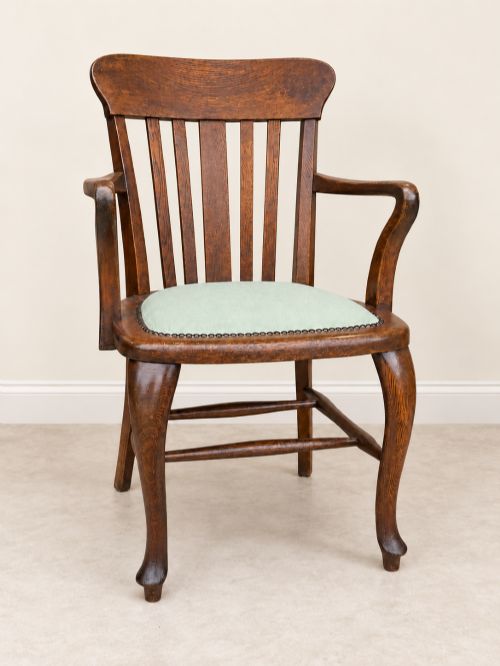
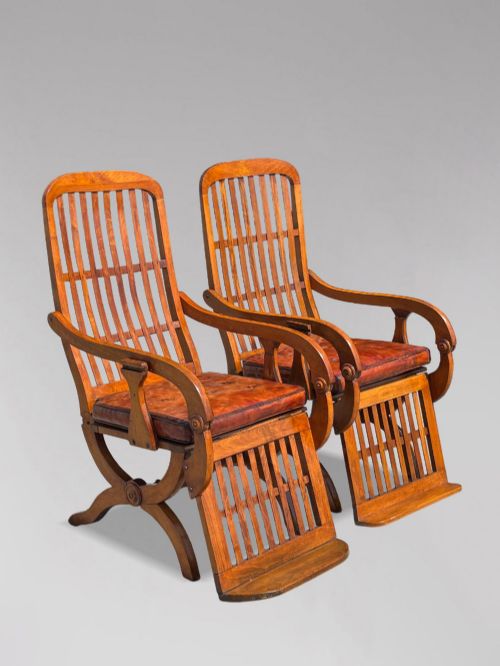

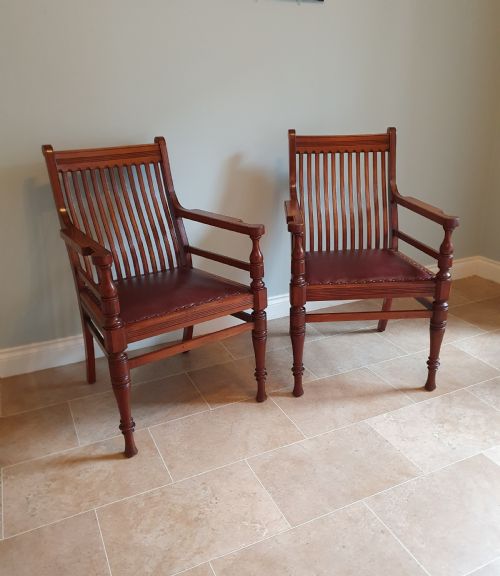
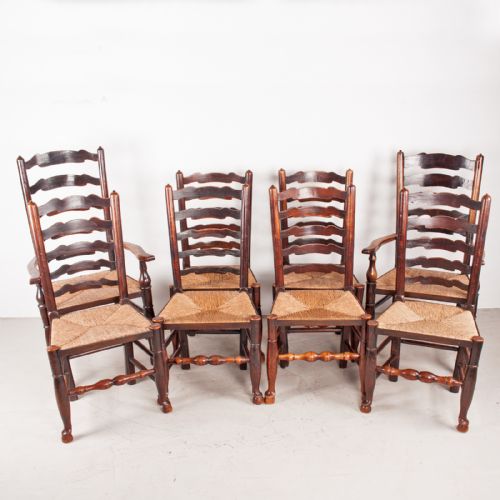


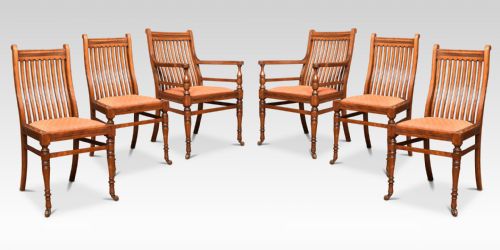

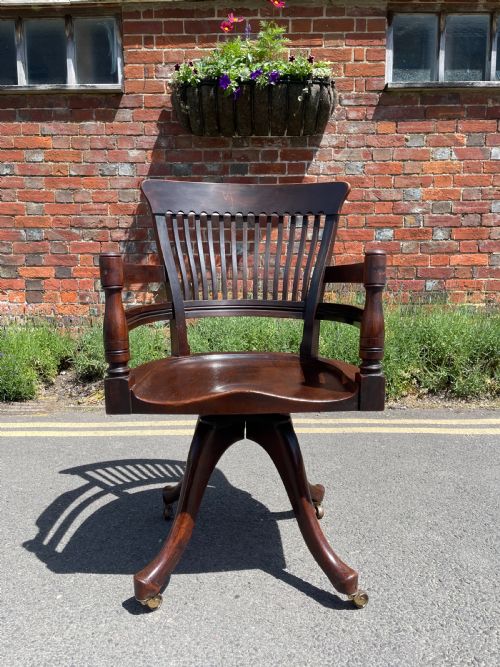

Victorian Slat Back Armchair
A victorian slat back armchair gives a room honest rural weight, built for daily sitting rather than formal display.
Victorian Slat Back Armchair
A victorian slat back armchair combines upright wooden slats with supportive armrests, originating from nineteenth century domestic and country workshops. These chairs appear across various regional British vernacular traditions, often adopting Windsor forms or ladderback structures.
The pieces catalogued here span from the middle decades of the nineteenth century into the early twentieth century, taking the form of fireside chairs, desk chairs, and robust rocking seats. Elm, ash, and beech frequently form the primary construction materials, finished with solid wooden seats or occasional leather pads.
Materials and construction methods
Traditional makers built these chairs using a combination of durable native timbers, selecting elm for solid sculpted seats and ash or beech for turned spindles and steam-bent components. This multi-wood construction allowed craftsmen to utilise the specific tensile strength and flexibility best suited to each part of the frame.
Joinery relied heavily on traditional pegged mortise and tenon joints alongside turned undercarriages, ensuring the structure remained rigid under heavy domestic use. Surface finishes typically consisted of applied wax or polish over plain timber, developing a deep natural patina through generations of handling.
Listings for this phrase feature pieces dated from 1850 through the Edwardian era, constructed primarily in elm, ash, beech, and walnut.
Distinguishing quality in construction
The standard of a victorian slat back armchair rests on the integrity of its timber selection and the precision of its original joinery. Chairs retaining their native uncompromised wood grain and tight structural joints demonstrate superior regional craftsmanship.
Proportion and comfort further separate ordinary workshop output from finer examples, seen in the subtle rake of the back slats and the careful shaping of the arm bow. Retention of original surface finishes without excessive timber replacement preserves the historical authenticity of the piece.
James Shoolbread·E W Godwin
The Victorian Slat Back Armchair Glossary
- Slat back
- A chair back formed of vertical wooden slats set between a top rail and the seat. This design provides robust vertical support while maintaining a lighter visual profile than a solid panel.
- Windsor
- A traditional chair style featuring a solid wooden saddle-shaped seat into which the legs, back spindles, and arms are directly socketed. These chairs often incorporate bentwood bows for enhanced upper back support.
- Lath back
- A regional term frequently used interchangeably with slat back, describing flat wooden laths secured horizontally or vertically within the chair frame. The method distributes pressure evenly across the sitter's spine.
- Vernacular
- Everyday objects made by regional craftsmen using local materials and traditional methods, without adherence to high academic architectural styles. These pieces reflect local trade practices and available woodland resources.
- Undercarriage
- The framework of turned stretchers connecting the legs beneath the seat of a chair. This structural element provides lateral stability and prevents the legs from spreading under weight.
Victorian Slat Back Armchair: Frequently Asked Questions
How do I date a slat back chair?
Dating relies on examining the timber species, tool marks left by manufacture, and regional construction traits recorded across the nineteenth century. Earlier examples often show hand-turned undercarriages and wider elm seat boards.
Later pieces from the turn of the twentieth century tend to incorporate standardised industrial components or display stylistic influences from the Aesthetic Movement. Comparing the wear patterns around the footings and seat edges also assists in placing the piece within its historical period.
Are these chairs comfortable for daily use?
Most of these seating forms were built for practical domestic tasks, offering supportive upright postures rather than deep lounging. The solid sculpted wooden seats are designed to accommodate simple squabs or cushions for extended sitting.
Their robust timber construction makes them well suited for regular placement beside a fireside or at a working desk. Checking the seat height and arm clearance ensures compatibility with modern room layouts.
What woods were commonly used?
Makers relied heavily on native British hardwoods such as elm, ash, and beech, chosen for their specific mechanical properties. Elm provided tough, splitting-resistant timber for solid seats.
Ash and beech offered flexibility and strength for steam-bent back bows and slender turned spindles. Occasional examples feature walnut, mahogany, or pitch pine in more formal or Gothic Revival designs.
What is the difference between lath and slat back?
The terms are largely regional variations describing the flat wooden uprights fitted into the backrest of a chair. Both constructions serve the same structural and ergonomic purpose of supporting the sitter.
Historical listing records use both descriptions interchangeably for nineteenth-century country seating. The physical construction remains consistent regardless of which term the original maker or cataloguer applied.