


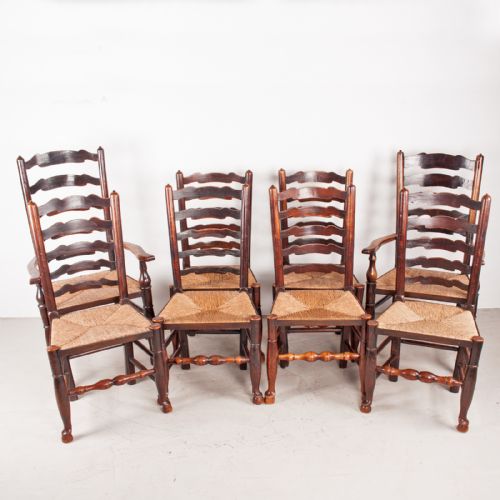


Slat Back Carver Chair
A slat back carver chair offers solid timber construction and upright arm support, turning up frequently in Victorian beech and elm.
Slat Back Carver Chair
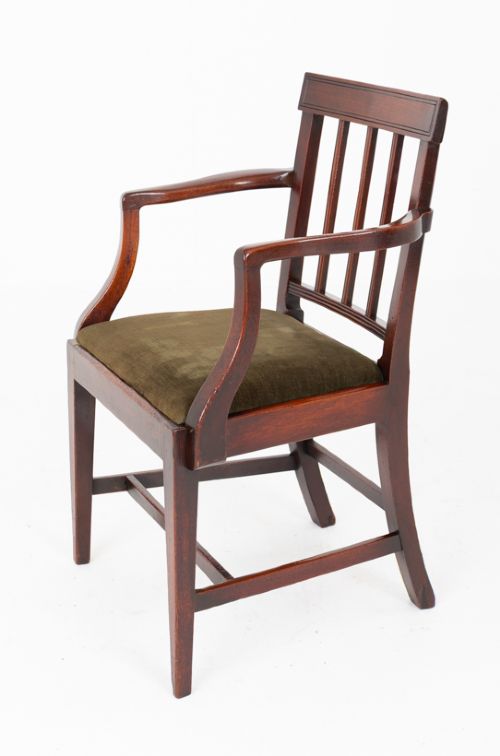
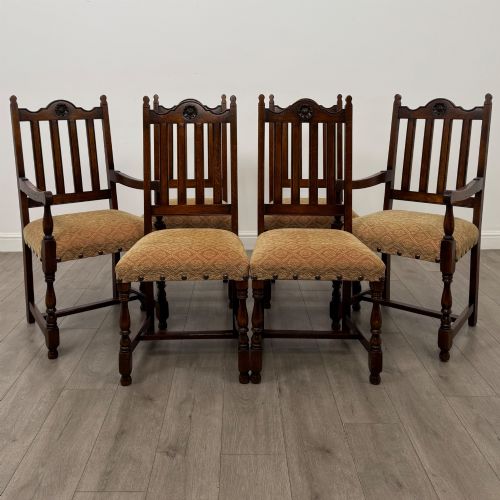
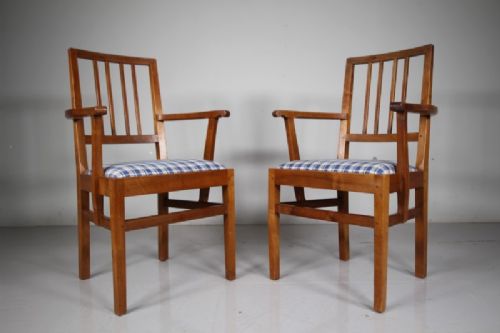
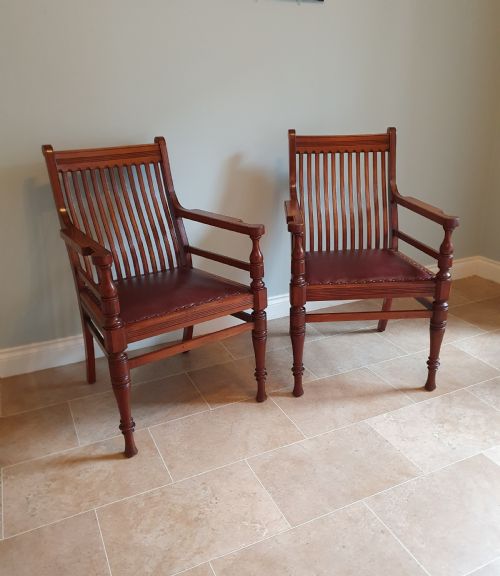
When searching for a slat back carver chair, a buyer encounters sturdy seating distinguished by horizontal wooden slats fitted into the backrest and integrated armrests. These pieces serve primarily as fireside reading chairs or desk seats, combining domestic utility with traditional joinery.
The version most commonly met on this page is the Victorian beech and elm example, often featuring a shaped wooden seat and turned supports. Alongside these, examples appear in oak and mahogany across periods spanning from the eighteenth century through the Edwardian era.
How they were made
Construction relies heavily on native hardwoods such as oak, elm, beech, and walnut, shaped using traditional turning, mortise and tenon joinery, and steam bending. Windsor and vernacular regional traditions utilise turned spindles and solid saddle seats carved from a single block of timber.
Later Edwardian and revival iterations incorporate inlaid mahogany veneers, upholstery using fabric, leather, or velvet drop-in pads, and structural brass elements. The combination of dense timbers and pegged joints accounts for the heavy, rigid structure seen in surviving kitchen and dining armchairs.
Several farmhouse examples still bear the subtle dents of eighteenth-century elbows resting firmly by the hearth.
What varies in quality
Distinctions in quality rest upon the choice of timber and the precision of the underlying joinery rather than surface decoration. Chairs fashioned from dense, figured oak or well-grained elm display greater structural integrity at the joints than lighter secondary woods.
Proportion and the retention of original finish dictate the standing of an individual piece within its period. Examples retaining their original patination and integrated arm supports demonstrate a higher level of workshop execution than later assembly.
Edward Barnsley·James Shoolbread
The Slat Back Carver Chair Glossary
- Carver chair
- An armchair designed with open sides, typically intended for the head of a dining table or as a singular desk seat. These pieces feature structural armrests built into the frame.
- Slat back
- A chair back construction utilising flat wooden bars or laths placed horizontally or vertically between the top rail and the seat. This method provides robust spinal support while maintaining a relatively lightweight frame.
- Windsor
- A traditional chair construction method where legs and back spindles are wedged directly into a solid carved wooden seat. This technique creates a resilient, unified structure.
- Vernacular
- Furniture produced by local provincial makers using regional traditions and readily available materials rather than following metropolitan fashion trends. These pieces often exhibit unique structural quirks reflecting local utility.
- Barley twist
- A decorative turning technique shaped in a helical screw pattern resembling twisted barley sugar. This profile appears frequently on the legs and stretchers of seventeenth and nineteenth-century seating.
Slat Back Carver Chair: Frequently Asked Questions
What is a slat back carver chair?
A slat back carver chair is an armchair featuring horizontal wooden slats in the backrest and open sides. They appear frequently in nineteenth-century beech and elm vernacular forms.
These pieces were constructed for general domestic utility, often serving as fireside seating or as head chairs at a dining table.
How do I identify a Victorian slat back chair?
Victorian examples frequently combine beech frames with solid elm seats, displaying turned legs and traditional stretcher supports. The joinery is typically pegged, and the backrest incorporates flat wooden slats.
Later Victorian versions may also introduce mahogany frames with inlaid details reflecting revival styles of the period.
Where were these chairs used?
These armchairs served primarily in kitchens, farmhouses, and libraries where durable, upright seating was required. The inclusion of armrests provided added comfort for prolonged tasks.
They function equally well today as desk chairs, hallway seats, or feature pieces in living rooms alongside modern furniture.
What is the difference between an elm and oak chair?
Elm timber was traditionally chosen for chair seats because its interlocking grain resisted splitting when shaped into a saddle form. Oak possesses a denser, more pronounced grain pattern suited to heavy structural frames and turned spindles.
Both timbers provide exceptional durability, though oak chairs often belong to formal dining sets or earlier revival periods.