


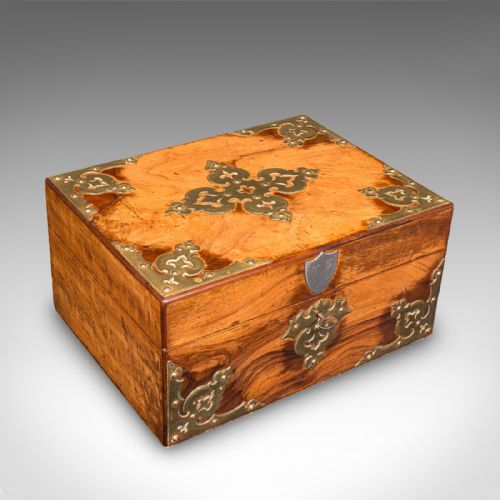


Victorian Decorative Wooden Box
A Victorian decorative wooden box brings refined nineteenth-century craftsmanship into daily use, holding everything from letters to jewellery.
Victorian Decorative Wooden Box
A victorian decorative wooden box encompasses a broad range of nineteenth-century containers designed for specific domestic functions.
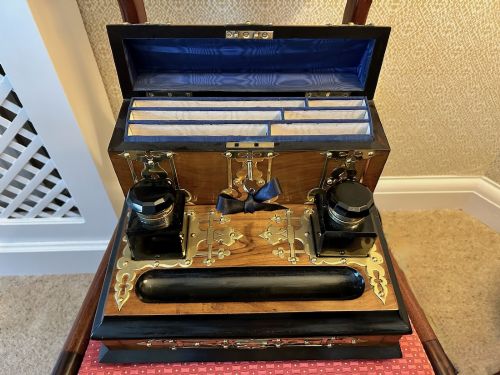
Tea caddies, jewellery cases, and writing slopes form the core of what collectors encounter in walnut, rosewood, and mahogany.
Pieces frequently reflect Victorian, Arts and Crafts, and Gothic Revival styles alongside Anglo-Indian and Black Forest traditions.
Materials and Techniques
Cabinet makers utilised dense hardwoods like walnut, rosewood, and coromandel as stable foundations for elaborate decorative schemes.
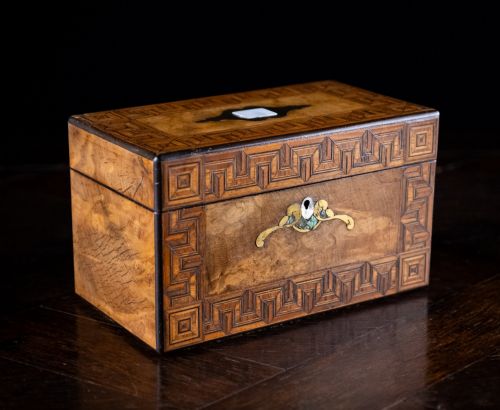
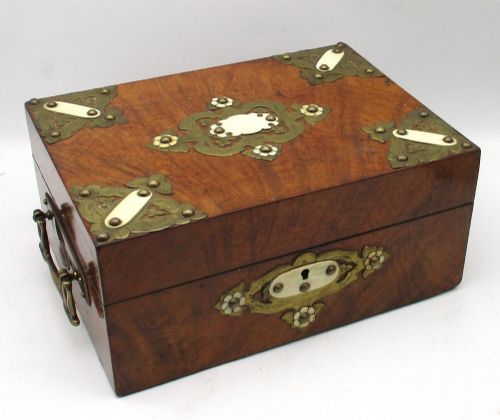
Surface enrichment relied on brass mounts, mother of pearl inlay, marquetry, and parquetry geometric patterns.
Specialised techniques such as Tunbridge ware mosaic work and detailed hand-carving define the more ambitious nineteenth-century examples.
Standards of Execution
The division between standard boxes and exceptional pieces rests upon the precision of the inlay and the depth of the carving.
Superior examples retain fitted internal trays, original working locks, and interior linings that demonstrate uncompromised attention to detail.
Tahan of Paris
The Victorian Decorative Wooden Box Glossary
- Tunbridge ware
- A form of woodworking originating in Kent featuring mosaic patterns assembled from thousands of tiny dyed wood blocks.
- Parquetry
- Geometric wood inlay laid down in regular patterns to create decorative surface designs on box lids and sides.
- Casket
- A descriptive term for a more substantial or heavily decorated box, often intended for jewellery or keepsakes.
- Work box
- A specialised nineteenth-century container fitted with internal compartments specifically for sewing and needlework accessories.
Victorian Decorative Wooden Box: Frequently Asked Questions
What were these boxes originally used for?
Nineteenth-century boxes served designated practical roles within the home, housing valuable loose leaf tea, writing implements, or personal trinkets.
Interior compartments and lift-out trays helped organise small items before the widespread use of fitted modern furniture.
How do I care for antique wood boxes?
Keep wooden boxes away from direct heat sources and dramatic humidity fluctuations to prevent timber splitting or veneer lifting.
Apply a gentle application of traditional beeswax polish occasionally to nourish the grain and maintain the surface sheen.
How can I tell different wood types apart?
Walnut presents a rich brown tone with distinctive grain movement, whereas rosewood offers darker, heavier colouration with characteristic reddish streaks.
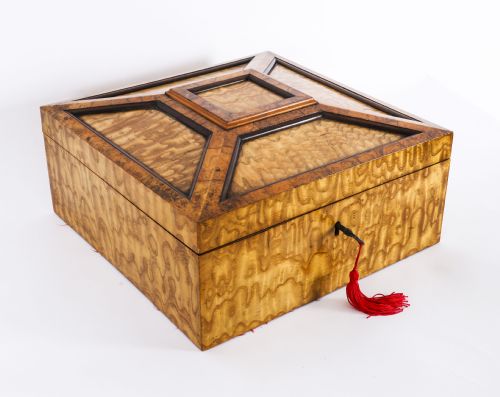
Burr varieties exhibit swirling, knotty patterns created from excrescences on the tree, highly prized for decorative lid veneers.
Are music boxes and writing slopes considered boxes?
Mechanical music boxes and folding writing slopes share the core structural form and cabinetry techniques of standard decorative containers.
Their internal mechanisms or sloping writing surfaces simply adapt the foundational wooden carcass to specialised domestic duties.