
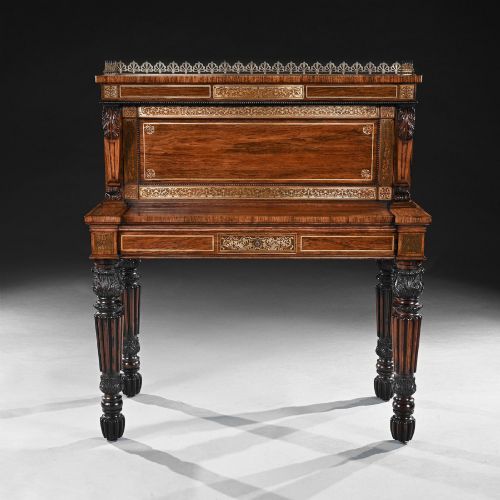
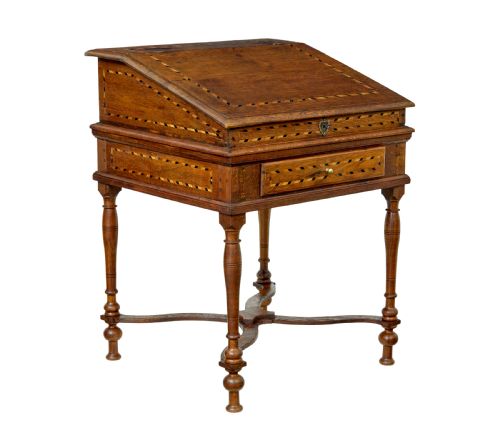

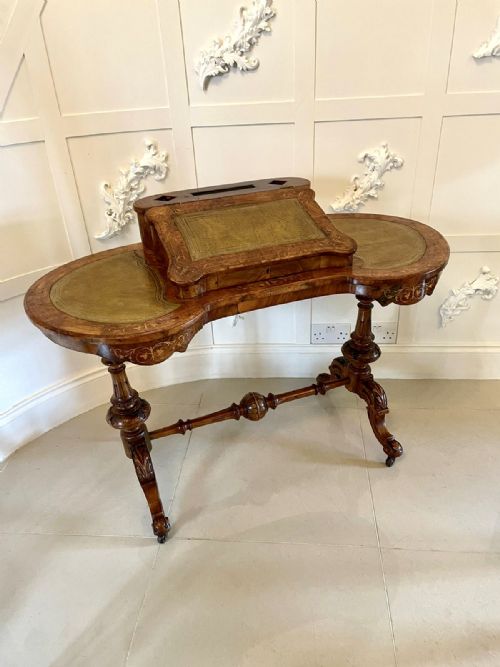


Carved Marquetry Slope
A carved marquetry slope brings intricate wood inlay and a practical writing surface together into a handsome piece of furniture for the home.
Carved Marquetry Slope
A carved marquetry slope is a portable writing box or a fitted desk featuring decorative wood inlays and carved details. When you search for this phrase, you encounter varieties ranging from compact writing boxes to larger bureau desks and davenports.
The pieces on this page span several eras, with the nineteenth century heavily represented alongside eighteenth-century examples. Victorian burr walnut models and Dutch inlaid bureaux appear frequently in various forms.
Makers utilised distinct regional styles, creating Dutch marquetry pieces with characteristic bombe shapes alongside English writing tables and davenports. Walnut and mahogany serve as the primary foundational timbers for these surfaces.
How they were made
Craftsmen built these slopes using solid timbers like oak, mahogany, and walnut, frequently applying burr walnut or rosewood veneers to the exterior surfaces. Marquetry involves cutting contrasting woods into floral or geometric patterns and fitting them precisely into the background veneer.
Makers incorporated brass hardware, leather writing inserts, and intricate tunbridge ware details to enhance the functionality and appearance of the desks. Carved wooden elements often frame the inlaid panels and drawers.
The listings on this page span the eighteenth, nineteenth, and early twentieth centuries, featuring walnut, mahogany, oak, and fruitwood.
What varies in quality
The precision of the marquetry cutting and the choice of timber set the finest examples apart from standard pieces. Richly figured burr walnut and detailed floral inlays indicate a higher grade of craftsmanship.
The complexity of the interior fittings, including secret drawers and pop-up compartments, demonstrates the skill involved in construction. Condition and originality of the brass mounts and leather writing surfaces also influence the character of each piece.
Gillows Oxford Street Workshop
The Carved Marquetry Slope Glossary
- Marquetry
- The art of applying pieces of veneer to a structure to form decorative patterns and pictures. Craftsmen use various coloured woods to achieve detailed floral or geometric designs.
- Davenport
- A small pedestal desk featuring a sloping writing surface and drawers to the side. This form gained popularity during the Victorian period for domestic correspondence.
- Bombe
- A swollen or bulging contour found on the front and sides of certain antique furniture. This rounded shape requires advanced woodworking techniques to apply veneer successfully.
- Tunbridge Ware
- A type of decorative woodwork characterised by tiny mosaic tiles formed from different coloured woods. These geometric patterns decorate small wooden boxes and writing accessories.
Carved Marquetry Slope: Frequently Asked Questions
What is a carved marquetry slope?
A carved marquetry slope is a desk or writing box decorated with patterned wood veneer and carved wood details. These pieces combine a sloping writing surface with storage compartments for papers and writing instruments.
Such items range from compact portable boxes to freestanding davenport desks and larger bureau forms. They were designed for correspondence and record keeping in the home.
How do I date a writing slope?
Dating relies on observing the secondary woods, construction methods, hardware styles, and prevailing design characteristics of the period. Pieces from the eighteenth century often feature bombe shapes and floral marquetry.
Nineteenth-century examples frequently utilise burr walnut veneers and include fitted interiors with secret compartments. Comparing the brass hinges and locks provides additional clues regarding the manufacturing date.
Where were these desks used?
These desks served as private writing spaces within the principal rooms of a residence, such as the drawing room or study. Portable slopes could be placed on top of tables or used on the lap.
Freestanding davenports and bureaux remained stationary in parlours and bedrooms. They provided a dedicated area for writing letters and managing personal accounts.
How do I care for walnut veneer?
Walnut veneer requires protection from direct sunlight and excessive moisture to prevent fading and splitting. Regular dusting with a soft, dry cloth preserves the polished surface.
Applying appropriate wax polishes occasionally maintains the lustre of the wood without building up heavy residue. Keeping the furniture away from direct heat sources ensures the stability of the timber.