


Marquetry Desk Box
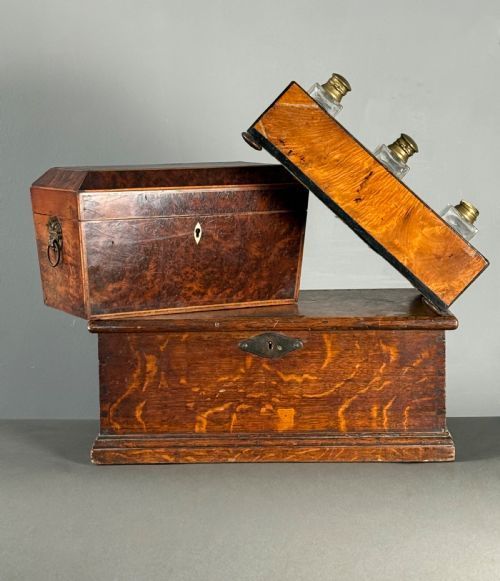
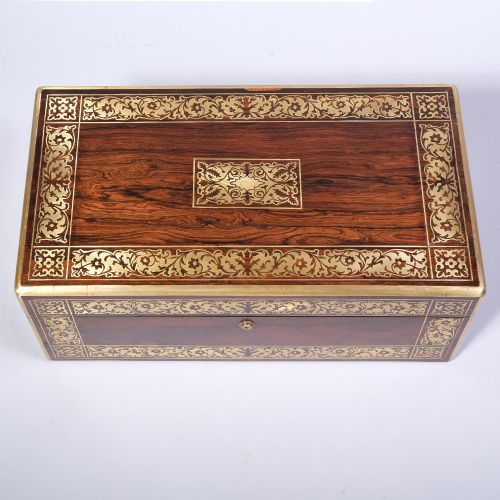
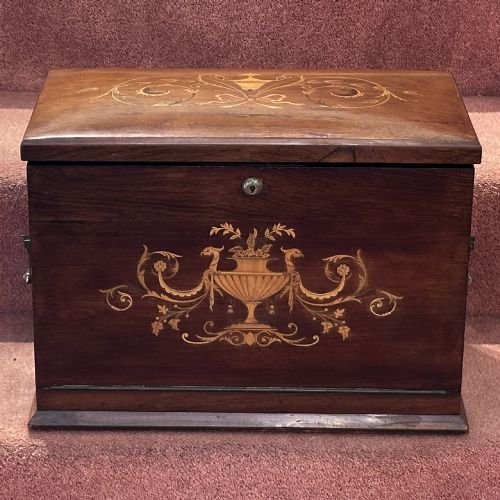
Marquetry desk box pieces combine fine woodworking with practical storage, offering a sophisticated surface inlay that draws the eye across periods.
Marquetry Desk Box
A marquetry desk box serves as a functional desktop container, frequently taking the form of a stationery box, writing slope, or correspondence chest. These items emerge primarily from Victorian, Regency, and Georgian periods, showcasing detailed surface decoration.
Buyers encounter walnut, rosewood, and mahogany foundations inlaid with contrasting timbers like boxwood, satinwood, and various exotic woods. The assortment spans British workshops alongside French and Dutch examples.
Interior fittings often include compartments for paper, pens, and inkwells, sometimes accompanied by secret drawers or sloping writing surfaces lined in velvet or leather.
Standards of Execution
Quality rests in the precision of the veneer work and the tightness of the joinery where individual wood pieces meet. Sharp, clean lines in geometric parquetry or delicate curves in floral marquetry indicate superior hand-cutting skills by the maker.
The choice of secondary timbers and the retention of original interior fittings, such as matching glass inkwells or fitted pen trays, elevate a piece above standard utility boxes. Exterior hardware, including flush brass handles and working locks with original keys, further distinguishes finer specimens.
A tiny bone swan glides across a Victorian desk, proving that even paperwork needed a feathered escort.
Waring & Gillow
The Marquetry Desk Box Glossary
- Marquetry
- The art of applying pieces of veneer to a structure to form decorative patterns and pictures. It differs from parquetry through its use of pictorial designs rather than repeating geometric tiles.
- Parquetry
- A geometric mosaic of wood pieces used for covering floors or furniture surfaces. This technique creates regular patterns like cubes, stripes, or triangles.
- Stationery box
- A desktop cabinet designed specifically to hold writing paper, envelopes, and letters upright in tiered compartments. These often feature a sloping front lid that drops open.
- Writing slope
- A portable box with a hinged lid that opens to form an inclined surface for writing letters. Interiors typically contain compartments for nibs, ink, and blotting paper.
- Tunbridgeware
- A distinct type of decorative woodwork produced in Tunbridge Wells, utilising thousands of tiny blocks of naturally coloured wood to form mosaic pictures. Common motifs include geometric designs and local landmarks.
Marquetry Desk Box: Frequently Asked Questions
What is a marquetry desk box used for?
These boxes organise writing materials, letters, and small desk accessories on a tabletop or writing desk. They provide secure, compartmentalised storage for stationery while adding decorative value to a room.
Historically, owners kept personal correspondence, stamps, and writing instruments inside these lidded containers. Today, they serve a similar desktop function or act as decorative display pieces.
How do I tell Victorian from Regency boxes?
Regency pieces often feature clean architectural lines, rosewood carcases, and bright cut-brass inlay or brass stringing. They lean towards neoclassical restraint and are typically dated around the early nineteenth century.
Victorian examples frequently utilise walnut or burr walnut with denser floral marquetry, parquetry, or Tunbridge ware mosaics. They tend to display heavier proportions and more elaborate interior stationery compartments.
Are the brass mounts original?
Original brass mounts, escutcheons, and hinges fit flush into the wood with hand-cut screws matching the period of the box. They show consistent patination and wear appropriate to the exterior surface.
Replacement hardware often leaves slight gaps in the inlet recesses or uses modern screw heads. Examining the interior woodwork around the lockplate reveals whether original fittings have been altered.