


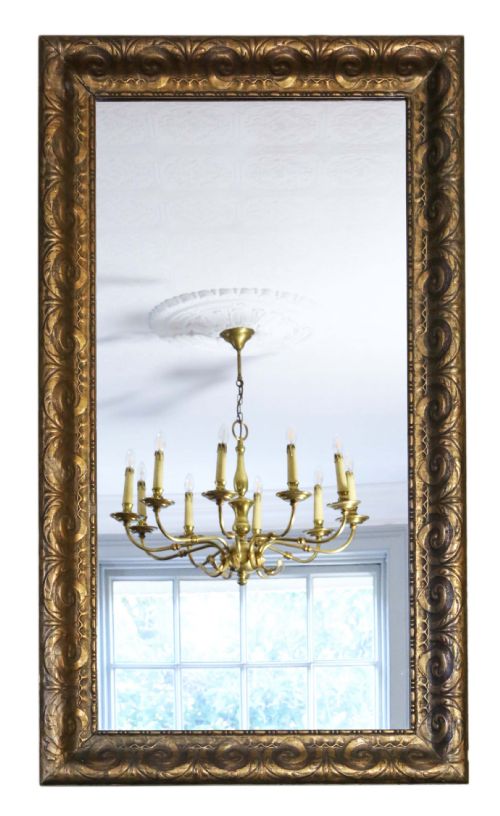

Victorian Cushion Mirror
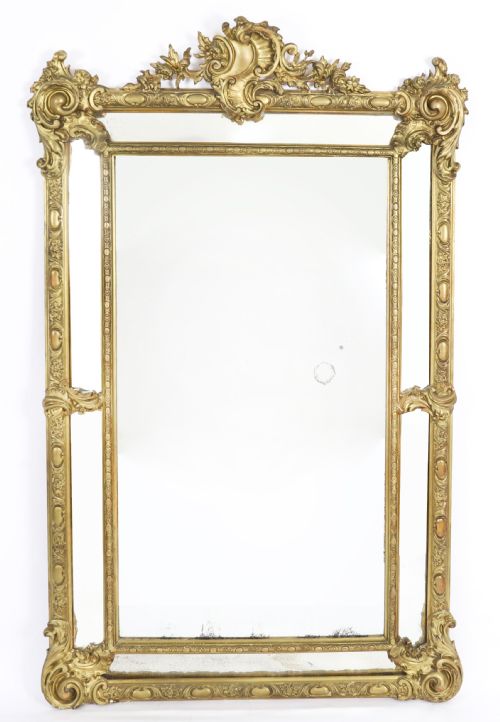
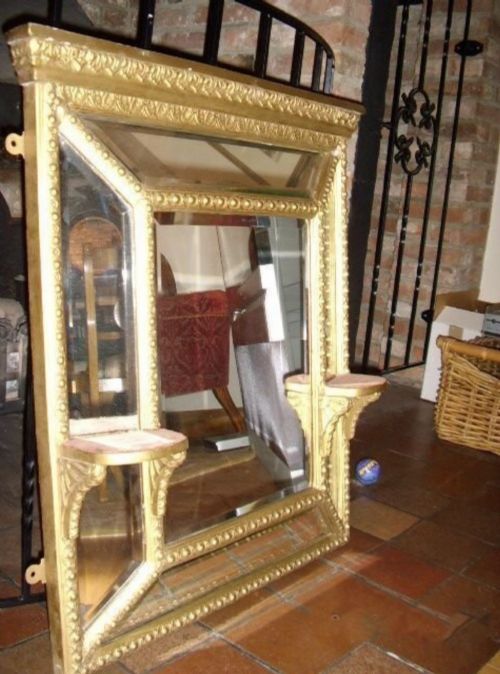
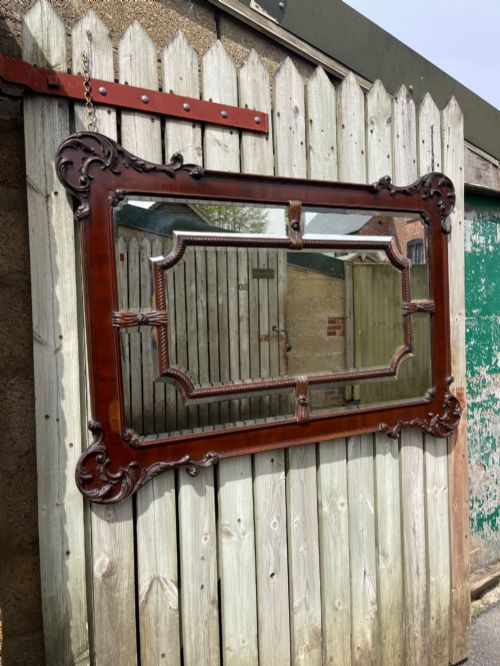
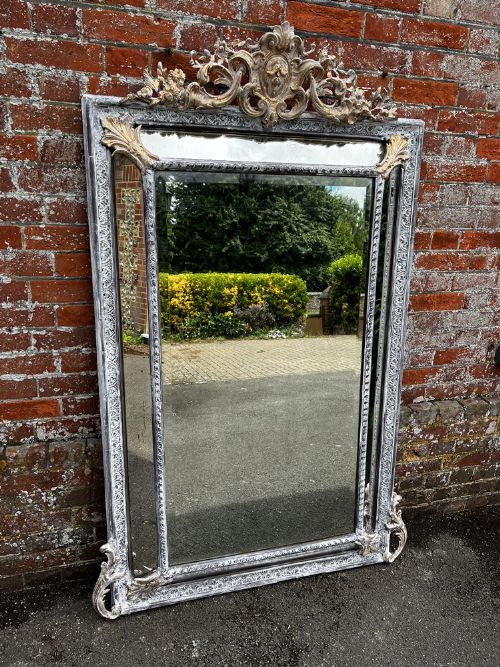
These Victorian cushion mirror examples offer deep, swelling frames that draw light directly into the glass.
Victorian Cushion Mirror
A Victorian cushion mirror presents a distinctive convex or sloping frame profile that swells outward toward the outer edge before meeting the wall. This form creates considerable depth and catches ambient light from multiple angles in a room.
The selections on this page span several decades of the nineteenth century and into the early twentieth century, taking the form of wall mirrors and larger overmantels. Styles range from plain ebonised surfaces to ornate Louis Revival giltwood and Dutch Baroque Revival brass frames.
Materials and construction
Makers built the foundational frames of these pieces using sturdy timbers like mahogany, rosewood, oak, and ebony, or constructed them from softer woods coated in gesso before gilding. Brass and gilt metal elements frequently overlay or clad the wooden carcasses.
The glass panes feature traditional silvering and hand-bevelled edges that catch the eye, set securely within the deeply sloping rebate of the cushion frame.
Listings feature wood, brass, gesso, and mahogany materials alongside Louis Revival and Dutch Baroque Revival styles.
What separates the best pieces
Quality rests in the crispness of the carved ornamentation on the wooden mouldings and the precision of the mitred corners on the deep cushion profile. Substantial scale and heavier timber foundations elevate an example above standard production.
The richness of the gilding, whether matte or burnished, and the preservation of original patinated brass sheet work dictate the visual strength of the piece.
The Victorian Cushion Mirror Glossary
- Cushion frame
- A convex or sloping border profile that swells outward from the wall towards the glass plate. This volumetric shape defines the entire aesthetic of the piece.
- Giltwood
- Timber coated with fine gesso and covered in thin sheets of gold leaf. It provides a bright, reflective surface that enhances the grandeur of revival styles.
- Overmantel mirror
- A large wall mirror designed specifically to hang on the chimney breast above a fireplace. These pieces often command significant proportions.
- Bevelled glass
- A mirror plate with edges cut and polished at an oblique angle. This technique creates a prismatic border that refracts incoming light.
- Ebonised
- Wood stained or painted deep black to imitate costly ebony timber. It appears frequently on nineteenth-century frames to provide a stark contrast against gilt details.
Victorian Cushion Mirror: Frequently Asked Questions
Where should I hang a cushion mirror?
These pieces suit positions above fireplaces or along primary hallway walls where their deep frames can capture and reflect natural room light.
Ensure the wall structure supports the substantial weight of timber, brass, and glass combinations typical of these heavy frames.
How do I clean the brass frame?
Dust the metal gently with a soft, dry cloth to prevent accumulation within the embossed details of the brass cladding.
Avoid abrasive chemical polishes that strip away the historic patination accumulated over the nineteenth century.
Are these mirrors very heavy?
Solid wood cores combined with thick glass and metal overlays create considerable weight across most examples on this page.
Professional wall fixings suited to masonry or heavy studwork are essential for secure installation.
How do I date a cushion mirror?
Examine the timber species, the mounting hardware at the rear, and the characteristics of the glass plate edge.
Stylistic cues such as Louis Revival or Dutch Baroque revival motifs further narrow down the production period.