
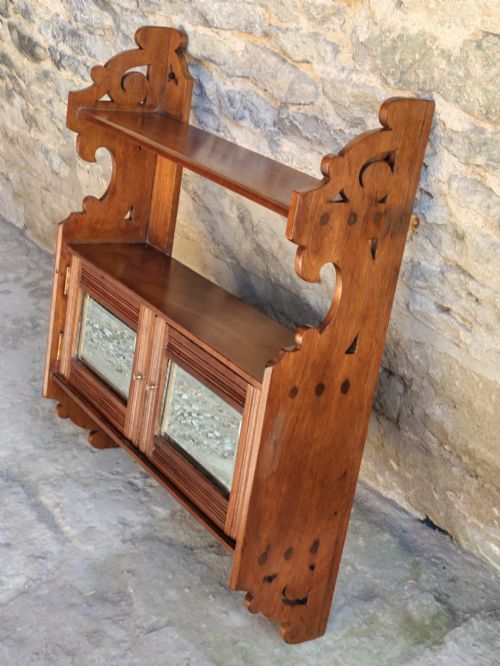


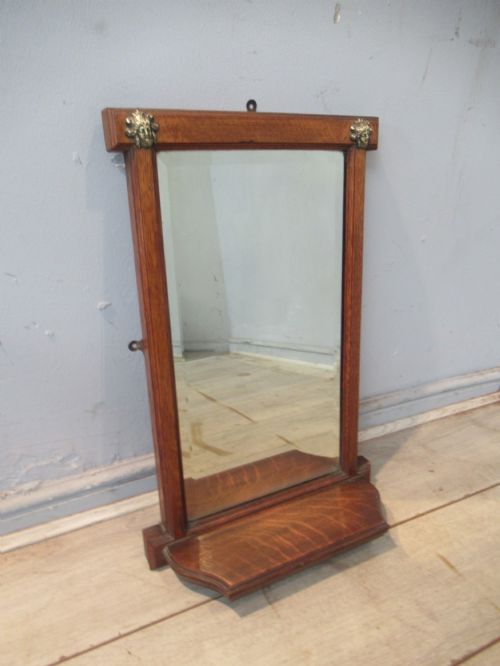


Antique Wall Mirror with Shelves
An antique wall mirror with shelves combines practical storage and reflective glass, bringing traditional character and utility to an entryway or room.
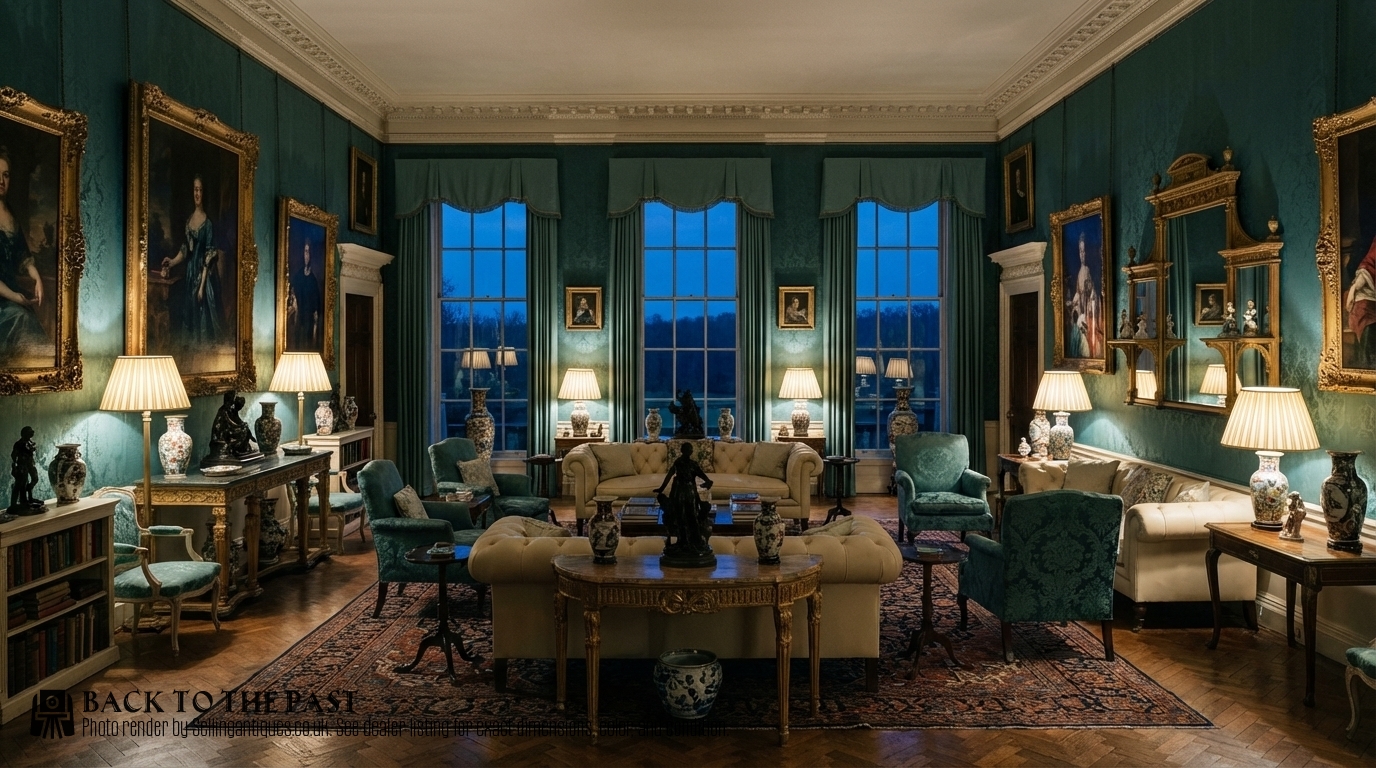
Antique Wall Mirror with Shelves
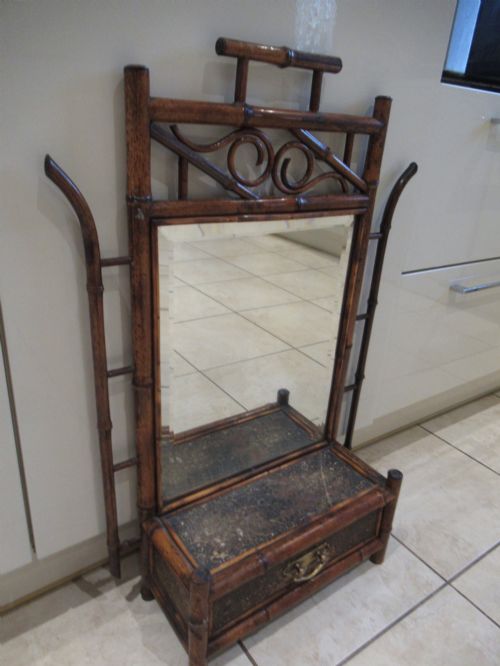
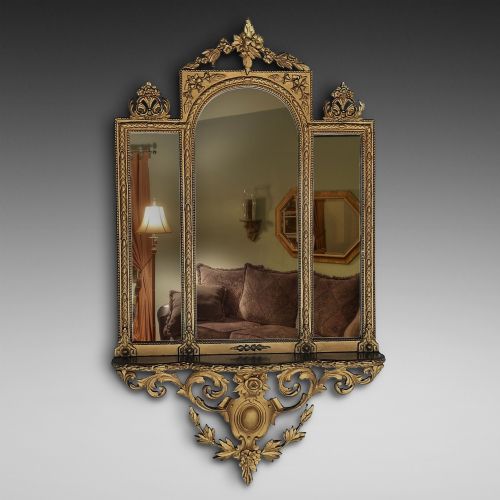
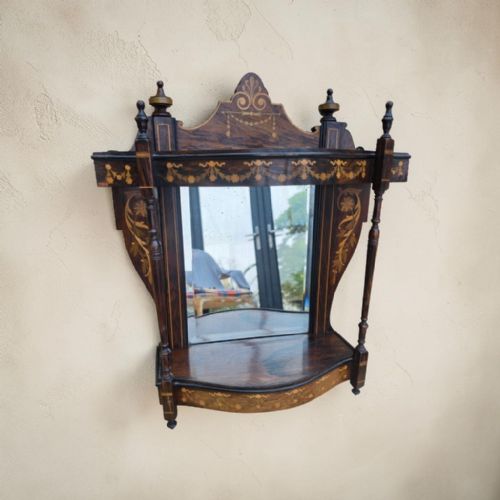
An antique wall mirror with shelves brings together reflective glass and display surfaces, appearing across Victorian, Edwardian, and early twentieth-century periods. These pieces frequently manifest as hall mirrors, overmantels, and wall-hanging cloakroom fixtures designed for daily household use.
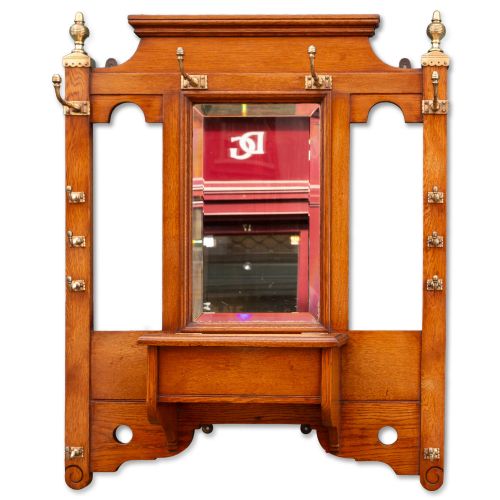
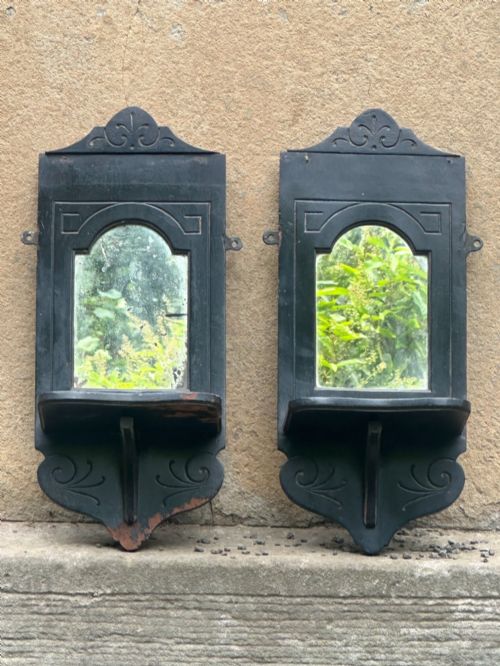
Makers utilised timber frames alongside glass plates, creating forms that served as last look mirrors, console mirrors, and coat racks with integrated ledges. The selection spans compact bedroom pieces to large reception hall furnishings with display brackets and ornament shelves.
Materials and Construction
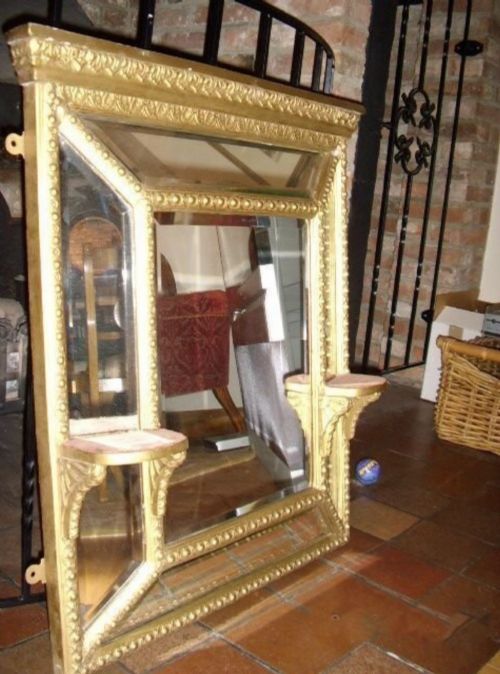
Frames are constructed from solid and veneered timbers such as oak, mahogany, walnut, rosewood, and yew wood, alongside giltwood and gesso. Metal elements in brass and iron appear in coat racks, brackets, and structural fixings.
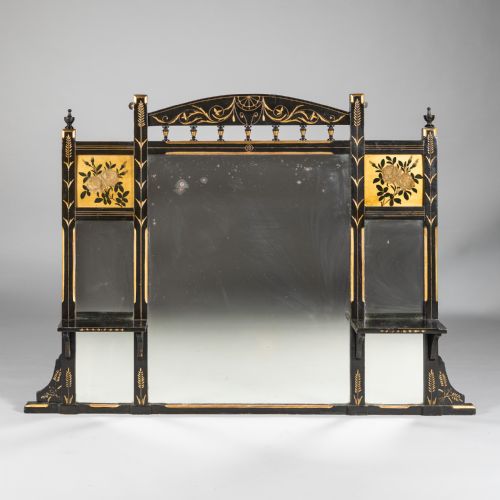
Mirror plates include bevel cut glass and original plates held within frames shaped by carving, inlay, and ebonising. Black lacquer and gilt finishes complement carved woodwork and architectural mouldings.
Listings feature pieces spanning the nineteenth and early twentieth centuries, encompassing Victorian, Edwardian, and Art Deco styles.
Quality and Craftsmanship
The standard of an antique wall mirror with shelves is determined by the depth of timber carving, the precision of inlay work, and the integrity of the original giltwood or gesso. Finer examples display balanced proportions in architectural frames and well-fitted display brackets.
The quality of the glass plate itself, whether featuring a bevel cut or showing age through original silvering, distinguishes standard utilitarian items from more decorative reception and hallway furnishings.
The Antique Wall Mirror with Shelves Glossary
- Overmantel mirror
- A large mirror designed to hang above a fireplace mantelpiece. These often incorporate shelves or gilded brackets for display.
- Pier glass
- A tall mirror specifically made to hang on the narrow wall space between windows. They frequently feature console tables or shelves beneath.
- Girondole
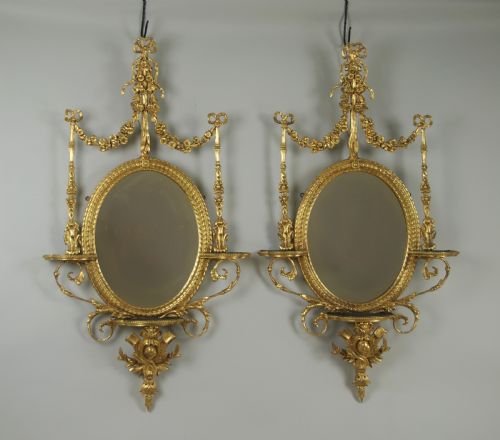
- An ornamental branched mirror featuring candle sconces or display brackets attached to the frame. These decorative fixtures date back to earlier periods.
- Giltwood
- Timber carved and coated with a thin layer of gold leaf. This finish defines many formal Victorian and neoclassical frames.
- Bevel cut
- A glass plate edge angled and polished to a thinner margin. This technique adds depth and catches light distinctively.
Antique Wall Mirror with Shelves: Frequently Asked Questions
Where should I hang a wall mirror with shelves?
These pieces suit entrance halls, cloakrooms, and bedrooms where a surface for small items pairs usefully with a looking glass. Overmantel versions fit traditionally above fireplace hearths.
Ensure wall fixings match the weight of the timber frame and glass plate, particularly for larger mahogany, oak, or giltwood examples.
How do I care for antique mirror glass and timber frames?
Dust wooden frames gently with a dry cloth and avoid harsh chemical cleaners on giltwood or lacquered surfaces. Clean mirror glass sparingly with a soft cloth dampened mildly.
Protect original silvering on antique plates by avoiding excessive moisture and direct sunlight.
What is the difference between an overmantel and a hall mirror?
Overmantel mirrors were traditionally scaled to sit above fireplace surrounds, often featuring substantial widths and decorative brackets or shelves. Hall mirrors are proportioned for entryways and cloakrooms.
Many hall variants include integrated hooks, hat racks, or valet spaces alongside the shelf and mirror.
How can I tell a Victorian mirror from an Edwardian one?
Victorian pieces often lean towards heavier carved mahogany, ebonised finishes, and ornate giltwood rococo or neoclassical styles. Edwardian examples tend toward lighter mahogany, satinwood inlay, and simpler hanging forms.
Construction methods and backboards also help indicate the specific nineteenth or early twentieth-century period.