
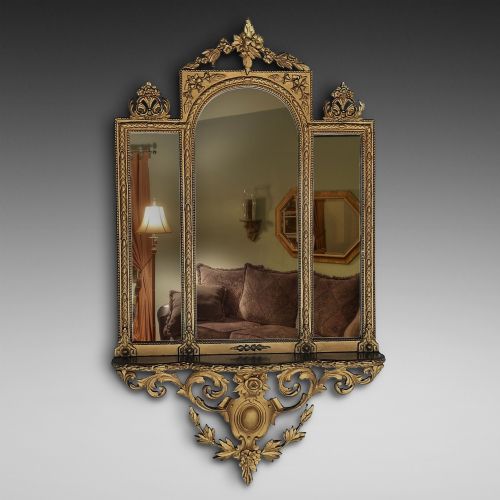
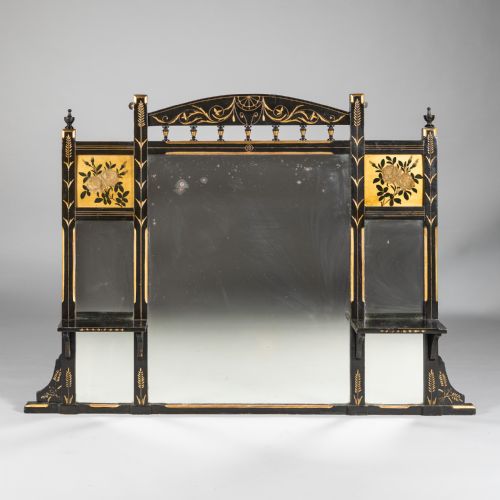


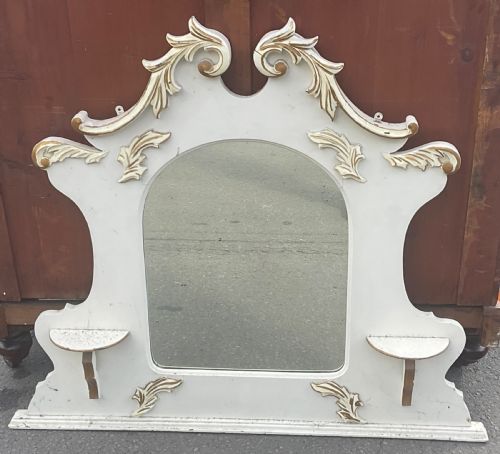


Shelf Overmantel Mirror
A shelf overmantel mirror anchors a chimney breast with practical ledges and reflective glass, bringing scale and historical presence to a room.
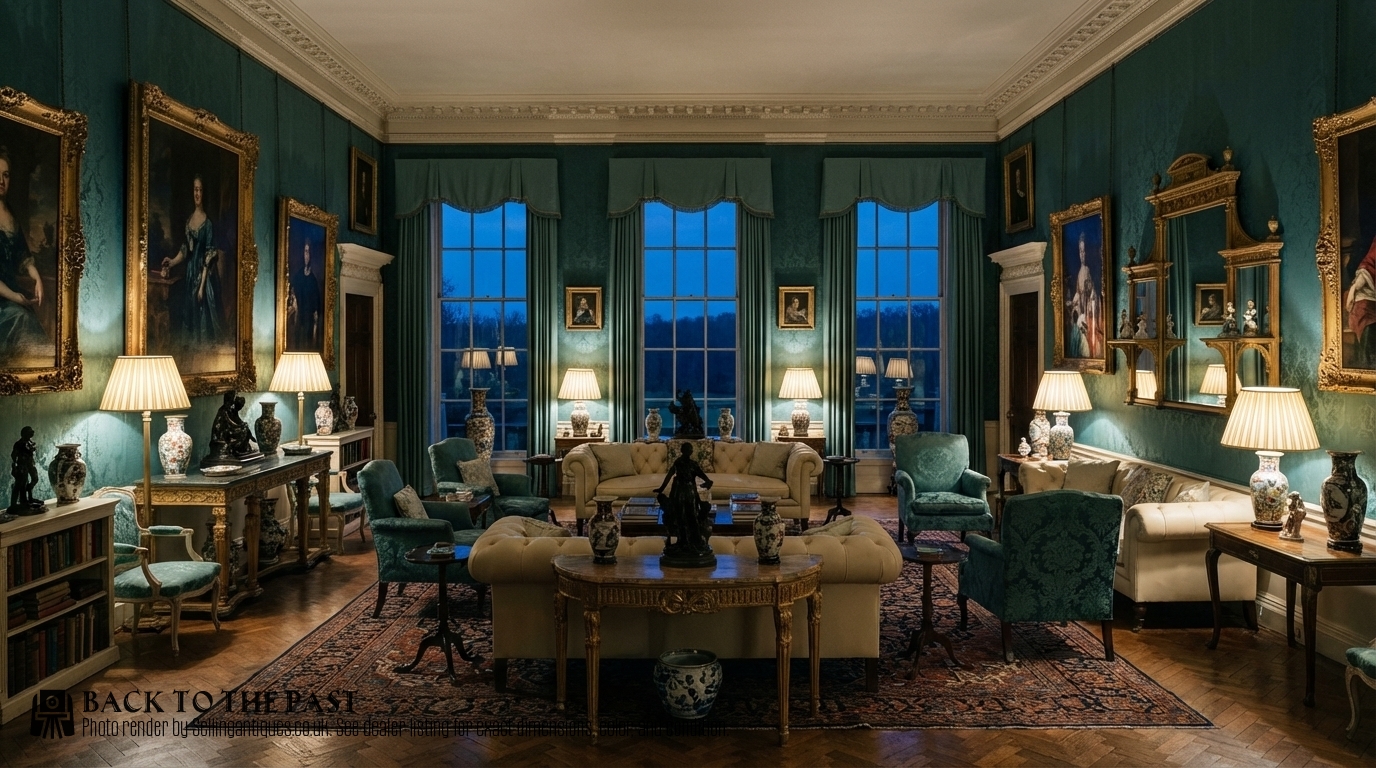
Shelf Overmantel Mirror
A shelf overmantel mirror combines a substantial mirror plate with an integrated shelf designed to sit directly above a fireplace mantelpiece. You encounter these across the nineteenth and early twentieth centuries, spanning periods from the William IV era through to Edwardian production.
The forms vary from grand Victorian giltwood and ebonised frames to simpler Edwardian mahogany, oak, and painted designs. Makers experimented with styles ranging from Aesthetic Movement and Moorish Revival to Victorian Rococo Revival and Arts and Crafts.
Many examples incorporate display surfaces or brackets alongside the mirror glass, serving both decorative and functional purposes in period interiors.
What varies in quality
The depth of carving and the crispness of moulded gesso ornamentation separate standard production from exceptional pieces. Superior workshops employed skilled artisans to execute intricate fretwork, detailed parcel-gilt highlights, and harmonious proportions.
The choice of primary timber and the integrity of the original mercury or silvered mirror glass also define the tier of the piece. Substantial framing, well-joined timber construction, and original integrated brackets denote higher craftsmanship.
Listings feature periods spanning from the early nineteenth century through to the Edwardian era, utilising materials such as mahogany, oak, gesso, and giltwood.
Liberty & Co
The Shelf Overmantel Mirror Glossary
- Overmantel
- A mirror or decorative piece specifically made to hang or stand upon the mantelpiece above a fireplace.
- Giltwood
- Timber that has been coated with gold leaf or gold paint over a prepared gesso ground.
- Gesso
- A plaster-like mixture applied to wood frames to create a smooth surface for gilding or deep relief moulding.
- Ebonised
- Wood treated with chemical stains or finishes to imitate expensive ebony.
- Parcel-gilt
- A decorative treatment where only specific portions of a frame are gilded, leaving other areas exposed or painted.
Shelf Overmantel Mirror: Frequently Asked Questions
How do I hang a heavy overmantel mirror?
These mirrors carry considerable weight due to their dense wooden frames and thick glass plates. Secure wall fixings into structural brickwork or studs using heavy-duty brackets suited to the weight.
Professional installation ensures the piece rests safely above the mantelpiece without straining the wall fixings or the frame construction.
Did these always sit on a mantel?
Whilst primarily designed to rest on a fireplace mantelpiece, many substantial examples also feature secure hanging fixings for wall mounting.
Placement depends on the proportions of the room and the weight distribution of the specific wooden frame.
How do I clean antique mirror glass?
Use a soft, dry microfibre cloth to remove dust gently from the surface of the glass and the surrounding wooden or gilt frame. Avoid harsh chemical sprays that might seep behind the edges and damage the historical silvering or foil backing.
Apply mild cleaning solutions sparingly to the cloth rather than directly onto the glass itself.
How do I date an overmantel mirror?
Examine the construction methods, backboards, and timber types to establish the manufacturing period. Stylistic cues such as Aesthetic ebonising, Edwardian painted finishes, or heavy Victorian giltwood provide reliable indicators of age.
Tool marks on the timber frame and the characteristics of the glass plate further help narrow down the decade of origin.