
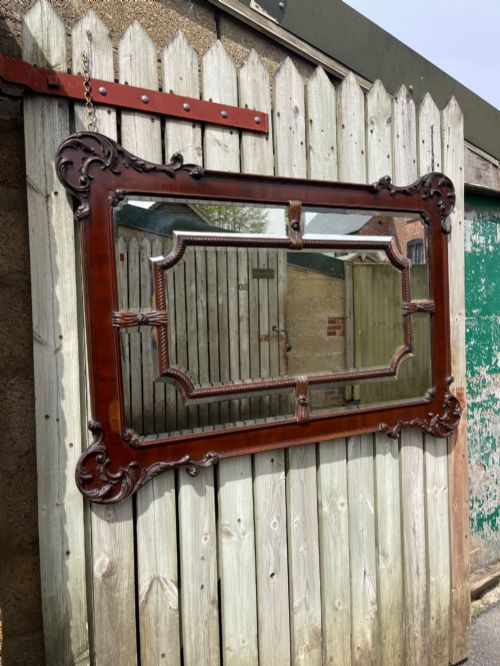


Bevelled Cushion Wall Mirror
These bevelled cushion wall mirrors bring depth and historic glass to a room through their distinct raised frames.
Bevelled Cushion Wall Mirror
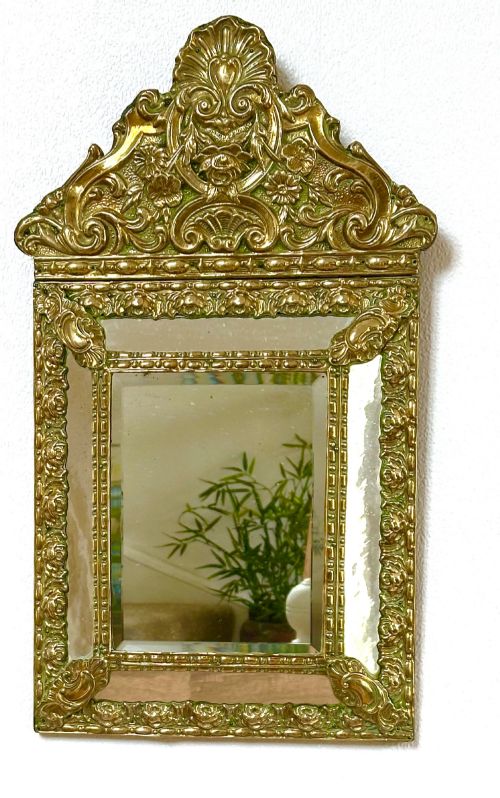
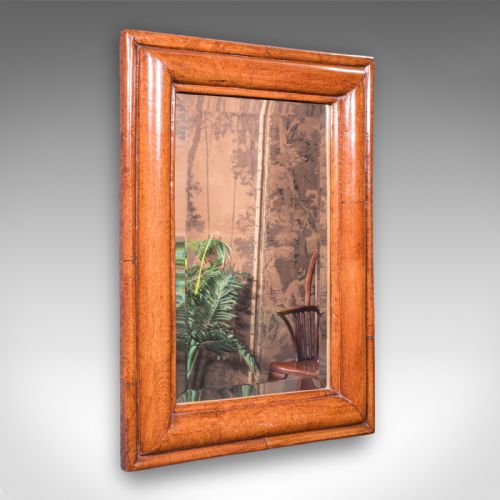
A bevelled cushion wall mirror displays a rounded, convex frame profile that slopes outwards or inwards towards the central glass plate. These decorative objects date from the Regency and Victorian eras through to the early twentieth century, taking forms such as French brass frames, carved oak, and gilded wood.
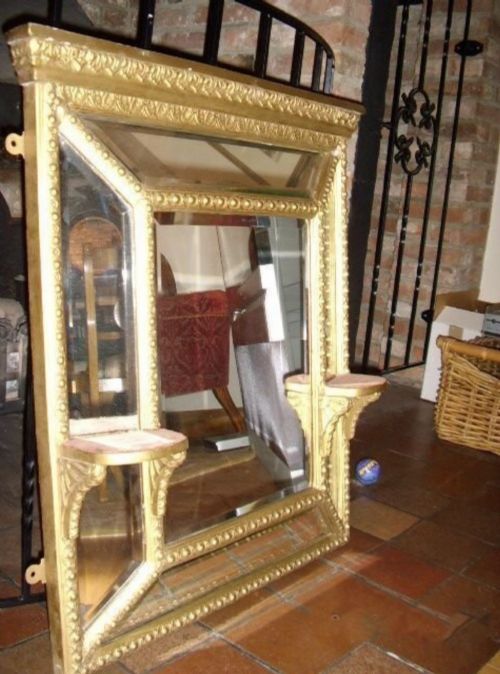
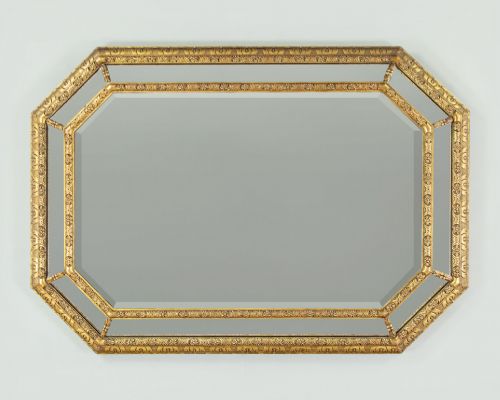
The versions most commonly met on this page span the nineteenth century and the Edwardian period, often featuring distinct corner mounts, ornate crests, or segmented marginal glass. They function primarily as wall mirrors and reception hall vanity mirrors, combining functional reflection with architectural presence.
How they were made
Makers constructed these frames using timber foundations like mahogany, walnut, and oak, or cast metals such as brass. Giltwood and gesso applications frequently coated the wooden surfaces, sometimes finished with gold leaf.
The central glass plates incorporate hand-bevelled edges, and certain examples utilise mercury glass or engraved Venetian panels held within metal mounts or sectional wooden frameworks.
Listings span the 19th Century, Victorian, Regency, Edwardian, and 1930 periods, utilising materials such as glass, wood, brass, giltwood, gesso, walnut, and gold leaf.
What varies in quality
The sophistication of the frame carving and the purity of the gilding set superior pieces apart from simpler domestic examples. Crisp hand-cut bevelling on the glass and intricate metal mounts indicate higher workshop standards.
Original mercury glass and intact structural joinery within the cushion frame hold greater aesthetic and historical integrity than later replacements or heavily restored mounts.
The Bevelled Cushion Wall Mirror Glossary
- Bevelled glass
- Glass with an angled edge ground and polished to a specific width. This technique catches the light and adds a decorative border to the reflection.
- Cushion frame
- A convex, rounded mirror frame profile resembling a soft cushion. It projects forward from the wall to create visual depth.
- Giltwood
- Timber coated with a thin layer of gold leaf or gold paint over a prepared gesso ground. It provides a bright, reflective surface characteristic of formal period pieces.
- Mercury glass
- Silvered glass produced by pouring a liquid mercury amalgam between double-walled glass or onto a flat plate. It yields a characteristic mottled, deep reflection found in older mirrors.
- Marginal mirror
- A mirror where the main central plate is surrounded by smaller, angled marginal glass strips held by clips or divisions. This style creates multiple reflective facets.
Bevelled Cushion Wall Mirror: Frequently Asked Questions
Where should I hang a cushion mirror?
These mirrors suit principal reception rooms, hallways, and above mantels where their projecting frames catch the light from multiple angles. Their architectural presence works best on a clear wall surface with adequate space to appreciate the profile.
Ensure the wall fixings match the substantial weight of wooden or brass framed pieces. Hallways benefit particularly from the reflected light and the historic character these frames introduce.
How do I identify the period?
Examine the materials, frame construction, and glass characteristics to determine the age. Nineteenth-century examples often feature heavy giltwood, embossed brass, or mercury glass, while Edwardian and later pieces display distinct timber choices like walnut and oak.
Backboards, fixings, and the style of the bevelling offer further clues regarding manufacturing dates. Regency and Victorian variants frequently show hand-finished details distinct from later production methods.
Are the mirror plates original?
Many period pieces retain their original glass, which often displays minor foxing, age spots, or the characteristic dark speckling of mercury backing. These surface traits confirm the age and authenticity of the piece.
Replacement glass typically appears too clear and lacks the soft, distorted reflection characteristic of historic plates. Inspect the edges where the bevel meets the frame to observe the depth and hand-ground finish.
How do I clean the glass?
Clean the glass gently using a soft cloth and a mild, ammonia-free glass cleaner applied to the cloth rather than directly sprayed onto the mirror. This prevents moisture from seeping behind the bevel or damaging the frame backing.
Take care around antique silvering and exposed foil edges, as harsh chemicals or excessive moisture can accelerate degradation. Dust carved wooden and gilt frames with a dry, soft brush.