



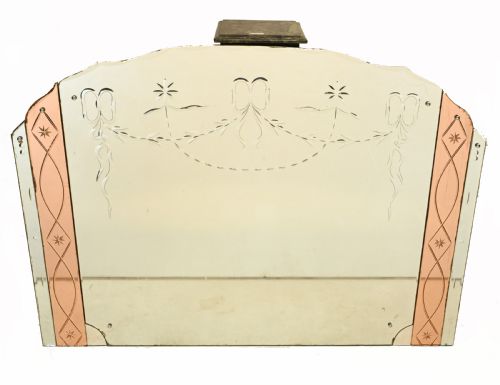
Etched Border Wall Mirror
An etched border wall mirror brings striking light and historical depth to a room, offering both practical reflection and decorative presence.
Etched Border Wall Mirror
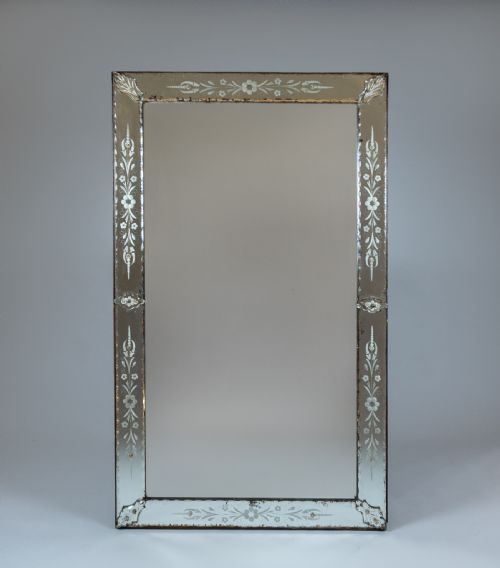
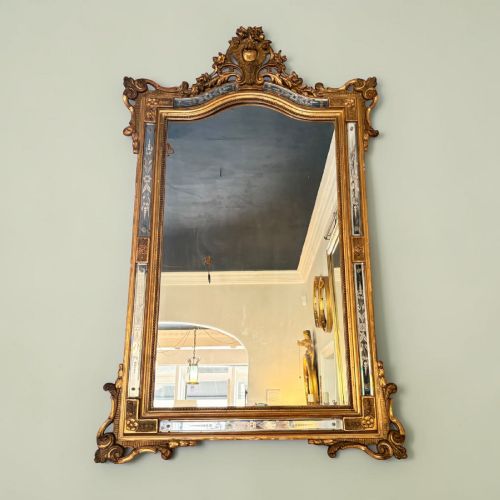
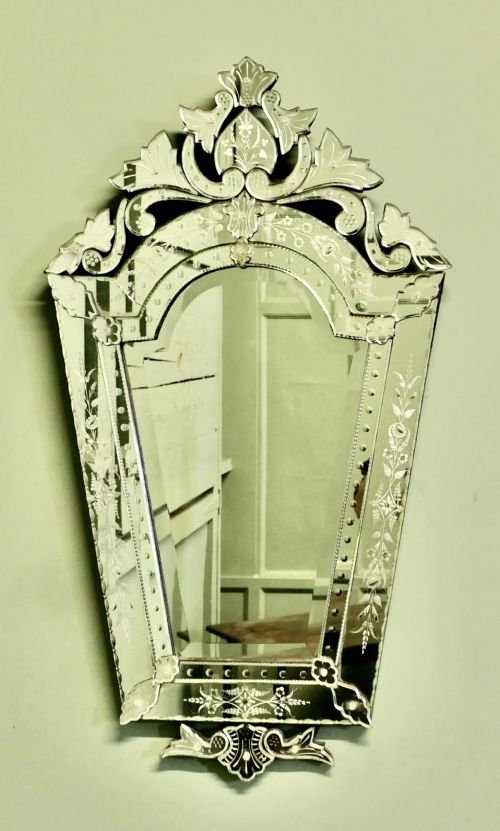
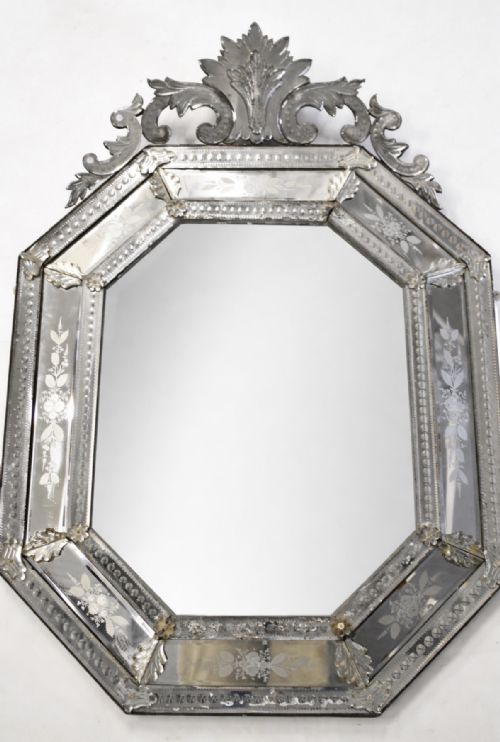
When you search for an etched border wall mirror, you encounter decorative looking-glasses defined by surface ornamentation upon the glass itself. These pieces range from grand nineteenth century cushion frames to geometric designs from the nineteen thirties.
The version you most frequently meet on this page is the Venetian style, often featuring elaborate cut glass framing and detailed floral or scrollwork etching. Other variations include English peach coloured glass overmantle mirrors and carved painted wood examples from French chateau traditions.
Originating largely from European workshops spanning the late Victorian era through the mid twentieth century, these wall mirrors serve as focal points above mantelpieces and in principal reception rooms.
Materials and construction methods
Makers constructed these looking-glasses using heavy plate glass, mirrored glass, and specialised tinted varieties such as peach glass. Frames frequently incorporate sections of silvered glass secured to timber backings.
Surface decoration relies on wheel cutting and acid etching to create intricate borders and floral motifs. Wood elements on specific frames receive painted and carved finishes, complementing the reflective panels.
Etched Border Wall Mirror Retail Price Guide 2026
Typical asking prices for etched border wall mirror among the pieces listed under this phrase on Sellingantiques today, from the lower quarter to the upper quarter. They describe what is for sale here now, not the wider market.
Some Venetian cushion mirrors possess so many angled glass segments that checking your hair becomes an exercise in geometry.
Distinctions in quality
The standard of an etched border wall mirror depends heavily on the depth and clarity of the glass engraving. Finer examples display crisp, hand-cut lines and well-preserved silvering across both central plates and marginal sections.
Structural integrity also separates superior items, particularly in cushion mirrors where numerous glass segments rely on secure fixings. Original painted wood frames show precision in hand carving rather than mechanical replication.
The Etched Border Wall Mirror Glossary
- Cushion mirror
- A looking-glass featuring a convex or sloping outer frame made of angled glass sections. This construction directs light inward and creates a multifaceted perimeter.
- Overmantle mirror
- A large horizontal wall mirror designed specifically to hang above a fireplace mantel. These pieces often span the width of the hearth.
- Silvered glass
- Glass coated with a reflective metallic substance on the rear surface. Older formulations develop characteristic patination over decades.
- Peach glass
- Tinted mirror plate popular during the interwar period. It imparts a warm, rosy tone to the reflection.
Etched Border Wall Mirror: Frequently Asked Questions
Where should I hang one?
These mirrors suit principal living spaces, hallways, and above mantelpieces where they can capture and distribute natural light.
Ensure the wall construction safely supports the substantial weight of plate glass and wooden backing frames.
How do I clean them?
Use a soft microfiber cloth and a gentle, ammonia-free glass cleaner applied to the cloth rather than directly to the surface.
Take care around aged edges and etched sections to prevent moisture seeping behind the silvered backing.
Are original fixings important?
Original chains, D-rings, or wooden backing boards provide reassurance regarding the piece's history and uncompromised condition.
Replacements are common for safety reasons, but surviving original hardware adds authenticity to older wall mirrors.
How do I date them?
Examine the bevel style, frame materials, and the characteristics of the glass plate itself for clues to the period.
Nineteenth-century examples often feature heavy cushion borders, while nineteen thirties pieces typically display geometric Art Deco forms.