



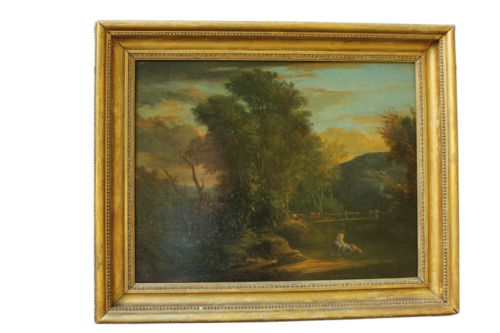

Victorian Countryside Oil Painting
A victorian countryside oil painting brings the quiet rivers, woodlands, and pastures of nineteenth-century Britain directly into a room.
Victorian Countryside Oil Painting
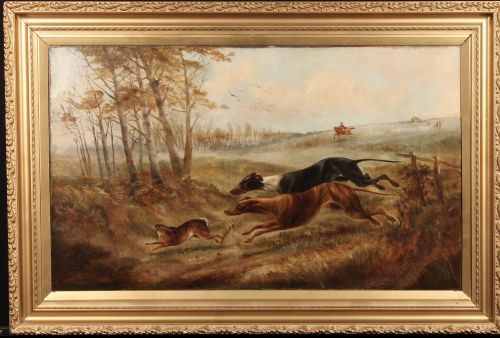
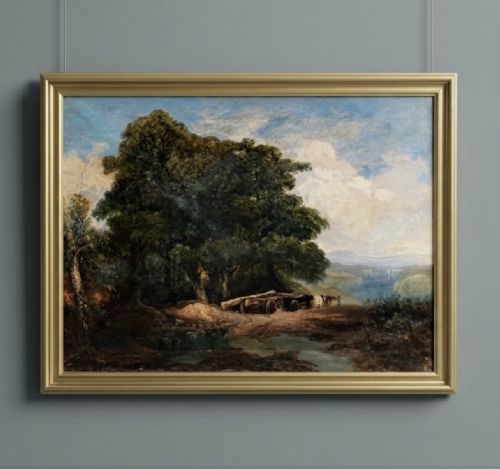
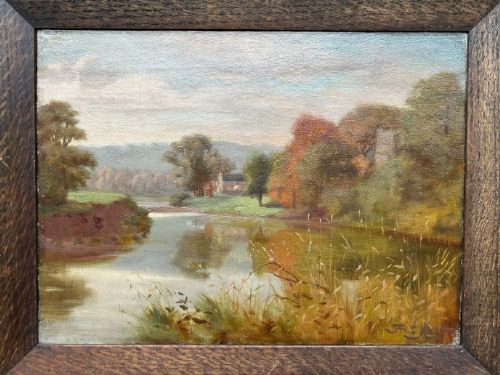
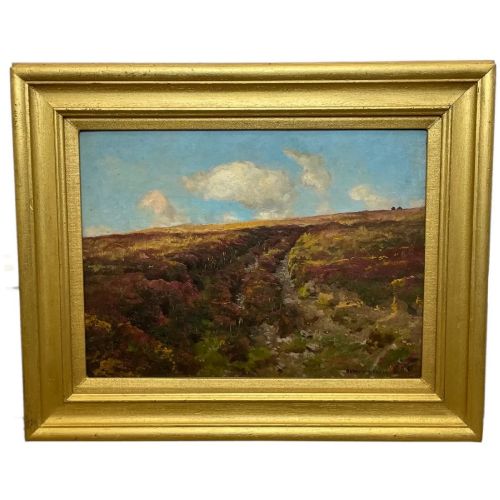
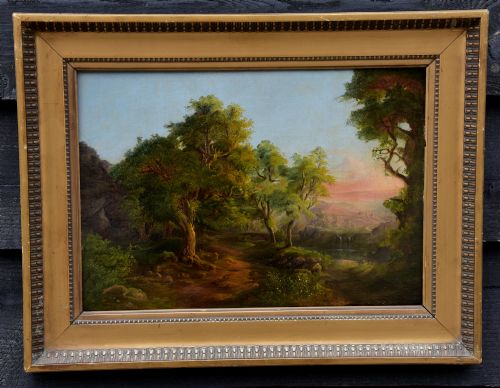
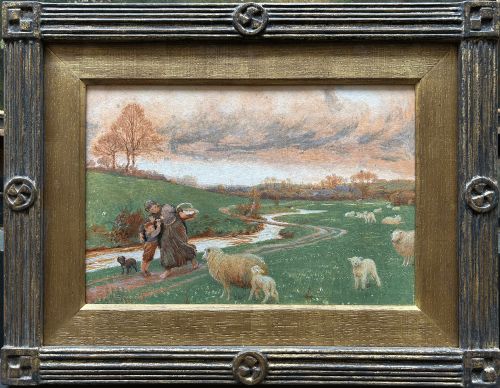
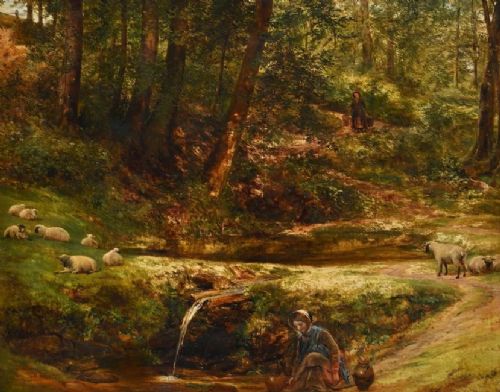
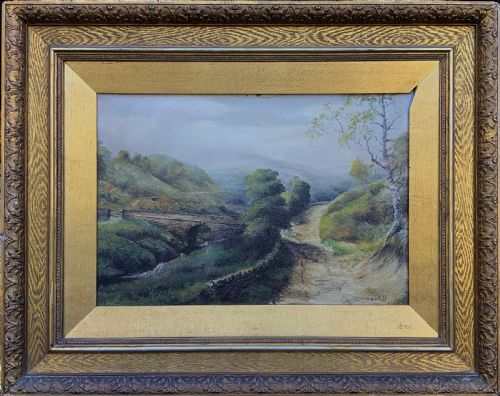
A victorian countryside oil painting captures rural life, pastoral views, and river scenes across the nineteenth century and into the early twentieth century. These works range from intimate woodland studies on board to large canvas landscapes depicting figures herding cows, sheep grazing, and farmers labouring in the fields.
The pieces on this page originate predominantly from British artists working in realist, pastoral, and naturalistic styles. Many focus specific regional views in North Wales, Kent, and along the River Severn, recording the topography and rural occupations of the era.
Buyers will most frequently encounter framed oil paintings on canvas or board dating from the mid-nineteenth century to the Edwardian period. These works often bear signatures from established British painters or represent the output of the broader British School.
How they were made
Artists built a victorian countryside oil painting using oil paint applied to stretched canvas or wooden board. This medium allowed for rich blending of pigments to render atmospheric skies, foliage, and water.
Many of these works retain their original giltwood and gesso frames, which were carved and gilded to complement the depth and tone of the canvas within. Canvas supports were frequently prepared with a gesso ground before the artist applied the oil layers.
Listings feature works spanning the nineteenth century into the Edwardian era, utilising oil on canvas and wood with giltwood frames.
What varies in quality
The quality of a victorian countryside oil painting rests upon the artist's command of light, brushwork, and atmospheric perspective. Finer examples display confident handling of detail in foliage, figures, and animals, whereas lesser works can appear formulaic or stiff in composition.
Condition and originality also determine standing, particularly the preservation of the paint surface and the retention of period giltwood frames. Works by documented named artists command greater attention than anonymous pieces from the British School.
George Armfield·Richard Sebastian Bond·Frederick Marriott·Arthur Wardle·David Bates·Frederick Walker·Richard Redgrave·John Horace Hooper·William Henry Mander·Alfred Augustus Glendening Jnr·William Sydney Cooper·Sidney Richard Percy·Thomas Spinks·Robert John Hammond·Robert Thorne Waite·Charles Vickers·William Mellor·Walter J Watson·John Linnell·Robert Finley McIntyre·J Barclay·James Gunson Atkinson·Charles Faulkner·James William Booth·Benjamin Williams Leader
The Victorian Countryside Oil Painting Glossary
- Oil on Canvas
- Pigment mixed with drying oil applied to a woven fabric support stretched over a wooden frame. This was the primary medium for serious landscape painting in the period.
- Gesso
- A plaster-like mixture used as a smooth base on wood panels or picture frames before gilding or painting. It provides a stable foundation for decorative surface work.
- Giltwood
- Wood that has been coated with a thin layer of gold leaf or gold paint. Frames of this material are frequently paired with nineteenth-century pastoral canvases.
- Pastoral Landscape
- A genre of artwork depicting idealized or realistic rural scenes involving farms, fields, livestock, and country laborers. These subjects formed the core of nineteenth-century British country painting.
- British School
- A term used by dealers to describe works created by British artists whose specific individual identity is unrecorded or uncertain. It groups together competent period paintings sharing national techniques.
Victorian Countryside Oil Painting: Frequently Asked Questions
How do I date a landscape painting?
Dating relies on costume details in any figures, the style of the canvas stretching, and the framing techniques used. Clues also come from artist signatures and exhibition records.
Period pigments and canvas stamps from known suppliers help narrow down the decade of creation.
Were these paintings always framed in gold?
Giltwood frames were standard for displaying finished oil paintings in nineteenth-century domestic interiors. They added luminosity and separated the scene from the wall.
Many surviving works retain their original frames, though some have been reframed over the decades.
What is the difference between canvas and board?
Canvas offered a flexible, textured surface stretched over a wooden frame, favoured for larger exhibition pieces. Wood board provided a rigid, flat panel often used for smaller outdoor studies and sketches.
Both supports were common throughout the Victorian era.
How should I care for an oil painting?
Keep the painting away from direct sunlight and fluctuating humidity to protect the canvas and paint layers. Dust the surface gently with a soft, dry brush without applying pressure.
Avoid using water or chemical cleaners on the paint or the giltwood frame.