



Victorian Corner Whatnot
A victorian corner whatnot makes clever use of neglected space while offering open shelving for prized ornaments and books.
What a Victorian Corner Whatnot Is
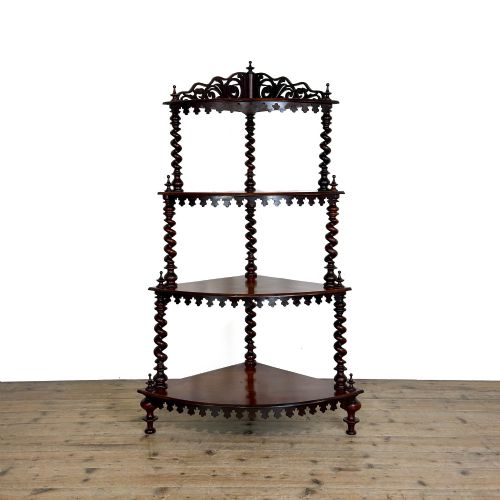
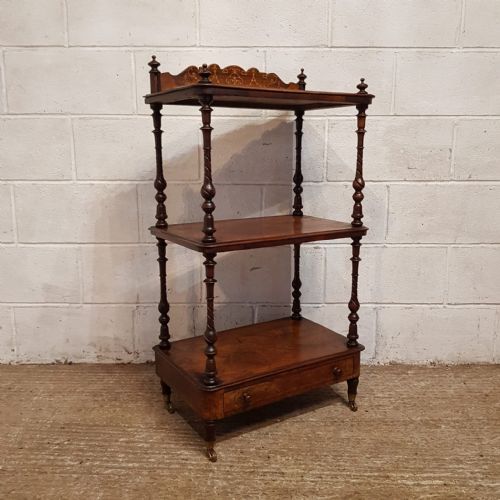
The victorian corner whatnot is an ingenious piece of furniture designed to slot neatly into room angles, making efficient use of space that standard cabinets ignore. You are most likely to encounter tiered shelving units made during the nineteenth century, configured specifically to fit a ninety-degree corner.
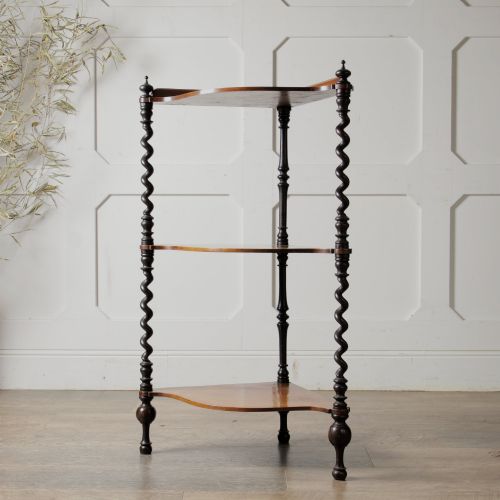
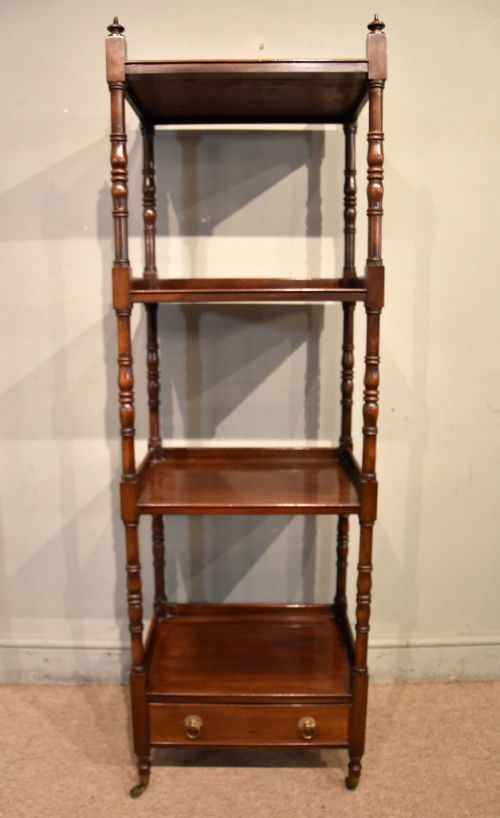
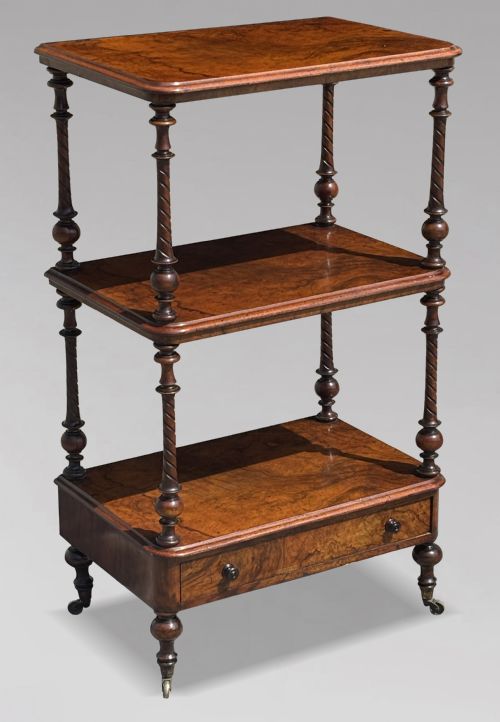
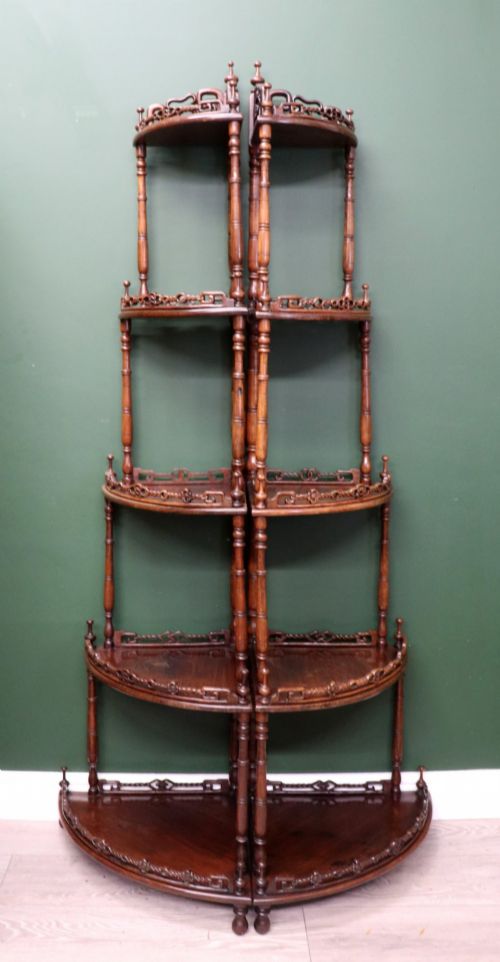
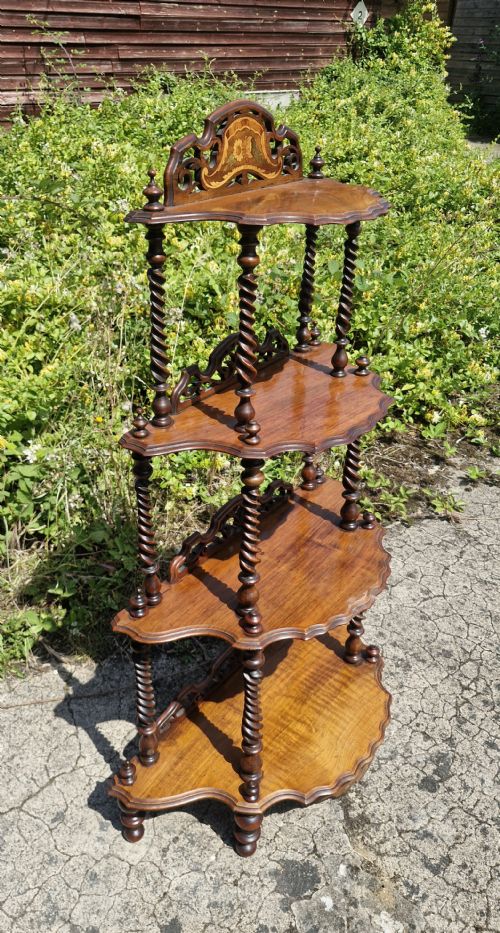
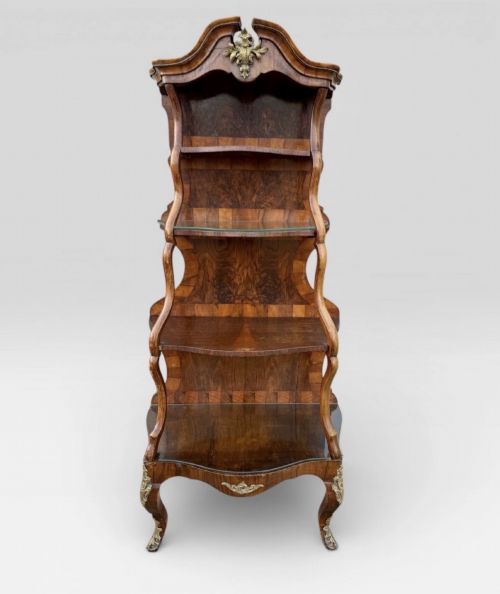
These multi-layered stands provide open display surfaces rather than enclosed storage, allowing decorative objects to be viewed from multiple angles in a room. Surviving examples typically feature three or four graduated tiers supported by turned columns or intricate uprights.
Makers produced these stands in various dimensions, ranging from compact hanging wall shelves to tall floor-standing furniture that reaches chest height or above. The basic architectural format remains consistent across the period, prioritising vertical display capacity within a minimal footprint.
Materials and Construction Techniques
Cabinetmakers utilised dense timbers such as mahogany, walnut, burr walnut, and rosewood to construct the structural framework and shelves of these tiered stands. Lighter woods like oak and bamboo also appear in the record, alongside turned wooden components and barley twist supports.
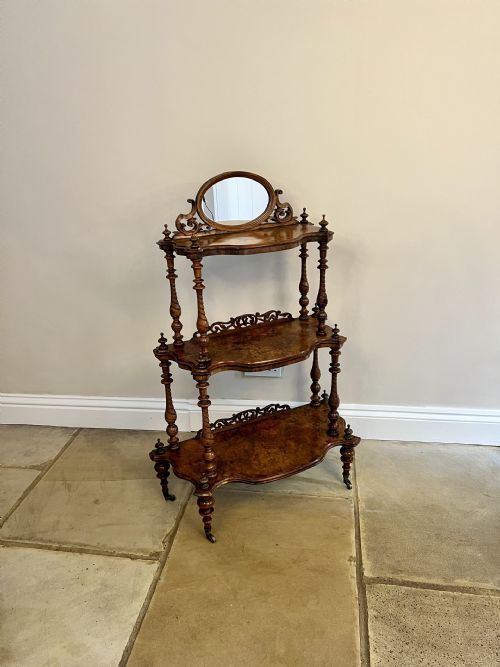
Decoration relied heavily on surface ornamentation, incorporating boxwood inlay, marquetry, and contrasting veneers to accent the grain of figured walnut. Joinery techniques tied the graduated horizontal platforms securely to vertical uprights and scrolled corner supports.
Retail Price Guide 2026
Typical UK retail prices for victorian corner whatnot, calculated from the Sellingantiques database of over a million retail prices indexed since 2003. This retail price guide relies exclusively on Sellingantiques data; no external sources or auction records are used, so the figures do not describe the wider market.
Recorded materials span walnut, mahogany, burr walnut, rosewood, oak, boxwood inlay, and bamboo.
The Spectrum of Quality
The distinction between standard examples and the finest pieces rests upon timber selection and the complexity of decorative enrichment. Furniture featuring highly figured burr walnut, intricate marquetry inlay, and refined turned or scrolled supports sits firmly at the upper end of the scale.
Simpler versions constructed from plain mahogany or oak with minimal turning represent the more utilitarian end of production. The crispness of the inlaid details and the balance of the graduated shelf tiers ultimately determine the visual success of each individual piece.
The Victorian Corner Whatnot Glossary
- Whatnot
- An open set of shelves designed for displaying ornaments, books, or curiosities. These pieces became immensely popular during the nineteenth century for domestic display.
- Burr Walnut
- A specialised wood grain obtained from walnut tree growths, prized for its swirling patterns and rich texture. Cabinetmakers used veneers of this material on prominent surfaces.
- Marquetry
- The art of applying decorative pieces of wood veneer to a structure to form intricate pictorial or geometric designs. This technique frequently embellished the top shelves of display stands.
- Barley Twist
- A type of turned wooden support carved in a helical screw pattern resembling a twist of barley. It adds a sculptural quality to the vertical uprights of shelving units.
- Serpentine Front
- A curved furniture front featuring a convex centre flanked by concave ends, creating a flowing wave shape. This contour softens the geometric angles of corner furniture.
Frequently Asked Questions
What is a corner whatnot used for?
These stands were originally designed to hold small decorative ornaments, porcelain, and books in domestic drawing rooms.
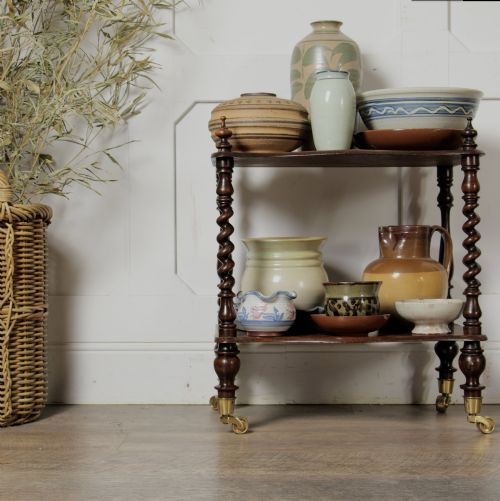
Today, they serve a similar function in modern interiors, providing vertical display space in unused room angles without dominating the floor area.
How many tiers do these stands have?
Surviving examples most commonly feature three or four graduated tiers, with the largest shelves positioned at the bottom for stability.
Some wall-mounted versions feature fewer levels, while floor-standing variants occasionally incorporate cupboards or drawers beneath the open shelving.
What woods were used to make them?
Cabinetmakers primarily worked with rich hardwoods including walnut, burr walnut, mahogany, and rosewood.
Lighter materials such as oak, bamboo, and ebonised wood also appear in nineteenth-century production, often paired with contrasting boxwood inlay.
How do I date a Victorian whatnot?
Dating relies on observing stylistic markers, timber choices, and construction methods recorded across the nineteenth century.
Heavier rosewood and mahogany forms often date to the mid-nineteenth century, while burr walnut with intricate marquetry frequently aligns with production around eighteen-eighty.