

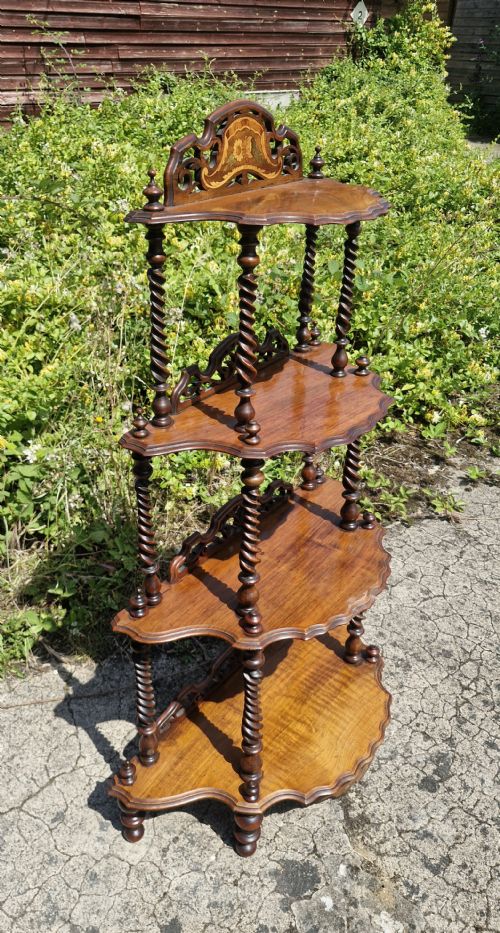
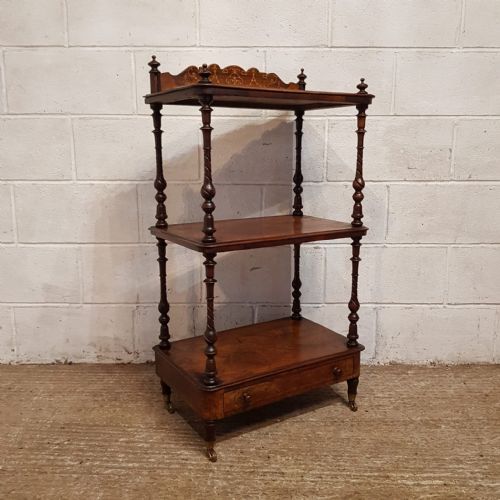
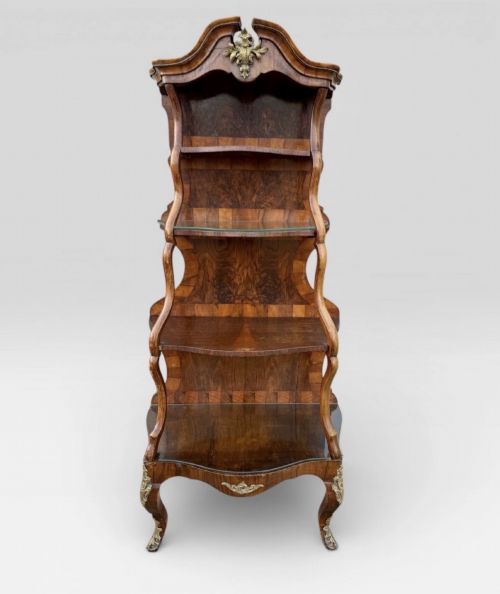


Victorian Corner Whatnot Shelf
When you handle a Victorian corner whatnot shelf, you hold a piece of nineteenth-century display furniture designed to fit awkward junctions in a room.
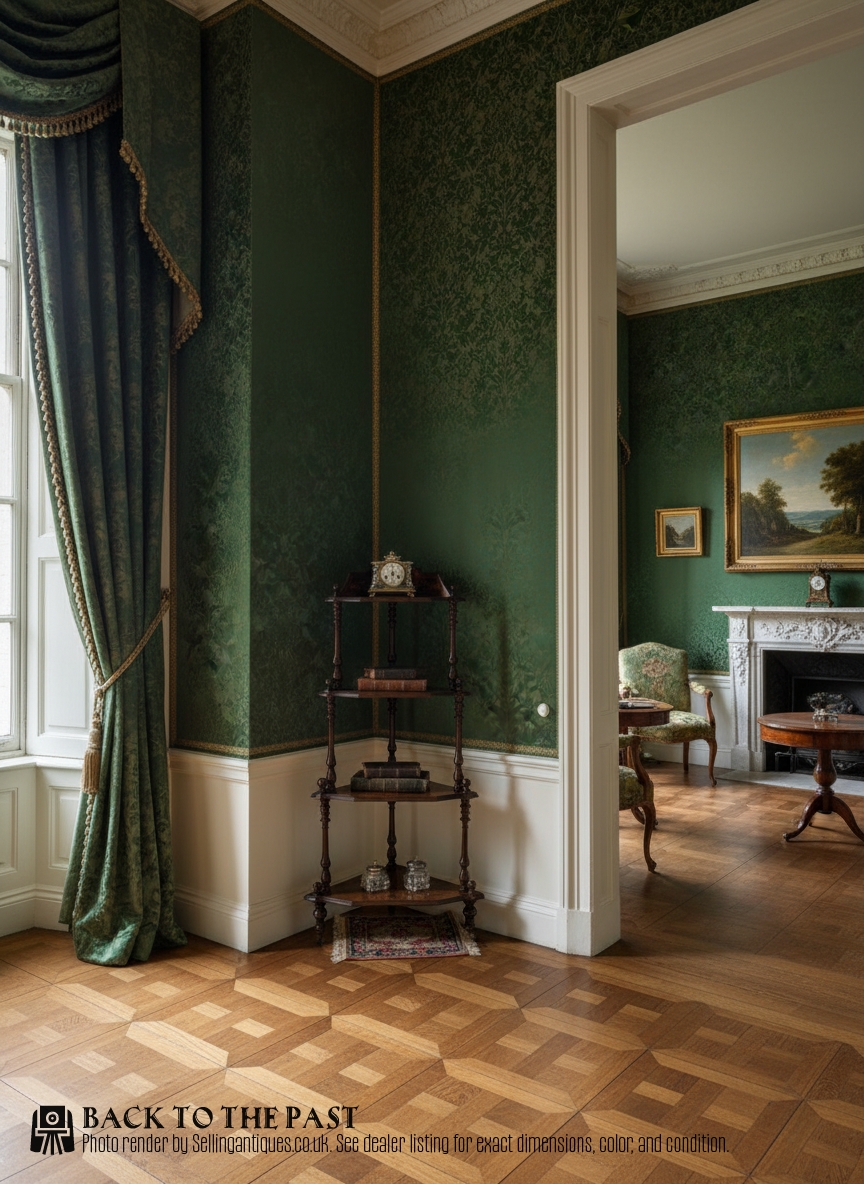
Victorian Corner Whatnot Shelf
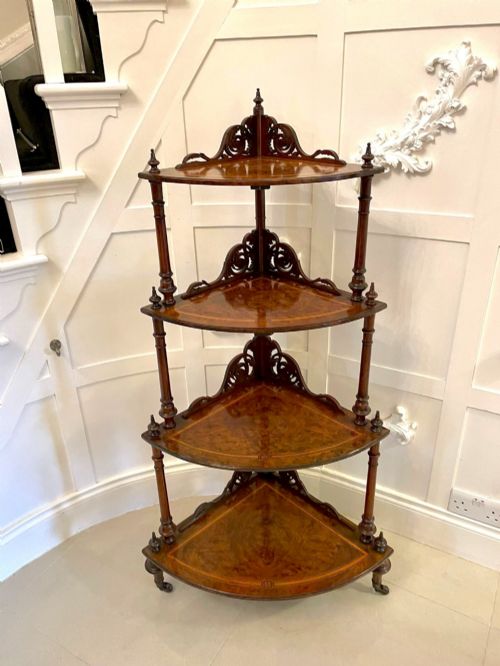
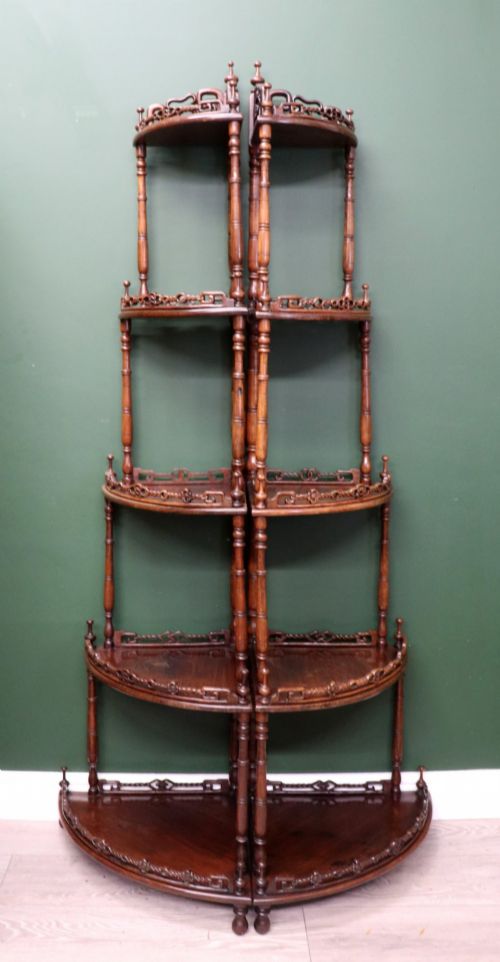
A victorian corner whatnot shelf is a multi-tiered shelving unit built specifically to occupy the junction of two walls, making use of space that standard rectangular furniture leaves empty.
The pieces appearing on this page date predominantly from the nineteenth century, spanning the Victorian period alongside earlier examples from the Georgian era and later pieces from the Edwardian years.
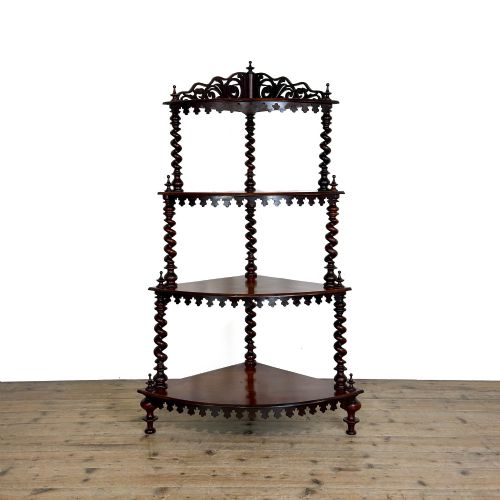
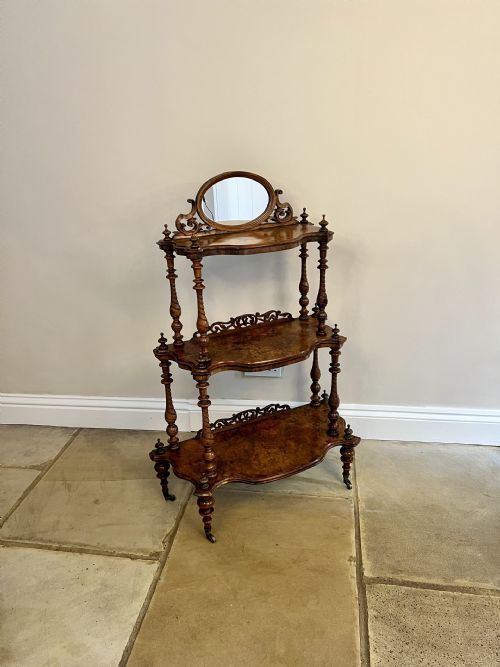
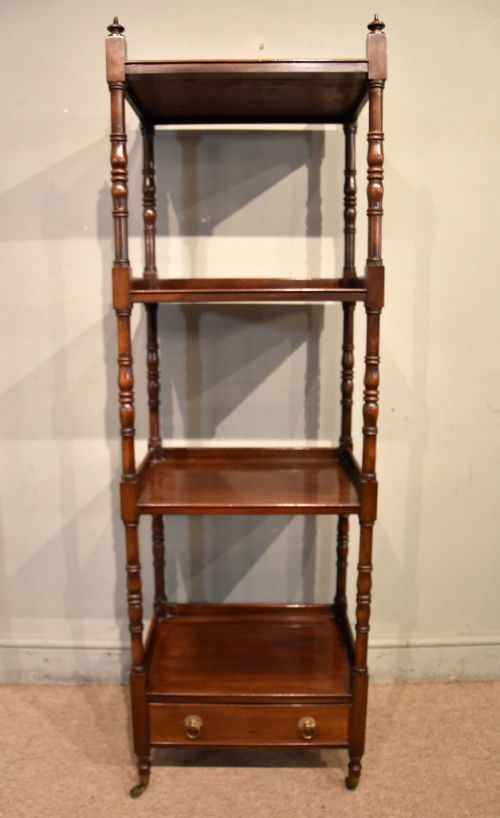
These stands function primarily as display surfaces for ornaments and books, appearing in formats ranging from modest three-tier units to towering six-tier structures with mirrored backs or barley twist supports.
Materials and construction methods
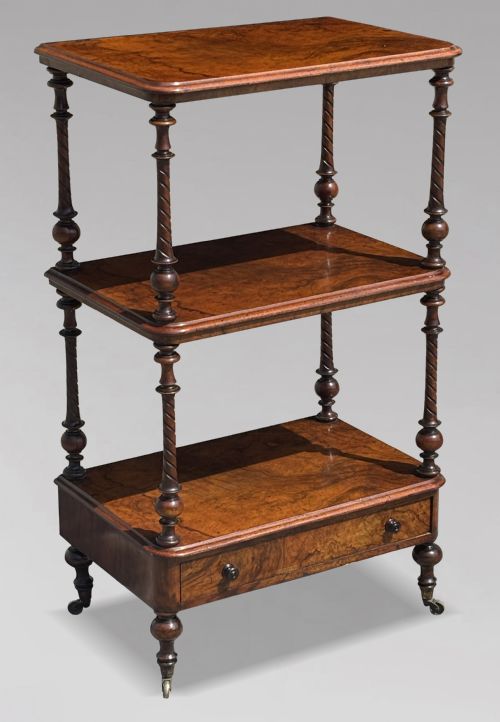
Cabinet makers utilised dense hardwoods such as mahogany, walnut and rosewood, frequently selecting burr walnut veneers or birdseye maple to create richly figured surfaces on the shelves and tiers.
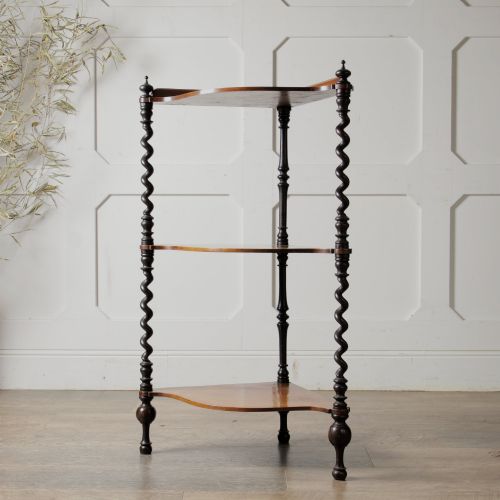
Decorative embellishments relied on contrasting wood inlay, marquetry patterns and gilt metal mounts, while structural uprights often took the form of turned columns or barley twist uprights.
Cabinet makers named these shelves whatnot simply because nobody could quite decide what else to put on them.
Distinctions in quality
The division between standard domestic pieces and exhibition quality examples rests upon the selection of timber, such as highly figured burr walnut veneers rather than plain mahogany, and the crispness of carved details.
Superior tiers demonstrate rigorous joinery in their upright supports and gallery rails, whereas simpler utilitarian items rely on straightforward stacked platforms without intricate turning or inlay.
The Victorian Corner Whatnot Shelf Glossary
- Whatnot
- A piece of furniture consisting of a set of open shelves for displaying articles, popular throughout the nineteenth century. The name reflects the uncertainty of what precisely would be placed upon it.
- Etagere
- A French term for a piece of furniture with small open shelves for displaying ornaments, often used interchangeably with whatnot in nineteenth-century contexts.
- Barley twist
- A type of furniture turning resembling a twisted rope or barley sugar stick. This technique appears frequently on the vertical supports of Victorian stands.
- Marquetry inlay
- Decorative woodwork where small pieces of coloured wood, veneer or shell are fitted into a primed background to form geometric or floral patterns.
- Demi-lune
- A half-moon shape used for the footprint of console tables and display pieces designed to sit flush against a flat wall or corner.
Victorian Corner Whatnot Shelf: Frequently Asked Questions
What is a corner whatnot used for?
These tiered stands were designed to hold ornaments, small clocks, ceramic figures and books in nineteenth-century reception rooms.
By tucking into the angle of two walls, they provided vertical display space without obstructing movement through the room.
How do I date a Victorian whatnot?
Dating relies upon timber choices, stylistic markers and construction methods recorded across the nineteenth century. Early examples show Georgian proportions and rosewood or maple, while mid-Victorian pieces often feature burr walnut and barley twist turnings.
Later Edwardian variants introduce lighter inlaid walnut frames, while exhibition pieces incorporate carved crests and mirrored panels.
Are all corner whatnots Victorian?
While the majority of pieces originate from the Victorian era and the broader nineteenth century, the archive and listings include pieces from the Georgian period and Edwardian times.
Stylistic shifts between these eras help separate earlier mahogany and rosewood designs from later walnut and inlaid versions.
How do I style a whatnot shelf at home?
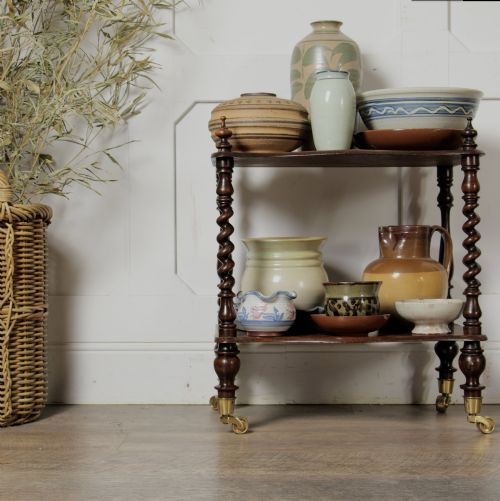
Distribute objects across the tiers by balancing heavier books or ceramic items on the lower shelves with lighter glass or brass pieces near the top.
Allow negative space around the items so the wood grain, inlay or turned supports remain visible.