


Burr Walnut Corner Shelf
A burr walnut corner shelf brings rich, swirling grain into an unused room angle, offering tiered display space with distinct Victorian character.
Burr Walnut Corner Shelf
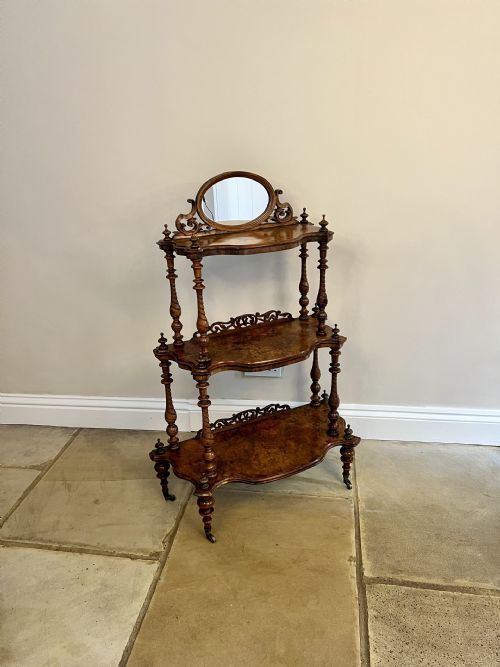
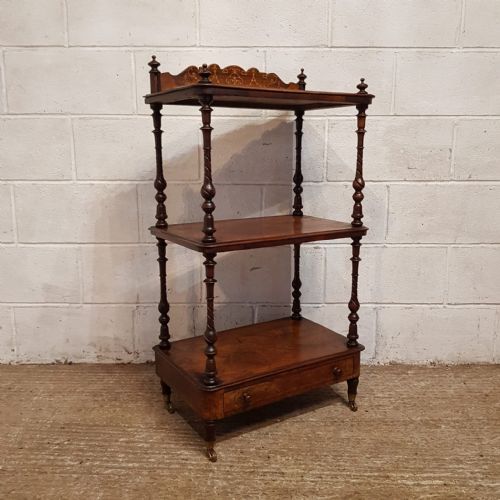
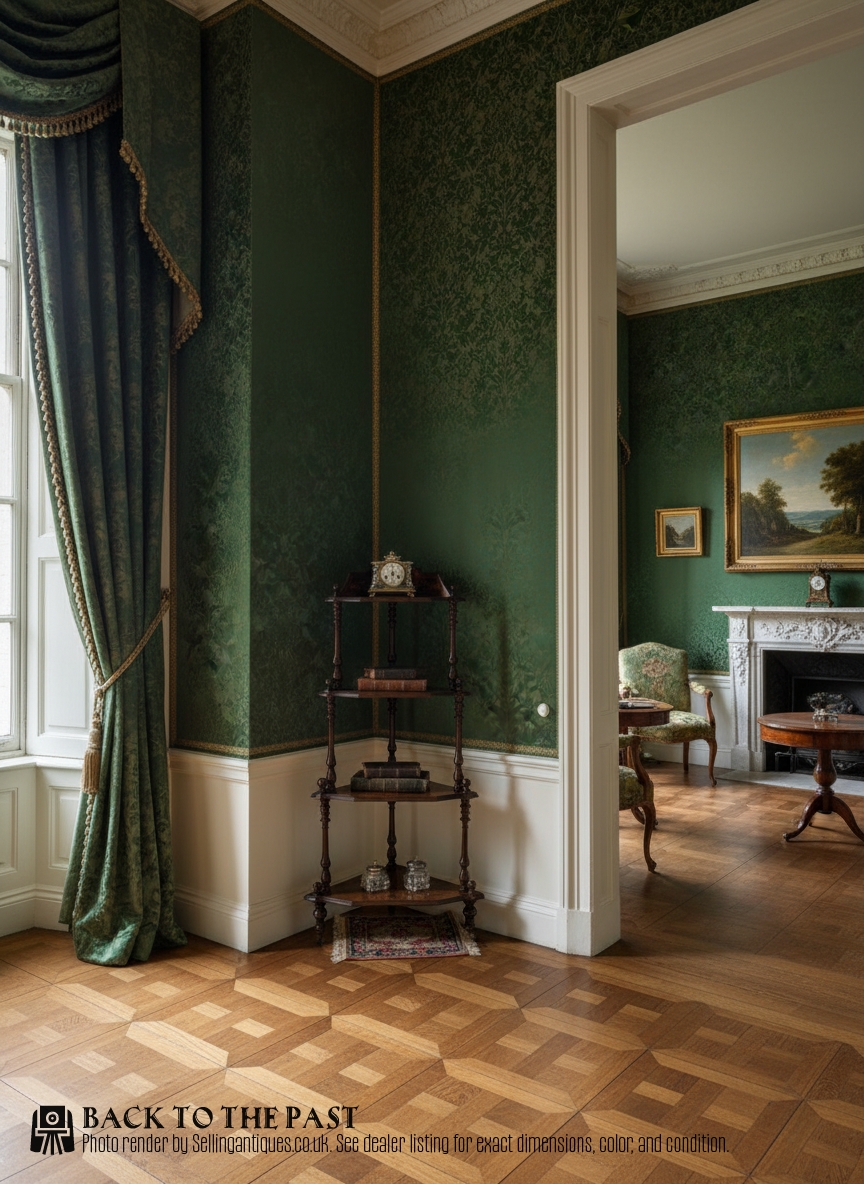
A burr walnut corner shelf utilises awkward room angles to display objects, appearing most frequently on this page as a Victorian corner whatnot or tiered display stand. These pieces rise in multiple tiers supported by turned or carved uprights, designed to fit snugly into the junction of two walls.
Most examples encountered here date from the mid to late Victorian era, spanning the decades from eighteen fifty to eighteen eighty. They appear in both freestanding formats and wall-mounted variations, combining walnut timbers with intricate figuring.
How they were made
Makers constructed these pieces primarily from walnut and burr walnut, slicing the highly figured knot growths of the tree into thin veneers to cover structural softwood or hardwood carcases. This technique produced dramatic, swirling grain patterns across the shelves and backboards.
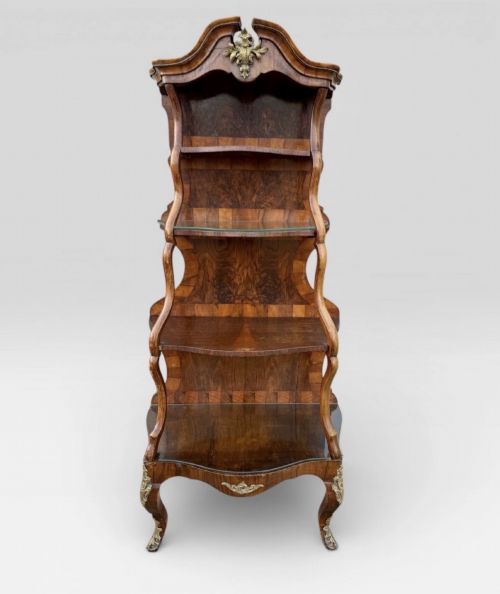
Additional decorative elements include brass mounts, gilt metal details, inlay work, and ceramic components, which accent the timber surfaces. Mirror glass panels occasionally feature within the back sections, adding depth and reflection behind displayed items.
Several pieces include miniature stacked stages that seemingly defied Victorian dust by offering more tiers than anyone had ornaments to fill.
What varies in quality
The distinction between standard pieces and exhibition quality examples rests in the selection of the burr walnut veneer and the crispness of the carving. Highly figured timber with deep, complex patterns commands greater attention than plain walnut surfaces.
Structural refinement also separates grades, visible in the turning of the upright supports, the precision of any inlay work, and the integration of auxiliary materials like brass and ceramic. Pieces bearing exhibition quality status display superior joinery and more ambitious architectural silhouettes.
The Burr Walnut Corner Shelf Glossary
- Burr walnut
- A veneer sliced from the deformed growth or knot of a walnut tree, prized for its swirling, organic grain patterns. It creates a highly decorative surface on Victorian furniture.
- Whatnot
- A piece of furniture consisting of several open shelves for displaying small objects, popular throughout the nineteenth century. Corner versions are specifically shaped to fit room angles.
- Demi-lune
- A half-moon or semicircular shape used for the tabletops and shelves of console tables and display stands. This curved profile softens room lines.
- Inlay
- A technique where contrasting materials such as lighter wood, metal, or shell are inserted into recesses within the primary walnut surface to form patterns.
- Rococo Revival
- A mid-nineteenth-century style characterised by exuberant, flowing curves, naturalistic leaf motifs, and ornamental scrolls derived from earlier French designs.
Burr Walnut Corner Shelf: Frequently Asked Questions
What is a corner whatnot?
A corner whatnot is a tiered set of open shelves built with a triangular footprint designed specifically to tuck into the corner of a room.
These pieces were used in Victorian parlours and drawing rooms to display decorative ornaments, ceramics, and small collectables without obstructing floor traffic.
How do I date a Victorian shelf?
Dating relies on examining the timber species, construction methods, and stylistic cues present in the piece, often referencing the mid to late nineteenth century.
Victorian pieces frequently combine burr walnut veneers with turned supports, specific inlay techniques, or Rococo Revival motifs characteristic of eighteen fifty to eighteen eighty.
Are these shelves freestanding?
Many examples on this page are freestanding three or four-tier structures designed to stand securely within a ninety-degree wall junction.
Some variations incorporate lower cabinets or sideboard elements, while others take the form of lighter display stands intended purely for corner placement.
How should I clean burr walnut?
Burr walnut requires gentle maintenance using a soft, dry cloth to remove dust without harming the delicate veneer or historical polish.
Avoid excessive moisture and harsh chemical cleaning products, applying a quality beeswax sparingly only when the timber appears dry.